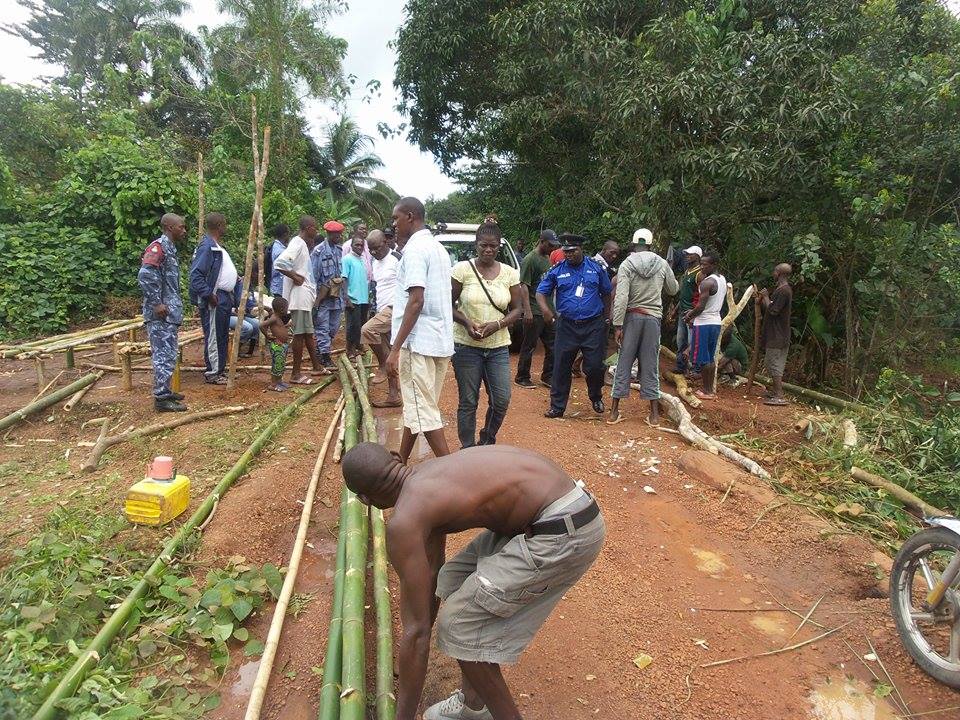
Concept to Harvest in 5 Months –  the Women’s Vegetable Growing Project

Concept to Harvest in 5 Months – the Women’s Vegetable Growing Project

Just shy of five months from our first March phone call on the Bumpeh Chiefdom Women’s Vegetable Growing Project, women are harvesting their first crops.

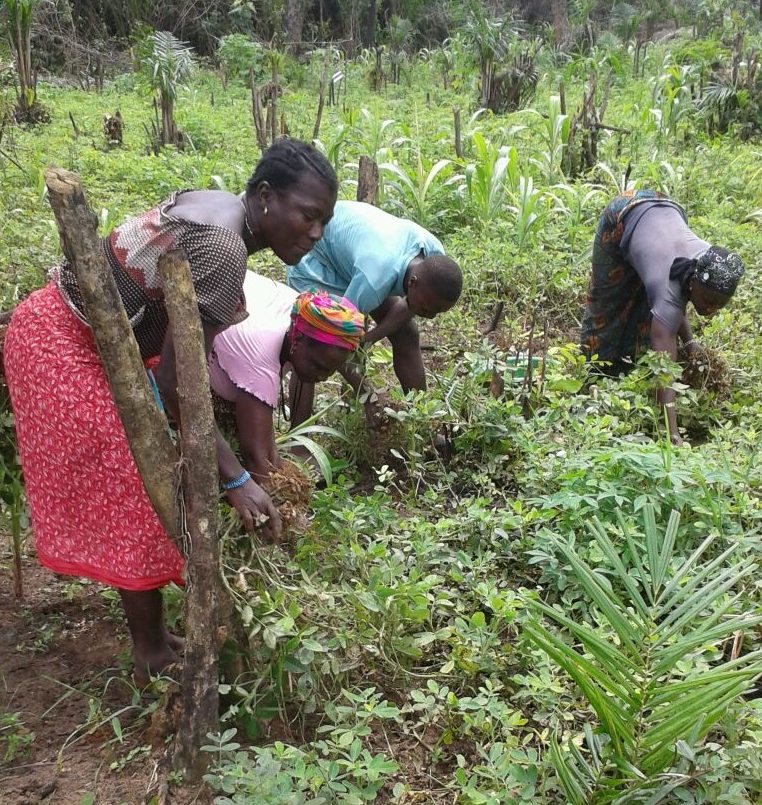
I got the pictures of the peanut harvest Sunday.  It’s a good crop, Mrs. Kaimbay told me. She leads our partner organization, the Center for Community Empowerment & Transformation (CCET), who organized and started this first time project.

She and local teachers Mr. Sonnah and Mr. Phoday got the vegetable project started in April – at the same time they were restarting school that had been closed for nine months because of Ebola.

Veg - Groundnut harvesting3

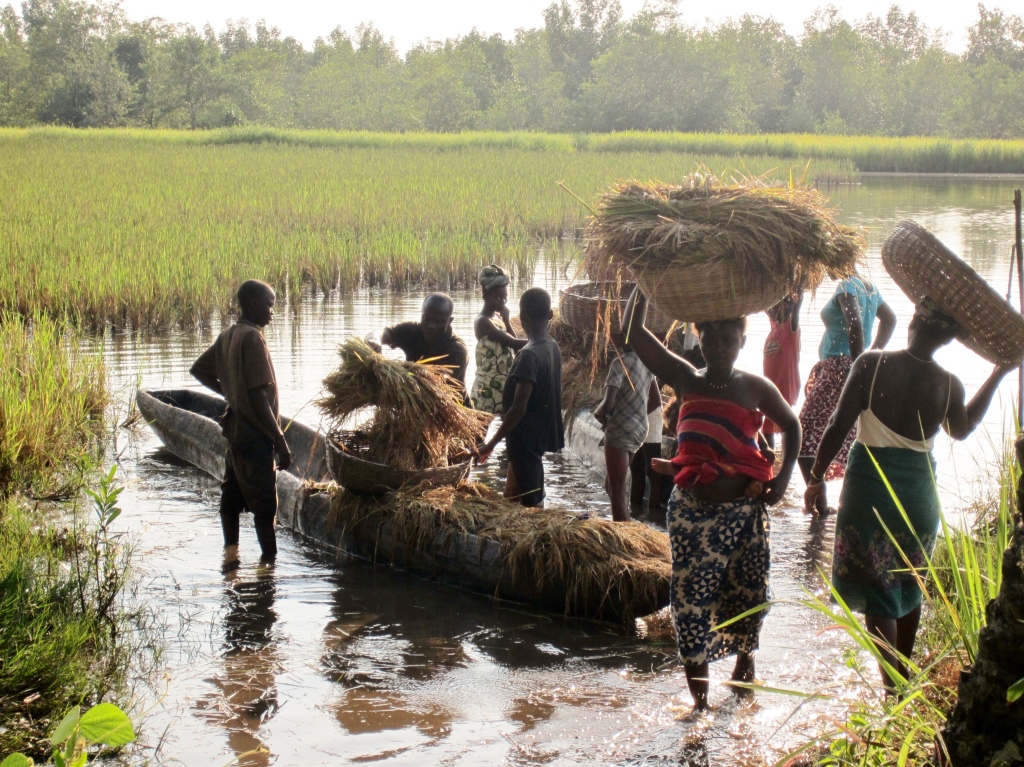
Now in late July, these women in the project’s first group of farmers were harvesting their groundnuts. The corn in the background will be ready soon, together with okra and cucumbers.

It was only in early March that I first asked, what can Sherbro Foundation do to help people whose incomes were slashed during the Ebola crisis.  Help women farmers start fast growing cash crops was the answer. Peanuts and vegetables.

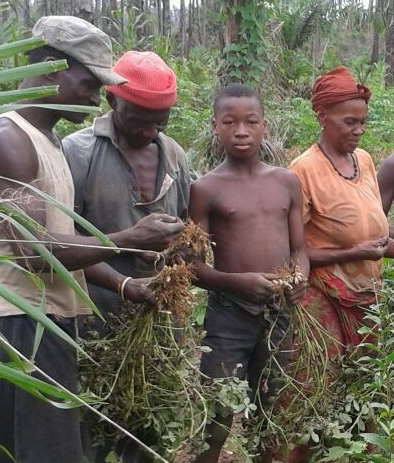
Veg - grountnut harvesting 2What we call peanuts are groundnuts in Africa. That’s because they grow in the ground. They’re actually legumes, not nuts. They’re an important source of protein in the African diet, commonly ground into a paste for soups and stews.
Or eaten straight up, after roasting in a pan. Groundnuts are also enjoyed boiled in the shell.

Veg - groundnuts growing

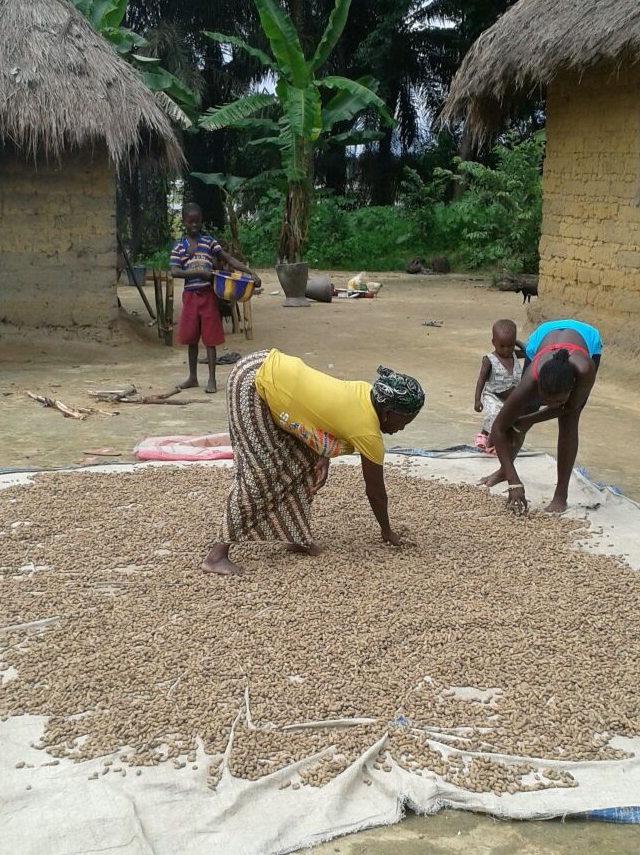
Here’s what groundnuts look like when they’re harvested.  They grow as nodules among the roots of the plant. You dig them up like harvesting potatoes. Then spread them out in the sun to dry.


Veg - drying groundnuts

The Women’s Vegetable Growing project will continue to expand and add new groups of farmers. The thirty five women in this first group will donate seed back to the project for the next group of farmers – a bag of groundnuts and a cup of seed from each of their three vegetable crops.

The women will still net at least three to four times our initial investment of $75 in each farmer. They’ll be ready to start their second crops in September themselves, followed by a third crop in their first year.

In the meantime, new groups of women farmers will be given their start.  In the project’s first twelve months, we should be able to have groups of 30+ farmers producing crops six times.

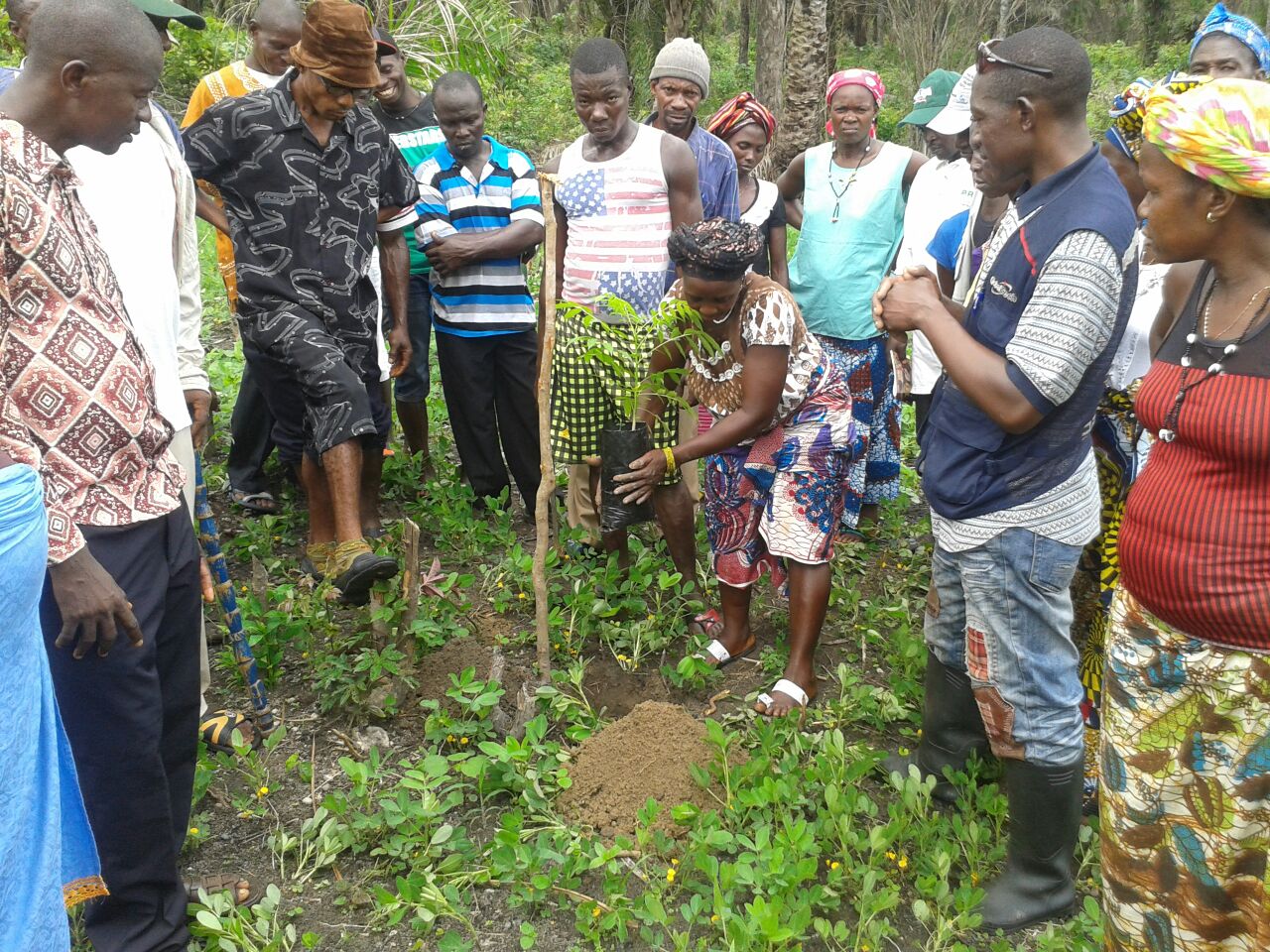
Workshop on erosion control.

Workshop on erosion control.

The women selected for the project are single heads of large households. They get the use of community land set aside in the chiefdom for special projects. They get training on topics like planting and erosion control, and ongoing support.

Importantly, they now know what empowerment feels like. They’re farming themselves and becoming self sufficient.

Sherbro Foundation and our partner CCET take on practical projects that are simple to implement and which quickly benefit the poorest people in the chiefdom.

We don’t wait years to see lives improved while bureaucracy and overhead are created. We do it within months.

Show Us the Money: How Ebola Crisis Money Was Spent

Show Us the Money: How Ebola Crisis Money Was Spent

Here’s an issue I’ve been waiting to see made public: how global aid money was spent in the Ebola emergency.

Amy Maxman’s recent Newsweek story will change the way you look disaster aid. Maxman managed to spend enough time in Sierra Leone and probe in the right places to illuminate some of the Ebola crisis’s most exasperating issues. I posted her February story on how the capital Freetown’s new Ebola case rate was not going to zero. She astutely noted Freetown has no traditional leaders with authority to lead the fight in their own communities, as they effectively did in the provinces.

Now she’s written about how global Ebola aid money was spent in Sierra Leone during the epidemic’s peak. Again, she’s spot on. How is it possible only 2% of foreign aid reached frontline Ebola workers?  Read on.

It’s hard for outsiders responding to an emergency to know how to donate efficiently — quickly and with the highest impact. Foreign governments and major foundations want to send money, but not actually spend it. They have to trust other organizations with local connections to act on their behalf.

Actually, foreign governments and foundations pledged Ebola aid money. The wheels of bureaucracy turn slowly, emergency or no emergency. Less than half the $3 billion aid pledged reached the affected Ebola countries by the end of 2014 when the crisis peaked and was declining.

Big Aid may have been frustrated in the past by immature and ineffective African government systems, and sometimes out-and-out corruption. So, many foreign governments and foundations bypassed the Sierra Leone government, and gave Ebola aid funds to the World Health Organization and Western nonprofit organizations. Some sent a few experts, like the US Center for Disease Control, to advise and train Sierra Leone government agencies or do diagnostic tests.

Most individual donors don’t understand how aid organizations actually spend money.  I didn’t until I got personally involved with a rural Sierra Leone community.

Crises don’t happen in convenient places. Aid organizations either don’t have staff in the affected country, or in the remote places they’re needed. And in the Ebola emergency, they didn’t have the right kind of staff. Infectious disease ward nurses, sanitation crews, burial teams and community mobilizers were needed — all speaking local languages and able to respond to local customs on life and death matters.
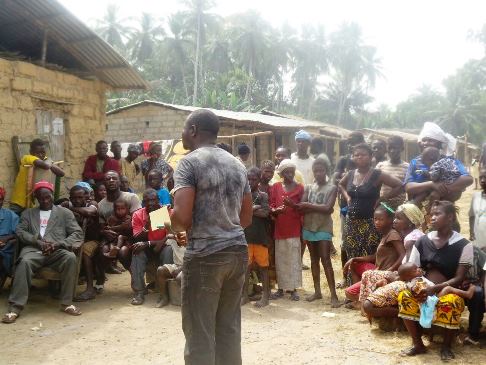
IMG-20150115-WA0000Ebola started and spread in remote villages. To reach these places, foreign aid organizations would be confronted with a total lack of familiar infrastructure. It takes 3-5 hours to drive 50 miles on impossible roads to reach small villages – with the right 4×4 vehicle. They’d find nowhere to stay or eat, difficulty buying bottled water or petrol, no electricity, no toilets, no internet connection, of course, and unreliable cell phone coverage. There’d likely be no Sierra Leone government presence, and therefore, no local host or suitable building to work in.

They might find no one to be go-between with the community. They wouldn’t speak the local language and could encounter suspicious, even hostile, villagers they’re trying to serve.

So, unless you’re Doctors Without Borders experienced in setting up mobile MASH units, you subcontract your work to locally based nonprofits. These nonprofits may in turn need to hire more local, but inexperienced, people to deliver emergency services.

Most local nonprofits are not rurally based. They typically are in Sierra Leone cities, and they don’t necessarily have rural relationships or speak tribal languages. But they are at least in-country. These nonprofit workers drive to a town or village for a few hours and leave, having limited impact. But they spend lots of money nonetheless on staff, new employees, training, new vehicles and travel expenses.

The funding pie quickly shrinks. Every time work and funding are handed off to another government, another agency within a government, or from a global aid organization to country and regional groups, a slice of the funding pie is eaten up.

Maxman found less than 2% of the billions of Ebola aid money made it to frontline Sierra Leone health care and sanitation workers. She found a UK report that only 7% of EU funding for a Liberian Ebola program reached frontline workers. This is not exceptional. Before the Ebola outbreak, I asked Bumpeh Chiefdom Paramount Chief Caulker about development aid distribution. He said it’s common for only 10% of aid money to reach people in his chiefdom as actual goods and services. Twenty percent would be good for non-emergency aid distribution.

Where did the rest of the Ebola aid money go? Much of donated money is going to highly paid foreign aid organizations and their employees. Or to pay for military flown in to build treatment centers that took so long they were hardly used. Salaries of foreign aid workers sent over – that could be 6-figures – are counted in the emergency aid figures. And they may get extra hazardous duty pay. They fly in, stay in expensive city hotels designed for foreigners, and travel in air-conditioned SUVs. Some were flown by helicopter daily to field centers. And they seldom engaged directly in what we thought we donated our money for – caring for people sick with Ebola.

In emergencies, spending money efficiently is not the prime objective, as Maxman found. Speed is. But without established programs, that speedy spending in the Ebola emergency led to many mistakes and missed objectives. And cost many lives.

A vicious circle continues. With the crisis over, foreign organizations pack up and go home. Under-developed local health care services are no better off. They can’t self-support the next crisis because we keep relying on foreign emergency aid organizations, instead of investing in building Sierra Leone’s health care capability. Yet we quickly forget how expensive emergency aid is.

What’s the moral of the story? Certainly, you should understand the organizations to which you’re donating in an emergency. What is their track record in the country you’re trying to help?

Consider small nonprofit organizations doing grassroots work in a country like Sierra Leone; don’t be automatically dubious. Find their websites and check what they’re doing.

Sherbro Foundation was able to quickly fund life-saving programs for 40,000 people with very few US dollars.

We funded 90% of the Ebola prevention work that Bumpeh Chiefdom led itself, with chiefdom leaders and volunteers.  They focused on prevention, not waiting for people to get sick. We sent $9,000 USD by wire transfer, and they directly received $9,000 in local currency within days after we agreed on objectives.

For $9,000, the chiefdom got results. They kept Ebola out for over 50 days, while it was raging all around them. After two isolated cases at Christmastime, the chiefdom again remains Ebola-free.

That $9,000 would have paid the hotel bill for a single foreign aid worker “consulting” in Freetown for only a month and staying at the Raddison Blu for $270 nightly.

Grassroots organizations like Sherbro Foundation are not involved in Sierra Leone for the short term.  We’re continuing the work of community development.

What Do Mothers Want on Mother’s Day?

What Do Mothers Want on Mother’s Day?

It’s nearly Mother’s Day. So, what do mothers really want on their special day?

It would be the rare mom — or grandmother, or aunt, or godmother, or wife — who wouldn’t say, “I just want to enjoy time with my children.” Cherishing time with family is more important than gifts. They already have enough “stuff.”

Here’s a simple way to make this Mother’s Day truly special: Give her the satisfaction of knowing she’s sending a deserving Sierra Leone girl to school. A gift to the Sherbro Foundation Girls Scholarship Fund will have happy ripple effects for a struggling West African family for a long time to come.

IMG_0097Can an American mother empathize with a Sierra Leone mother? If they could meet and chat, I think they would find much in common. They want the same things for their children — good food, shelter, a safe and healthy childhood. And importantly: an education and the opportunity to do as well or better than they did.

I asked mothers in Sierra Leone what they want. Here’s what they told me:

IMG_1642Thirty-year-old Mary Bendu was born in the same small village of 200 people as her mother and grandmother. They had to abandon their farm and home during the civil war, and hide from rebels for a year. They lived in the bush, sleeping on the ground and surviving on wild bananas and coco yams and catching mud skippers.

She now lives by the work women usually do – selling things in the market. She collects firewood, smokes fish caught in the river and grows sweet potatoes. She would make more money if she could take these to a bigger market, but she can’t afford to pay for public transportation.

Mary has five children, from five to 15 years old. What makes her most proud is sending them to school. She wants her children to have the education she never had. These are the kind of girls for whom Sherbro Foundation scholarships make secondary school possible.

Zainab Caulker, 28 yrs, wants to become a nurse.Zainab Caulker, 28, has 7- and 9-year-old children in school. She herself went through primary school but the war interrupted her education. She’s opened a small business buying farm goods in small villages and reselling them in the Rotifunk market. She used micro-finance loans of $60 – $100 to start her business. She was able to repay them, but with the high interest rates, she could see she was never getting ahead.

She wanted to learn more and help her children with their studies, so she decided to start Adult Literacy classes Sherbro Foundation sponsors in Rotifunk. “I knew nothing before Principal Kaimbay encouraged me to come back to school. Now, I can get up in public and represent myself.”  She’s also helping board some teenage girls from nearby villages who attend secondary school with Sherbro Foundation scholarships. Her dream is to become a nurse.

IMG_3280Zainab Sammoh lives in Rotifunk with her two children, 10 and 6. Her husband wanted to go away to college, so she stayed home with the children. He then left her and married an educated woman. Zainab started Adult Literacy classes so she can follow her children’s progress in school and make sure they’re doing what they should.

“I want to be able to ask them, ‘what did you learn in school today,’ and know what it means.” The day I met her she was learning to write her name. She hopes to get a job as a secretary.

Despite their overwhelming struggles, these mothers prize education as the key to a better life for their families.

You can help them create better tomorrows. And make Mother’s Day special for the special woman in your life.

A $30 donation to the Sherbro Foundation Girls Scholarship Fund will send a girl to school – making a powerful difference in the lives of girls and women in Sierra Leone for years to come.  

Click here to make a gift in the name of your special woman. Include her email address, and we’ll let her know she’s helping another mother give her daughter a good start in life.  Or if you’d rather personally deliver it, we’ll send you an acknowledgement of your thoughtful gift in her name.

We’ll make it more special.  We’re matching all donations until May 15, doubling the impact of your gift.

You’ll make a difference in your family, too. Show Mom she taught you well in helping make the world a better place.

Think your help doesn’t matter? Think again.

Think your help doesn’t matter? Think again.

People often think, how can I, as one person, make a dent in the world’s problems?  Well, I’ve found change starts with one person here making a difference in the life one person somewhere else.

The first step is to get involved. Just take one positive step.  Many small  positive actions add up to real change. That’s what movements are all about.

Not sure what kind of positive action you can take? Sherbro Foundation supports girls’ education and addressing extreme poverty in Sierra Leone.  Here’s a list of actions you can take to help us help the people of Sierra Leone.

Help promote Sherbro Foundation’s work in your personal network

  • Like us on Facebook. Then share a SF news item to your Friends saying you support this work.
  • Like a post on www.sherbrofoundation.org. Send a Comment on why this work is important.
  • If you use Twitter, Tumblr, Pinterest, Stumbleupon, etc. – share a Sherbro Foundation post
  • Speak out: Letter to the Editor or article – your organization newsletter or local media

 Connect us with others that might want to support a project    

  • Advocate for us with: Churches doing mission & outreach work;  School public service projects; Civic & Professional groups funding nonprofit projects; Clubs holding charity Walks & Runs
  • Host a Club program or salon for your circle of friends
  • Investigate your Company’s corporate Foundation for nonprofit projects & how to apply         Employee sponsorship usually needed
  • Find used or in-kind donations for schools and children:
    • Collect used baby clothes
    • School supplies
    • Sports shoes & sports equipment – a big need
    • Educational videos (National Geographic, Planet Earth, etc.), Math tutorials, etc.

Be a Sherbro Foundation Volunteer

  • Write a guest Blog post – why you care about Girls Education or other development issues
  • We can use your skills
    • Advise us on Nonprofit Marketing & Fundraising
    • Consult with us on our Website – especially on use of WordPress & SEO
    • Advise us on optimizing use of social media
    • Produce a short video for our website

Donate to Sherbro Foundation projects   www.sherbrofoundation.org/donate/

  • Send a girl to school with a uniform – $30
  • Sponsor a vegetable farmer to get back on her feet with fast growing cash crops – $50 
    • Seed & fertilizer for a half acre vegetable garden + bag of rice to feed family now
  • Give in honor of someone special – birthday, Mother’s Day, memorial, special day
  • Support other projects www.sherbrofoundation.org/about-us/projects/
Blaming the Victims – Pregnant Girls Banned from Sierra Leone Schools

Blaming the Victims – Pregnant Girls Banned from Sierra Leone Schools

There will be a number of Sierra Leone girls who want to come back to school when they reopen that won’t be allowed to.

Pregnant girls are being banned from school.  From an outsider’s point of view (mine), this smacks of blaming the victim.

Fatu is one of the Bumpeh Chiefdom girls who should have been taking the senior high entrance exam last week.  Instead, she’s waiting to give birth as a single mother.

Walter Schutz Secondary School studentsWhen Sierra Leone President Koroma first made his announcement in February that schools would reopen, he publicly stated all children should return. He specifically encouraged pregnant girls and young mothers to come back to school.

The Ministry of Education recently recanted this, saying pregnant schoolgirls are a bad moral influence on other students.  They will not be allowed to attend school while “visibly pregnant.”

These pregnant girls were victimized once, and now they’re being made to pay again.

It’s been estimated as many as 30% of Sierra Leone schoolgirls became pregnant during the Ebola crisis. I doubt there was a sudden lapse in morals in this many girls in the last nine months. There have been many reports of an increase in sexual violence across Sierra Leone triggered by the Ebola crisis. Men lost employment and girls were home, out of school. Constant stress from fear of Ebola, lost income and restricted movement is fuel for sexual predators, as described in this BBC interview.

There’s many variations on this, from rape to coercion, from “transactional sex” to misplaced emotions. Emotions were running high for all during the Ebola crisis, including teenage girls. When you’re bored, depressed and feeling hopeless, it can be easy to seek comfort in the wrong place. Add to this the lack of health care services and contraception during the Ebola crisis. Needing money to cope financially or seeking to boost self esteem resulted in terrible consequences for many girls.

Behind the statistics there’s real people, and their life stories are not simple.

Center for Community Empowerment & Transformation Executive Director, Rosaline Kaimbay told me about some of these girls in Bumpeh Chiefdom who won’t be returning to school in April.

Fatu finished JSS3 (junior secondary school 3) last July and was ready to start senior high. Her mother separated from her stepfather when he made it clear he wanted to take another younger wife; a girl of eighteen, not much older than Fatu. He abandoned the family, including his own five year old son, Fatu’s stepbrother.

Fatu’s stepfather is actually her uncle. He was a local warrior called a Kamajor that fought to save Rotifunk when it fell under rebel control during Sierra Leone’s long civil war. His entire family was killed by rebels, including his younger brother – Fatu’s father.

He took Fatu’s mother as his wife, which is common. A widow needing support and protection often becomes the wife of her brother-in-law. Now over ten years later, he wanted another young wife of his choosing. It would be easy to cast him the villain, but he’s led a difficult life. He’s been a victim, too.

It’s not clear how Fatu became pregnant. Girls like Fatu are ashamed to talk with Principal Kaimbay about what happened and hide their pregnancy as long as possible.

Fatu lost her father; then she was abandoned by her stepfather and the father of her baby.  Now she’s forbidden to take the one route that could be a way out for her and her baby – returning to high school to complete her education at a high enough level to give her job skills.  She’s banned at least until after the baby is born.

What are her options? If her mother can manage to take of the baby – supporting another child – Fatu could return to school after she gives birth.  If they live in town where the schools are, or have friends where she could stay, she may be lucky and pick up again on her education. These are big if’s.

If not, she would be another statistic among the five out of six girls who don’t complete high school. Another who remains stuck in a cycle of rural poverty so hard to escape.

Sherbro Foundation’s girls scholarship program focuses on helping the most vulnerable students like Fatu who are serious about their education. As more girls progress into senior high, we especially want to help senior girls stay in school and graduate. This includes young mothers.

Fatu fits the profile in all respects. Mrs. Kaimbay calls her a brilliant student. She could do well.

There’s hope for Fatu and girls like her if she can make her way back to school. She needs our support, not blame.

You can support girls like Fatu.  Donate to Sherbro Foundation’s Girls Scholarship Program.

Remember – Sherbro Foundation is all-volunteer. So everything donated goes to the Scholarship Program.

Back to School, but Not Back to Normal

Back to School, but Not Back to Normal

How do you reopen Sierra Leone schools closed for seven months by a country-wide health epidemic? What do you do when the Ebola epidemic is still not completely over, and you’re afraid to send your children back to school?

Sierra Leone schools reopen in April. But it won’t be like just turning a faucet back on. Teachers and students scattered when Ebola suspended school last year to be with family in home towns and villages. Getting students back will be a process.

ebola hug

Rotifunk teachers returning to school demonstrate an Ebola hug.

Ebola is not yet gone.  It continues to ebb and flow in the capital and three northern districts. Another three day countrywide shutdown starts today, Friday, March 27 to try to stamp out remaining Ebola cases. Everyone is ordered to stay home Friday through Sunday. They continue to observe the strict “no touch” policy of the last eight months and no public gatherings.

Then, Monday, March 30 last year’s ninth graders are the first to come back to school to take their senior high entrance exam. The exam was canceled last July when Ebola escalated.

What are parents to do?  Keep your child at home where you believe it’s safe, or safeguard their future and let them test their way into senior high?  Skip Monday’s test and they’ll be waiting months again for another chance.

IMG_3350

Community Empowerment & Transformation project leader and local teacher, Abdul Phoday

I texted Center for Community Empowerment & Transformation volunteer and local teacher Abdul Phoday to hear what’s going on. “Everyone is still scared of one another,” he said. “People do gather, but with some distance because of the virus. Some of the girls who are supposed to be present for [this week’s exam review] are absent because of teenage pregnancy. They have been idling so long, they were confused by some bad boys, and are now pregnant.”

“The few who are present are not enthusiastic as usual, for they were a long time out of school. But we are doing our best to bring them on board, even though it’s not easy.”

Phoday and other teachers only have one week to prepare their students for the senior high entrance exam. They normally spend a whole month in a concentrated study camp.  His school has been the exam’s district champion for the last two years. “So, we want to keep the title,“ Phoday said. “Really, it’s out of love [we do this] as we are still getting fluctuational Ebola results so everyone is still scared.”

Principal Rosaline Kaimbay attended a workshop last month to prepare principals to reopen schools. She said she’s satisfied the Ministry of Education has considered the risks and made provisions for these.  Still, getting everything needed in place and implemented locally will be a big effort.

Safety first  The first order of business is making the physical environment safe after Ebola.  Fortunately, none of Bumpeh Chiefdom schools were used as temporary Ebola holding centers needing decontamination.

IMG_1908Maintaining the Ebola “no touch” policy is still needed. This means enough classroom space to keep students separated by three feet. Primary schools often pack young children in classrooms with 2 or 3 kids to a desk. They are to get additional desks to spread students out.

Sanitation at rural schools is a real dilemma. Students need to regularly wash their hands. But most schools have no water sources on-site. There’s usually no clean water nearby; not even a well. Schools are lucky to have latrines, let alone toilets. Hand washing provisions were never made. “Policy makers in Freetown don’t come upcountry and don’t know sanitation conditions here,” lamented Paramount Chief Charles Caulker.

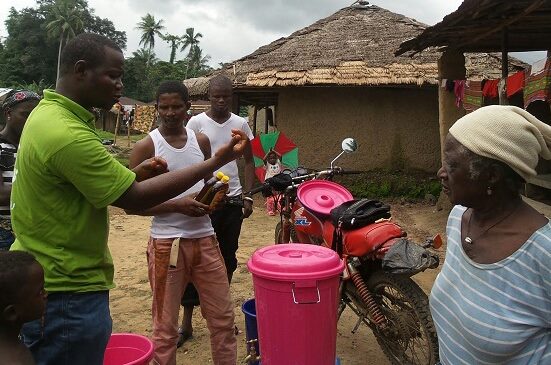
Bumpeh Chiefdom schools will have to resort to the public handwashing stations used during the Ebola epidemic  –  buckets fitted with a faucet and chlorinated or disinfectant treated water that will need to be carried there. Supervising 200+ children washing their hands each time they come on-site will be a time consuming chore for teachers.

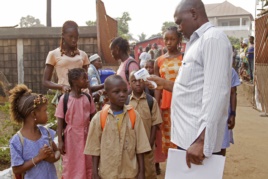
taking temps at school Conakry

Liberian teacher takes daily student temperatures.

Likewise, teachers will need to take each student’s temperature every day with no-contact thermometers they’ll be supplied with. Will morning assembly songs and announcements be replaced with the hand washing – temperature taking regimen to keep on schedule?

Stress management  Teachers are getting training on stress counseling for students. Those who are Ebola survivors, or who lost one or both parents or other family members are still traumatized.  Being stigmatized as an Ebola family further adds to their stress. They may not yet be fully accepted by the community. These children need extra support, and their peers need more education that they pose no risk to the community.

The epidemic has put everyone under great hardship and economic stress. Then, there’s chronic stress from constant fear of the invisible enemy called Ebola.

Making up for lost time  Everyone may need stress management with the school regimen they’re being asked to follow. To make up lost time, school will be held six days a week, including Saturdays, for 25 weeks. School will push through July and August, the heavy rain months when many students are normally back home helping plant rice on family farms.

I remember as a Peace Corps Volunteer trying to teach during the rainy months. We’d have to stop during an especially heavy downpour when it sounded like horses galloping over the metal roofs and you could hear nothing else.  Walking miles to school on muddy roads in downpours is miserable.

Back to school campaign  Our Rotifunk partner organization, the Center for Community Empowerment and Transformation (CCET) plans a back-to-school and public health campaign. Made up primarily of local teachers, CCET will be going door to door in Rotifunk and village to village in the chiefdom, encouraging parents to send their children back to school.

IMG-20150105-WA0001The way to answer parents’ questions on Ebola and the remaining risk is to reach out to them in their villages.  CCET will continue public health messages on recognizing Ebola and other common disease symptoms, and what to do if you believe someone is sick.  Local nurses will join in and assure people of the safety of community health clinics.

Pregnant girls and new mothers especially need counseling on seeking medical care. They’re still afraid of getting Ebola if they go to hospitals and health clinics to deliver and for pre and postnatal care. They’ve been delivering at home. More lives across the country are being lost in childbirth and from complications after birth than from Ebola.

Young mothers and their parents need to be encouraged on the girls returning to school.  Becoming a mother does not need to end their education. Rather, they and their babies need the benefits education brings more than ever. But village girls face the dilemma of leaving their new baby with parents in order to go to Rotifunk for secondary school.

The Ebola epidemic has been incredibly hard. Getting life back to some semblance of normal is far from easy.

Arlene Golembiewski
Executive Director

She is why we do what we do

She is why we do what we do

School is slated to reopen in April across Sierra Leone. It won’t come any too soon for both teachers and students weary of the seven month limbo they’ve been in since the Ebola crisis closed schools last September.

Zainab Bangura 2 - PGHS scholarship awardeeZainab is one of the girls I’ll be watching for. She’s gone to one of Rotifunk’s secondary schools with scholarships from Sherbro Foundation.

Last year, I talked with Zainab and found she has a big dream.  It’s a dream we want to help her achieve.

Zainab has had a difficult time completing secondary school.  I worried she might be one of those not returning.  At 19, she’s a young woman, and it’s hard to find the means to stay in school. The longer teenagers stay out of school in Sierra Leone the less likely they are to return, especially the girls.  Ebola has only made that worse.

Village on road heading to Freetown

Zainab comes from a small village like this one on the road leading to Freetown.

Zainab comes from a small village about seven miles outside Rotifunk.  It’s ten mud houses, she told me, with an emphasis on “mud” houses. Her mother is a very poor farmer and old. When she told me her mother’s age, I laughed and said, “Well, that makes me old, too.”  “But you are strong,” was her reply.  Strong in Sierra Leone means healthy.  It also means I’m privileged to have the means to be this strong at my age.

Zainab attended junior high in a nearby town.  Four years ago when she was ready for senior high, her aging mother could no longer afford $30 to send her to school.  So, she sat home for a year.

An older man then persuaded her mother to let Zainab move in with him in Rotifunk.  He promised to help her finish school and then marry her. Zainab’s mother thought this was the only way to ensure her future. But he didn’t pay her school fees and didn’t marry her.  He was already married. He forced her to work for him by selling goods in the market. I’ll let you fill in the rest.

IMG-20150103-WA0011 - CopyPrincipal Rosaline Kaimbay seeks out village girls like Zainab and encourages their parents or guardians to send the girls to high school.  Zainab started senior high with Sherbro Foundation scholarships two years ago. A teacher heard of her living situation and convinced her to leave the man and move to a friend’s home.

Zainab has now completed 10th and 11th grades, a real accomplishment.  Only one in six Sierra Leone girls is able to complete high school.  Zainab’s school will be starting its first twelve grade class this year. Zainab should be one of the first seniors in that class.

10356312_349283451885472_4392104421503392972_n[1]I want to become a doctor.

I spoke with Zainab last July before Ebola suspended  school.  Principal Kaimbay had told me she’s interested in studying science. When I asked Zainab why she likes science, she said with no hesitation, “I want to go to college and become a doctor.”

Not a nurse or a teacher, the usual responses. But a doctor. When I asked why, she immediately replied, “I want to save lives.”  She’s no doubt seen lives lost in her short life because there’s so little health care available.

With school now reopening, my thoughts returned to Zainab. I asked Principal Kaimbay if she’s been in contact with her, and will she be returning to school. Zainab has been living with her mother now. Mrs. Kaimbay regularly stopped by to see them since their village was near one of the Ebola check points on the way to Freetown. They’ve been scraping by, growing a few vegetables to sell.

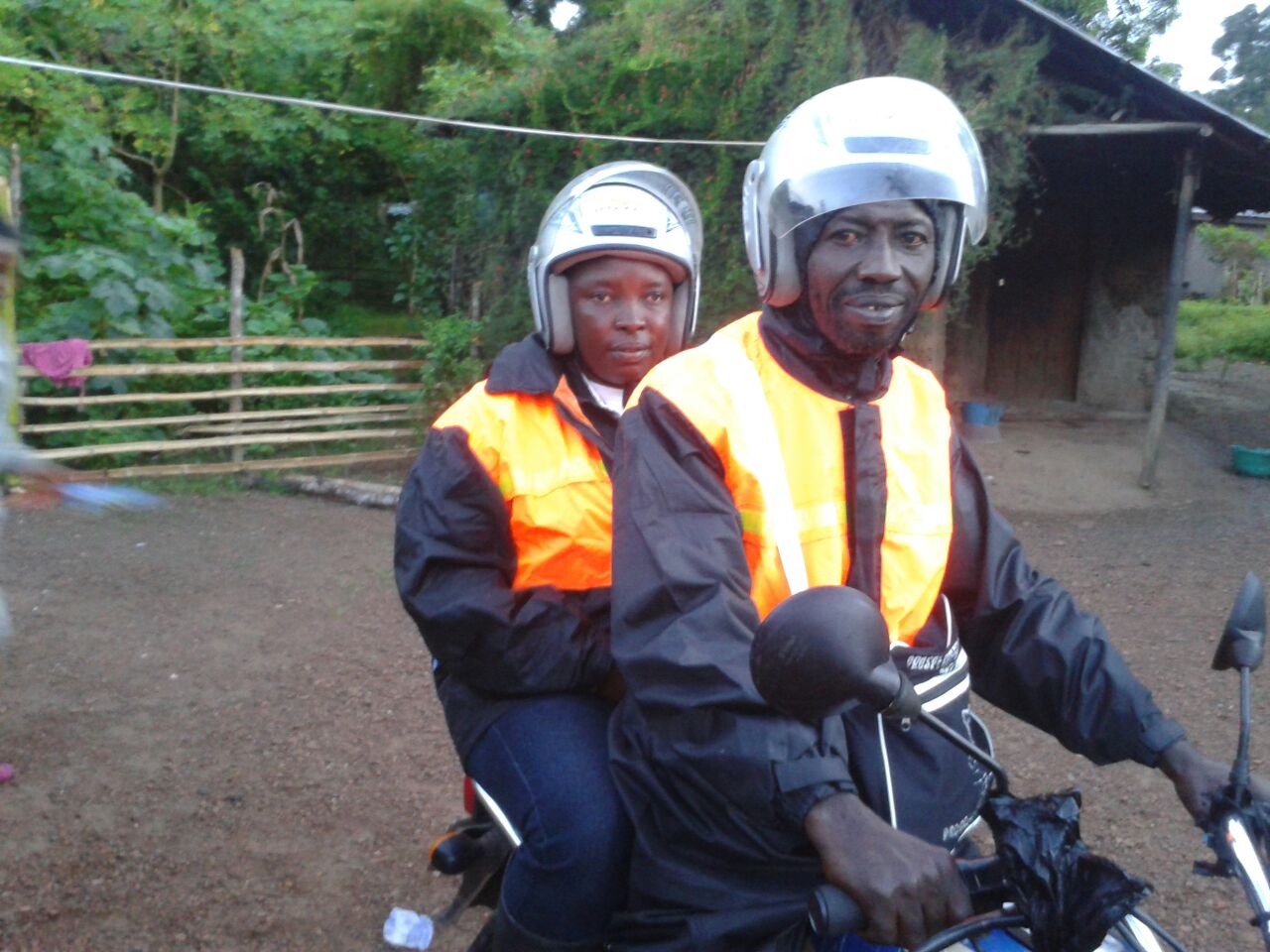
IMG-20141120-WA0000Mrs. Kaimbay is more than a dynamic principal and a gifted teacher. She’s an advocate for girls like Zainab, and a champion for girls and women everywhere in Bumpeh Chiefdom. During this long Ebola crisis, she’s made a point to connect with girls and their families whenever she could. She resorted to the back of a motorcycle to monitor and support the chiefdom Ebola control program — and visit village girls. She encourages and motivates the girls to stay focused on their education. School will reopen; we want you to come back. We’ll help you wherever we can.

Now she told me, yes, Zainab is ready to return to school.

Last July, I asked Zainab if she had any questions for me. She immediately asked: will I be helping with university scholarships? With girls like Zainab finishing high school in Rotifunk and determined to go to college, that’s something to be planning for.

God knows Sierra Leone needs more doctors and nurses. Now, they need to replace those who sacrificed their lives in the Ebola crisis caring for others.

Zainab gave me a message last July to bring back here:

“Thank you for helping us. We come from poor homes, but we are ready to learn. Without scholarships, we should drop out.”

Girls like Zainab are the reason I started the girls scholarship program. I think how many other bright, determined girls like Zainab won’t achieve their dreams without getting through that first formidable hurdle in their lives — secondary school. And the hurdle amounts to just $30 a year.

Zainab is the reason Sherbro Foundation does what we do.

You can help Zainab and other girls come back to school now.   http://www.sherbrofoundation.org/donate

Today Everyone in Sierra Leone is an Ebola Victim

Today Everyone in Sierra Leone is an Ebola Victim

People now ask me if the Ebola crisis is over. It’s certainly dropped out of the media here in the US.

But the answer is, no. The outbreak stubbornly hangs on in Freetown and three northern districts.  Getting to zero is proving to be more difficult than imagined. This is about changing human behavior on deeply seated traditions like burial practices.  Consistent behavior change across the country remains an elusive goal.

Today, March 18, the daily new Ebola case report had only one new case. That’s the lowest ever since the epidemic began. But yesterday was 14 new cases, and the last seven day total is 50. Ebola is not gone.

But much of the country is hanging on to their zeros. Bumpeh Chiefdom has now gone nearly 90 days without a new Ebola case. Their district, Moyamba District, is now 22 days Ebola free.

DSCN0453Today, however, everyone in Sierra Leone should be considered an Ebola victim.

The tragedy won’t end with eliminating the infectious outbreak. The economic and social impact on the country has been nothing less than disastrous. The majority of families’ livelihood is subsistence agriculture, and they are devastated. They depend on today’s market sale for tomorrow’s food.

The entire country’s economic growth has fallen by two-thirds. Mining and tourism are the two largest industries that brought foreign investment and cash into the country. Tourism is of course at a standstill. Little mining goes on.

IMG_0413For Bumpeh Chiefdom, incomes of farmers and small traders were cut in half when they couldn’t get crops to city markets. The three month chiefdom isolation order caused some people to just abandon farms and businesses. Others lost some of their harvest when seasonal laborers fled the chiefdom.

Prices for food, fuel and staples at the same time increased 30%. Feeding their families is now the priority. Things like sending kids to school is a luxury for many.

Bumpeh chiefdom has enough food to avoid starvation.  But the poorest families rely on cheap starchy foods like rice and yams. Not a balanced diet. This can cause developmental problems over time in small children like stunting.

Sierra Leone had the highest maternity and under-five mortality rates in the world even before Ebola hit.  In 2012, free health care for pregnant and nursing mothers and children under five started to change this. But with health care overwhelmed by Ebola, families avoided clinics and hospitals.

IMG_0097Many more people have likely become ill or died of common untreated illnesses like malaria, dysentery and typhoid than from Ebola, especially small children. Women and babies died because pregnant women did not seek health care, or they were turned away by health care workers fearful of the Ebola risk. The UN Population Fund estimated the Ebola epidemic may have caused 120,000 maternal deaths in the 3 countries affected by Ebola by late October when Ebola had not yet peaked. Children are not being vaccinated against dangerous diseases like small pox. HIV goes undiagnosed or untreated.

Schools have been closed for seven months and more than 60% of the population is school age children. Keeping kids out of school will have a long term effect on the country’s development.  The longer teenagers stay out of school, the less likely they will return.

Teenaged girls are especially affected. Pregnancy rates climbed during the Ebola crisis with over 30% of schoolgirls estimated pregnant nationwide. Sierra Leone President Koroma is calling for pregnant girls and new mothers to come back to school and complete their education.

IMG-20150108-WA0001So is all lost in Sierra Leone? No! The people are resilient. The world development community learned hard lessons from Ebola on the importance of targeting local solutions and local leadership.  And Sierra Leone mobilized thousands of young people eager to help their country who stay connected with social media.

IMG_2005Sherbro Foundation goes back to our mission of supporting practical grassroots projects that quickly benefit the poorest people. Bumpeh Chiefdom’s Paramount Chief Caulker said his top two priorities now  are restoring income for hungry people and sending girls back to school. So we are helping them with two urgent programs for these.

The first is a vegetable growing program, so farmers can raise fast growing cash crops like peppers and quickly earn income again.

Our second urgent program is helping girls get back in secondary school.  School is slated to reopen April 14. The Sierra Leone government has a grant that will cover school fees this year for all secondary school children. But the $30 school uniform and school supplies will still be barriers for most poor families.

Sherbro Foundation’s goal this year is to buy school uniforms for 300 girls.

More on both these programs in future posts.

You don’t have to wait to help Bumpeh Chiefdom. You can donate now at www.sherbrofoundation.org/donate. Your money helps restore livelihoods and build self sufficiency.

Arlene Golembiewski
Executive Director

Ebola: When Culture Confronts Science

Ebola: When Culture Confronts Science

Respect people’s deeply seated cultural beliefs on things like burial during an emergency? Seek to understand and make some accommodation when the family is grief stricken and at their most vulnerable?

I’m posting a link to the second of National Geographic reporter Amy Maxmen’s articles on Ebola, people and culture.  This one gives a good overview of burial practices in Sierra Leone and why people have been so unwilling to give these up.  Even when confronted with the risk of death themselves.

Maxmen reports with both facts and sensitivity. Maybe it takes National Geographic and its long legacy of studying and reporting the world’s cultures to bring this kind of understanding behind the headline news.

Culture confronts Science  “The problem was that the people handling the intervention only looked at this as a health issue; they did not try to understand the cultural aspects of the epidemic.”

from National Geographic - adapting burial practices

from Nat’l Geographic – adapting burial practices. Start with prayers. Use white, the Muslim color of mourning.

Sierra Leone people are deeply spiritual, and there’s different tribes and subcultures. The escalating Ebola crisis was really about confronting cultural beliefs and changing unsafe behaviors. Outside health care and aid workers calling the shots came armed to fight Ebola only with science. There was no time for culture.

Yet for Sierra Leoneans, it was all about culture. With death – unexpected, tragic death – you automatically index to your most fundamental cultural beliefs.

When it became clear Ebola wasn’t ending quickly, respect and cultural accommodation finally came into play. The right things started to happen, and the Ebola epidemic started to decline. Families began to accept burial by strangers who had before seemed like anonymous body snatchers, throwing their loved ones in the back of a truck like trash. People started trusting health services more and calling for help.

Could this whole tragic episode have been shortened and lives saved with a different mindset?  Who knows. Read the whole National Geographic article and decide what you think.


Time to Get Girls Back in School

It’s time to send Sierra Leone girls back to school.  The Ebola crisis has kept schools closed for the 2014-15 school year.  Schools finally re-opened April 15 after being closed for nine long months.

Sherbro Foundation sent over 200 girls to school last academic year with our Girls’ Scholarship program. This year we want to send 300 girls back to school.

The longer kids stay out of school, the less likely they will come back.  Teen-aged girls in particular are a real casualty of the Ebola crisis.  Pregnancy rates have soared to over 30% nationwide  with girls being out of school.  Family incomes plummeted when Ebola forced markets to close and put districts under travel bans. Parents who previously found paying $25 annual school fees a hardship will now have more trouble than ever sending their daughters back to school.

final poster

Sherbro Foundation has been affected by the Ebola crisis, too.  Money we were collecting for our girls scholarship fund went to help Bumpeh Chiefdom fight their battle against Ebola.

We’re proud to have played a role in keeping Ebola out of Bumpeh Chiefdom. But now we have to start again raising money for girls’ scholarships. We want to get girls back in school as soon as they reopen.

The Sierra Leone government is paying school fees this year in a bid to return children to school. But that won’t be enough for most girls from poor families living on $1 a day. Sherbro Foundation scholarships will focus on buying $30 school uniforms that girls will wear for more than a year. We’re starting with girls moving from primary to secondary school

You can make a difference in the life of a Sierra Leone girl.  Send a girl back to school with a uniform for $30.

For the price of a Superbowl pizza, you can send a girl to school.   Please Donate Here.

“Investing in girls education may well be the highest-return investment available to the developing world.”  — the World Bank

Connecting the Dots: Sierra Leone – US Shared History

Connecting the Dots: Sierra Leone – US Shared History

Today is Martin Luther King Day in the U.S. to honor Dr. King.  Soon it will be African American History month in February. When I think of these dates now, I think of the shared history between Sierra Leone and the U.S.

I thought I would repost an article I wrote last year. Click here: “Connecting the Dots: Sierra Leone – US  Shared History.”

Unloading rice to the threshing floor

Unloading rice harvest Bumpeh Chiefdom – Nov 2013

I sometimes ponder the events that would have taken place in Bumpeh Chiefdom where Sherbro Foundation works. It’s a coastal area involved in the slave trade long ago in the 18th century.

But I think about more than just the slave trade. I’m thinking again today about the deep connections between our two countries – connections most people have no knowledge of.  Last year I wrote:

When I now travel down the Bumpeh River and visit traditional rice farms and villages, I remain mindful that there is a special link between Americans and the people of Sierra Leone.  Our people are kin.  Whether black or white, our histories and cultures are inextricably linked.”

A number of African Americans who have tested their DNA have found they’re of Sierra Leone descent. DNA can be matched to various tribal group in Sierra Leone. I keep reading of more people, like Maya Angelou and Colin Powell who found they are DNA – Sierra Leoneans.

I hope when tourism resumes in Sierra Leone, more people will make a trip to Sierra Leone to learn about our shared history. People of all races will find it fascinating to learn about where and how this whole story started.

My own journey changed the way I think of our two countries today, not just in the past. We are connected – and should remember that.

From Ebola Hotspot to Zero

From Ebola hotspot to zero new cases. This isn’t a dream.  It’s reality today in a number of  parts of Sierra Leone.

The media was blasting news through December about a country out of control with rising Ebola numbers.  Yes, the capital Freetown and northern cities like Port Loko have had high levels of new cases making Sierra Leone now the hardest hit country in the Ebola epidemic. They also put the whole country at continued risk because people continue to travel between districts.

So, am I an optimist talking about zero? I drafted this story a week ago and hesitated to post it for concern people would think this is just wishful thinking.  It isn’t.  In the last month, numbers have been steadily coming down. The Sierra Leone Ministry of Health’s daily postings of new Ebola cases have gone from 72 cases per day December 1, to 55 cases per day December 24, to 29 cases January 2.  January 12  was 19 new cases – for the entire country.

Eight of 12 districts in the country have achieved zero new Ebola cases for varying lengths of time.

So, what’s going on? I’m in weekly phone contact with Bumpeh Chiefdom in Moyamba District. I hear what Paramount Chief Caulker and paramount chiefs around the country have been doing in the last month. “Christmas was canceled.” Instead chiefs and other local leaders visited all parts of their chiefdoms with the task of influencing those resident behaviors that have been so resistant to change. In Sierra Leone’s culture, it’s the chiefs who have the authority to give people the difficult expectations on Ebola, like no traditional burials with washing of dead bodies  And chiefs can hold their people accountable.  More on this in another post.

Minister of Local Government and Rural Development, Hon. Diana Finda Konomanyi celebrates 42 days without Pujehun district recording a single new case of Ebola.

Minister of Local Government and Rural Development, Hon. Diana Finda Konomanyi celebrates 42 days without Pujehun district recording a single new case of Ebola.

Today, many parts of Sierra Leone have learned how to control Ebola, and they have achieved zero new cases.  Quarantines are lifted after 21 days. To be declared “Ebola free,”  the magic number is zero new cases for 42 days.

Pujehun District was just declared the first Sierra Leone district Ebola free, now more than 42 days.  Pujehun is in the southeast corner, away from current outbreak areas.  They’ve only had 31 cases total to date. But they note they share a border with Liberia, and only their strict procedures have kept Ebola out of the district.

Kailahun and Kenema districts are the two original Ebola hotspots in the East where the disease first crossed over from Guinea. They both declared themselves with no new Ebola cases for 21 days or more. A few cases returned, but with fast reporting and treatment facilities available, they’ve been able to stop further spread. Five other districts are at or near zero for a number of days.

This Reuters story describes where Kailahun district is today and how they did it.  The last 21-day quarantine on a home was lifted on December 30.

Opening new check point between Bumpeh & Ribbi chiefdoms

Opening new check point between Bumpeh & Ribbi chiefdoms

Bumpeh Chiefdom, where Sherbro Foundation does its work in Moyamba District, lifted a 21 day quarantine last week, leaving them today with no Ebola cases.  They had gone more than 42 days Ebola free.  Then a family in the remote SW corner of the chiefdom crossed back and forth between Bumpeh and neighboring Ribbi chiefdom, carrying Ebola with them. It resulted in two deaths in early December in Bumpeh Chiefdom, and more in Ribbi Chiefdom.

The village homes involved were quarantined. New chiefdom led check points were set up to stop movement between the chiefdoms with 24/7 monitoring .  Bumpeh Chiefdom’s Paramount Chief Caulker had no choice but to arrest and fine the Section chief and village chief involved for not reporting these Ebola cases.

This was the first instance in the country of chiefs being arrested for not carrying out their duties under the new Ebola by-laws.  They’re subject to six months imprisonment. It’s this kind of strict accountability that will stamp out Ebola.

It’s now been about 21 days and surprisingly, no new Ebola cases came out of the Bumpeh Chiefdom village quarantine.  Chief Caulker speculated that perhaps all the earlier sensitization training paid off. Perhaps villagers involved in the burial understood they could become infected and improvised ways to protect themselves.


“In two months, we’ll ensure Ebola becomes a thing of the past”

“In two months, we’ll ensure Ebola becomes a thing of the past”

Here’s one of the most under-reported stories in Sierra Leone’s Ebola saga – and potentially one of the most impactful.

“The chairman of the Council of Paramount Chiefs, PC Charles Caulker has said that within the next two months [paramount chiefs] will ensure that Ebola will become a thing of the past.

“He made this statement at a meeting with the Deputy Minister of Local Government …. at the Bo District Council Hall on December 3.” (ExpoTimes – Dec 6)

Chief Caulker (blue sports suit) inspecting chiefdom checkpoint.

Chief Caulker (blue sports suit) inspecting chiefdom checkpoint.

How can Chief Caulker make such a bold statement?  He can because he has done just this in his own Bumpeh Chiefdom. He’s sustained no new Ebola cases now for nearly 60 days, despite Ebola present all around in neighboring chiefdoms. 

Why have more paramount chiefs not had a greater impact to date in eliminating Ebola? A clear game plan was needed describing the few high impact activities to control Ebola. The chiefs have pooled their collective experience in facing Ebola and defined this plan through the National Council of Paramount Chiefs (NCPC). They call it “Breaking the Chain of Ebola Transmission.” The plan leverages the chiefs’ unique responsibilities and local authority at the village and neighborhood level to stop the virus from being transmitted person to person.

The other gap has been lack of funding to implement the necessary activities in all chiefdoms.  On December 3, the government finally addressed this with $1.2 million in funding for the 149 chiefdoms across the country provided by the World Health Organization.

The Spectator newspaper reported: “The Chief Executive Officer (CEO) of the National Ebola Response Centre (NERC), Major (Rtd.) Alfred Paola Conteh, on Wednesday 3rd December, 2014, disclosed that US$1.2 million has been sourced by his office for the 149 Paramount Chiefs in the country. … the CEO maintained that Paramount Chiefs are very instrumental in the fight against Ebola.

The money, according to Major (Rtd.) Alfred Paolo Conteh, is meant to get the Paramount Chiefs up and running in their continued fight against the Ebola disease …”

The National Council of Paramount Chiefs (NCPC) Chief Caulker leads developed a concept paper that outlined steps he and other paramount chiefs have used to keep Ebola out of their chiefdoms. The paper serves as a template for each chiefdom to enact byelaws on this chiefdoms use as their local “law.”

Bumpeh Chiefdom launches Ebola program.

Bumpeh Chiefdom launches their Breaking-the-Chain-of Transmission program.

The NCPC used the paper to co-author a “Breaking the Chain of Ebola Transmission” document with the Ministry of Local Government and Rural Development (MLGRD). Changing long held beliefs and customs on burials and caring for the sick has stymied ending the Ebola epidemic.  MLGRD Minister Diana Konomanyi-Kabba said, “solutions to end Ebola need to be fashioned out of and implemented within the framework of local leadership.” (Awareness Times)

In a second meeting last week in Kenema launching this initiative, the Kenema mayor declared Ebola eliminated from Kenema District. Two months ago Kenema city was plastered in the news as one of two early epicenters out of control, with hospitals overflowing and bodies in the street.  Mayor Keifala said, “they had encouraged local authorities to form taskforces in their respective chiefdoms to coordinate activities for the eradication of Ebola.” Politico – December 6

Deputy Minister of Local Government and Rural Development Hadiru Kalokoh, who came to Kenema to launch the paramount chiefs’ project there said, “his government recognised the role of Paramount Chiefs in ensuring development in their localities. He said the president was convinced that the chiefs were the answer to the fight against Ebola.

What will paramount chiefs actually do to eradicate Ebola from their chiefdoms? They are leading a four-prong approach:

  1. Daily door-to-door home visitations by village headmen to check for sick people and isolate them from the rest of the village. Immediate calls to district health teams will initiate Ebola testing to confirm and move cases for treatment.
  2. Safe burial procedures with immediate reporting of all deaths to chiefdom authorities. Paramount Chiefs have the authority to take custody of dead bodies in their chiefdom and ensure Ebola testing and safe burial teams are arranged.
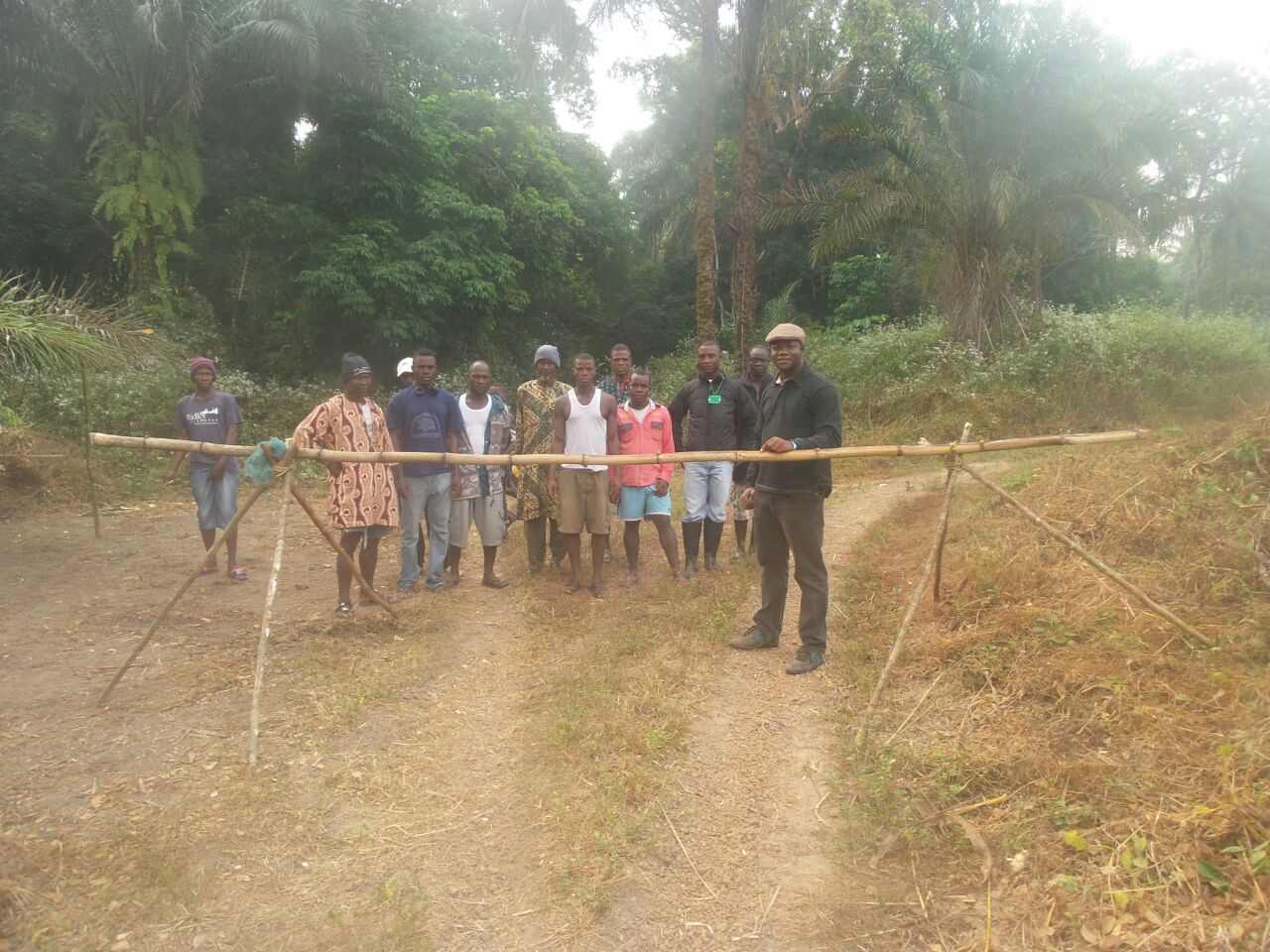
  3. Checkpoints at chiefdom borders manned 24/7 to monitor all movement in and out, and turn away people who are not residents or who appear sick. Checkpoints are strategically placed for vehicle, river and foot traffic.
  4. Continuing sensitization of residents to reinforce Ebola symptoms and actions to protect themselves.
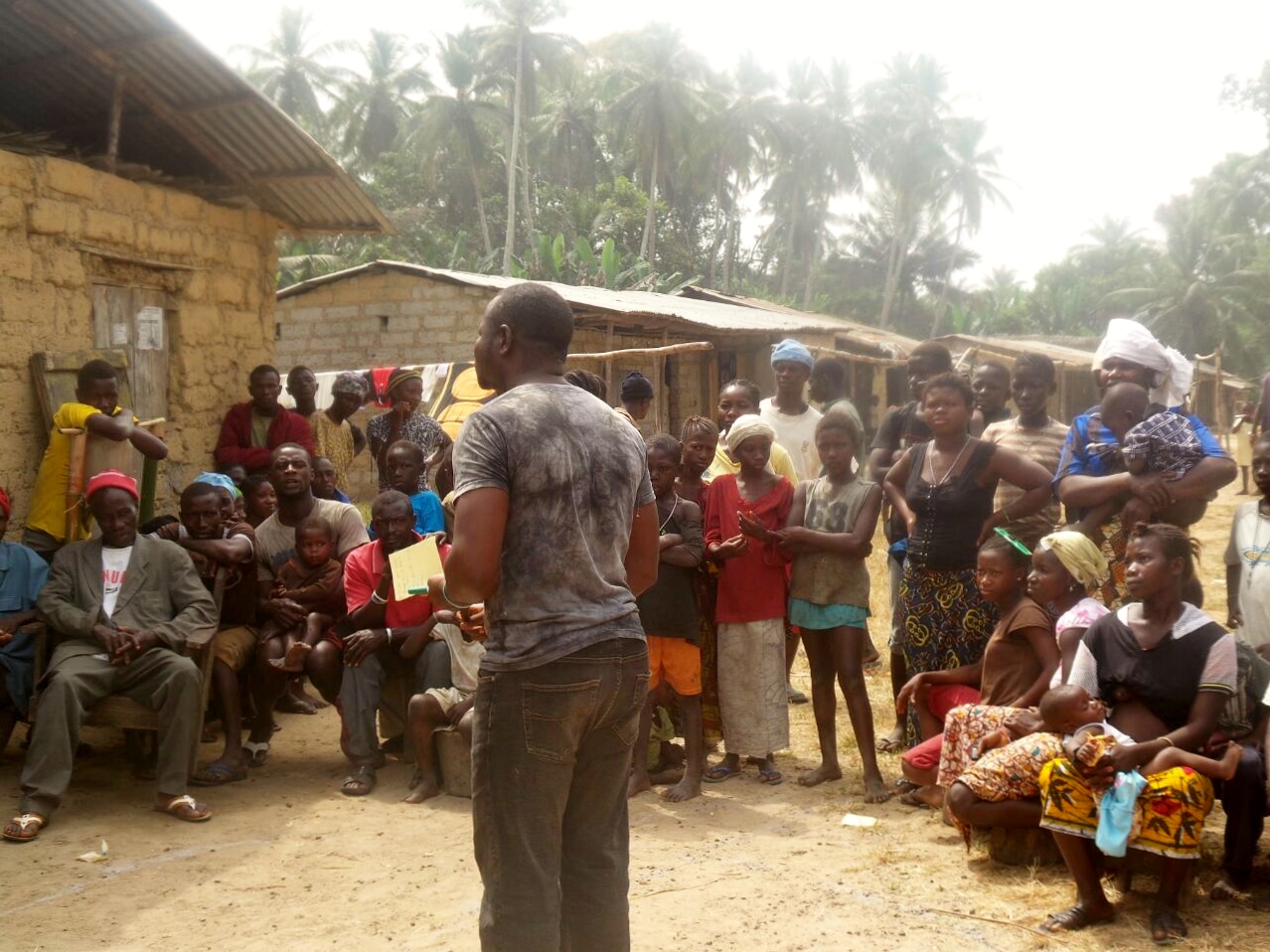
Bumpeh Chiefdom volunteers educate in small villages.

Bumpeh Chiefdom volunteers educate in small villages.

$1.2 million for this program may sound like a lot of money.  But divided among 149 chiefdoms, it averages only $8000 per chiefdom.  This is far less to achieve far more than funding for large NGO programs to “sensitize” the population.  Short one-time visits to towns and villages by NGO staff unfamiliar with the people will not change deep seated behaviors. Many inaccessible villages will be missed.

The paramount chiefs’ plan will not alone be the silver bullet to end Ebola. It has to work in concert with government services to isolate, transport and treat Ebola cases. More hospital beds are still needed. But it’s a major component that’s been missing to date. With Ebola so widespread across the country, a systematic way to identify any and all sick people and dead bodies, and immediately isolate them from the rest of the community has been needed. It’s also the most effective way to influence safe behaviors  countrywide using known and trusted community leaders and repeated contact.

This is why the chiefs call their plan “breaking the chain of transmission.” It goes to the source of the problem at the community level and stops further transmission.  Ebola started locally in a village. It will only end with comprehensive local action.

With Ebola now raging in urban centers in the west and north, the whole country remain at-risk. I asked Chief Caulker what can be done to control these areas. Handle them in the same way as a chiefdom, he said.

Divide a city like Freetown into sections and assign responsible section leaders to coordinate activities like chiefdom section chiefs. Further divide sections into neighborhoods for village equivalents. Use neighborhood leaders to do the daily home visitations and respond to suspected Ebola cases and deaths.

Sounds simple.  But it’s simple, strategic plans that usually works.  Chief Caulker, other Paramount Chiefs and Kenema District have shown what does works. With traditional leaders now fully engaged and funded, a major proven strategy is moving into place. Hopefully, the country can soon call Ebola a thing of past.

Sherbro Foundation is proud to have provided early funding for Chief Caulker’s Bumpeh Chiefdom Ebola program. It saved lives and allowed them to demonstrate the program’s effectiveness.

Arlene Golembiewski
Executive Director, Sherbro Foundation


P.C. Caulker interviewed on role of chiefs in Ebola crisis

Paramount Chief Caulker of Bumpeh Chiefdom talks about being a chief and their role during the Ebola crisis. As leader of the National Council of Paramount Chiefs in Sierra Leone, Chief Caulker was interviewed by Radio France Internationale.  Read the transcript here. 

Paramount Chief Charles Caulker

Paramount Chief Charles Caulker

Most Westerners don’t understand paramount chiefs are distinct from the Sierra Leone government.  They’re a separate form of governance that represents every Sierra Leone resident in every part of the country, and pre-dates colonial rule. They deal with local affairs and are the first level of action in addressing resident safety, including in time of disasters.  In a rural country with difficult roads and many remote villages, paramount chiefs are the first and often the only authority figure their residents will encounter.  Their role is critical for something like the current Ebola crisis.

Chiefdoms enact byelaws to document the customs and practices of the area. Two sets of byelaws on the paramount chief’s role in addressing the Ebola crisis were defined in recent months.  President Koroma has been admonishing paramount chiefs of late to fulfill their role in breaking the chain of Ebola transmission, as defined in the byelaws.  Chief Caulker discusses in the interview the need for adequate resources if chiefs are to deliver this role.

It’s working – No More Ebola Cases in Bumpeh Chiefdom!

December 8th Update:  55 Days & counting  –  No new Ebola Cases!

Chiefdom Ebola Task Force is doing a fantastic job – but they need our continued support.

There are no more Ebola cases in Bumpeh Chiefdom since they embarked on their Breaking-the-Chain-of-Transmission program  October 22nd. Even though they earlier lost 21 people to Ebola and the epidemic rages around them.

Setting up check point.

Setting up check point.

What’s changed? The single biggest intervention is rigorously managed checkpoints at the main roads to stop “strangers” from entering the chiefdom and carrying Ebola with them.  Village chiefs are the next level of defense going door to door daily to verify no one has taken ill and there are no unexpected visitors.  Reporting is real time with cell phones.

Imagine if every chiefdom in Sierra Leone mounted this kind of systematic offensive to identify and isolate Ebola cases for even 21 days.  It would literally break the chain of Ebola transmission and the outbreak would be on its way out.   Read the whole story here.

Sherbro Foundation continues to support Bumpeh Chiefdom in their Breaking-the-Chain-of- Ebola-Transmission program.  Without our donations, they could not have launched this comprehensive effort.

You can make a difference and help eliminate Ebola, too.  Join us and donate at www.sherbrofoundation.org/donate. We need your help to keep this effort going for the coming months.

You’ll know exactly where your money goes, and that it’s actually working to stop the spread of Ebola.

Bonus: 100% goes directly to the chiefdom Ebola program. Every penny. We’re an all-volunteer organization and our small administrative costs are paid by a separate donation.

2nd Bonus: It’s tax deductible for US residents. Sherbro Foundation is a 501(c)(3) tax exempt organization.

Help us even more – forward this to a friend.