“We are sure and proud that what is happening in Bumpeh Chiefdom is not happening in any other chiefdom.”
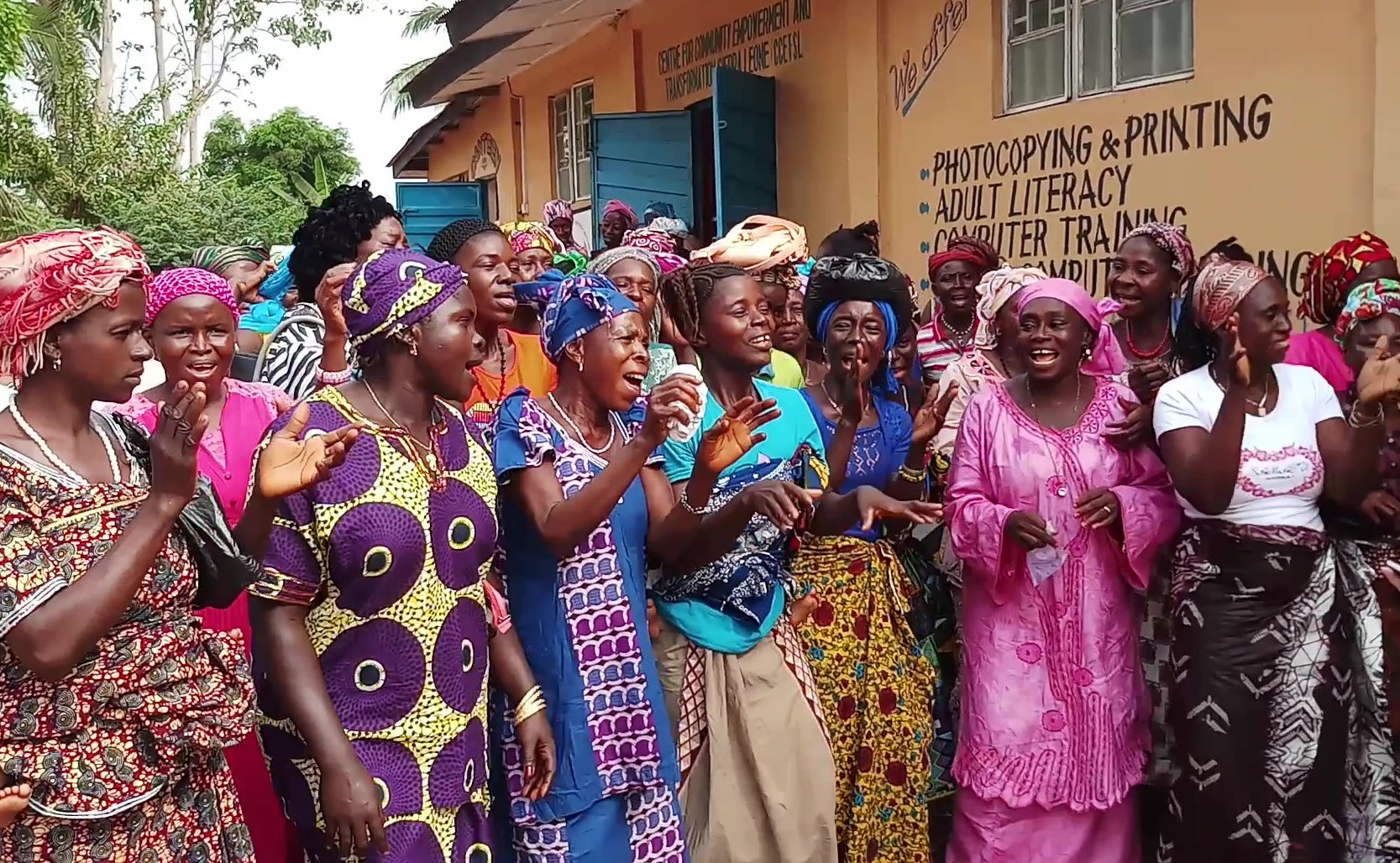
Before we reached the CCET Center to meet women from the Women’s Vegetable Growing project, we could hear them. Bumpeh Chiefdom women greet visitors with a welcome done in song. See video. (It may take a moment to load.) Their distinctive style with voices in harmony sounds like a minor key. They’re singing as one with syncopated clapping. You feel embraced by their warmth.
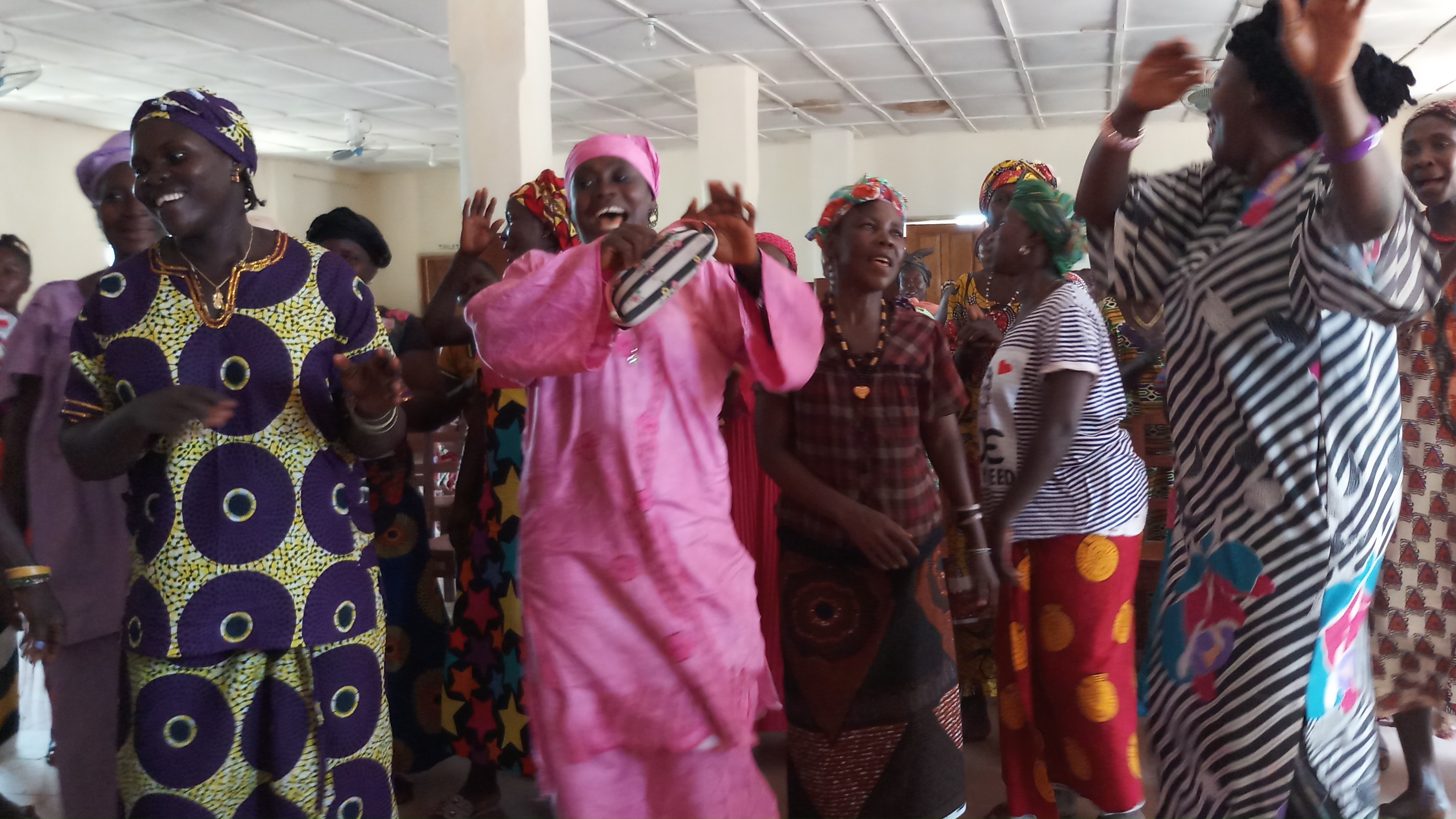
As we took our seats inside, the hall was thundering with the women’s song and clapping.
Their welcome song is one they sing among themselves while working as teams in each other’s gardens. They sang that if they are united and help each other, together, they will all individually benefit. There’s a Sherbro word for unity and working together: Lomthibul.
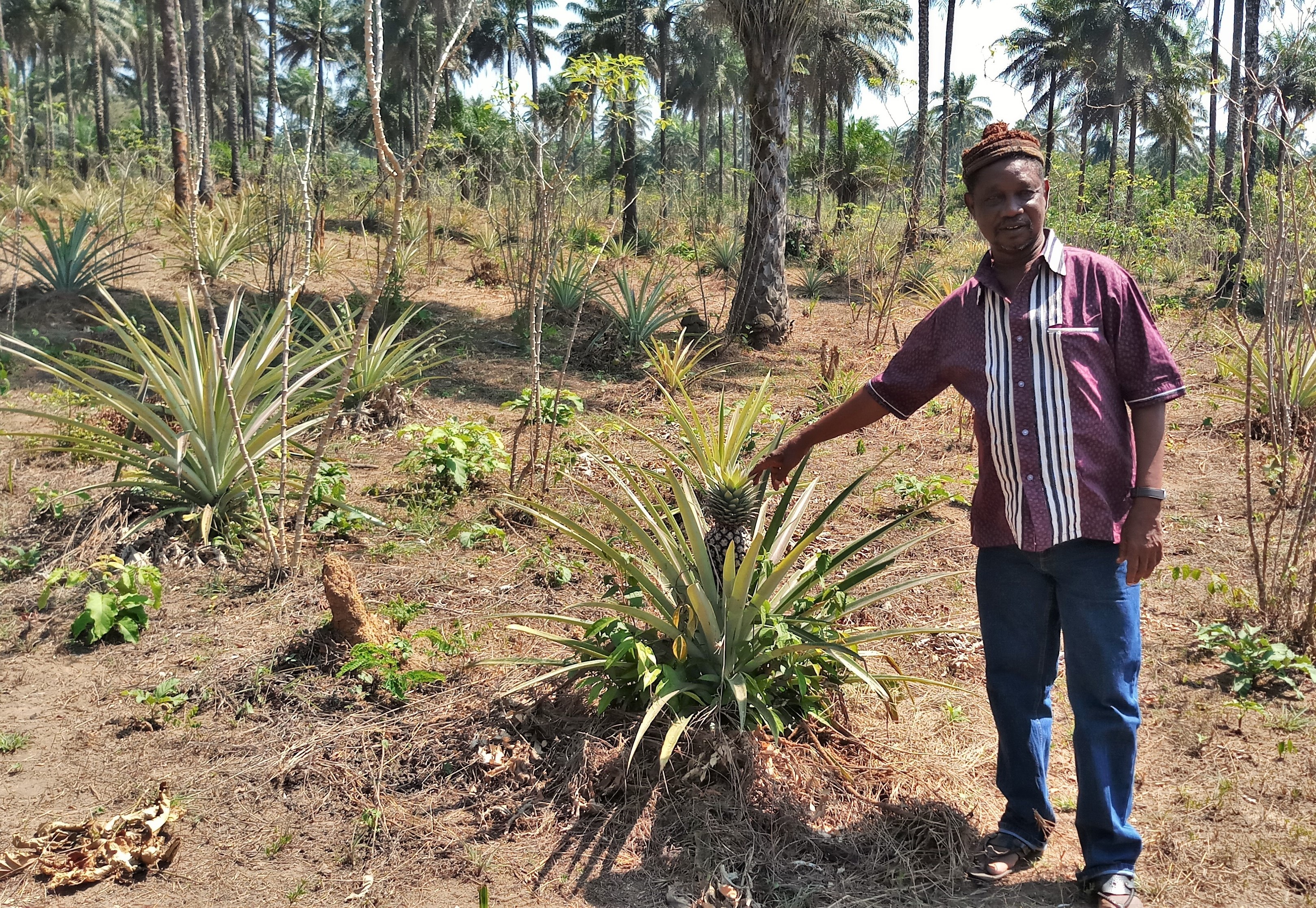
They gathered to thank us for helping them grow groundnuts (peanuts) in a project they say is not found in any other chiefdom.
Started in 2015 as an Ebola relief effort, Women’s Vegetable Growing is now entering its fifth year. Sherbro Foundation funded it for three years, with Rotary Clubs stepping in last year.

The women are proud to be part of the program, as they should be. They receive a modest grant of two bushels of groundnut seed, a drying tarpaulin and a 100 lb. bag of rice. With that, they grow enough groundnuts to sell for income and keep seed for another harvest. For once, they have their own discretionary income they use to feed and care for their families.
In 2018, the program started supporting women for two harvests to give them a strong enough base to then keep planting and gain self-reliance.
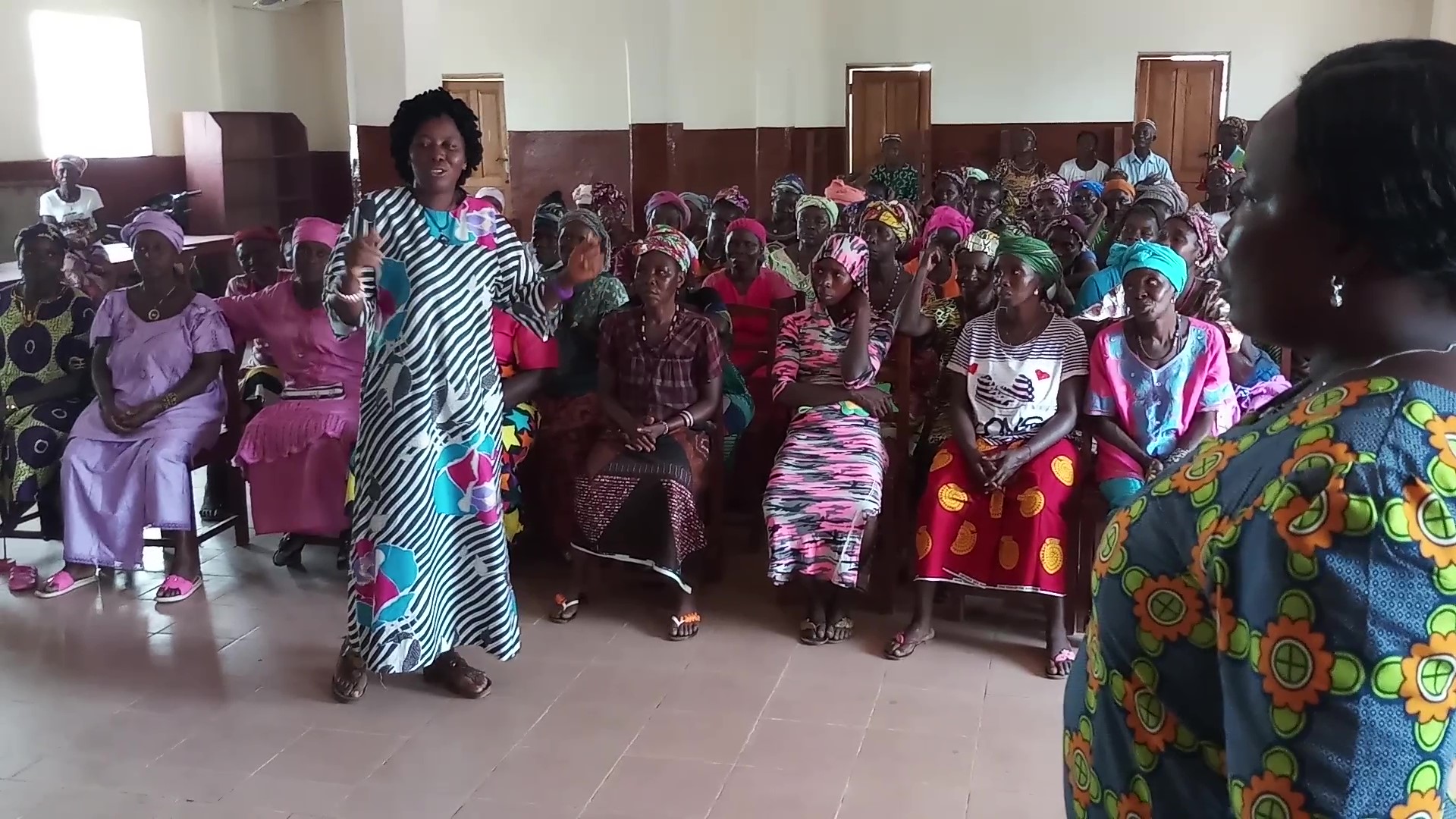
As we sat together, their spokesperson Hawanatu Sesay (above) explained, income in this rural area is dependent on agriculture. “Our only means of survival is though agriculture.”
These were representatives of the last group of 106 women selected for the project because they’re mature and vulnerable. “Most of us are widows. Some lost their husbands, and other men are not able to work now; they’re too old. Some [don’t take] responsibility for our welfare.” Hawanatu herself is a widow. She has more education than most, dropping out of junior secondary school to marry when she became pregnant. Her husband died and left her with two young children. She depends on her garden for income to feed her children.
When women first join the project, Rosaline Kaimbay, director of CCET-SL (the Center for Community Empowerment & Transformation) (above, right), explains the goal is to help them transform their own lives. They’re being helped with funding from Sherbro Foundation and now Rotary Clubs.
Today, the women told us, “Indeed, it’s a reality. Our lives have been transformed and we’re happy!”
They no longer need to rely on men to feed their families. “When we don’t have money, we take a few groundnuts [we grew] and sell them in the market and buy what we need to cook.”
“Before this time, ” Hawanatu continued, “our children were forced into early marriage because we don’t have much to give them. They go to school hungry. Because of this, they’re prone to getting boyfriends who give them money [and get them pregnant]. Now, we’re able to feed our children and they don’t get into early marriage.”
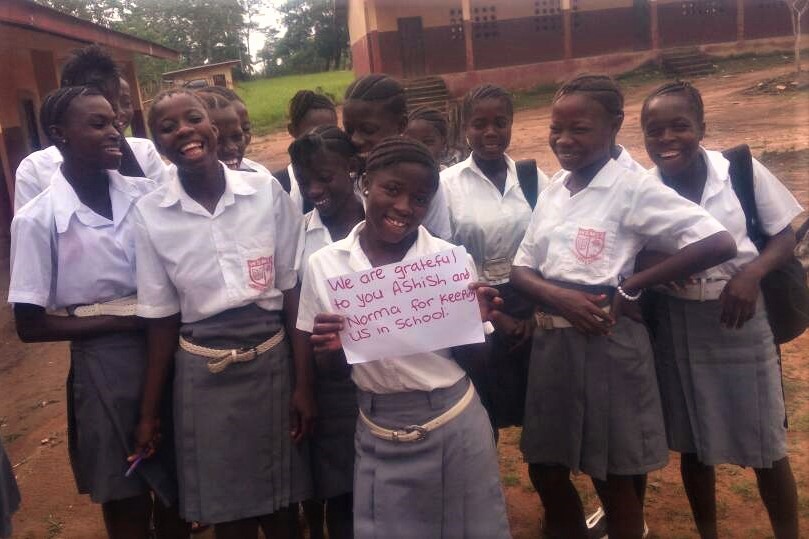
The women are also grateful to be beneficiaries of other CCET-SL programs. “You’ve given our children [in the girls scholarship program] uniforms and books. Through your help, some of our children are now at university with the college scholarships you’ve given them.”
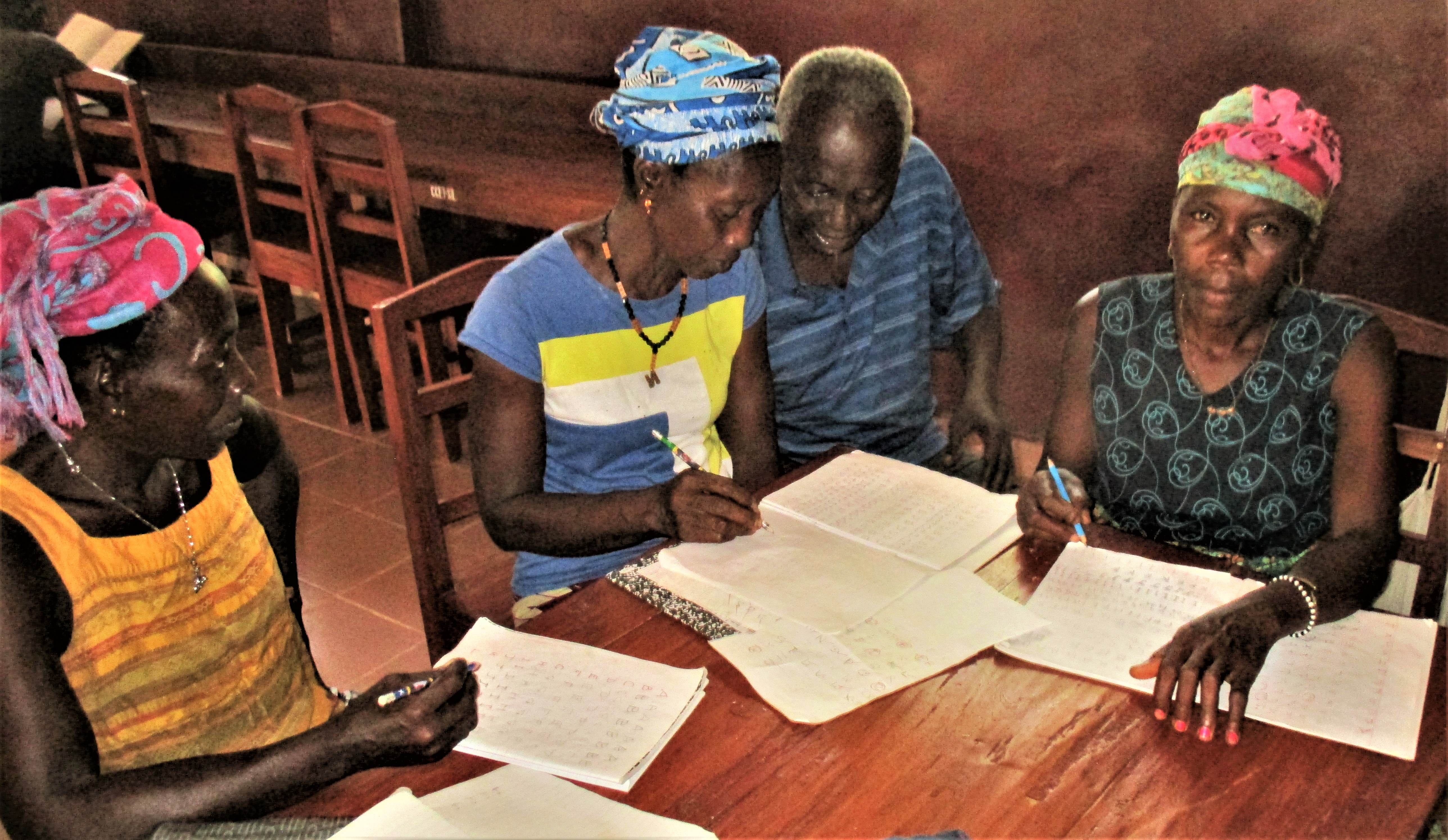
“Through the efforts of CCET-SL and the Adult Literacy program (above), most of us are now able to sign our names. Before, we were unable to read the [school] results of our children. Now we can look at their [report card] and see whether they passed their exams or not.”
The women also appreciate their 9th grade children could participate in the after-school tutoring program preparing for them for the senior high entrance exam, the BECE. They saw their children being fed three times a day in the intensive study camp before the exam – while they only have money to feed once or twice a day. “Because you did this, most of our children passed their BECE exam and we’re grateful.” All these things “are a big lesson to us.”

By now, tears were rolling down my face as I recalled the dark days in early 2015 when Ebola was nearly over, but a 3-year economic crisis just starting. We asked Bumpeh Chiefdom’s Paramount Chief Charles Caulker what Sherbro Foundation could do to help. Fund women to grow vegetables as a quick way for them to earn income, he said. The women today rightfully said Chief Caulker is “the brains behind this program.”
Women’s Vegetable Growing has grown from the first group of 30 to 106 women last year. By investing in them with several programs, CCET-SL enables the women to focus on growing groundnuts and maximize the seed they save to grow another and larger next crop. Nearly 400 women in total have been supported to move towards self-reliance. With families of five and more, the community impact is significant.
The women are proud to also contribute to the success of the program. It’s become a tradition spontaneously started by the first group of grateful women growers that they donate some seed back to help the next group.
“Because we are united, that is why the groundnuts you’ve given us we’re able to reproduce them and help other women. We’re happy and proud to help other women.
When starting a new program, you hope it will be embraced by the community and beneficiaries helped in a measurable way. It’s a priceless reward to now hear these women as a group say their lives have been transformed.
Let me thank all who have supported Women’s Vegetable Growing over the years. I hope you, too, now feel rewarded by your generosity.
We hope to expand Women’s Vegetable Growing with new funding to help the most successful of these women entrepreneurs develop their gardens into small businesses. They can then hire workers, creating local wage-paying employment.
Women farmers have great potential to become a driver of local economic development. As they said, they are united.
—- Arlene Golembiewski, Executive Director


 Goodall returned to the
 Girls in CCET’s tutoring program waiting to start their senior-high entrance exam.
 Why the title Eat. Pray. Learn?
 And prayer in all faiths, left, is part of the camp day. At day’s end, tables were pushed to the side and girls spread out on the floor to sleep dormitory style.
 We especially want to congratulate Bumpeh Academy who had the highest exam results (all students, boys and girls) among schools in 3 adjoining chiefdoms.




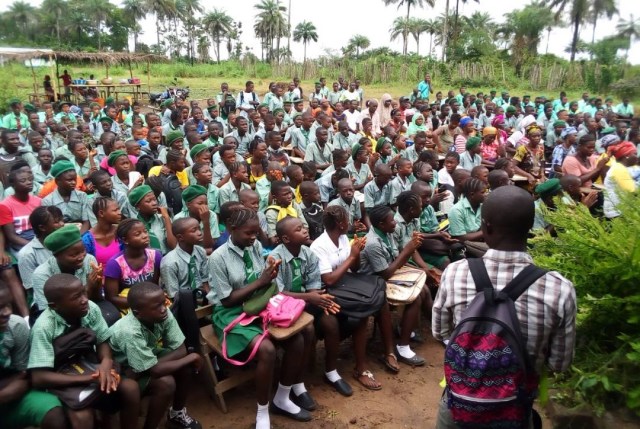 Students at Bumpeh Academy Secondary School assemble for the scholarship award ceremony.
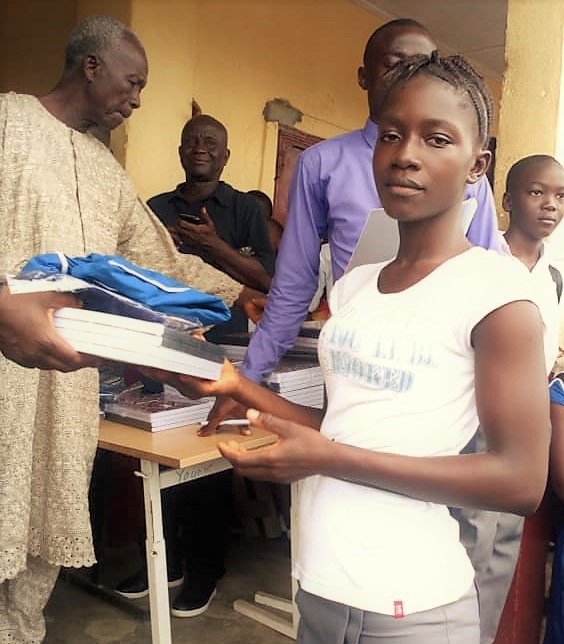 Bumpeh Academy Acting Principal Daniel Koroma said schools are full to overflowing with students this year after the new Sierra Leone government announced its “free education” program. It paid school fees for all students for the first time and deposited the money before the first day of school.
 When the scholarship award gives girls a second uniform, it also helps keep them in school. Many students walk four, five, even six miles each way to school. If they arrive home at 4 p.m. soaked in the rain or hot and sweaty, it’s late to wash their uniform.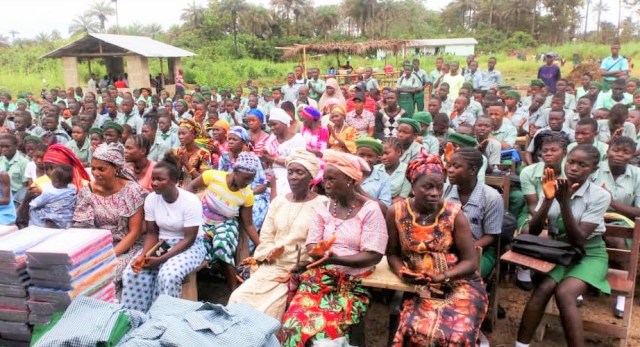
 We’re especially pleased to welcome Junneth Kamara back to school with her scholarship, left with Bumpeh Academy Principal Koroma.
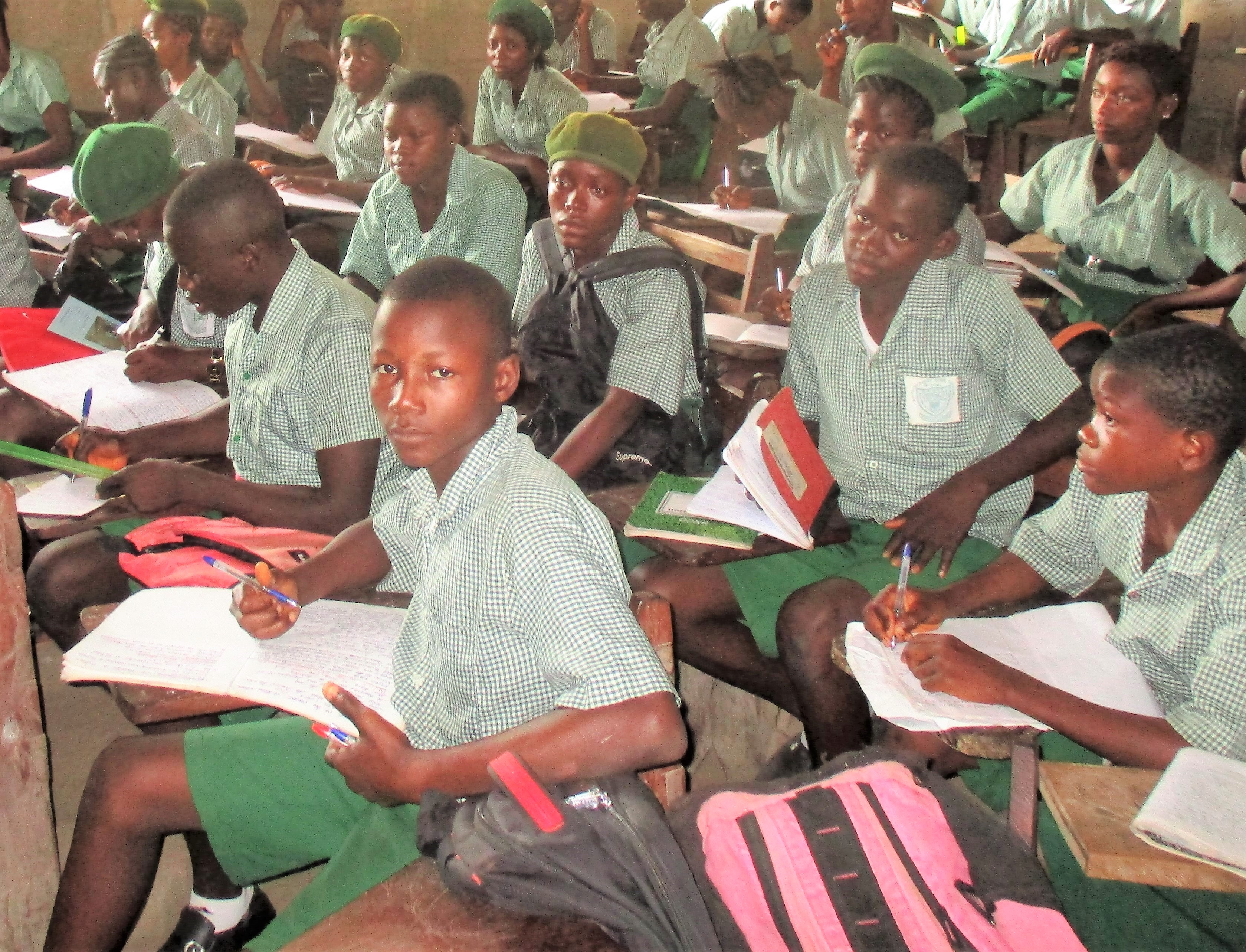
 In schools without text books, students must take notes teachers write on blackboards.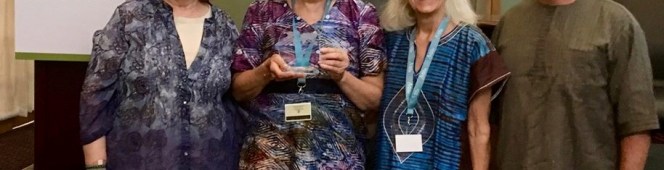
 Arlene received the Shriver award at the NPCA annual conference. L to R with Sherbro Foundation Board members: Chris Golembiewski, Arlene, Cheryl Farmer, Steve Papelian.


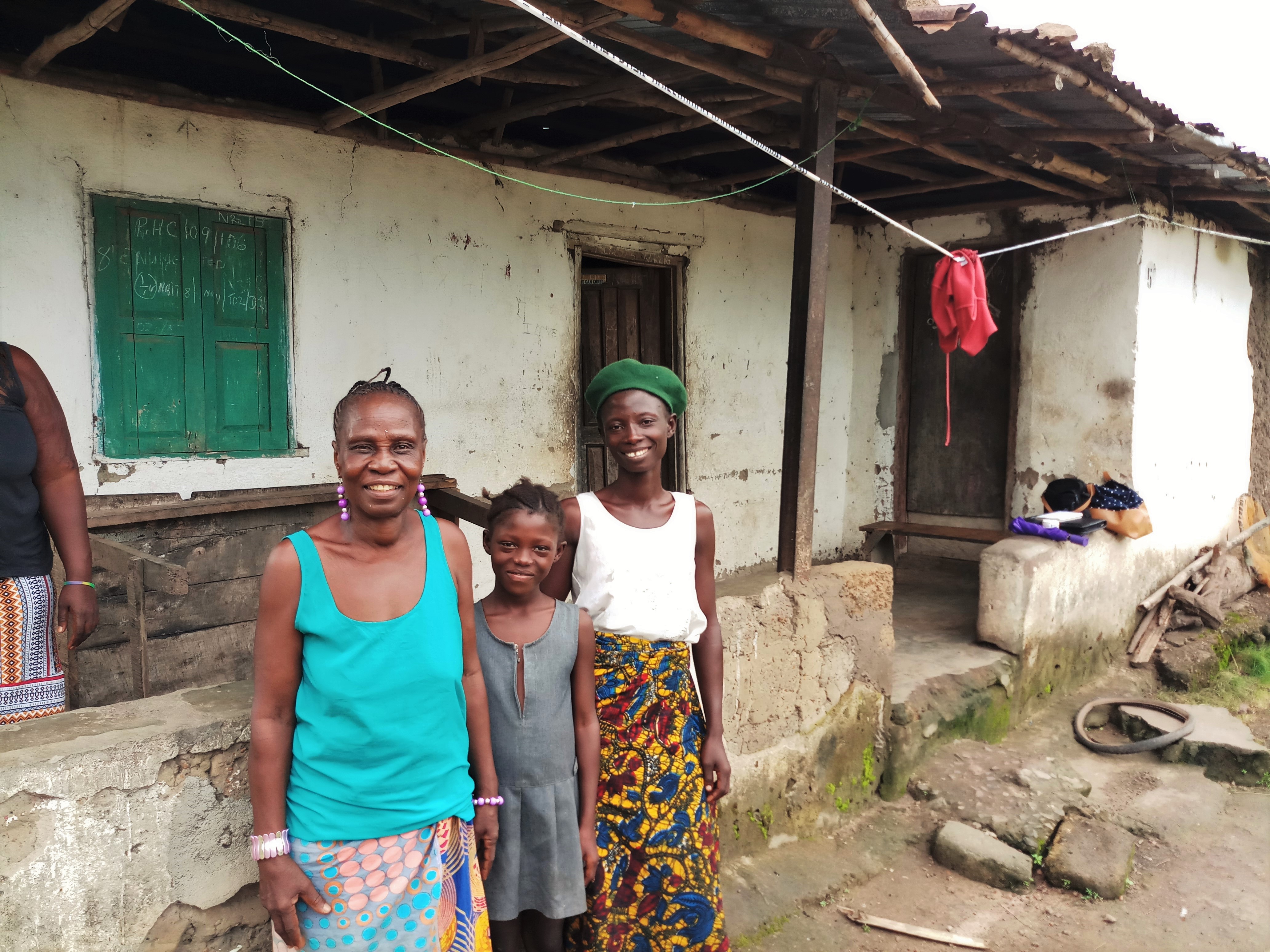
 Junneth grows sweet potatoes, (left), corn, yams and eggplant to eat and to sell in the market for money to live on. You’ll see her in a nearby river after school catching fish to eat.
  She explained, an educated woman can work and improve the community. People respect her. Men respect her. When a woman can earn a living and help the family, it helps her marriage. She said, “If I learn, I also [will] have something. He will give; I will also give.” A two-career couple is needed in Sierra Leone to move away from subsistence farming to a more middle class life, just as much as it’s needed in the US.
 Mrs. Kaimbay arranged a scholarship, asked Bumpeh Academy to enroll Junneth in school and gave her a uniform. She became a proud 10th grade student, in her first year of senior high, picking up where she left off years before.

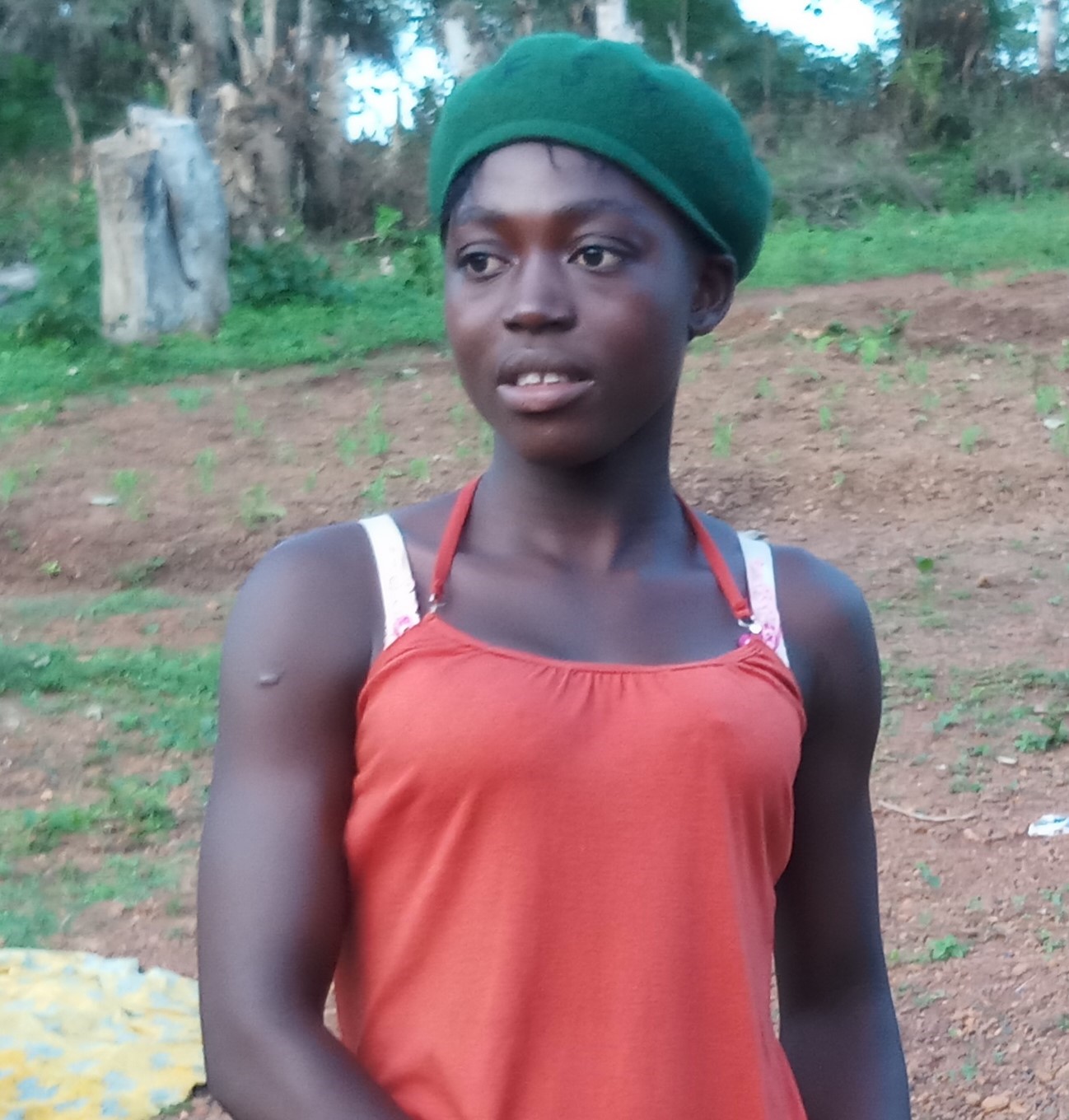 Fatmata’s not sure how old she is. We estimate she’s 17. Her
 “She made a good choice to stay here,” said our local partner CCET’s Managing Director Rosaline Kaimbay. “She’s determined to learn. We need to motivate her. I love the girl. So bold. I will follow her progress.”
 During that tumultuous time, Fatmata had to repeat her first year of junior high. She’s continued to advance to the 9th grade with four SFSL scholarships.
 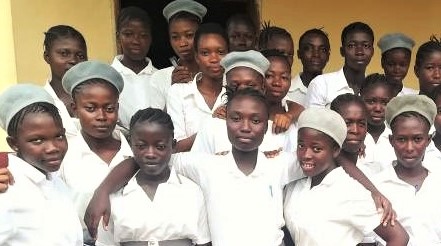 Many other bright girls are eager to keep learning, often after interruptions in their educations.
 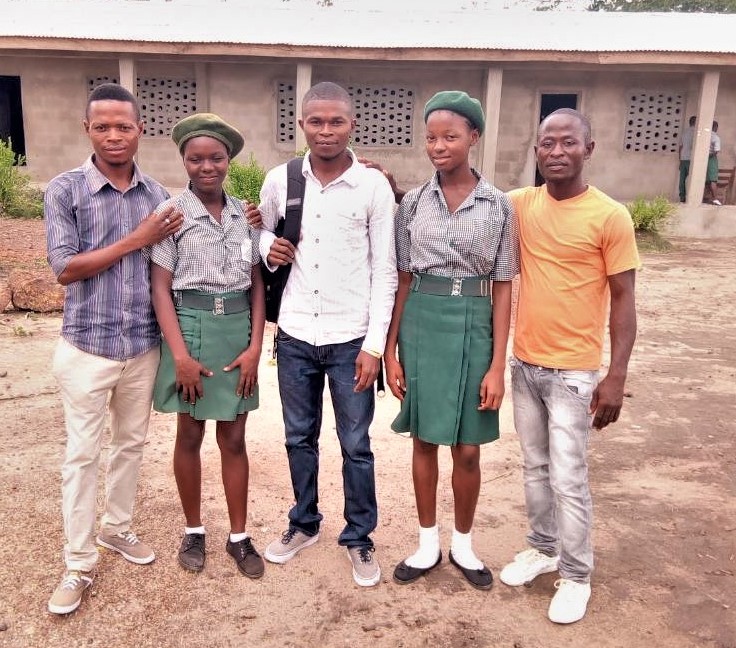 Isatu, an orphan in senior high, just completed 12th grade. She’s awaiting the next national senior high completion exam. She could be a candidate for our new college scholarship program.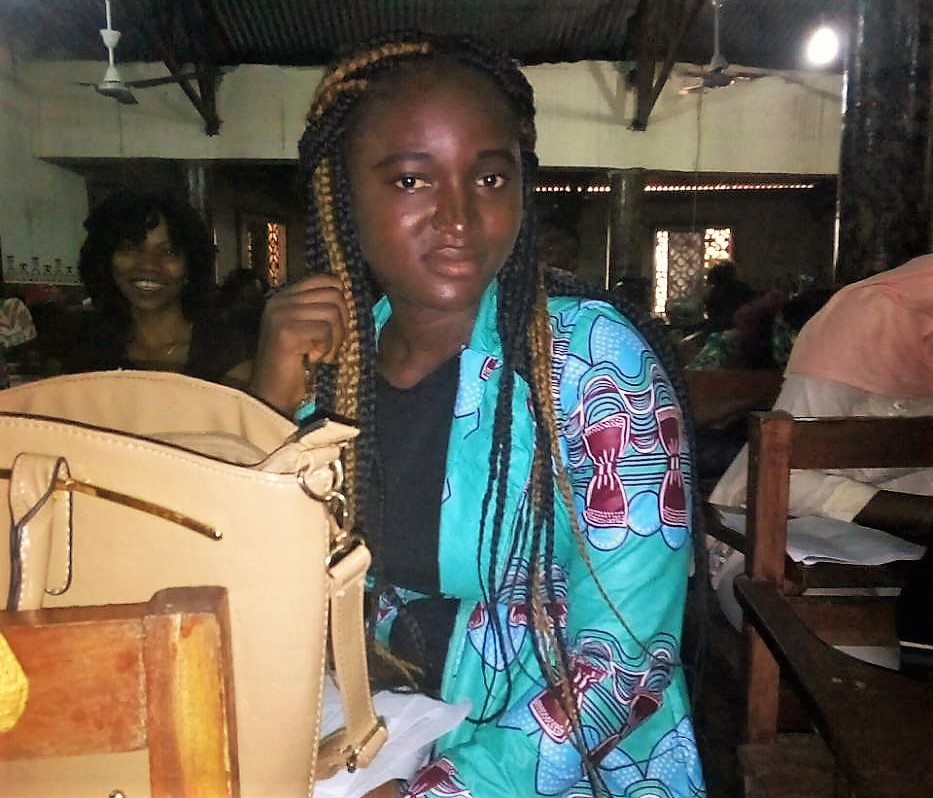
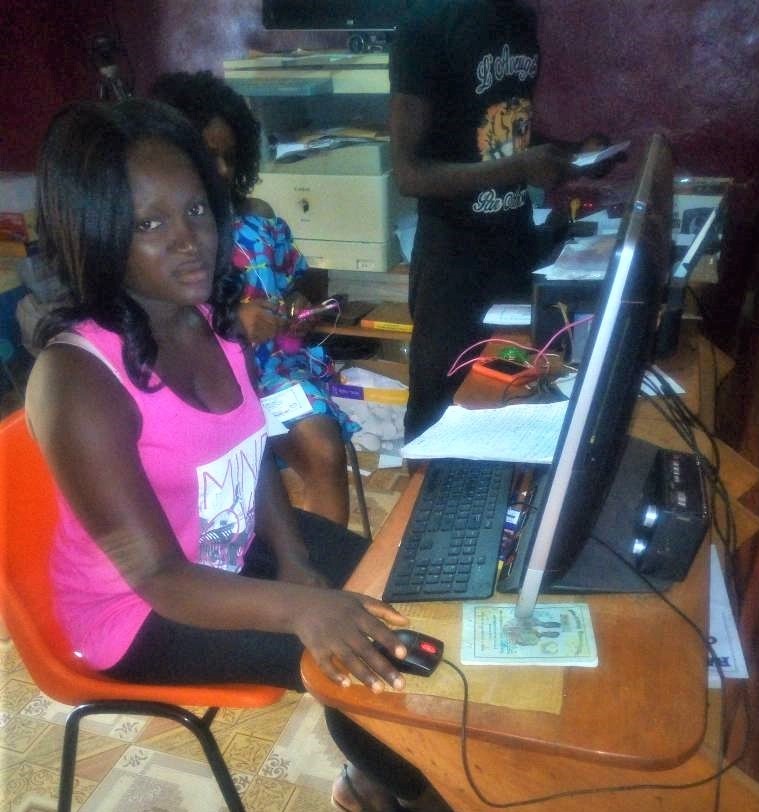 AK: The high cost of transportation and high Internet cost. I can’t afford a computer laptop and a modem to do the required research.
 AG: You have a change of government, with the new president making education his first priority. What are you students hoping to see change with the new administration?
 Aminata Kamara, left, recipient of our first college scholarship is in her first year at the University of Sierra Leone’s Institute for Public Administration and Management in Freetown.


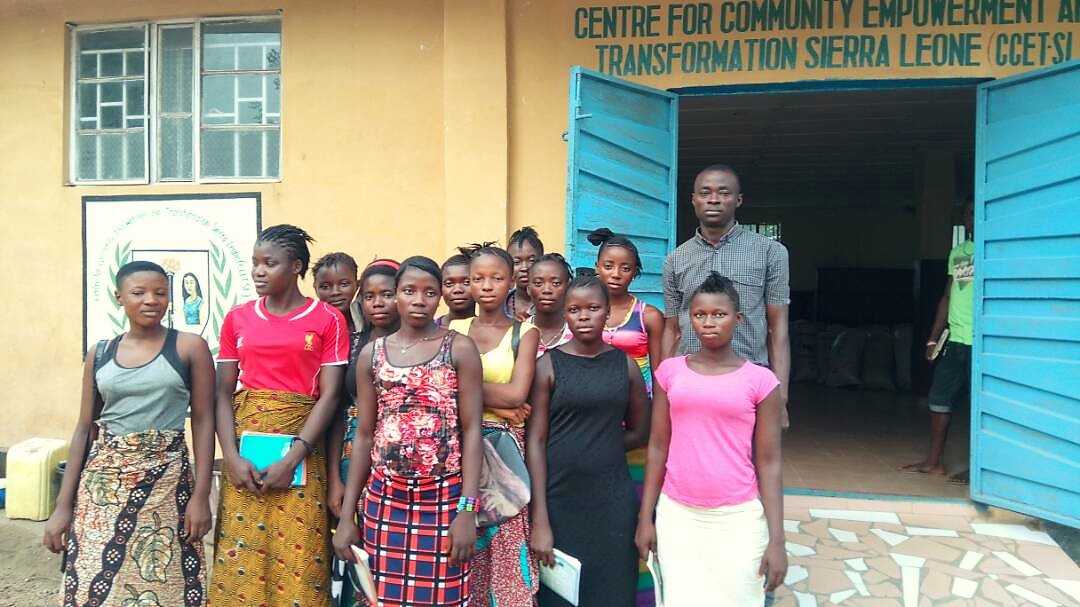 She’s brought the most qualified local teachers together to provide evening classes that complete and intensively review the school curriculum. 9th graders in schools without qualified teachers now get the chance to be fully prepared for their national proficiency exam.
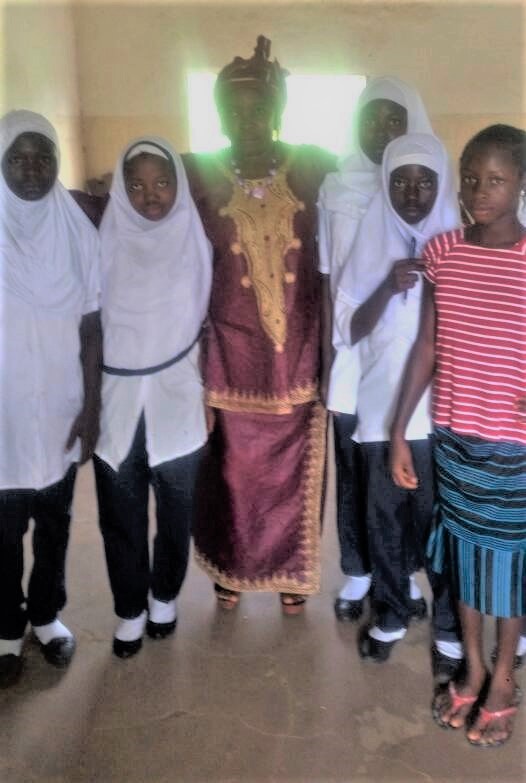 Mrs. Kaimbay is focused on the success of the chiefdom’s teens.
 Sherbro Foundation