Giving Thanks in Sierra Leone

Giving Thanks in Sierra Leone

Thanksgiving came early for me this year. I hadn’t planned my trip to be in Sierra Leone on the day the country was declared Ebola free. But I was grateful it worked out that way.

November 9th, the actual day, was quiet and rather anticlimactic. This chiefdom, like much of the country, hadn’t had an Ebola case since mid-January – ten months ago.  November 9th was a day for reflection, to remember those who lost their lives, especially health care workers.  It was a day to give thanks that the chiefdom and the country were delivered from this scourge.

Bumpeh Chiefdom’s Ebola Committee decided at the last minute to have a small ceremony while I was still in the country to thank Sherbro Foundation for our support in their Ebola fight.

I was honored to accept their thanks on behalf of all Sherbro Foundation donors who came forward to help during Ebola’s darkest days.
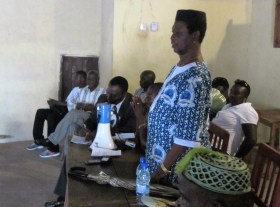
Paramount Chief Caulker recognizing Nov 9th, the Ebola-free date.

Paramount Chief Caulker recognizing Nov 9th, the Ebola-free date.

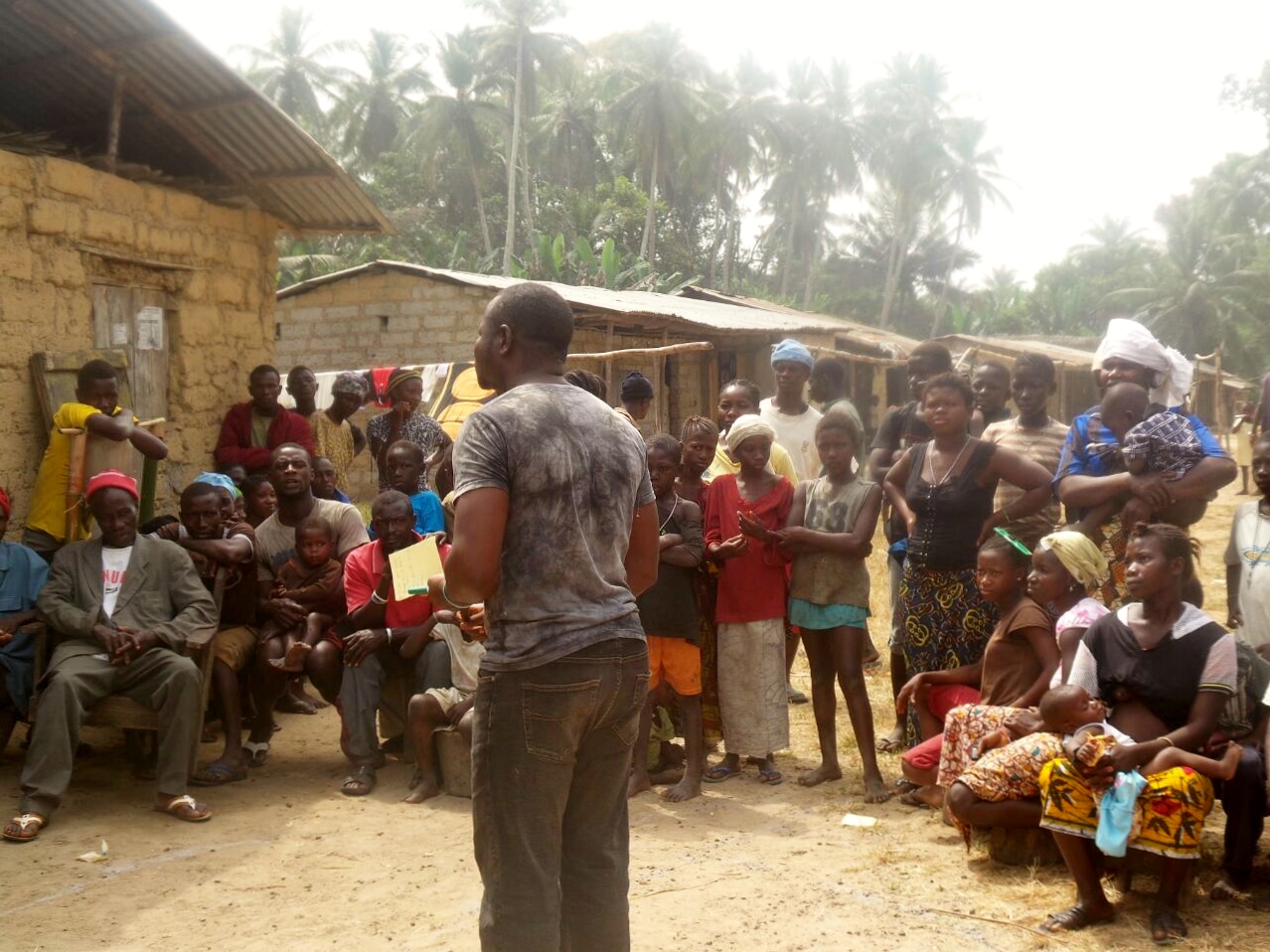
One by one, leaders of the community came forward to thank Sherbro Foundation. An Imam and a Christian minister offered prayers, with people joining in to recite both.

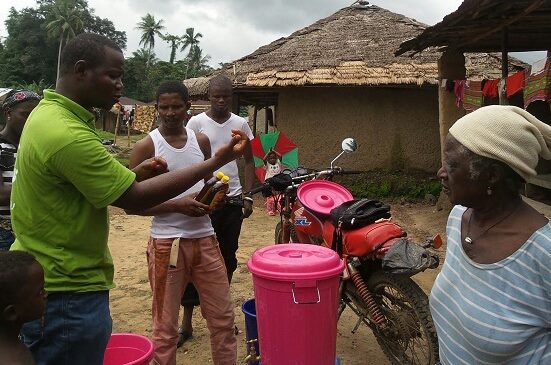
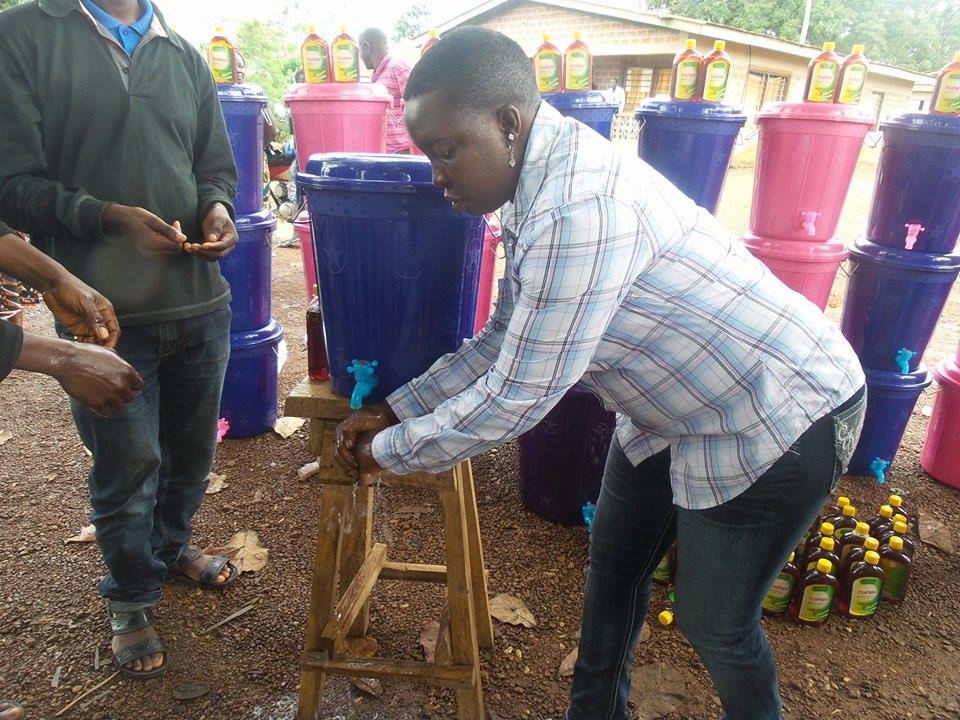
A representative of village chiefs and a section chief were grateful SF funded over 300 hand washing stations they set up early when no other funding was coming. These were the chiefdom leaders on the front line as the epidemic was spreading. A year ago, it was unclear how easily the Ebola virus could be transferred with casual contact. It was a frightening time and people avoided each other. They didn’t know who they could trust.

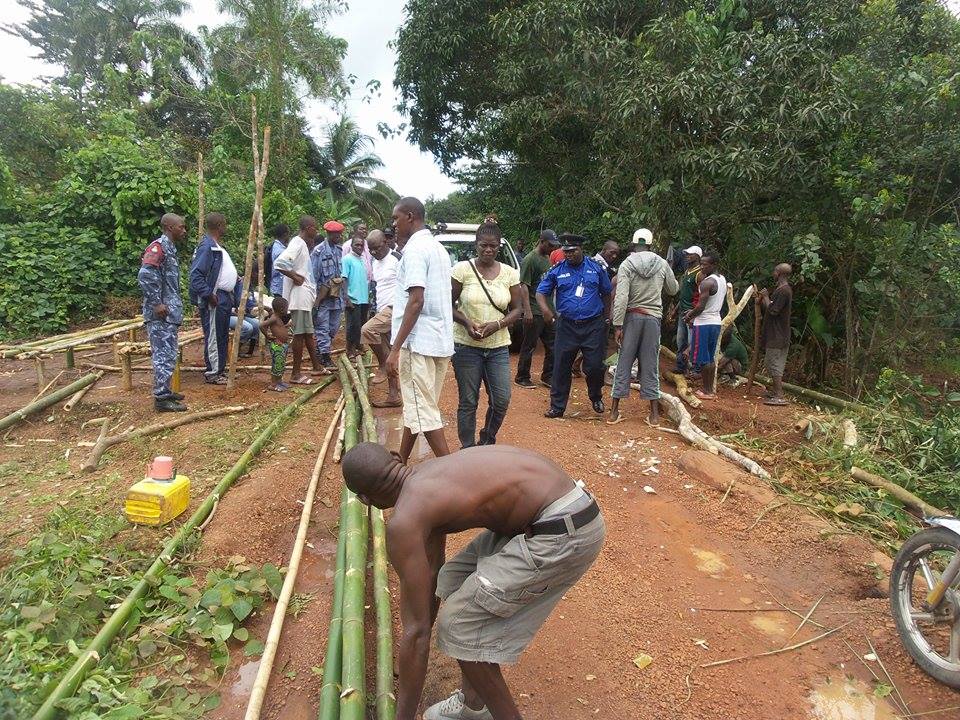
The Local Councilor and Chiefdom Speaker were grateful SF stayed in touch throughout the outbreak and just asked, how can we help. When the Ebola Committee recognized they needed a more aggressive approach to keeping Ebola from entering their chiefdom, SF quickly responded. They thanked us for funding them to staff checkpoints, do house to house checks in every village and stop unsafe burials.

Paramount Chief Caulker has been vocal throughout that the chiefdom could not have done what they did without Sherbro Foundation support.

But as I was accepting their thanks, I was silently thinking, who’s more grateful?  Them, or me?

I was grateful lives were spared and my friends were safe.

I was grateful SF could play a role in enabling this chiefdom to become a model for the rest of the country in stopping Ebola.  I was never more proud to be part of an organization’s work than when I saw the dramatic 80% drop in Ebola cases last January as chiefdoms around the country implemented programs like Bumpeh Chiefdom’s.
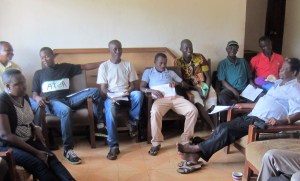
IMG_4552I was grateful to work with our remarkable partner, the Center for Community Empowerment & Transformation who volunteer their efforts to protect and now develop their chiefdom.  They shifted from fighting Ebola to reopening schools closed for nine months to restarting our projects without missing a beat – all within a few months.

I was grateful to see children back in school – and more Bumpeh Chiefdom girls in secondary school than ever before.

I was grateful to go to the new community bank and see 1249 new savings accounts opened for newborn babies that can grow to fund their future education – more baby accounts than adult accounts.
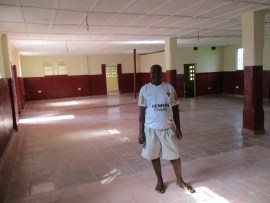
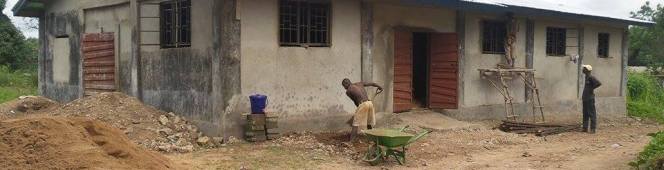
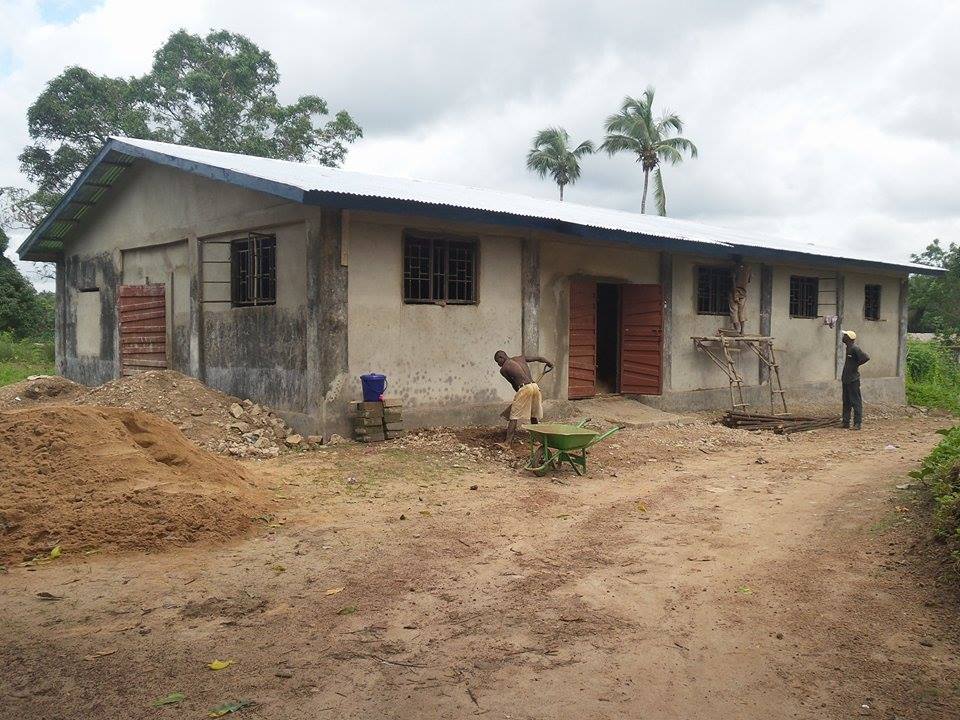
IMG_0104I was grateful to see the computer center built during the Ebola outbreak finished.  The floors are tiled floors and it’s wired for power we’ll bring over from a nearby solar system. Come February, we should be able to start initial computer and adult literacy classes.
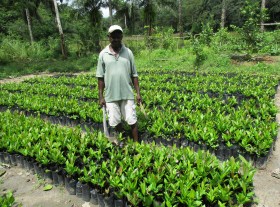


IMG_0138I was grateful to see our dream of transforming the chiefdom by planting fruit trees is becoming reality.  15,000 tree seedlings were planted this year that will transform six villages economically and environmentally.  I saw thousands more fruit trees started from seed growing in two tree nurseries, awaiting planting in next year’s village orchards. And plans to start thousands more in January – February.


IMG_4684I was grateful to see firsthand the work spreading to the community level. More than a hundred people in six villages took ownership to clear 10-20 acres each and plant their community orchards.  Orchards that will provide income for them to build schools, dig wells, send their children to school and protect the environment for years to come.

All this had been done, in spite of the Ebola crisis.


I think most people just want to feel they’ve made a difference in the world and someone’s life has improved because of their efforts.  

I had ample evidence on this trip that Sherbro Foundation’s collaboration with Bumpeh Chiefdom was doing just that.

This work gets done because of the generosity of Sherbro Foundation’s donors. We are deeply grateful for all you have done to make this possible.

So, when you’re sitting around the Thanksgiving table this year giving thanks, pat yourself on the back for reaching out and making a difference in Sierra Leone. I’ll be thinking of you and thanking you again.

——- Arlene Golembiewski, Executive Director
Girl Scholarship Students Dream Big – I Want to Become President

Girl Scholarship Students Dream Big – I Want to Become President

Going to secondary school should be about more than reading and writing. It should be a place where Sierra Leone girls learn what’s possible in life. They should learn to dream big at this early age.

Form 5 (11th grade) student Adama Sankoh at Bumpeh Academy has a big dream. When asked what she wants to do after finishing school, Adama said,

“I want to become a president.”

She’s clear on where to start. “Education is the only way I could change the social and economic status of my family. School prepares my mind to be useful and influential in my community and country as a whole.”

IMG_0257

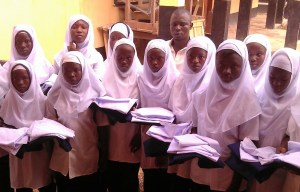
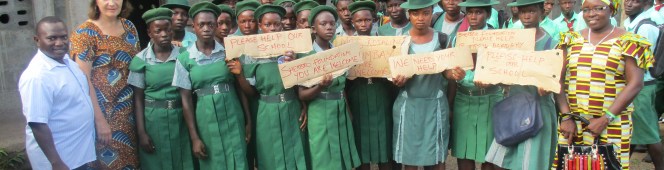
Bumpeh Academy Principal David Rashid Conteh, Arlene, BA scholarship students, CCET Executive Director, Rosaline Kaimbay. Adama is front row, 3rd student from right.  Signs read: Sherbro Foundation, You are welcome. Please help our school.

In school, Sierra Leone girls like Adama are being exposed to the opportunities open to them beyond the small rural communities they come from. Even becoming president. They’re learning the first practical step to achieving those dreams is completing their education.

Sherbro Foundation’s girls scholarship program helped 150 Bumpeh Chiefdom girls continue their education for the school year starting August 2015.

My motivation for starting the girls scholarship program in Bumpeh Chiefdom was simple.  I wanted girls to learn to dream big and start on the path to reaching their full potential with education.  I’ve met more high potential Bumpeh Chiefdom girls like Adama who want to become doctors, nurses, lawyers, journalists, teachers, accountants. Their first step – completing secondary school – is still a hurdle and huge accomplishment for most girls in Sierra Leone.

Sherbro Foundation helps eliminate financial barriers to girls attending secondary school. This year we provided school uniforms for girls in five Bumpeh Chiefdom schools.

The Sierra Leone government paid school fees this year with post-Ebola funding. But uniforms cost as much as school fees, and present a big burden for parents still recovering the past year’s Ebola crisis.

Sherbro Foundation’s 2015 scholarship program helped remove that barrier for 150 of the chiefdom’s most vulnerable girl students. The program is administered by our local partner, the Center for Community Empowerment & Transformation (CCET). Here’s more of this year’s scholarship students.

—– Arlene Golembiewski, Executive Director

WSSS scholarshipsWalter Schutz Memorial Secondary School students


2015 scholarships WSSS, Ah, BAScholarship awardees from three schools flanked by CCET Executive Director, Mrs. Rosaline Kaimbay (left) and CCET Child Welfare program director, Abdul Foday (lower right).  Schools left to right: Walter Schutz SS, Ahmadiyya SS, Bumpeh Academy SS


Ahmadiyya scholarshipsAhmadiyya Islamic Secondary School students


2015 scholarship Mosimbara bEarnest Bai Koroma Junior Secondary School in Mosimbara village, Bumpeh Chiefdom’s newest secondary school. Children from small villages can start secondary school here close to home, and later transfer to Rotifunk for senior high.


2015 Bellentine primaryVain Memorial Primary School, serving six villages in Bellentine Section.  Primary school students got 2 uniforms each. Mothers of many children in this school are in our Women’s Vegetable Growing project.

Back from a month in Sierra Leone

Back from a month in Sierra Leone

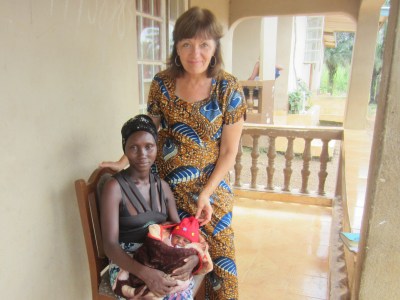
IMG_4630I’m just back Sunday from a month in Sierra Leone. Word is getting out to Bumpeh Chiefdom families about the Newborn Baby program. Kadijatu Kamara seen here presented herself to me with one-week-old Sheikfuad. She wanted to get him registered so he’ll have his education fund bank account opened and get three fruit trees to plant.

It was gratifying to be in Sierra Leone last week when they reached 42 days with no new Ebola cases and were declared Ebola-free. Bumpeh Chiefdom’s Ebola Committee warmly recognized Sherbro Foundation’s support in their Ebola fight – one that led to them being recognized nationally as a model program.

Big thanks go out to all Sherbro Foundation donors.  It was you who made that happen and you who helped save lives.

It was a great trip back to Sierra Leone – my first in two years.  All our projects are moving forward.  Our local partner the Center for Community Empowerment and Transformation mapped out big plans for 2016 that we are excited to assist them with. Look for more news here soon.

—- Arlene Golembiewski, Executive Director
Growing a Baby’s Future

Growing a Baby’s Future

Baby snip it 2

Join Sherbro Foundation’s fall campaign – sponsor a baby   

Only 30% of children in Sierra Leone can afford secondary school.  Without education, children are born into poverty and never escape. The post-Ebola economic crisis has made getting an education even harder.

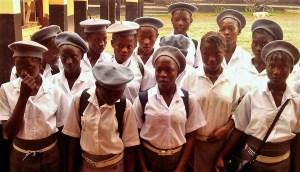
Growing a Baby’s Future empowers Bumpeh Chiefdom parents to start saving for their child’s secondary education right after birth by providing 3 income-producing fruit trees to raise.

We also open a bank account for the child, paying the minimum balance. The program combines an old tradition of planting a tree with the baby’s umbilical cord and the new practice of education savings accounts.  Parents learn a culture of saving for the future – and gain a living safety net.

To make every child count, we are helping the chiefdom start a birth registry.  UNICEF reports “one in three children doesn’t exist.” In Sierra Leone, even fewer births are registered. Without birth certificates, people can be denied birthrights of land ownership, voting and health care.

For $20, please help parents secure their child’s future

www.sherbrofoundation.org/donate

Do good with good value

How We Spent Your Money

How We Spent Your Money

Sherbro Foundation Board members get annoyed with organizations we only hear from when they want money from us. We don’t want to be one of those organizations.

Rather, we want to let you know how we spent the money you already sent.  Below is a newsletter covering key projects over the last fifteen months.  You can judge if it was well spent, and whether you want to support us again. Or start supporting us.

If you’d like to subscribe for future e-news, please send an email with “Subscribe” in the title to sherbrofoundation@gmail.com . We only plan about three each year and the occasional special message.  We won’t flood your inbox.   (Likewise, send an “Unsubscribe” message to stop receiving them.)

Are you now thinking now, oh, they haven’t spent my money because I haven’t sent any. You can easily remedy that at http://www.sherbrofoundation.org/donate .

Thank you. Together, we are making a real difference in the lives of people in rural Sierra Leone.

Arlene Golembiewski
Executive Director

Letterhead


Eliminating poverty through education and economic empowerment
August 2015
Veg project distribution ceremony May 2015 - Copy


Click here:  Sherbro Foundation Newsletter August 2015


Think your help doesn’t matter? Think again.

Think your help doesn’t matter? Think again.

People often think, how can I, as one person, make a dent in the world’s problems?  Well, I’ve found change starts with one person here making a difference in the life one person somewhere else.

The first step is to get involved. Just take one positive step.  Many small  positive actions add up to real change. That’s what movements are all about.

Not sure what kind of positive action you can take? Sherbro Foundation supports girls’ education and addressing extreme poverty in Sierra Leone.  Here’s a list of actions you can take to help us help the people of Sierra Leone.

Help promote Sherbro Foundation’s work in your personal network

  • Like us on Facebook. Then share a SF news item to your Friends saying you support this work.
  • Like a post on www.sherbrofoundation.org. Send a Comment on why this work is important.
  • If you use Twitter, Tumblr, Pinterest, Stumbleupon, etc. – share a Sherbro Foundation post
  • Speak out: Letter to the Editor or article – your organization newsletter or local media

 Connect us with others that might want to support a project    

  • Advocate for us with: Churches doing mission & outreach work;  School public service projects; Civic & Professional groups funding nonprofit projects; Clubs holding charity Walks & Runs
  • Host a Club program or salon for your circle of friends
  • Investigate your Company’s corporate Foundation for nonprofit projects & how to apply         Employee sponsorship usually needed
  • Find used or in-kind donations for schools and children:
    • Collect used baby clothes
    • School supplies
    • Sports shoes & sports equipment – a big need
    • Educational videos (National Geographic, Planet Earth, etc.), Math tutorials, etc.

Be a Sherbro Foundation Volunteer

  • Write a guest Blog post – why you care about Girls Education or other development issues
  • We can use your skills
    • Advise us on Nonprofit Marketing & Fundraising
    • Consult with us on our Website – especially on use of WordPress & SEO
    • Advise us on optimizing use of social media
    • Produce a short video for our website

Donate to Sherbro Foundation projects   www.sherbrofoundation.org/donate/

  • Send a girl to school with a uniform – $30
  • Sponsor a vegetable farmer to get back on her feet with fast growing cash crops – $50 
    • Seed & fertilizer for a half acre vegetable garden + bag of rice to feed family now
  • Give in honor of someone special – birthday, Mother’s Day, memorial, special day
  • Support other projects www.sherbrofoundation.org/about-us/projects/
Back to School, but Not Back to Normal

Back to School, but Not Back to Normal

How do you reopen Sierra Leone schools closed for seven months by a country-wide health epidemic? What do you do when the Ebola epidemic is still not completely over, and you’re afraid to send your children back to school?

Sierra Leone schools reopen in April. But it won’t be like just turning a faucet back on. Teachers and students scattered when Ebola suspended school last year to be with family in home towns and villages. Getting students back will be a process.

ebola hug

Rotifunk teachers returning to school demonstrate an Ebola hug.

Ebola is not yet gone.  It continues to ebb and flow in the capital and three northern districts. Another three day countrywide shutdown starts today, Friday, March 27 to try to stamp out remaining Ebola cases. Everyone is ordered to stay home Friday through Sunday. They continue to observe the strict “no touch” policy of the last eight months and no public gatherings.

Then, Monday, March 30 last year’s ninth graders are the first to come back to school to take their senior high entrance exam. The exam was canceled last July when Ebola escalated.

What are parents to do?  Keep your child at home where you believe it’s safe, or safeguard their future and let them test their way into senior high?  Skip Monday’s test and they’ll be waiting months again for another chance.

IMG_3350

Community Empowerment & Transformation project leader and local teacher, Abdul Phoday

I texted Center for Community Empowerment & Transformation volunteer and local teacher Abdul Phoday to hear what’s going on. “Everyone is still scared of one another,” he said. “People do gather, but with some distance because of the virus. Some of the girls who are supposed to be present for [this week’s exam review] are absent because of teenage pregnancy. They have been idling so long, they were confused by some bad boys, and are now pregnant.”

“The few who are present are not enthusiastic as usual, for they were a long time out of school. But we are doing our best to bring them on board, even though it’s not easy.”

Phoday and other teachers only have one week to prepare their students for the senior high entrance exam. They normally spend a whole month in a concentrated study camp.  His school has been the exam’s district champion for the last two years. “So, we want to keep the title,“ Phoday said. “Really, it’s out of love [we do this] as we are still getting fluctuational Ebola results so everyone is still scared.”

Principal Rosaline Kaimbay attended a workshop last month to prepare principals to reopen schools. She said she’s satisfied the Ministry of Education has considered the risks and made provisions for these.  Still, getting everything needed in place and implemented locally will be a big effort.

Safety first  The first order of business is making the physical environment safe after Ebola.  Fortunately, none of Bumpeh Chiefdom schools were used as temporary Ebola holding centers needing decontamination.

IMG_1908Maintaining the Ebola “no touch” policy is still needed. This means enough classroom space to keep students separated by three feet. Primary schools often pack young children in classrooms with 2 or 3 kids to a desk. They are to get additional desks to spread students out.

Sanitation at rural schools is a real dilemma. Students need to regularly wash their hands. But most schools have no water sources on-site. There’s usually no clean water nearby; not even a well. Schools are lucky to have latrines, let alone toilets. Hand washing provisions were never made. “Policy makers in Freetown don’t come upcountry and don’t know sanitation conditions here,” lamented Paramount Chief Charles Caulker.

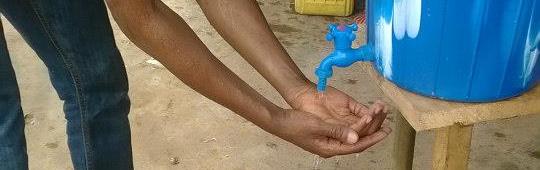
Bumpeh Chiefdom schools will have to resort to the public handwashing stations used during the Ebola epidemic  –  buckets fitted with a faucet and chlorinated or disinfectant treated water that will need to be carried there. Supervising 200+ children washing their hands each time they come on-site will be a time consuming chore for teachers.

taking temps at school Conakry

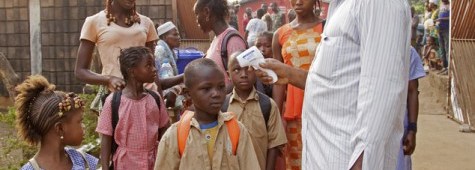
Liberian teacher takes daily student temperatures.

Likewise, teachers will need to take each student’s temperature every day with no-contact thermometers they’ll be supplied with. Will morning assembly songs and announcements be replaced with the hand washing – temperature taking regimen to keep on schedule?

Stress management  Teachers are getting training on stress counseling for students. Those who are Ebola survivors, or who lost one or both parents or other family members are still traumatized.  Being stigmatized as an Ebola family further adds to their stress. They may not yet be fully accepted by the community. These children need extra support, and their peers need more education that they pose no risk to the community.

The epidemic has put everyone under great hardship and economic stress. Then, there’s chronic stress from constant fear of the invisible enemy called Ebola.

Making up for lost time  Everyone may need stress management with the school regimen they’re being asked to follow. To make up lost time, school will be held six days a week, including Saturdays, for 25 weeks. School will push through July and August, the heavy rain months when many students are normally back home helping plant rice on family farms.

I remember as a Peace Corps Volunteer trying to teach during the rainy months. We’d have to stop during an especially heavy downpour when it sounded like horses galloping over the metal roofs and you could hear nothing else.  Walking miles to school on muddy roads in downpours is miserable.

Back to school campaign  Our Rotifunk partner organization, the Center for Community Empowerment and Transformation (CCET) plans a back-to-school and public health campaign. Made up primarily of local teachers, CCET will be going door to door in Rotifunk and village to village in the chiefdom, encouraging parents to send their children back to school.

IMG-20150105-WA0001The way to answer parents’ questions on Ebola and the remaining risk is to reach out to them in their villages.  CCET will continue public health messages on recognizing Ebola and other common disease symptoms, and what to do if you believe someone is sick.  Local nurses will join in and assure people of the safety of community health clinics.

Pregnant girls and new mothers especially need counseling on seeking medical care. They’re still afraid of getting Ebola if they go to hospitals and health clinics to deliver and for pre and postnatal care. They’ve been delivering at home. More lives across the country are being lost in childbirth and from complications after birth than from Ebola.

Young mothers and their parents need to be encouraged on the girls returning to school.  Becoming a mother does not need to end their education. Rather, they and their babies need the benefits education brings more than ever. But village girls face the dilemma of leaving their new baby with parents in order to go to Rotifunk for secondary school.

The Ebola epidemic has been incredibly hard. Getting life back to some semblance of normal is far from easy.

Arlene Golembiewski
Executive Director

She is why we do what we do

She is why we do what we do

School is slated to reopen in April across Sierra Leone. It won’t come any too soon for both teachers and students weary of the seven month limbo they’ve been in since the Ebola crisis closed schools last September.

Zainab Bangura 2 - PGHS scholarship awardeeZainab is one of the girls I’ll be watching for. She’s gone to one of Rotifunk’s secondary schools with scholarships from Sherbro Foundation.

Last year, I talked with Zainab and found she has a big dream.  It’s a dream we want to help her achieve.

Zainab has had a difficult time completing secondary school.  I worried she might be one of those not returning.  At 19, she’s a young woman, and it’s hard to find the means to stay in school. The longer teenagers stay out of school in Sierra Leone the less likely they are to return, especially the girls.  Ebola has only made that worse.

Village on road heading to Freetown

Zainab comes from a small village like this one on the road leading to Freetown.

Zainab comes from a small village about seven miles outside Rotifunk.  It’s ten mud houses, she told me, with an emphasis on “mud” houses. Her mother is a very poor farmer and old. When she told me her mother’s age, I laughed and said, “Well, that makes me old, too.”  “But you are strong,” was her reply.  Strong in Sierra Leone means healthy.  It also means I’m privileged to have the means to be this strong at my age.

Zainab attended junior high in a nearby town.  Four years ago when she was ready for senior high, her aging mother could no longer afford $30 to send her to school.  So, she sat home for a year.

An older man then persuaded her mother to let Zainab move in with him in Rotifunk.  He promised to help her finish school and then marry her. Zainab’s mother thought this was the only way to ensure her future. But he didn’t pay her school fees and didn’t marry her.  He was already married. He forced her to work for him by selling goods in the market. I’ll let you fill in the rest.

IMG-20150103-WA0011 - CopyPrincipal Rosaline Kaimbay seeks out village girls like Zainab and encourages their parents or guardians to send the girls to high school.  Zainab started senior high with Sherbro Foundation scholarships two years ago. A teacher heard of her living situation and convinced her to leave the man and move to a friend’s home.

Zainab has now completed 10th and 11th grades, a real accomplishment.  Only one in six Sierra Leone girls is able to complete high school.  Zainab’s school will be starting its first twelve grade class this year. Zainab should be one of the first seniors in that class.

10356312_349283451885472_4392104421503392972_n[1]I want to become a doctor.

I spoke with Zainab last July before Ebola suspended  school.  Principal Kaimbay had told me she’s interested in studying science. When I asked Zainab why she likes science, she said with no hesitation, “I want to go to college and become a doctor.”

Not a nurse or a teacher, the usual responses. But a doctor. When I asked why, she immediately replied, “I want to save lives.”  She’s no doubt seen lives lost in her short life because there’s so little health care available.

With school now reopening, my thoughts returned to Zainab. I asked Principal Kaimbay if she’s been in contact with her, and will she be returning to school. Zainab has been living with her mother now. Mrs. Kaimbay regularly stopped by to see them since their village was near one of the Ebola check points on the way to Freetown. They’ve been scraping by, growing a few vegetables to sell.

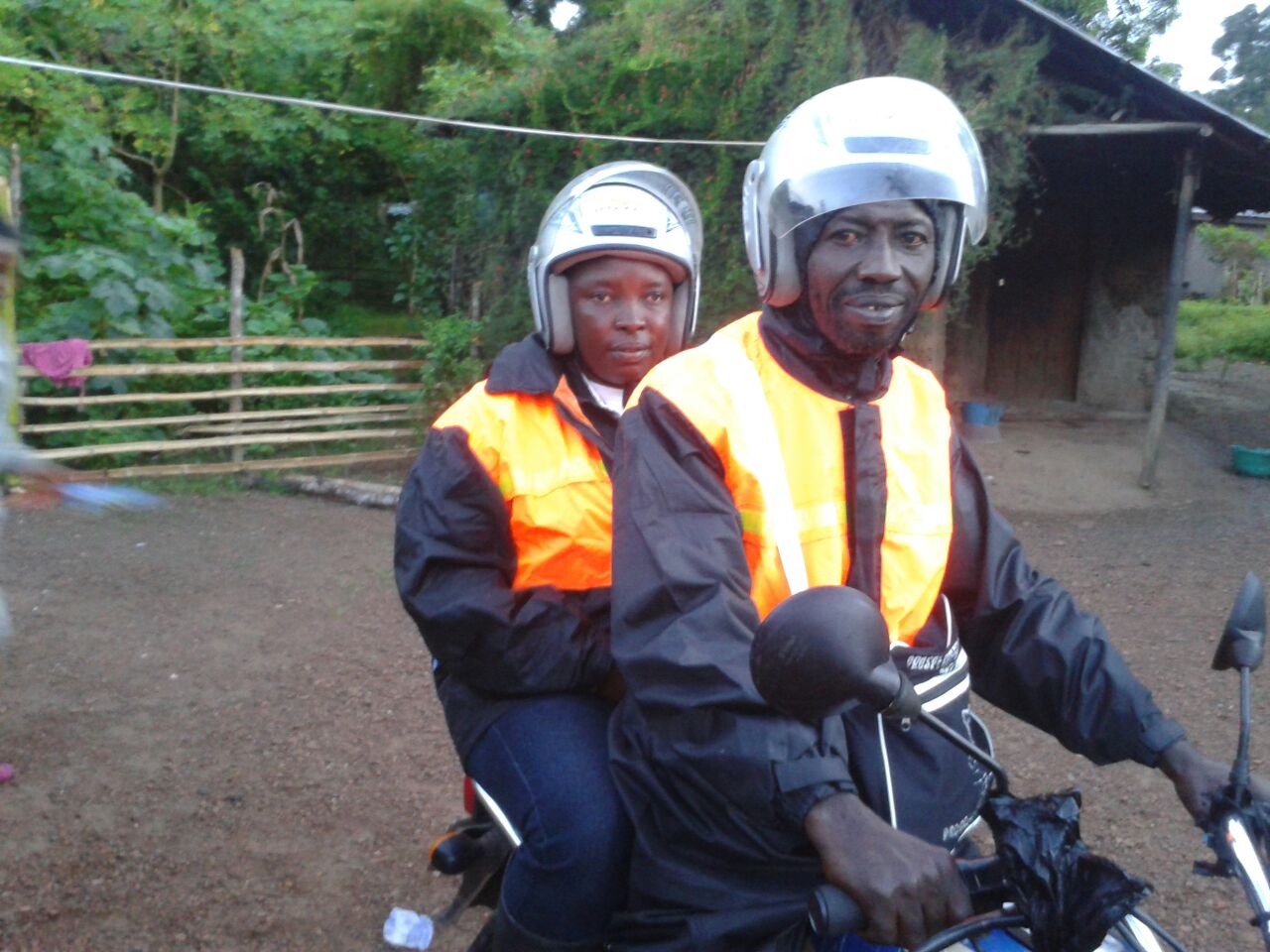
IMG-20141120-WA0000Mrs. Kaimbay is more than a dynamic principal and a gifted teacher. She’s an advocate for girls like Zainab, and a champion for girls and women everywhere in Bumpeh Chiefdom. During this long Ebola crisis, she’s made a point to connect with girls and their families whenever she could. She resorted to the back of a motorcycle to monitor and support the chiefdom Ebola control program — and visit village girls. She encourages and motivates the girls to stay focused on their education. School will reopen; we want you to come back. We’ll help you wherever we can.

Now she told me, yes, Zainab is ready to return to school.

Last July, I asked Zainab if she had any questions for me. She immediately asked: will I be helping with university scholarships? With girls like Zainab finishing high school in Rotifunk and determined to go to college, that’s something to be planning for.

God knows Sierra Leone needs more doctors and nurses. Now, they need to replace those who sacrificed their lives in the Ebola crisis caring for others.

Zainab gave me a message last July to bring back here:

“Thank you for helping us. We come from poor homes, but we are ready to learn. Without scholarships, we should drop out.”

Girls like Zainab are the reason I started the girls scholarship program. I think how many other bright, determined girls like Zainab won’t achieve their dreams without getting through that first formidable hurdle in their lives — secondary school. And the hurdle amounts to just $30 a year.

Zainab is the reason Sherbro Foundation does what we do.

You can help Zainab and other girls come back to school now.   http://www.sherbrofoundation.org/donate

It’s working – No More Ebola Cases in Bumpeh Chiefdom!

December 8th Update:  55 Days & counting  –  No new Ebola Cases!

Chiefdom Ebola Task Force is doing a fantastic job – but they need our continued support.

There are no more Ebola cases in Bumpeh Chiefdom since they embarked on their Breaking-the-Chain-of-Transmission program  October 22nd. Even though they earlier lost 21 people to Ebola and the epidemic rages around them.

Setting up check point.

Setting up check point.

What’s changed? The single biggest intervention is rigorously managed checkpoints at the main roads to stop “strangers” from entering the chiefdom and carrying Ebola with them.  Village chiefs are the next level of defense going door to door daily to verify no one has taken ill and there are no unexpected visitors.  Reporting is real time with cell phones.

Imagine if every chiefdom in Sierra Leone mounted this kind of systematic offensive to identify and isolate Ebola cases for even 21 days.  It would literally break the chain of Ebola transmission and the outbreak would be on its way out.   Read the whole story here.

Sherbro Foundation continues to support Bumpeh Chiefdom in their Breaking-the-Chain-of- Ebola-Transmission program.  Without our donations, they could not have launched this comprehensive effort.

You can make a difference and help eliminate Ebola, too.  Join us and donate at www.sherbrofoundation.org/donate. We need your help to keep this effort going for the coming months.

You’ll know exactly where your money goes, and that it’s actually working to stop the spread of Ebola.

Bonus: 100% goes directly to the chiefdom Ebola program. Every penny. We’re an all-volunteer organization and our small administrative costs are paid by a separate donation.

2nd Bonus: It’s tax deductible for US residents. Sherbro Foundation is a 501(c)(3) tax exempt organization.

Help us even more – forward this to a friend.

Ebola – how life is unnecessarily lost

Oct 4  Sad update to this story: everyone, save three small children, in the three quarantined houses have contracted Ebola and passed away. 14 adults and the 17-yr old girl pictured here. The 3 children have reached the 21 day point with no symptoms, and are being released.
****************************************************************************************************************************

I was shocked to hear that all of Moyamba District was put under an Ebola isolation order last week, and Bumpeh Chiefdom was further isolated within the district. And worried about the welfare of my friends in Bumpeh Chiefdom where Sherbro Foundation does our work.

I soon learned more that shocked me, more than four months into the second and more rapidly growing wave of Ebola in Sierra Leone. My heart aches for these people so far away, and there’s so little we can do from here. But one important action is helping.

After a three-day national shutdown to try to contain Ebola cases, it may have seemed that the cities were starting to get a grip on the deadly virus, which is spread by contact with bodily fluids.

But there’s still no full logistical plan nor Ebola-equipped health care in rural areas –the majority of the country — to manage cases in new Ebola hot spots. What are the practical next steps, when there are so few resources, when there are so many obstacles in a subsistence society?

17-yr old gives birth aloneIsolation and quarantine are the government orders. But with no further plan and coordination of services, avoidable Ebola cases can happen — and more unnecessary deaths.

This 17-year old girl is another kind of Ebola victim.

Pregnant with her first baby and quarantined in a village just outside Rotifunk, she got no prenatal care in her last weeks. When the baby came, she was left to deliver on her own. Even her own mother was afraid to come to assist. The baby was stillborn. The young mother got no assistance to ensure the placenta was fully removed and she had no complications. She remains untended in quarantine.

“If there had been the opportunity of suing the state to court, I should have been the first person to do that,” Rotifunk Ebola task force team leader Ben Alpha’n Mansaray said via Facebook.

“Once you are quarantine, you are sentenced to death. They need care! They need hope!”

About 1.2 million people in the country are now under isolation orders in the Sierra Leone government’s efforts to stop the spread of the disease. Isolation means a cluster of new Ebola cases occurred, requiring a more drastic measure.  People can move around within the isolated area, but no one can come in or go out. Individual homes are quarantined to further isolate new cases.

Alpha Mansaray delivers hand washing stations and Ebola prevention message to villagers.

Alpha Mansaray delivers hand washing stations and Ebola prevention message to villagers.

Quick action by Bumpeh Chiefdom’s Paramount Chief Charles Caulker to quarantine contacts of the first Ebola case in early September has kept the disease contained to a small village on the outskirts of Rotifunk. Rotifunk itself, seat of the chiefdom of 40,000, remains safe.

Ten days ago, the dreaded virus emerged in new cases among the quarantined people. Eight people total have died, and two early cases made it to a treatment center.

Quarantine sounds like a straight-forward measure. You restrict people to their house who may have been exposed, and wait through the 21-day incubation period to see if they develop the disease. But in an impoverished rural area like Rotifunk, the logistics are anything but simple.

They are nightmarish.

  • There’s no local holding center to isolate new Ebola cases from those not sick until they can be carried to a treatment center. In close quarters of a quarantined house, the sick can quickly infect those not sick.
  • The few Ebola treatment centers (only in far-off cities) and ambulance service are beyond overloaded. Rotifunk made repeated calls for five days and got no response. With no Ebola-equipped local health care, the sick are left on their own. No one comes near. The sick only got sicker.  Three died waiting for an ambulance to arrive.  Three others made it to the district capital holding center — two hours to go only 17 miles on a pothole ridden dirt road  — but died waiting for a bed opening up in a treatment center.
  • Inexperienced ambulance teams that did finally appear are fearful even with some protective equipment, and wouldn’t assist Ebola patients into the ambulance. If sick patients could drag themselves 25 feet and climb in on their own, they were taken to a holding center. If not, they were left to die at the quarantine house.  One man died the following day.
  • People in quarantine have great difficulty getting adequate food or daily clean water. These are people who rely on their daily labor to buy their daily food. Some are lucky when family or friends send food. Others are at the mercy of generous local residents.
  • Water is especially important to keep the sick hydrated. When a water container is used in quarantine, it must be considered contaminated. Disposables are unheard of. If the quarantined are near a river, they can collect their own water. If not, they wait for a Good Samaritan to bring water and pour it into their container left outside.
  • Other medical emergencies like malaria, typhoid, maternity cases or increasingly common chronic conditions like hypertension get no care in quarantine – resulting in unnecessary complications or deaths.

When new Ebola cases appear in a quarantined house, the 21-day quarantine clock starts again for those showing no Ebola symptoms.  They could end up in quarantine for five, six or more weeks. When left in the same infected house, their likelihood of getting Ebola only grows.

The central government Health Service orders there be no movement of people under quarantine. Security (army or police) are stationed to enforce this. No safe houses have been provided despite repeated reports of Rotifunk’s situation. Some well people, like this pregnant girl, moved to an outdoor bathhouse (just concrete) in an effort to protect themselves while waiting out the remainder of their quarantine.

Bumpeh Chiefdom’s  isolation order came last week without notice, separating parent from children, farmer from fields needing planting, family from breadwinner who went to market and has the only money or food to feed the others.

When I read of whole villages being decimated by Ebola, I can now better understand why. Quarantine can lead to the sick quickly infecting those not sick with nowhere to go. Villages may self-impose quarantine to isolate the sick. With sick people and no indoor plumbing or easy to access water, houses quickly become filthy. Disease spreads. Mothers delivering babies and small children with malaria get no medical care.

How can this awful situation be improved?  One simple solution is to build temporary makeshift huts and pit latrines as local Ebola holding centers, to separate those becoming sick until they can be moved for treatment. With very minimal funding, these could be locally built. But they’re not forthcoming. Ambulance service calls need to be coordinated, and drivers trained and held accountable for delivering patients.

There is something important we in other countries can do: Help to buy simple hand-washing stations for Bumpeh ChiefdomSherbro Foundation paid for 200 such plastic stations and disinfectant in August. Forty stations were set up in public places around Rotifunk in one week.  160 more followed for chiefdom villages in August.  Chief Caulker said, “These have been very, very effective. You see them constantly in use with people washing their hands throughout the day.”

Chief Caulker would like 200 more hand-washing stations to supply remaining villages. Villagers get Ebola sensitization training and weekly reminders from Rotifunk volunteers on the importance of frequent washing to prevent Ebola and other diseases like cholera, typhoid and dysentery. Behaviors on personal hygiene and sanitation are changing.

Sherbro Foundation works directly with the Bumpeh Chiefdom Ebola task force to quickly send all donated dollars so they can buy these life-saving supplies. Please consider donating right now!  $20 buys one hand-washing station and two bottles of disinfectant.  Donate online here.

Nothing is easy about managing the Ebola outbreak in Sierra Leone. But coordination and common-sense local solutions could help. When coordination between the central Sierra Leone government and rural traditional leaders during emergencies is missing, key opportunities are lost.

Innocent people are the losers when critical decisions aren’t made quickly. It means unnecessary and tragic loss of life.

Rotifunk’s Computer Center: building their future

Rotifunk’s Computer Center: building their future

Rotifunk’s Community Computer Center structure is now completely up.  Latest pictures are below.  See more of the full construction story here and read about plans for the computing center here.

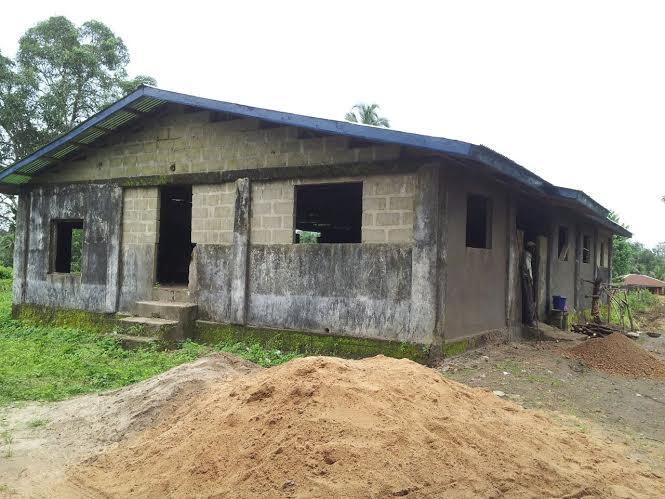
September 16: The building’s exterior is finished with window frames in place. Ready to paint.

computer ctr sept 16 4     computer ctr sept 16


computer ctr sept 16 3Work on the interior now proceeds.  We did a quick lighting and computer use plan 2 weeks ago to devise the electrical wiring plan. An electrician got to work on wiring so the interior finishing with wall plastering can proceed.  The drop ceiling is now in.


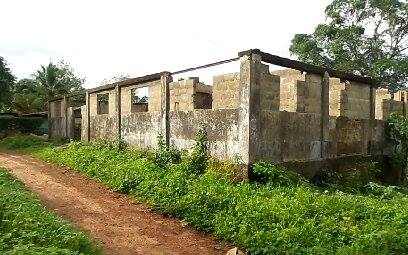
Compare with these pictures taken  June 24 a week after work initially started on from a burned out building shell.Computer Lab 2

Computer Lab 3


September 1: Rotifunk’s first Ebola cases appear in town.  Five deaths and 35 quarantined in five houses.  But the computer center construction proceeds on schedule.

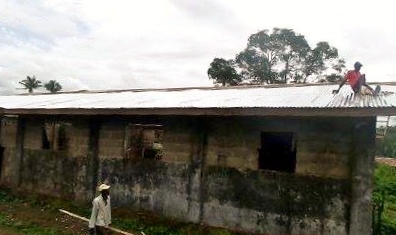
August 25:  The roof is up on Rotifunk’s community computing center.  Ebola is not slowing down work on this center full of hope for the future.

10634313_720411201361353_1073541016_nThis (now) ugly baby will be beautiful as they plaster the walls and add a coat of paint.

Work has gone on in spite of August being the peak of the rain season. Remember 2011 when here in Cincinnati we got 73″ rain for the year and called it an all time record year. The average rainfall for the month of August alone  in Sierra Leone is 42″.  Throw in July and there’s 73″.

The next stage is raising funds for a solar energy system so the computing center can operate into the evening with classes and community computer access. They’ll offer small business services, too, like typing and copying for those without computers or printers.

unnamed 5

unnamed 2

10637736_720409494694857_1289394485_n


Rotifunk Leads Unique Community Ebola Prevention Effort

Rotifunk Leads Unique Community Ebola Prevention Effort

Dear Friends,

I thought I would be writing now to ask your support for Sherbro Foundation Sierra Leone’s girls scholarship fund. With the Ebola outbreak in Sierra Leone, school is indefinitely suspended. Instead, I’m asking for your help on getting Ebola prevention supplies to the rural Sierra Leone area we work with.

CCET Exec. Director Rosaline Kaimbay demonstrates the hand washing station.

CCET Executive Dir. Rosaline Kaimbay demonstrates portable hand washing station filled with disinfectant solution.

In the last two weeks, SFSL has had to shift our focus from education to helping Rotifunk and surrounding villages fight the Ebola epidemic.  A second and bigger wave of Ebola is now moving through Sierra Leone.  Neither the Sierra Leone government nor any NGO’s have reached rural areas beyond the outbreak epicenter with Ebola prevention supplies.  Yet, it’s in these kinds of rural places the Ebola outbreak started.

The majority of Ebola cases continue to be in two areas in eastern Sierra Leone. A national state of emergency was declared last week, and these two areas have been blockaded. Everyone is effectively quarantined in place for 21 days, the Ebola incubation period. Only food, water and essential supplies are allowed in.

This is a necessary public health step to control the Ebola outbreak. But the disease had already started spreading around the country.  People who became sick in the hot spot areas feared they would get Ebola if they went to a hospital. Before the blockades went up, sick people ran to the care of relatives in other districts. Some of these sick people had Ebola and transferred it to other parts of the country, including Moyamba district where Rotifunk is.  This district now has four confirmed cases and fifty being tested.  This is how epidemics spread.  A frontline Scots aid worker describes the many direct and indirect effects the epidemic is having on an already fragile country.

10336595_716185338450606_6438555027606916424_n

CCET, our local partner, prepares to deliver hand sanitizing stations.

There’s a misconception that the Ebola outbreak is being managed for the whole country by large nonprofit organizations like Doctors WIthout Borders (MSF). MSF is heroically fighting the battle to save people’s lives already ill with Ebola in the two epicenters, and tracing their contacts for quarantine there. But they are not involved in prevention activities to stop the spread of Ebola in the rest of country. The Sierra Leone Government’s actions have been limited to reactive steps and mainly within their fragile health care system; not preventive steps across the country.

Sherbro Foundation is equipping Rotifunk and surrounding villages with portable hand sanitizing stations.  This deadly disease can surprisingly be killed with soap and water and hand sanitizers.  People are being trained to frequently wash their hands, especially when in public places like markets, churches, mosques and health clinics.

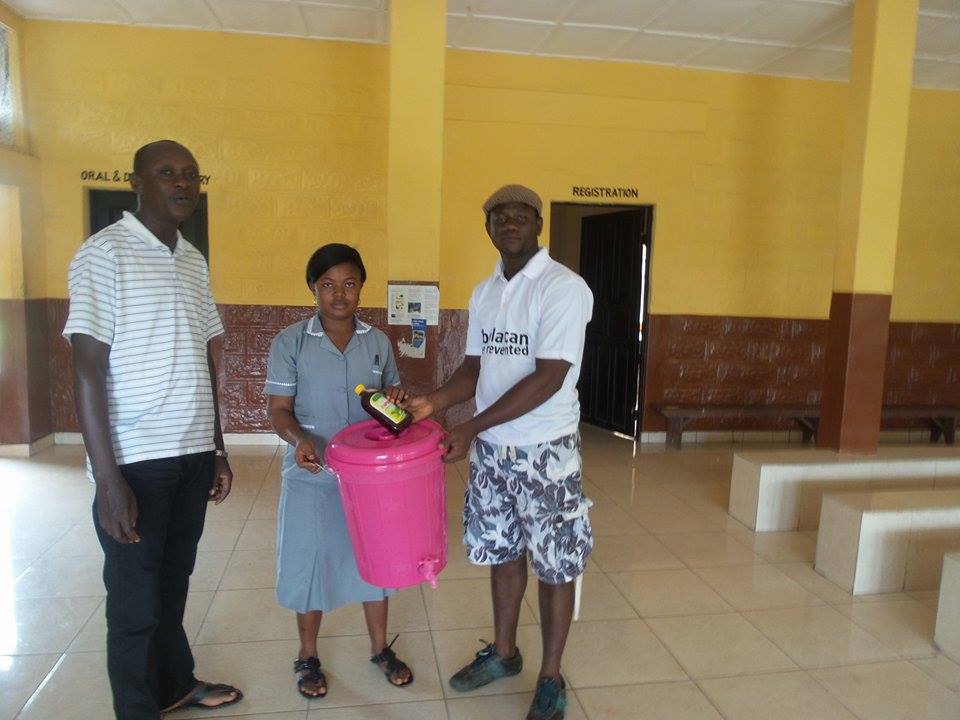
Hand washing station delivered to the health clinic waiting area.

Hand washing station delivered to health clinic waiting area.

Rotifunk, like most of the country, has no running water.  There is nowhere to wash hands.  Preventive steps like hand sanitizing stations in public places are not set up in rural towns and villages outside the two Ebola hot spots.

SFSL sent money last week to set up over forty hand sanitizing stations like this one and a supply of disinfectant. Our Rotifunk local partner, the Center for Community Empowerment & Transformation (CCET)informed us today they need to reach more villages and have more disinfectant to go around. Prices on buying these portable sanitizing stations have gone up 50% in the last week, as goods are in short supply.

CCET Executive Director, Rosaline Kaimbay informed me today they are being seen as unique in Sierra Leone with this kind of grass roots community-led effort on Ebola prevention.  While towns across Sierra Leone are still waiting for Government and NGO assistance, they are taking charge on the fight against Ebola.

It’s understandable that limited resources are first going to the epicenters of the emergency.  But unless towns in the rest of Sierra Leone like Rotifunk are equipped for preventive actions to fight Ebola, the epidemic can continue to spread across the country – and beyond.  More lives will be lost.

Time is of the essence. Can you help stop this tragic epidemic for the cost of a dinner out or one concert ticket? To donate online, just click here: Donate   We accept all major world currencies. To send checks, contact us at sherbrofoundation@gmail.com.

You can help even more by passing this on to a friend.

Thank you!

Arlene Golembiewski
Founder & Executive Director

Good News from Sierra Leone – Computer Center Construction Progress

The entire country of Sierra Leone may be living in the grip of fear of Ebola.  But life does go on beyond the two epicenters of the epidemic. We need good news to share right now.  Here’s some. Construction on the Rotifunk community Computer Center is on track for its November debut.

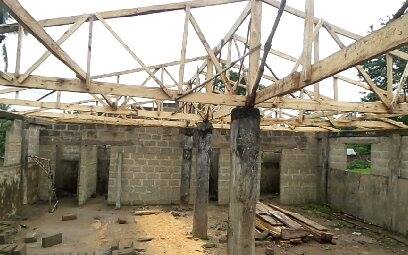
10592057_711825275553279_1085342184_nThese pictures from August 3 show the roof tresses going up.  The sheets of metal roofing were purchased. If they arrived, the roof may be going on as we speak.

This project will provide a permanent building for computer literacy classes and small business services. We already have fifty five Windows 7 laptop computers in Rotifunk waiting for their new home and central access for the whole town.

The building is going up with private donations and  community contributions of the land, building shell, local materials and local unskilled labor.

You can read more about the project here.  I like to call it from tragedy to triumph.  When the computer center construction started, I was referring to rebuilding from the shell of a building burned by rebels during the war.

Today, we can also say despite the Ebola tragedy, the people of Rotifunk and Sierra Leone will triumph. They are still hard at work building a better future.

For now, enjoy these construction pictures.  I am.

Arlene Golembiewski, Executive Director

10589489_711825702219903_1600237143_n


Old exterior walls of the building shell were reinforced with an inner wall of new bricks.  Once the walls are plastered and painted inside and out, you won’t know it’s a building rebuilt from a fire.


10589754_711825898886550_675216109_n


Deep roof overhangs are essential in a place with tropical rains over 120 inches a year.


10592057_711825275553279_1085342184_nYou can still the charred tops of the original inside pillars – evidence of the fire set by rebels during the war, trying to destroy the town.

Rotifunk today is about 60% rebuilt.  With recent construction like a large community hall, a rebuilt hospital, four secondary schools, a new rural community bank, and now a modern computer center, Rotifunk is putting itself back on the map.  It’s regaining its former position as a rural hub for education, health care and trade in southern Sierra Leone.


Sherbro Foundation Funds Ebola Prevention

Sherbro Foundation Funds Ebola Prevention

Sierra Leone and the Ebola crisis are all over the news this week. Everything we read is about the two main outbreak areas in Kailahun and Kenema in the east of the country.  But what’s going on in the rest of the country, you may wonder .

Weeks with the strain of bad news, much uncertainty and no direct support is taking its toll on a small town like Rotifunk. Imagine a country with some of the friendliest people on earth that has stopped shaking hands with friends and colleagues, part of the normal daily ritual of greetings. Everyone is eying each other for signs of illness.

President Koroma declared a national emergency and Monday, August 4 was a national day of prayer and reflection. Everyone was asked to stay home. And they did.  It was eerie to see pictures of the normally jammed streets of Freetown empty without even a pedestrian in sight.

Ebola trainingThis was a chance to complete Ebola sensitization training for all citizens.  We’d call it awareness training. Health care workers could make door to door checks.

Paramount Chief Caulker in Rotifunk, Bumpeh Chiefdom last week gathered all his section chiefs and other chiefdom leaders to personally explain symptoms of Ebola and how to prevent transmission of the virus.

The Ebola training poster is rather graphic.  It needs to be for the many people who cannot read.

Rotifunk is in Moyamba District and they are a long way from the Ebola hot spots.  The District has only had one confirmed Ebola case, fortunately not in Rotifunk.

Rotifunk is a center of local trade with its lively Saturday market.

But with traders coming from many parts of the country for big weekly Luma markets, it wouldn’t be hard for a person just coming down with Ebola to show up in town. These Luma markets have now been banned. Local people are free to buy and sell every day as usual, but “strangers” cannot set up in town to trade.

P. C. Caulker was clearly tired and on edge when I called to check on things. I could hear the strain in his voice of now weeks of the crisis and trying to oversee protection of the people in his chiefdom. It wasn’t the first time he told me no Ebola prevention supplies had made their way to his chiefdom and the other smaller towns across the country.  He felt vulnerable – for the town and for himself.  I’m the chief and I have to receive everyone who comes to my door, he said.  I’m personally at risk.

hand washing stationWe’ve trained people to frequently wash their hands, he said. Yet we have nowhere in public places like the market, mosques, churches and schools to do this.  In a town like Rotifunk with no running water and no public rest rooms, people can’t follow the procedures we just trained them on.

I asked what they need to improvise for hand washing. He described covered buckets fitted with spigots and diluted household bleach solution, now the country protocol. Done. The Sherbro Foundation Board quickly agreed to fund this, and I wired the money on Monday. By end of the week, they should have fifty of these hand sanitizing stations staged around town and a supply of bleach.

Chief’s second problem was harder to address.  Hospitals and clinics may have no personal protective equipment beyond thin disposable gloves and health care workers are afraid to handle people who become sick. Patients might be unattended for several days while waiting for Ebola test results to come back from Kenema. It’s understandable they are afraid. When they do their jobs, nurses and community health officers are at significant risk.

Buckets they can buy in Freetown, but not PPE.  To order and ship from here would be expensive and take a long time, even if we chose the right things.  Sherbro Foundation Director and physician Cheryl Farmer called the Infectious Disease unit at the Ann Arbor hospital where she lives. US hospitals are receiving bulletins on how to handle suspect cases of things like Ebola, including PPE. But the shipping dilemma remained. The whole process can take 6-8 weeks and be expensive.

I raised the concern on the Friends of Sierra Leone Yahoo group. This diverse group of former Peace Corps Volunteers and Sierra Leoneans now in the US has an active dialog group.  Within hours, I got a response from Raphael, working with the Well Body Alliance. This US NGO has sent a large shipment of PPE that should arrive soon and is intended for health care workers upcountry.  The Rotifunk hospital is now in the queue to hopefully receive equipment soon. Thank you, Raphael and Well Body Alliance!

So many times in recent months when I’ve felt the frustration of how I will get something done for Sierra Leone, my prayers are answered.  I’ve learned to be clear and just ask – by email, by phone, by website, by personal contacts.  By blog post.

This is how things are getting done in and for Sierra Leone these days. Often piecemeal and ad hoc.  But thankfully, we’re getting the basics done and making progress.

When I called Chief Caulker to tell him that PPE should be on its way, they had just read CNN news about Liberian Doctor Brantly and his remarkable turnaround from Ebola’s deathbed.  This is the kind of good news people need to hear. Not that it will affect the many people now sick in Sierra Leone. But good news is good news.  That night ended on an upbeat note. For once.

If you would like to help Sherbro Foundation defray the cost of the hand sanitizing stations for Rotifunk (an unplanned expense), your support is most welcome.  You can donate here.

Arlene Golembiewski, Executive Director

A Phoenix Rises From the Ashes to Live Again

A phoenix is rising in Rotifunk to live again.  But not a bird.  A different kind of phoenix.

A phoenix is a mythological bird that arises from the ashes of its own funeral pyre as a newborn bird to live again.

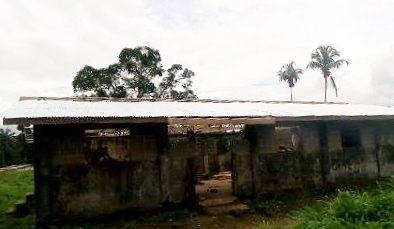
Computer Lab 2Rotifunk had to abandon their town to rebel control for seven years during Sierra Leone’s civil war. Townspeople fled for their lives, and rebels burned the town to the ground.

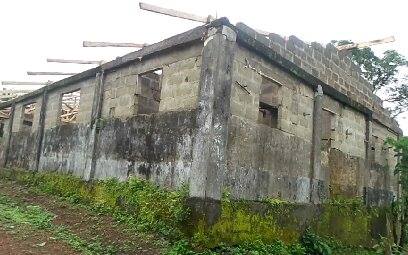
Today, on the main road in Rotifunk, a building torched by rebels is rising once again from its own ashes. It’s being rebuilt as the new community computer center.

The computer center for Rotifunk that started as our dream three years ago is coming to life. No myth here. It’s being built, bricks and mortar style.  Or rather, being rebuilt.

Charred wood support posts.

Charred wood support posts.

In Sierra Leone, necessity is the mother of many things. Rebuilding structurally sound but damaged buildings to live again is a common thing. Especially buildings like this one that died a premature death at the hands of rebels intent on destroying a town.

This large building is being given over to house Rotifunk’s new community computer lab.  The concrete slab and foundation walls are good. It’s large enough to house two classrooms, offices and storage rooms. And importantly, it’s centrally located on the main road to easily serve residents and visitors alike as a computer café and business service center.

Anything wood, like these roof supports, burned when set on fire by rebels.  But the concrete foundation and original walls remain to work with.

Computer Lab 4Local materials are further bringing down the project cost.  Bricks made in wooden frames from the hard laterite clay mixed with cement dry in the hot tropical sun. Locally cut lumber from tropical hardwoods will support and frame the roof.

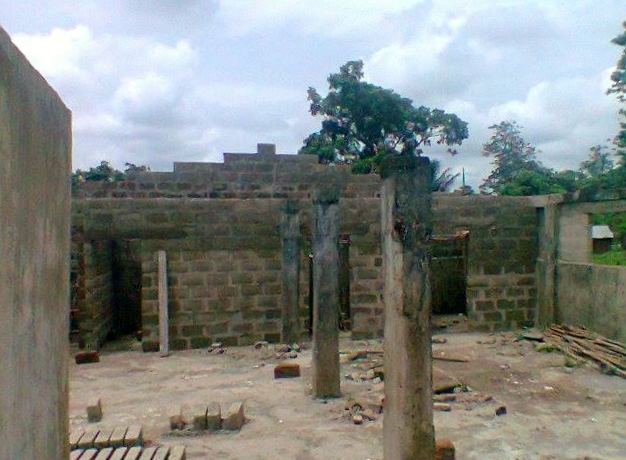
Inner walls of new bricks are being laid to reinforce the old walls and to rebuild upwards.

Window openings were left all around.  An important design feature for this town that still has no electricity and needs natural light coming in.

Computer Lab 10

Partitions – mud brick inner walls – will go in next to create classrooms, two offices, a storeroom and toilets.  These days modern style buildings in Rotifunk are built with inside toilets and underground septic systems.

This picture I just got shows the roof support starting to go up.  Roof trusses will go in that are one the biggest cost of the re- build.  We need roof trusses and a corrugated metal roof strong enough to hold solar panels.

You may ask how can a town build a computer center if it has no electricity. Well, we’ve already been operating a temporary computer center in a small house for nearly a year.  We were fortunate to get 50 up-to-date PC’s last year with a corporate donation from Schneider Electric.  Our local Rotifunk partner, the Center for Community Empowerment and Transformation wasted no time starting computer literacy classes. But classes end by 6:00 or 6:30 pm when it becomes too dark to see.

The PC’s are re-charged remotely. Too bad I don’t have a picture  of kids carrying 20 computers at a time (in PC bags) on their heads across town to a place that charges cell phones. It’s a standard these days to have small cell phone charging businesses run by generators.

But this is no way to run a real computer center.  Our next stage for this project is fundraising for a solar energy system.  We want to maximize use of the center and operate for twelve hours a day, seven days a week. We need reliable solar power.

People in Rotifunk are eager to learn to use a computer.  Most people can’t afford their own PC now. They can come here to take classes or rent a PC by the hour for a token fee.  Those who just want to have something typed or printed, can come here like a local Kinko’s or Staples for business services.  And the center will earn some money to make itself self supporting.

Rebels may have tried to destroy Rotifunk. But Rotifunk is no longer destroyed.  It’s a vibrant small town that’s rebuilding itself.  It’s once again taking its position as the rural hub for education, health care and trade it’s been for over a hundred years.

Rotifunk is rebuilding itself to be better than its former self.  Computers are linking its residents with the rest of world.

Sherbro Foundation is proud we arranged the original computer donation and are now fundraising for the building’s solar system.  The building itself is being paid by private donations and community contributions, including the building shell, local materials and local unskilled labor.

It definitely is “taking a village” to make this computer center become a reality for the rural town of Rotifunk.  It’s an international village of donors and supporters.

Why not join us? If you’d like help, you can read more about our donations and donate yourself here.