Giving Thanks in Sierra Leone

Giving Thanks in Sierra Leone

Thanksgiving came early for me this year. I hadn’t planned my trip to be in Sierra Leone on the day the country was declared Ebola free. But I was grateful it worked out that way.

November 9th, the actual day, was quiet and rather anticlimactic. This chiefdom, like much of the country, hadn’t had an Ebola case since mid-January – ten months ago.  November 9th was a day for reflection, to remember those who lost their lives, especially health care workers.  It was a day to give thanks that the chiefdom and the country were delivered from this scourge.

Bumpeh Chiefdom’s Ebola Committee decided at the last minute to have a small ceremony while I was still in the country to thank Sherbro Foundation for our support in their Ebola fight.

I was honored to accept their thanks on behalf of all Sherbro Foundation donors who came forward to help during Ebola’s darkest days.
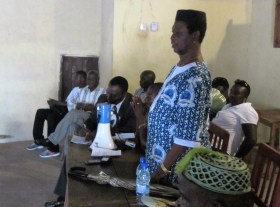
Paramount Chief Caulker recognizing Nov 9th, the Ebola-free date.

Paramount Chief Caulker recognizing Nov 9th, the Ebola-free date.

One by one, leaders of the community came forward to thank Sherbro Foundation. An Imam and a Christian minister offered prayers, with people joining in to recite both.

A representative of village chiefs and a section chief were grateful SF funded over 300 hand washing stations they set up early when no other funding was coming. These were the chiefdom leaders on the front line as the epidemic was spreading. A year ago, it was unclear how easily the Ebola virus could be transferred with casual contact. It was a frightening time and people avoided each other. They didn’t know who they could trust.

The Local Councilor and Chiefdom Speaker were grateful SF stayed in touch throughout the outbreak and just asked, how can we help. When the Ebola Committee recognized they needed a more aggressive approach to keeping Ebola from entering their chiefdom, SF quickly responded. They thanked us for funding them to staff checkpoints, do house to house checks in every village and stop unsafe burials.

Paramount Chief Caulker has been vocal throughout that the chiefdom could not have done what they did without Sherbro Foundation support.

But as I was accepting their thanks, I was silently thinking, who’s more grateful?  Them, or me?

I was grateful lives were spared and my friends were safe.

I was grateful SF could play a role in enabling this chiefdom to become a model for the rest of the country in stopping Ebola.  I was never more proud to be part of an organization’s work than when I saw the dramatic 80% drop in Ebola cases last January as chiefdoms around the country implemented programs like Bumpeh Chiefdom’s.
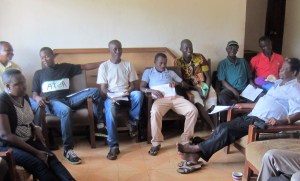
IMG_4552I was grateful to work with our remarkable partner, the Center for Community Empowerment & Transformation who volunteer their efforts to protect and now develop their chiefdom.  They shifted from fighting Ebola to reopening schools closed for nine months to restarting our projects without missing a beat – all within a few months.

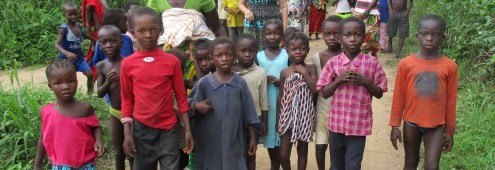
I was grateful to see children back in school – and more Bumpeh Chiefdom girls in secondary school than ever before.

I was grateful to go to the new community bank and see 1249 new savings accounts opened for newborn babies that can grow to fund their future education – more baby accounts than adult accounts.
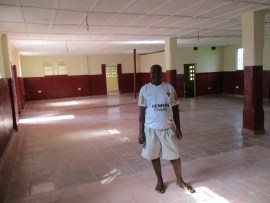
IMG_0104I was grateful to see the computer center built during the Ebola outbreak finished.  The floors are tiled floors and it’s wired for power we’ll bring over from a nearby solar system. Come February, we should be able to start initial computer and adult literacy classes.
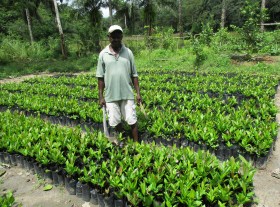


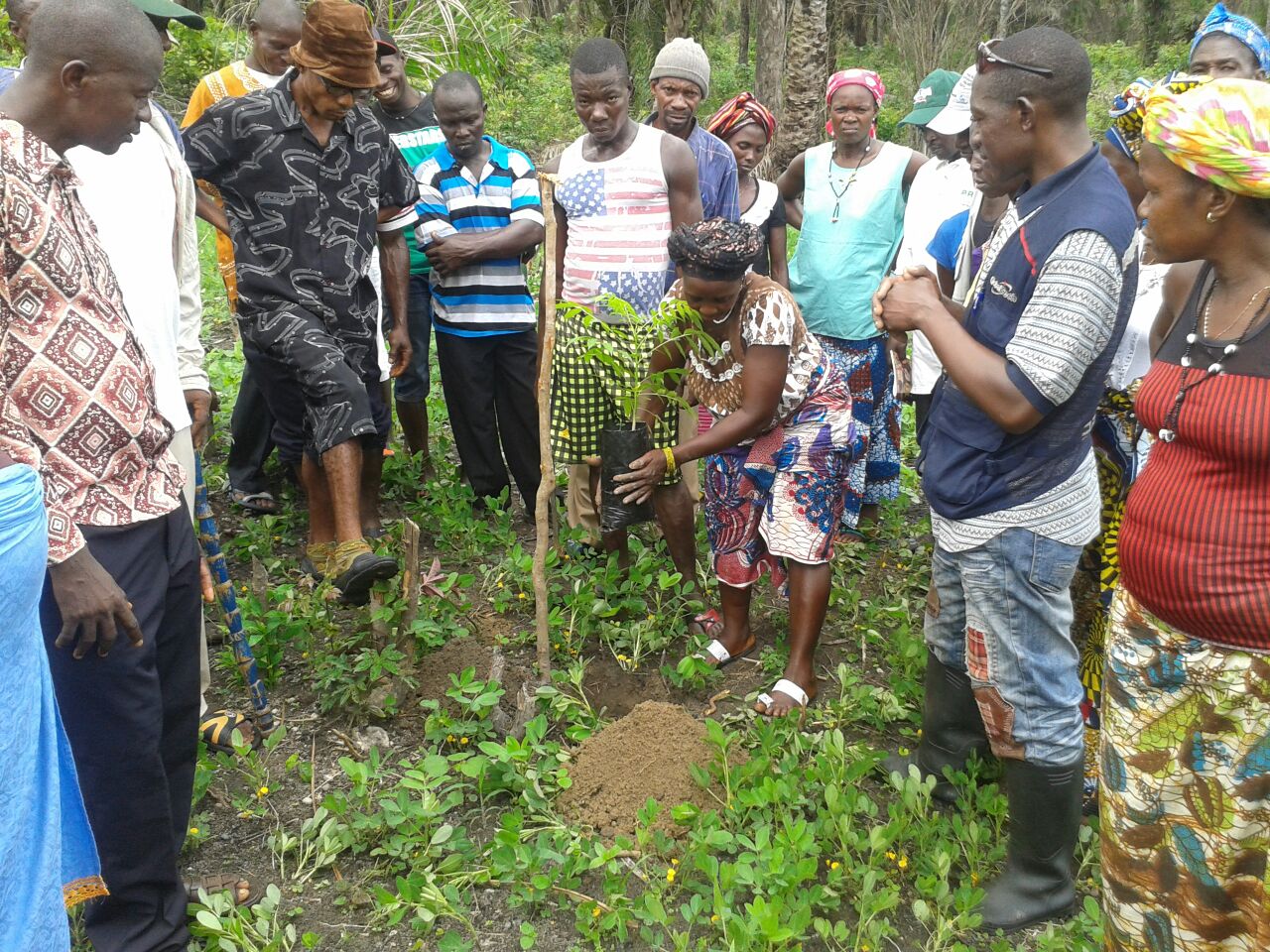
IMG_0138I was grateful to see our dream of transforming the chiefdom by planting fruit trees is becoming reality.  15,000 tree seedlings were planted this year that will transform six villages economically and environmentally.  I saw thousands more fruit trees started from seed growing in two tree nurseries, awaiting planting in next year’s village orchards. And plans to start thousands more in January – February.


IMG_4684I was grateful to see firsthand the work spreading to the community level. More than a hundred people in six villages took ownership to clear 10-20 acres each and plant their community orchards.  Orchards that will provide income for them to build schools, dig wells, send their children to school and protect the environment for years to come.

All this had been done, in spite of the Ebola crisis.


I think most people just want to feel they’ve made a difference in the world and someone’s life has improved because of their efforts.  

I had ample evidence on this trip that Sherbro Foundation’s collaboration with Bumpeh Chiefdom was doing just that.

This work gets done because of the generosity of Sherbro Foundation’s donors. We are deeply grateful for all you have done to make this possible.

So, when you’re sitting around the Thanksgiving table this year giving thanks, pat yourself on the back for reaching out and making a difference in Sierra Leone. I’ll be thinking of you and thanking you again.

——- Arlene Golembiewski, Executive Director
Girl Scholarship Students Dream Big – I Want to Become President

Girl Scholarship Students Dream Big – I Want to Become President

Going to secondary school should be about more than reading and writing. It should be a place where Sierra Leone girls learn what’s possible in life. They should learn to dream big at this early age.

Form 5 (11th grade) student Adama Sankoh at Bumpeh Academy has a big dream. When asked what she wants to do after finishing school, Adama said,

“I want to become a president.”

She’s clear on where to start. “Education is the only way I could change the social and economic status of my family. School prepares my mind to be useful and influential in my community and country as a whole.”

IMG_0257

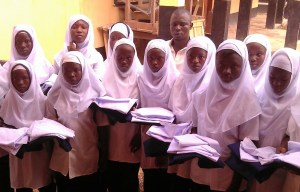
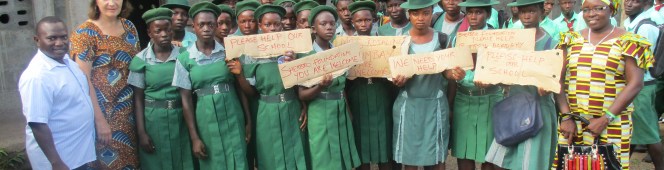
Bumpeh Academy Principal David Rashid Conteh, Arlene, BA scholarship students, CCET Executive Director, Rosaline Kaimbay. Adama is front row, 3rd student from right.  Signs read: Sherbro Foundation, You are welcome. Please help our school.

In school, Sierra Leone girls like Adama are being exposed to the opportunities open to them beyond the small rural communities they come from. Even becoming president. They’re learning the first practical step to achieving those dreams is completing their education.

Sherbro Foundation’s girls scholarship program helped 150 Bumpeh Chiefdom girls continue their education for the school year starting August 2015.

My motivation for starting the girls scholarship program in Bumpeh Chiefdom was simple.  I wanted girls to learn to dream big and start on the path to reaching their full potential with education.  I’ve met more high potential Bumpeh Chiefdom girls like Adama who want to become doctors, nurses, lawyers, journalists, teachers, accountants. Their first step – completing secondary school – is still a hurdle and huge accomplishment for most girls in Sierra Leone.

Sherbro Foundation helps eliminate financial barriers to girls attending secondary school. This year we provided school uniforms for girls in five Bumpeh Chiefdom schools.

The Sierra Leone government paid school fees this year with post-Ebola funding. But uniforms cost as much as school fees, and present a big burden for parents still recovering the past year’s Ebola crisis.

Sherbro Foundation’s 2015 scholarship program helped remove that barrier for 150 of the chiefdom’s most vulnerable girl students. The program is administered by our local partner, the Center for Community Empowerment & Transformation (CCET). Here’s more of this year’s scholarship students.

—– Arlene Golembiewski, Executive Director

WSSS scholarshipsWalter Schutz Memorial Secondary School students


2015 scholarships WSSS, Ah, BAScholarship awardees from three schools flanked by CCET Executive Director, Mrs. Rosaline Kaimbay (left) and CCET Child Welfare program director, Abdul Foday (lower right).  Schools left to right: Walter Schutz SS, Ahmadiyya SS, Bumpeh Academy SS


Ahmadiyya scholarshipsAhmadiyya Islamic Secondary School students


2015 scholarship Mosimbara bEarnest Bai Koroma Junior Secondary School in Mosimbara village, Bumpeh Chiefdom’s newest secondary school. Children from small villages can start secondary school here close to home, and later transfer to Rotifunk for senior high.


2015 Bellentine primaryVain Memorial Primary School, serving six villages in Bellentine Section.  Primary school students got 2 uniforms each. Mothers of many children in this school are in our Women’s Vegetable Growing project.

Back from a month in Sierra Leone

Back from a month in Sierra Leone

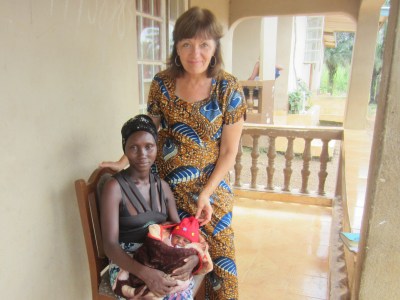
IMG_4630I’m just back Sunday from a month in Sierra Leone. Word is getting out to Bumpeh Chiefdom families about the Newborn Baby program. Kadijatu Kamara seen here presented herself to me with one-week-old Sheikfuad. She wanted to get him registered so he’ll have his education fund bank account opened and get three fruit trees to plant.

It was gratifying to be in Sierra Leone last week when they reached 42 days with no new Ebola cases and were declared Ebola-free. Bumpeh Chiefdom’s Ebola Committee warmly recognized Sherbro Foundation’s support in their Ebola fight – one that led to them being recognized nationally as a model program.

Big thanks go out to all Sherbro Foundation donors.  It was you who made that happen and you who helped save lives.

It was a great trip back to Sierra Leone – my first in two years.  All our projects are moving forward.  Our local partner the Center for Community Empowerment and Transformation mapped out big plans for 2016 that we are excited to assist them with. Look for more news here soon.

—- Arlene Golembiewski, Executive Director

Growing a Baby’s Future

Growing a Baby’s Future

They say money doesn’t grow on trees. But in Bumpeh Chiefdom in rural Sierra Leone, new parents are banking on it.

Through Sherbro Foundation’s Growing a Baby’s Future project, impoverished families in remote villages have a chance for the first time to save for their child’s education. Our grassroots partner, the Center for Community Empowerment and Transformation (CCET), is reaching places foreign aid – or even government funding — never reach.

Chief Caulker with village children.

Paramount Chief Caulker with Bumpeh Chiefdom village children.

The chiefdom is creating a living trust fund for the next generation by planting trees. And they’re doing it by relying on the Chiefdom’s only resources – its fertile land, water and agricultural skills.

Paramount Chief Charles Caulker realized the chiefdom can’t wait for outside help; for “someone” to create a social safety net for children. In a country devastated by both the Ebola virus and a long civil war, the wait is endless. He and CCET organized a major fruit tree planting project for the chiefdom, trees raised themselves from seed.

Only $20 will Grow a Baby’s Future in three steps:

  • Three fruit trees are planted for each newborn baby. The income from fruit sales will go into an education savings account for each baby at the new community bank.  By age 12, there will be money to pay the child’s secondary school fees.
  • Sherbro Foundation is seeding the bank accounts by paying the $3.50 minimum deposits.
  • And to make every child count, we are also is helping the chiefdom start a birth registry. Rural areas today have no birth registration. Without birth certificates, people can be denied birthrights of land ownership, voting and health care.
IMG-20150523-WA0000

Two tree nurseries hold 40,000 seedlings grown from seed, maturing for next year’s rainy season planting.

CCET and the people of Bumpeh are determined to raise thousands of citrus, mango, avocado, coconut, cashew and teak seedlings for newborn babies and their future education. Families will reap their bounty for years to come.

CCET plans to expand their tree nurseries – already boasting 40,000 seedlings – to sell to local farmers, too. This will generate income for the program to become self-sufficient.

Growing a Baby’s Future is facing a backlog of 1,000 babies after it was interrupted by the yearlong Ebola crisis.

CCET only needs our seed money to secure a baby’s future. You can help – donate here.

Growing a Baby’s Future

Growing a Baby’s Future

Baby snip it 2

Join Sherbro Foundation’s fall campaign – sponsor a baby   

Only 30% of children in Sierra Leone can afford secondary school.  Without education, children are born into poverty and never escape. The post-Ebola economic crisis has made getting an education even harder.

Growing a Baby’s Future empowers Bumpeh Chiefdom parents to start saving for their child’s secondary education right after birth by providing 3 income-producing fruit trees to raise.

We also open a bank account for the child, paying the minimum balance. The program combines an old tradition of planting a tree with the baby’s umbilical cord and the new practice of education savings accounts.  Parents learn a culture of saving for the future – and gain a living safety net.

To make every child count, we are helping the chiefdom start a birth registry.  UNICEF reports “one in three children doesn’t exist.” In Sierra Leone, even fewer births are registered. Without birth certificates, people can be denied birthrights of land ownership, voting and health care.

For $20, please help parents secure their child’s future

www.sherbrofoundation.org/donate

Do good with good value

How We Spent Your Money

How We Spent Your Money

Sherbro Foundation Board members get annoyed with organizations we only hear from when they want money from us. We don’t want to be one of those organizations.

Rather, we want to let you know how we spent the money you already sent.  Below is a newsletter covering key projects over the last fifteen months.  You can judge if it was well spent, and whether you want to support us again. Or start supporting us.

If you’d like to subscribe for future e-news, please send an email with “Subscribe” in the title to sherbrofoundation@gmail.com . We only plan about three each year and the occasional special message.  We won’t flood your inbox.   (Likewise, send an “Unsubscribe” message to stop receiving them.)

Are you now thinking now, oh, they haven’t spent my money because I haven’t sent any. You can easily remedy that at http://www.sherbrofoundation.org/donate .

Thank you. Together, we are making a real difference in the lives of people in rural Sierra Leone.

Arlene Golembiewski
Executive Director

Letterhead


Eliminating poverty through education and economic empowerment
August 2015
Veg project distribution ceremony May 2015 - Copy


Click here:  Sherbro Foundation Newsletter August 2015


Concept to Harvest in 5 Months –  the Women’s Vegetable Growing Project

Concept to Harvest in 5 Months – the Women’s Vegetable Growing Project

Just shy of five months from our first March phone call on the Bumpeh Chiefdom Women’s Vegetable Growing Project, women are harvesting their first crops.

I got the pictures of the peanut harvest Sunday.  It’s a good crop, Mrs. Kaimbay told me. She leads our partner organization, the Center for Community Empowerment & Transformation (CCET), who organized and started this first time project.

She and local teachers Mr. Sonnah and Mr. Phoday got the vegetable project started in April – at the same time they were restarting school that had been closed for nine months because of Ebola.

Veg - Groundnut harvesting3

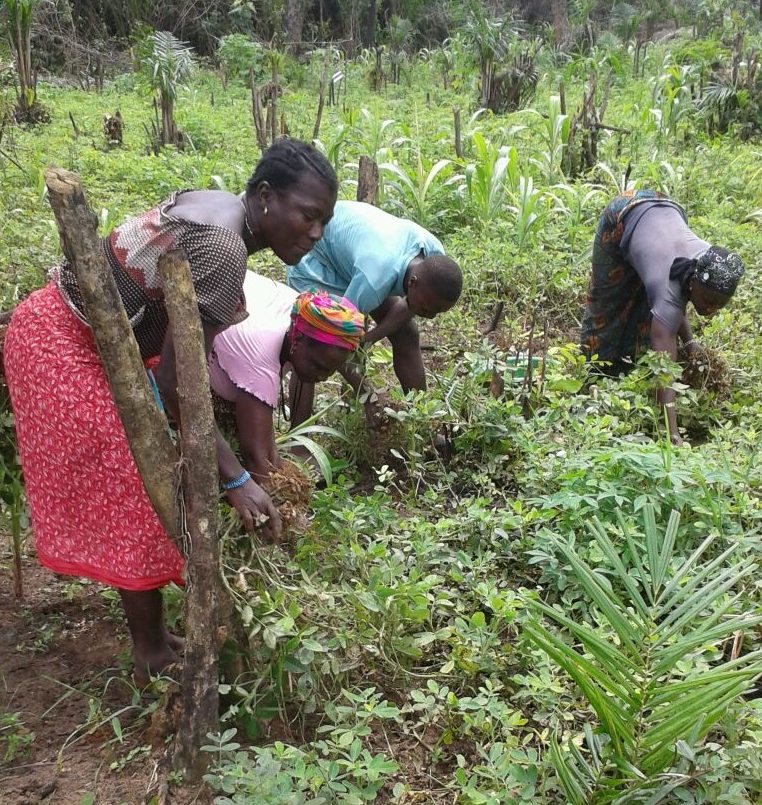
Now in late July, these women in the project’s first group of farmers were harvesting their groundnuts. The corn in the background will be ready soon, together with okra and cucumbers.

It was only in early March that I first asked, what can Sherbro Foundation do to help people whose incomes were slashed during the Ebola crisis.  Help women farmers start fast growing cash crops was the answer. Peanuts and vegetables.

Veg - grountnut harvesting 2What we call peanuts are groundnuts in Africa. That’s because they grow in the ground. They’re actually legumes, not nuts. They’re an important source of protein in the African diet, commonly ground into a paste for soups and stews.
Or eaten straight up, after roasting in a pan. Groundnuts are also enjoyed boiled in the shell.

Veg - groundnuts growing

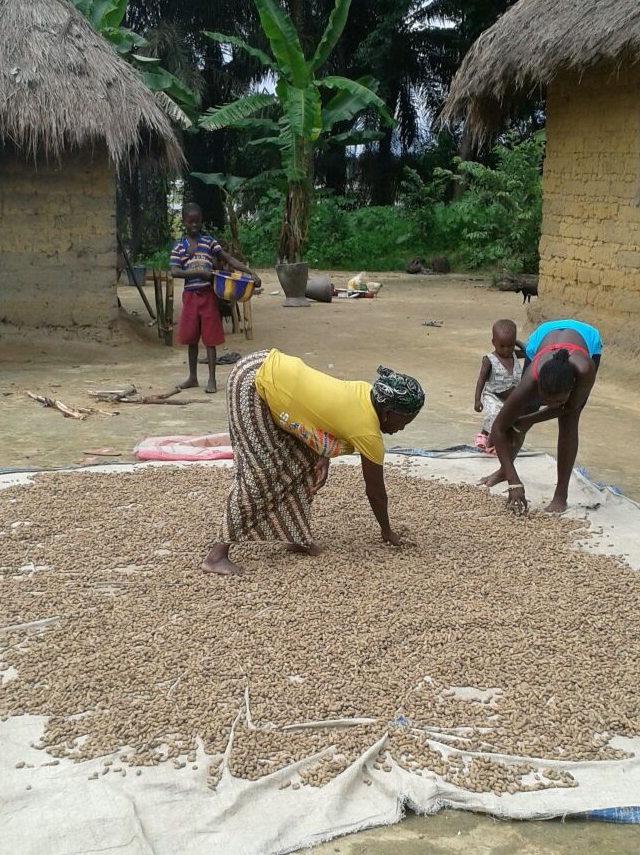
Here’s what groundnuts look like when they’re harvested.  They grow as nodules among the roots of the plant. You dig them up like harvesting potatoes. Then spread them out in the sun to dry.


Veg - drying groundnuts

The Women’s Vegetable Growing project will continue to expand and add new groups of farmers. The thirty five women in this first group will donate seed back to the project for the next group of farmers – a bag of groundnuts and a cup of seed from each of their three vegetable crops.

The women will still net at least three to four times our initial investment of $75 in each farmer. They’ll be ready to start their second crops in September themselves, followed by a third crop in their first year.

In the meantime, new groups of women farmers will be given their start.  In the project’s first twelve months, we should be able to have groups of 30+ farmers producing crops six times.

Workshop on erosion control.

Workshop on erosion control.

The women selected for the project are single heads of large households. They get the use of community land set aside in the chiefdom for special projects. They get training on topics like planting and erosion control, and ongoing support.

Importantly, they now know what empowerment feels like. They’re farming themselves and becoming self sufficient.

Sherbro Foundation and our partner CCET take on practical projects that are simple to implement and which quickly benefit the poorest people in the chiefdom.

We don’t wait years to see lives improved while bureaucracy and overhead are created. We do it within months.

Today Everyone in Sierra Leone is an Ebola Victim

Today Everyone in Sierra Leone is an Ebola Victim

People now ask me if the Ebola crisis is over. It’s certainly dropped out of the media here in the US.

But the answer is, no. The outbreak stubbornly hangs on in Freetown and three northern districts.  Getting to zero is proving to be more difficult than imagined. This is about changing human behavior on deeply seated traditions like burial practices.  Consistent behavior change across the country remains an elusive goal.

Today, March 18, the daily new Ebola case report had only one new case. That’s the lowest ever since the epidemic began. But yesterday was 14 new cases, and the last seven day total is 50. Ebola is not gone.

But much of the country is hanging on to their zeros. Bumpeh Chiefdom has now gone nearly 90 days without a new Ebola case. Their district, Moyamba District, is now 22 days Ebola free.

DSCN0453Today, however, everyone in Sierra Leone should be considered an Ebola victim.

The tragedy won’t end with eliminating the infectious outbreak. The economic and social impact on the country has been nothing less than disastrous. The majority of families’ livelihood is subsistence agriculture, and they are devastated. They depend on today’s market sale for tomorrow’s food.

The entire country’s economic growth has fallen by two-thirds. Mining and tourism are the two largest industries that brought foreign investment and cash into the country. Tourism is of course at a standstill. Little mining goes on.

IMG_0413For Bumpeh Chiefdom, incomes of farmers and small traders were cut in half when they couldn’t get crops to city markets. The three month chiefdom isolation order caused some people to just abandon farms and businesses. Others lost some of their harvest when seasonal laborers fled the chiefdom.

Prices for food, fuel and staples at the same time increased 30%. Feeding their families is now the priority. Things like sending kids to school is a luxury for many.

Bumpeh chiefdom has enough food to avoid starvation.  But the poorest families rely on cheap starchy foods like rice and yams. Not a balanced diet. This can cause developmental problems over time in small children like stunting.

Sierra Leone had the highest maternity and under-five mortality rates in the world even before Ebola hit.  In 2012, free health care for pregnant and nursing mothers and children under five started to change this. But with health care overwhelmed by Ebola, families avoided clinics and hospitals.

IMG_0097Many more people have likely become ill or died of common untreated illnesses like malaria, dysentery and typhoid than from Ebola, especially small children. Women and babies died because pregnant women did not seek health care, or they were turned away by health care workers fearful of the Ebola risk. The UN Population Fund estimated the Ebola epidemic may have caused 120,000 maternal deaths in the 3 countries affected by Ebola by late October when Ebola had not yet peaked. Children are not being vaccinated against dangerous diseases like small pox. HIV goes undiagnosed or untreated.

Schools have been closed for seven months and more than 60% of the population is school age children. Keeping kids out of school will have a long term effect on the country’s development.  The longer teenagers stay out of school, the less likely they will return.

Teenaged girls are especially affected. Pregnancy rates climbed during the Ebola crisis with over 30% of schoolgirls estimated pregnant nationwide. Sierra Leone President Koroma is calling for pregnant girls and new mothers to come back to school and complete their education.

IMG-20150108-WA0001So is all lost in Sierra Leone? No! The people are resilient. The world development community learned hard lessons from Ebola on the importance of targeting local solutions and local leadership.  And Sierra Leone mobilized thousands of young people eager to help their country who stay connected with social media.

IMG_2005Sherbro Foundation goes back to our mission of supporting practical grassroots projects that quickly benefit the poorest people. Bumpeh Chiefdom’s Paramount Chief Caulker said his top two priorities now  are restoring income for hungry people and sending girls back to school. So we are helping them with two urgent programs for these.

The first is a vegetable growing program, so farmers can raise fast growing cash crops like peppers and quickly earn income again.

Our second urgent program is helping girls get back in secondary school.  School is slated to reopen April 14. The Sierra Leone government has a grant that will cover school fees this year for all secondary school children. But the $30 school uniform and school supplies will still be barriers for most poor families.

Sherbro Foundation’s goal this year is to buy school uniforms for 300 girls.

More on both these programs in future posts.

You don’t have to wait to help Bumpeh Chiefdom. You can donate now at www.sherbrofoundation.org/donate. Your money helps restore livelihoods and build self sufficiency.

Arlene Golembiewski
Executive Director

Connecting the Dots: Sierra Leone – US Shared History

Connecting the Dots: Sierra Leone – US Shared History

Today is Martin Luther King Day in the U.S. to honor Dr. King.  Soon it will be African American History month in February. When I think of these dates now, I think of the shared history between Sierra Leone and the U.S.

I thought I would repost an article I wrote last year. Click here: “Connecting the Dots: Sierra Leone – US  Shared History.”

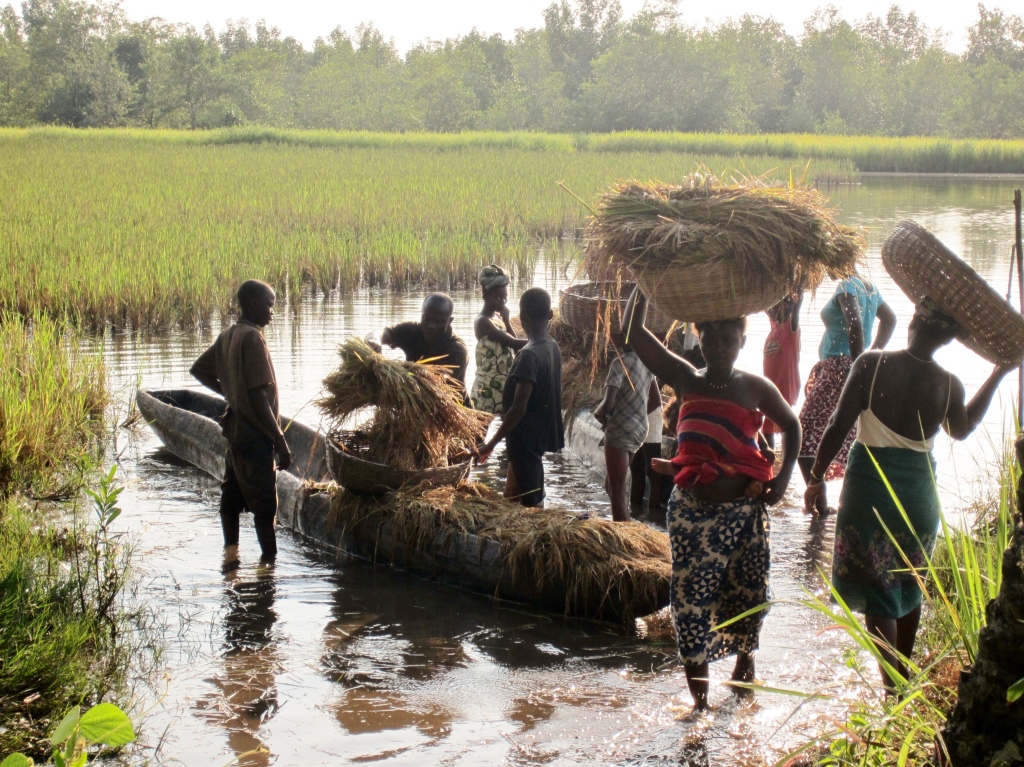
Unloading rice to the threshing floor

Unloading rice harvest Bumpeh Chiefdom – Nov 2013

I sometimes ponder the events that would have taken place in Bumpeh Chiefdom where Sherbro Foundation works. It’s a coastal area involved in the slave trade long ago in the 18th century.

But I think about more than just the slave trade. I’m thinking again today about the deep connections between our two countries – connections most people have no knowledge of.  Last year I wrote:

When I now travel down the Bumpeh River and visit traditional rice farms and villages, I remain mindful that there is a special link between Americans and the people of Sierra Leone.  Our people are kin.  Whether black or white, our histories and cultures are inextricably linked.”

A number of African Americans who have tested their DNA have found they’re of Sierra Leone descent. DNA can be matched to various tribal group in Sierra Leone. I keep reading of more people, like Maya Angelou and Colin Powell who found they are DNA – Sierra Leoneans.

I hope when tourism resumes in Sierra Leone, more people will make a trip to Sierra Leone to learn about our shared history. People of all races will find it fascinating to learn about where and how this whole story started.

My own journey changed the way I think of our two countries today, not just in the past. We are connected – and should remember that.

From Ebola Hotspot to Zero

From Ebola hotspot to zero new cases. This isn’t a dream.  It’s reality today in a number of  parts of Sierra Leone.

The media was blasting news through December about a country out of control with rising Ebola numbers.  Yes, the capital Freetown and northern cities like Port Loko have had high levels of new cases making Sierra Leone now the hardest hit country in the Ebola epidemic. They also put the whole country at continued risk because people continue to travel between districts.

So, am I an optimist talking about zero? I drafted this story a week ago and hesitated to post it for concern people would think this is just wishful thinking.  It isn’t.  In the last month, numbers have been steadily coming down. The Sierra Leone Ministry of Health’s daily postings of new Ebola cases have gone from 72 cases per day December 1, to 55 cases per day December 24, to 29 cases January 2.  January 12  was 19 new cases – for the entire country.

Eight of 12 districts in the country have achieved zero new Ebola cases for varying lengths of time.

So, what’s going on? I’m in weekly phone contact with Bumpeh Chiefdom in Moyamba District. I hear what Paramount Chief Caulker and paramount chiefs around the country have been doing in the last month. “Christmas was canceled.” Instead chiefs and other local leaders visited all parts of their chiefdoms with the task of influencing those resident behaviors that have been so resistant to change. In Sierra Leone’s culture, it’s the chiefs who have the authority to give people the difficult expectations on Ebola, like no traditional burials with washing of dead bodies  And chiefs can hold their people accountable.  More on this in another post.

Minister of Local Government and Rural Development, Hon. Diana Finda Konomanyi celebrates 42 days without Pujehun district recording a single new case of Ebola.

Minister of Local Government and Rural Development, Hon. Diana Finda Konomanyi celebrates 42 days without Pujehun district recording a single new case of Ebola.

Today, many parts of Sierra Leone have learned how to control Ebola, and they have achieved zero new cases.  Quarantines are lifted after 21 days. To be declared “Ebola free,”  the magic number is zero new cases for 42 days.

Pujehun District was just declared the first Sierra Leone district Ebola free, now more than 42 days.  Pujehun is in the southeast corner, away from current outbreak areas.  They’ve only had 31 cases total to date. But they note they share a border with Liberia, and only their strict procedures have kept Ebola out of the district.

Kailahun and Kenema districts are the two original Ebola hotspots in the East where the disease first crossed over from Guinea. They both declared themselves with no new Ebola cases for 21 days or more. A few cases returned, but with fast reporting and treatment facilities available, they’ve been able to stop further spread. Five other districts are at or near zero for a number of days.

This Reuters story describes where Kailahun district is today and how they did it.  The last 21-day quarantine on a home was lifted on December 30.

Opening new check point between Bumpeh & Ribbi chiefdoms

Opening new check point between Bumpeh & Ribbi chiefdoms

Bumpeh Chiefdom, where Sherbro Foundation does its work in Moyamba District, lifted a 21 day quarantine last week, leaving them today with no Ebola cases.  They had gone more than 42 days Ebola free.  Then a family in the remote SW corner of the chiefdom crossed back and forth between Bumpeh and neighboring Ribbi chiefdom, carrying Ebola with them. It resulted in two deaths in early December in Bumpeh Chiefdom, and more in Ribbi Chiefdom.

The village homes involved were quarantined. New chiefdom led check points were set up to stop movement between the chiefdoms with 24/7 monitoring .  Bumpeh Chiefdom’s Paramount Chief Caulker had no choice but to arrest and fine the Section chief and village chief involved for not reporting these Ebola cases.

This was the first instance in the country of chiefs being arrested for not carrying out their duties under the new Ebola by-laws.  They’re subject to six months imprisonment. It’s this kind of strict accountability that will stamp out Ebola.

It’s now been about 21 days and surprisingly, no new Ebola cases came out of the Bumpeh Chiefdom village quarantine.  Chief Caulker speculated that perhaps all the earlier sensitization training paid off. Perhaps villagers involved in the burial understood they could become infected and improvised ways to protect themselves.


It’s working – No More Ebola Cases in Bumpeh Chiefdom!

December 8th Update:  55 Days & counting  –  No new Ebola Cases!

Chiefdom Ebola Task Force is doing a fantastic job – but they need our continued support.

There are no more Ebola cases in Bumpeh Chiefdom since they embarked on their Breaking-the-Chain-of-Transmission program  October 22nd. Even though they earlier lost 21 people to Ebola and the epidemic rages around them.

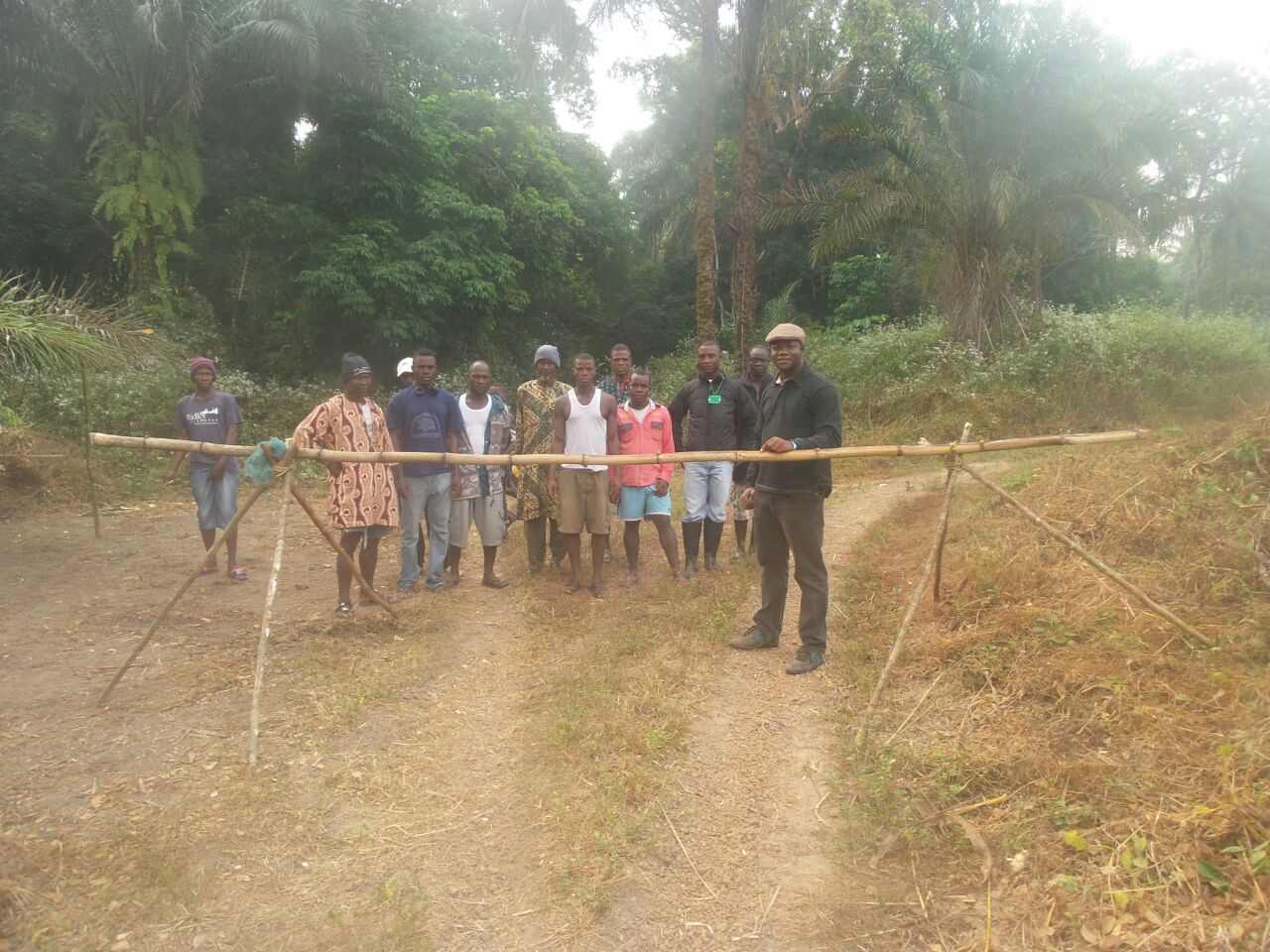
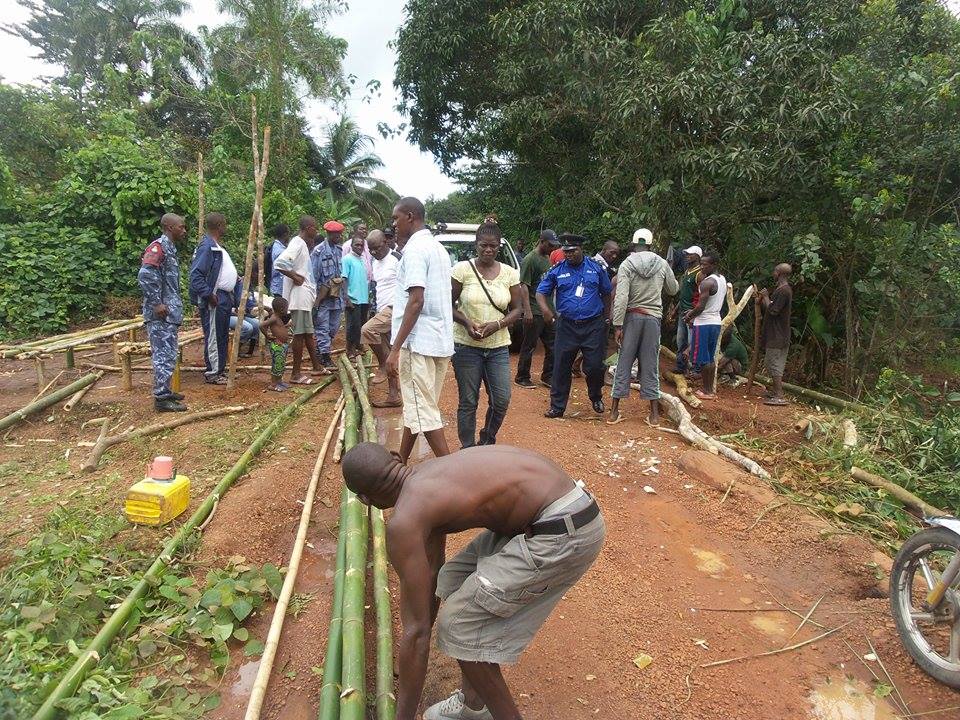
Setting up check point.

Setting up check point.

What’s changed? The single biggest intervention is rigorously managed checkpoints at the main roads to stop “strangers” from entering the chiefdom and carrying Ebola with them.  Village chiefs are the next level of defense going door to door daily to verify no one has taken ill and there are no unexpected visitors.  Reporting is real time with cell phones.

Imagine if every chiefdom in Sierra Leone mounted this kind of systematic offensive to identify and isolate Ebola cases for even 21 days.  It would literally break the chain of Ebola transmission and the outbreak would be on its way out.   Read the whole story here.

Sherbro Foundation continues to support Bumpeh Chiefdom in their Breaking-the-Chain-of- Ebola-Transmission program.  Without our donations, they could not have launched this comprehensive effort.

You can make a difference and help eliminate Ebola, too.  Join us and donate at www.sherbrofoundation.org/donate. We need your help to keep this effort going for the coming months.

You’ll know exactly where your money goes, and that it’s actually working to stop the spread of Ebola.

Bonus: 100% goes directly to the chiefdom Ebola program. Every penny. We’re an all-volunteer organization and our small administrative costs are paid by a separate donation.

2nd Bonus: It’s tax deductible for US residents. Sherbro Foundation is a 501(c)(3) tax exempt organization.

Help us even more – forward this to a friend.

It’s Working – No More Ebola Cases in Bumpeh Chiefdom

November 19 update – Ebola-free 32 days and counting

“Things are better, relatively speaking.” Rosaline Kaimbay emphasized the “relatively speaking” when I called yesterday for an update on Bumpeh Chiefdom. But it was the first positive news in some weeks. There are no more Ebola cases in the chiefdom since they embarked on their Breaking-the-Chain-of-Transmission program two weeks ago.

Yet Ebola is raging in Waterloo, a large town on the main highway and the source of recent Ebola cases in Bumpeh Chiefdom. There are reports of over 700 dead of Ebola in the Western Rural area in the last 5-6 weeks, most coming from Waterloo. Ebola “refugees” have been fleeing places like Waterloo and carrying Ebola to rural villages. Places like Bumpeh Chiefdom in close proximity.

Setting up check point.

Setting up a check point.

But today there’s no Ebola cases in Rotifunk or the rest of Bumpeh Chiefdom. Why? The single biggest intervention is rigorously managed checkpoints at the main roads to stop “strangers” from entering the chiefdom and possibly carrying Ebola with them.  There are also checkpoints on the Bumpeh River that traverses the chiefdom and is the main traffic route for many of its 208 villages “downriver” as they say.

Young chiefdom men volunteered to supplement government security forces at checkpoints and monitor all traffic in and out of the chiefdom. They’re the ones rigorously enforcing, keeping chiefdom borders tight, and ensuring outsiders are turned away. They’re the ones sitting up for all night vigils with nothing to protect them from mosquitos except a camp fire. They take turns for naps in a 3-sided palm branch lean-to on hard benches of split bamboo – their improvised shelter.

Rosaline Kaimbay interviewed at chiefdom meeting.

Rosaline Kaimbay interviewed at chiefdom meeting.

Rosaline visits the checkpoints daily to be sure all is going well and lend support. She is Executive Director of Sherbro Foundation’s partner organization, the Center for Community Empowerment and Transformation, CCET, and principal of Prosperity Girls High School. And now, she’s part of the chiefdom’s Ebola task force. Rosaline is a do-er. If you need something done, get Rosaline. If it’s important to Bumpeh Chiefdom, you won’t need to look for her. She’ll be there.

Rosaline said she goes to the checkpoints daily for at least 30 minutes, maybe an hour, to personally assess. She heads out each day with the CCET motorcycle and a driver, the only practical way to get around these days. Maybe the only way.

We have six chiefdom men assigned to each checkpoint, Rosaline said. They rotate through, with five days on and two days off. I talk with people, bring them drinks, something to boost morale.

And the checkpoints are working. I asked what they do if someone tries to enter the chiefdom who doesn’t live there. They send them back where they came from, she said, the way they came in.

Chiefs like Mr. Kamara monitor village families.

Chiefs like Mr. Kamara monitor village families.

It sounds rather medieval. But much of the country is under similar isolation orders, trying to isolate districts, and chiefdoms within districts, that have surges in new Ebola cases. This is Public Health 101 to isolate disease cases and keep them from spreading. It works.

Village chiefs are the next level of defense in the Breaking-the-Chain-of-Transmission program. Bumpeh Chiefdom chiefs are going door to door daily to verify no one has taken ill with Ebola-like symptoms, and there are no new visitors.  Reports are by cell phone real time, wherever possible.  Section Chiefs are responsible to report their village results to the Chiefdom task force.

Imagine if every chiefdom in the country mounted this kind of offensive to fight Ebola for even 21 days – the upper range for Ebola incubation. It would literally break the chain of Ebola transmission and the outbreak would be on its decline.

Identify – Isolate – Treat. If all three legs of the infectious disease control stool were reliably there, Ebola would come under control. Actively engaging and supporting traditional leaders to identify and isolate cases in their chiefdoms is the key. They play a role in getting cases promptly sent for treatment. No one else can do this systematically with cooperation of the people. No one else is already in place in every corner of the country.

There’s still a long uphill battle to eliminate Ebola. But for the first time in a long while, you get a sense the runaway train is starting to be controlled and slowing down.

Sherbro Foundation will continue to support Bumpeh Chiefdom in their Breaking-the-Chain-of- Transmission program. Our donations go to support the checkpoints teams with small weekly per diems, transportation costs and cell phone coverage. Village chiefs receive a $5 honorarium to recognize their service for three months of house to house checks. With gas at $5/gallon, transportation costs are high. Our support enables the Chiefdom task force to get around and ensure work gets done. We continue to supply villages with hand washing stations and disinfectant for public places.

You can make a difference and help eliminate Ebola, too.  Join us and donate at www.sherbrofoundation.org/donate

You’ll know exactly where your money goes, and that it’s actually working to stop the spread of Ebola.

Bonus: 100% goes directly to the chiefdom Ebola program. Every penny. We’re an all-volunteer organization and our small administrative costs are paid by a separate donation.

2nd Bonus: It’s tax deductible for US residents. Sherbro Foundation is a 501(c)(3) tax exempt organization.

Help us even more – forward this to a friend.

Ebola – All We Need to Do

All we need to do to make this work is restrict movement (into the chiefdom) and don’t touch.

Setting up checkpoint at chiefdom border.

Setting up checkpoint at chiefdom border.

These were Chief Caulker’s words to me two days after he launched his “break-the-chain-of-transmission” program to stop Ebola in Bumpeh Chiefdom. He spent the previous evening at one of the key checkpoints set up to control anyone trying to enter or leave the chiefdom on a drivable road. Additional checkpoints are being set up at strategic points for river traffic and frequented footpaths.

Chief was there until nearly midnight to personally observe checkpoint activity. And I need to boost morale, he said, so I stayed there late into the night.

Chief Caulker (blue sports suit) inspecting checkpoint.

Chief Caulker (blue sports suit) inspecting checkpoint.

The chiefdom has been under a government isolation order for a month with no traffic in or out except those with an authorized pass. Waterloo and Moyamba Junction are both market towns on the main highway now decimated by Ebola. Many there have family and personal connections in Bumpeh Chiefdom. You turn off the highway at either of these points to reach the chiefdom. Both towns have been the source of three cases of Ebola infected people fleeing quarantine there to chiefdom villages. Each incident was isolated and contained, but Bumpeh Chiefdom’s proximity puts it at risk of a bigger outbreak.

Army or police manned checkpoints on roads are supposed to stop all traffic without authorized passes, including any vehicle, motorbike or foot traffic. But borders are “porous,” as they say. “Lots of compromising going on,” Chief said. These are nice ways of saying people can pay or otherwise talk their way through.

Checkpoint night watch.

Checkpoint night watch.

This is why Chief Caulker has added his own chiefdom volunteers. Young men committed to their chiefdom and willing to sit up all night in a palm lean-to with a camp fire, and actually stop traffic without an official pass. Four trucks per day are allowed to bring supplies to Rotifunk.

A week later Chief Caulker said, the checkpoints are being very effective. The presence of checkpoint volunteers is making the army or police personnel do their jobs.  Traffic is finally being halted and turned away. Volunteers call in reports on cell phones.

The only problem, chief said, is that the police and army personnel are asking for food and ”incentives.” In the local vernacular, this means money and things like cigarettes, because they’re not being paid by the government, or payments are skipped. I’m not using donations the chiefdom received to fight Ebola to pay staff the government is responsible for, Chief said.

I’ve come to better understand all the petty corruption from police, army and other government employees, trying to extract small bribes from local people. When they don’t get paid, they still need to eat and support their families. They’re in effect imposing their own tax. If that’s all that’s at stake it’s one thing. But allowing Ebola infected people to pass through checkpoints during this crisis in inexcusable.

On the no touch side, one of the biggest sources of new Ebola infections have been traditional burials – now considered unsafe. People now understand (at least in Bumpeh Chiefdom) the need to report all deaths to first check for Ebola.

We’re having a good response on our side on reporting, Chief said. I got five cases of natural deaths reported to me last week I wouldn’t normally get. We need to know cause of death in each case. Swabs are taken for Ebola testing  by the community health officer.  There’s been a better response now on testing requests.

Local chiefdom burial teams have been organized and started doing burials under the supervision of official burial teams from the district capital, Moyamba. This includes proper use of personal protective equipment they received a few days ago that’s WHO funded. Teams have to undress and throw the PPE into the grave, chief said, so the supply won’t last for long. The first few burials will be supervised; then local teams are on their own. Bodies won’t be waiting two, three or more days for burial. Or be thrown in the river, as was recently done.

Let’s hope the chiefdom program to stop Ebola results in few Ebola burials to come, and new protective equipment isn’t in demand. So far, so good.

Sherbro Foundation is proud to be supporting Bumpeh Chiefdom in their program to break the chain of Ebola transmission with helping fund the checkpoint teams.

Ebola – how life is unnecessarily lost

Oct 4  Sad update to this story: everyone, save three small children, in the three quarantined houses have contracted Ebola and passed away. 14 adults and the 17-yr old girl pictured here. The 3 children have reached the 21 day point with no symptoms, and are being released.
****************************************************************************************************************************

I was shocked to hear that all of Moyamba District was put under an Ebola isolation order last week, and Bumpeh Chiefdom was further isolated within the district. And worried about the welfare of my friends in Bumpeh Chiefdom where Sherbro Foundation does our work.

I soon learned more that shocked me, more than four months into the second and more rapidly growing wave of Ebola in Sierra Leone. My heart aches for these people so far away, and there’s so little we can do from here. But one important action is helping.

After a three-day national shutdown to try to contain Ebola cases, it may have seemed that the cities were starting to get a grip on the deadly virus, which is spread by contact with bodily fluids.

But there’s still no full logistical plan nor Ebola-equipped health care in rural areas –the majority of the country — to manage cases in new Ebola hot spots. What are the practical next steps, when there are so few resources, when there are so many obstacles in a subsistence society?

17-yr old gives birth aloneIsolation and quarantine are the government orders. But with no further plan and coordination of services, avoidable Ebola cases can happen — and more unnecessary deaths.

This 17-year old girl is another kind of Ebola victim.

Pregnant with her first baby and quarantined in a village just outside Rotifunk, she got no prenatal care in her last weeks. When the baby came, she was left to deliver on her own. Even her own mother was afraid to come to assist. The baby was stillborn. The young mother got no assistance to ensure the placenta was fully removed and she had no complications. She remains untended in quarantine.

“If there had been the opportunity of suing the state to court, I should have been the first person to do that,” Rotifunk Ebola task force team leader Ben Alpha’n Mansaray said via Facebook.

“Once you are quarantine, you are sentenced to death. They need care! They need hope!”

About 1.2 million people in the country are now under isolation orders in the Sierra Leone government’s efforts to stop the spread of the disease. Isolation means a cluster of new Ebola cases occurred, requiring a more drastic measure.  People can move around within the isolated area, but no one can come in or go out. Individual homes are quarantined to further isolate new cases.

Alpha Mansaray delivers hand washing stations and Ebola prevention message to villagers.

Alpha Mansaray delivers hand washing stations and Ebola prevention message to villagers.

Quick action by Bumpeh Chiefdom’s Paramount Chief Charles Caulker to quarantine contacts of the first Ebola case in early September has kept the disease contained to a small village on the outskirts of Rotifunk. Rotifunk itself, seat of the chiefdom of 40,000, remains safe.

Ten days ago, the dreaded virus emerged in new cases among the quarantined people. Eight people total have died, and two early cases made it to a treatment center.

Quarantine sounds like a straight-forward measure. You restrict people to their house who may have been exposed, and wait through the 21-day incubation period to see if they develop the disease. But in an impoverished rural area like Rotifunk, the logistics are anything but simple.

They are nightmarish.

  • There’s no local holding center to isolate new Ebola cases from those not sick until they can be carried to a treatment center. In close quarters of a quarantined house, the sick can quickly infect those not sick.
  • The few Ebola treatment centers (only in far-off cities) and ambulance service are beyond overloaded. Rotifunk made repeated calls for five days and got no response. With no Ebola-equipped local health care, the sick are left on their own. No one comes near. The sick only got sicker.  Three died waiting for an ambulance to arrive.  Three others made it to the district capital holding center — two hours to go only 17 miles on a pothole ridden dirt road  — but died waiting for a bed opening up in a treatment center.
  • Inexperienced ambulance teams that did finally appear are fearful even with some protective equipment, and wouldn’t assist Ebola patients into the ambulance. If sick patients could drag themselves 25 feet and climb in on their own, they were taken to a holding center. If not, they were left to die at the quarantine house.  One man died the following day.
  • People in quarantine have great difficulty getting adequate food or daily clean water. These are people who rely on their daily labor to buy their daily food. Some are lucky when family or friends send food. Others are at the mercy of generous local residents.
  • Water is especially important to keep the sick hydrated. When a water container is used in quarantine, it must be considered contaminated. Disposables are unheard of. If the quarantined are near a river, they can collect their own water. If not, they wait for a Good Samaritan to bring water and pour it into their container left outside.
  • Other medical emergencies like malaria, typhoid, maternity cases or increasingly common chronic conditions like hypertension get no care in quarantine – resulting in unnecessary complications or deaths.

When new Ebola cases appear in a quarantined house, the 21-day quarantine clock starts again for those showing no Ebola symptoms.  They could end up in quarantine for five, six or more weeks. When left in the same infected house, their likelihood of getting Ebola only grows.

The central government Health Service orders there be no movement of people under quarantine. Security (army or police) are stationed to enforce this. No safe houses have been provided despite repeated reports of Rotifunk’s situation. Some well people, like this pregnant girl, moved to an outdoor bathhouse (just concrete) in an effort to protect themselves while waiting out the remainder of their quarantine.

Bumpeh Chiefdom’s  isolation order came last week without notice, separating parent from children, farmer from fields needing planting, family from breadwinner who went to market and has the only money or food to feed the others.

When I read of whole villages being decimated by Ebola, I can now better understand why. Quarantine can lead to the sick quickly infecting those not sick with nowhere to go. Villages may self-impose quarantine to isolate the sick. With sick people and no indoor plumbing or easy to access water, houses quickly become filthy. Disease spreads. Mothers delivering babies and small children with malaria get no medical care.

How can this awful situation be improved?  One simple solution is to build temporary makeshift huts and pit latrines as local Ebola holding centers, to separate those becoming sick until they can be moved for treatment. With very minimal funding, these could be locally built. But they’re not forthcoming. Ambulance service calls need to be coordinated, and drivers trained and held accountable for delivering patients.

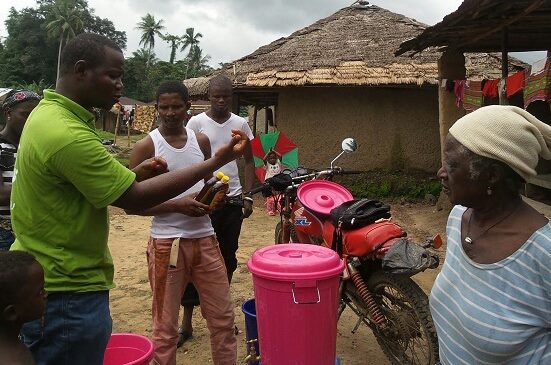
There is something important we in other countries can do: Help to buy simple hand-washing stations for Bumpeh ChiefdomSherbro Foundation paid for 200 such plastic stations and disinfectant in August. Forty stations were set up in public places around Rotifunk in one week.  160 more followed for chiefdom villages in August.  Chief Caulker said, “These have been very, very effective. You see them constantly in use with people washing their hands throughout the day.”

Chief Caulker would like 200 more hand-washing stations to supply remaining villages. Villagers get Ebola sensitization training and weekly reminders from Rotifunk volunteers on the importance of frequent washing to prevent Ebola and other diseases like cholera, typhoid and dysentery. Behaviors on personal hygiene and sanitation are changing.

Sherbro Foundation works directly with the Bumpeh Chiefdom Ebola task force to quickly send all donated dollars so they can buy these life-saving supplies. Please consider donating right now!  $20 buys one hand-washing station and two bottles of disinfectant.  Donate online here.

Nothing is easy about managing the Ebola outbreak in Sierra Leone. But coordination and common-sense local solutions could help. When coordination between the central Sierra Leone government and rural traditional leaders during emergencies is missing, key opportunities are lost.

Innocent people are the losers when critical decisions aren’t made quickly. It means unnecessary and tragic loss of life.

Nine year-old Caitlin raises money for Ebola prevention

“Just because you can’t do everything doesn’t mean you can’t do something.” Olga Murray, founder of the Nepal Youth Foundation.  Nine year-old Caitlin found something she could do to help fight Ebola in Sierra Leone.

caitlinCaitlin came to me Friday with $18 she earned by making bracelets and selling them in a neighborhood business area.  She kept going until she collected $18 – the cost of one portable hand washing station being used to prevent Ebola transfer in Sierra Leone.

She set up her box of colorful rubber bands in a prominent place in the shopping district and proceeded to braid them into stretchy bracelets for sale. She was selling them for twenty five and fifty cents. When people saw her hand made sign saying she’s selling to help prevent Ebola, some people gave her a dollar.

"All funds go to help build hand sanitizing stations in Sierra Leone."

“All funds go to help build hand sanitizing stations in Sierra Leone.”

When I asked her why she decided to do this, she said she wanted to give kids in Sierra Leone a good place to wash their hands and not get Ebola.  I was touched beyond words.

I stole the above quote from friend Karen. It says so well what we’re doing with Sherbro Foundation. We can’t save the world, but we can do something to help one Sierra Leone community get through the Ebola crisis.

Frequent hand washing is one proven way to stop spread of the Ebola virus. The money we’re sending now goes for public hand washing stations in  Bumpeh Chiefdom in rural Sierra Leone where there is no running water.

Thanks to Caitlin for joining our effort to fight Ebola in Sierra Leone.  Thanks to many others who also joined in with their donations this month. These helped us place one hundred forty public hand washing stations in Bumpeh Chiefdom in the last two weeks.  They’re already being used.

Villagers are also getting an important personalized education on the importance of sanitation and hand washing in preventing disease.  The leader of our Bumpeh Chiefdom partner organization, Rosaline Kaimbay, told me, These hand washing stations are protecting against more than Ebola. It’s raining now. This is the cholera season, too.

The Ebola outbreak is unfortunately growing at the moment.  We will have to maintain these hand washing stations with chlorine bleach or disinfectant for months to come.  You can help.  Click here to donate.