Open up her world. Give a girl a scholarship.

Campaign 7-25-17 (2)

Isatu is a remarkable girl.  She’s an orphan determined to stay in school.  With help from Sherbro Foundation scholarships, she has made it to her senior year!

Each day is a challenge in Bumpeh Chiefdom, Sierra Leone. Isatu lost both her parents as a young girl. She lives with her aunt, a farmer, in their small village of mud houses outside Rotifunk. There’s no public transportation. Isatu and her friends get up before dawn and walk six miles to school.

After school, Isatu walks six miles again home, and then helps her aunt in the field, tending cassava, rice and greens. They grow their own food, but have little left to sell for income for school fees. Darkness comes by 6:30 year-round near the equator. Isatu can’t afford a lamp to study in the evening.
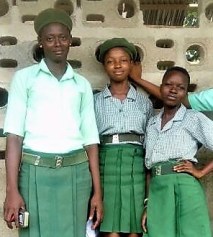
Yet Isatu has big plans. She wants to become a lawyer. She learned in Civics class that lawyers use the law to protect people. “I want to fight for my colleagues and people in the village against violence” and for better conditions, she says.  If Isatu hadn’t received a Sherbro Foundation scholarship, she wouldn’t be in school, and wouldn’t be learning about a world of jobs and careers.

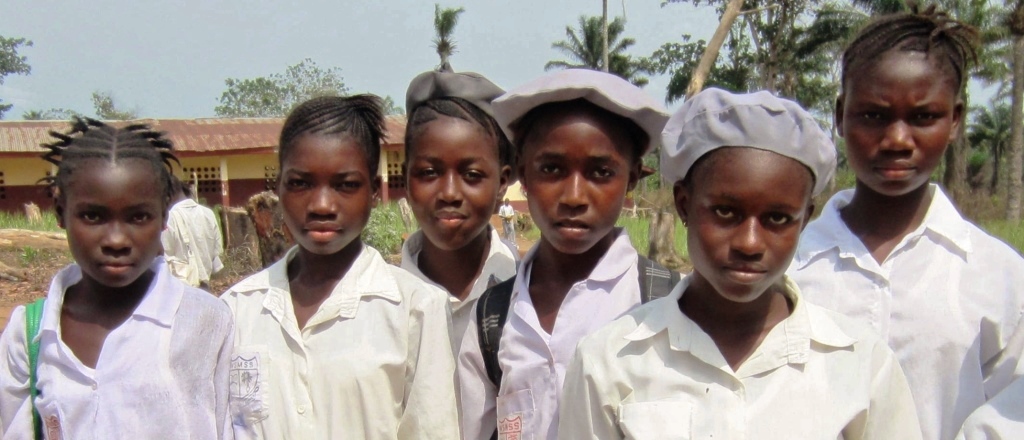
Bumpeh Academy students – Isatu, left, Hellen and Alima

More Bumpeh Chiefdom girls than ever are in school. Nearly 900 girls were enrolled in the area’s five secondary schools at this term’s end.

But hundreds more want to go to school and don’t have $17 to pay the annual fee! Their families are struggling to earn $1 per day to put food on the table. Sierra Leone’s economy went into freefall after Ebola and has not recovered. Families can’t continue to support teenage girls, and many are pushed to marry at 16 and 17. They get pregnant too early. The cycle of poverty continues. Teen pregnancy keeps Sierra Leone’s maternal and infant mortality rates among the world’s highest.

In four years, Sherbro Foundation’s scholarship program has helped 450 girls enter – and stay – in school.

Girls with scholarships work harder in school in order to keep them. They know there’s competition. They now have bigger goals, and pregnancies are reduced to only a few.

Some graduates will go on to vocational training. Some like Isatu are determined to go to college. They want to become the nurses, doctors, teachers, accountants, policewomen and lawyers their country desperately needs. With education, they all can move beyond the cycle of subsistence life that has long trapped their families.

But our scholarships have only helped a third of the girls enrolled. Even more want to go to school.

Now is a crucial time. With the new school year starting soon, you can give more of these girls the gift of attending school. You can:

  • Ensure 350 girls have the chance to go to school this year with a $17 scholarship.
  • Help girls progress into senior high and bring new 7th graders into junior high.
  • Provide a new uniform for 7th graders and 10th graders starting in new schools.

With a strong U.S. dollar, giving is a great bargain. Your $50 will sponsor three junior-high students to make the important leap to secondary school. Or ensure that three older girls can focus on graduation.

$35 will send a girl to school for an entire year AND outfit her with a school uniform. Where else can $35 do as much good as educating a girl?

More good news:  Our Board pledges to match each gift. You’ll help twice as many girls!

It’s easy to donate online: Click here. We welcome checks sent to: Sherbro Foundation, 3723 Sachem Ave., Cincinnati, OH 45226.

Bumpeh Chiefdom’s girls tell us: “We’re ready to learn.”

You’ll open up their world to new possibilities by giving girls a scholarship.

Thank you!

Arlene Golembiewski, Chris Golembiewski, Cheryl Farmer and Steve Papelian

— The Sherbro Foundation Board of Directors

P.S. Isatu and her fellow students are so grateful to you for expanding their world. Won’t you help a few more of her friends? If you do so now, they can be ready for school in September!


More girls in school than ever, but more want to go

More girls in school than ever, but more want to go

I was excited to see enrollment of girls was up when I visited Bumpeh Chiefdom’s secondary schools in February. Girls, in fact, were now equal in numbers to boys enrolled. This is a big step forward in Bumpeh Chiefdom, where poverty forces most girls to drop out by junior high.

But I soon found still more girls want to go to secondary school and can’t afford to.

The Sherbro Foundation Girls Scholarship program is changing this. We set a goal last summer of doubling the number of scholarships from 150 to 300 girls.

Thanks to your support, we met that goal and sent 300 girls to secondary school last September.

A small donation of $25 meant a Bumpeh Chiefdom girl could attend school for a full year.

Hear from some of the girls I recently met,  what it means for them to get a scholarship and how hard they work to stay in school:

vlcsnap-error123Some like Alima Kanu, left, JSS II (8th grade), are the oldest and first child in their family to go to secondary school.  She comes from a small village where her parents are rice farmers. Her scholarship to Bumpeh Academy made the difference in her continuing in secondary school.
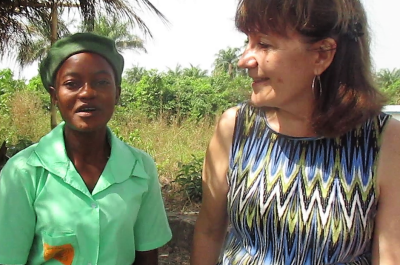
Alima told me, “This scholarship helps me and my family is happy when I have this scholarship because they don’t have money to pay for school fees. Me too, I’m happy. I thank all the people that give me the scholarship.”

The purpose of SFSL’s scholarship program is to not only get girls into secondary school, but to support them in finishing high school.

With her scholarship, Isatu Kargbo, left, completed JSS III (9th grade) and got the highest result of 127 students taking the senior high entrance exam.
Now in SSS I (10th grade) at Bumpeh Academy, she said, “My father couldn’t pay my school fees. CCET help us and give me a uniform. I’m very happy to be in school and give thanks.” CCET, the Center for Community Empowerment & Transformation, is our local community partner that administers the scholarship program.

Like many girls, Aminata, SSS IV said, “Thank you for donating your funds to enable me to continue my schooling. I appreciate it so much. Honestly, had it not been for your support, I have to stop going to school because my parents are poor and therefore cannot pay my school fees.”

Emilia, JSS III, wrote in a thank-you, “I am happy and delighted when I got this scholarship which every girl wish to have this opportunity. If not the intervention of you I would have been a drop-out because my parents find it difficult to pay my school fees. Through the help of Sherbro Foundation I am continuing my schooling.”

“I have been out of school for many years…You are now my light to see in the world.”  — Thuma, SSS III, on her scholarship

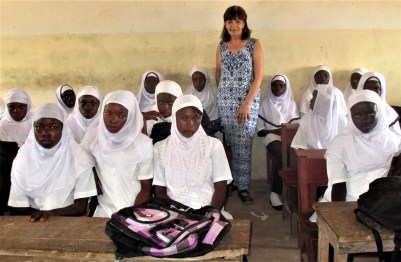
Sherbro Foundation supports five Bumpeh Chiefdom secondary schools of all faiths with scholarships. I met with the 50 girls at Ahmadiyya Islamic Secondary School receiving scholarships this academic year.
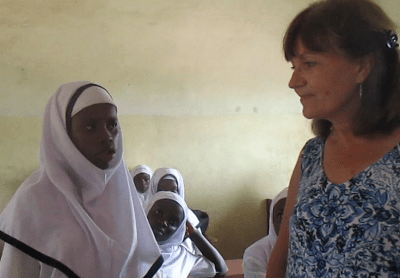
Fatmata, left below, said, “On behalf of the girls in the school, we express our thanks and appreciation for the scholarships. Also, last year for the uniform scholarship.”

vlcsnap-error362She went on to talk about the challenges the girls face in going to school. There are 208 villages in the chiefdom and only five secondary schools. Many girls must walk 4 or 5 miles or more each way to reach one of schools, often making them late for class. And the tropical sun is hot walking home on an empty stomach to get their one meal of the day.

Some just drop out after primary school. Other girls may get rides to school from motorcycle taxi drivers common on the rural roads, who may then coerce them into sex. A number have become pregnant.

vlcsnap-error133 (2)Kadiatu, left, told me most girls have no lights at home and have difficulty studying at night. By the time they get home and do chores, it’s dark. At the equator, it’s dark by 7 p.m. year-round.
Rechargeable solar lights are one possible solution the program can evaluate. Another girl added that they would like to have a library where they could study after school.

These are problems girls face in all Bumpeh Chiefdom secondary schools.

But the most poignant message was from a girl in the back of the room who stood to speak as our meeting was ending.

vlcsnap-error946 (2)“Please add more scholarships so we are all able to go to school. There are girls at home waiting for this same opportunity. I am fortunate, but there are others who can benefit and want to become educated and literate.”

With girls waiting for their chance to go to school, we want to set our sights higher and grow beyond 300 scholarships in the next school year.

Stay tuned for more in the coming months on Sherbro Foundation’s 2017-18 Girls Scholarship campaign.

US Caulker Family Sends Bumpeh Chiefdom Girls to School

Sherbro Foundation sends a big thank you to U.S. members of the Caulker family for donating to Sherbro Foundation’s Girls’ Scholarship Fund. Family members at this year’s annual reunion donated $1050.

Their generosity means 63 Junior Secondary School girls are returning to school as the new school year starts! Their donation amounts to nearly 20% of this year’s scholarship campaign goal.

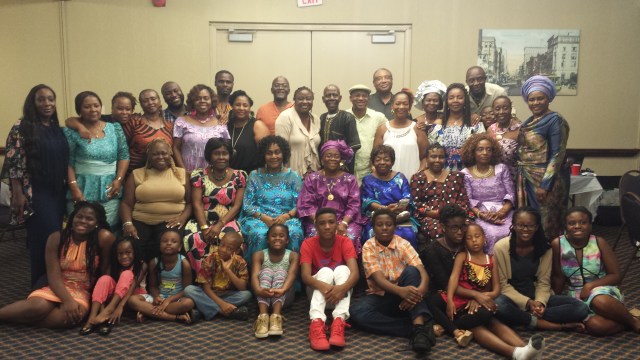
20160730_235449Members of the Caulker Descendants Association at their July 2016 family reunion – their 17th reunion.

The Caulkers are one of the oldest ruling families in Sierra Leone. They are the descendants of paramount chiefs from two branches of the Caulker family in Bumpeh Chiefdom and Kagboro Chiefdom.

This remarkable family traces their heritage back to Thomas Coker, one of the earliest British traders in Sierra Leone who set up a trading post for the Royal African Company in 1684. Coker, himself Irish, was the British company’s agent. He married a daughter of the one of kings in the coastal area of today’s Kagboro and Bumpeh chiefdoms. Their progeny were the start of the Caulker clan.

The Caulker Descendants Association formed in 1999 to teach and celebrate their family history and heritage. They’ve been meeting annually for seventeen years.

20150801_105739 The Caulker Family tree documents their 350 year history starting at the base of the tree with Thomas Coker, born 1667 in Ireland. The tree was constructed by Imodale Caulker Burnett after many years of research into the family’s history she then chronicled in The Caulkers of Sierra Leone: The Story of a Ruling Family and Their Times.  Fascinating reading.
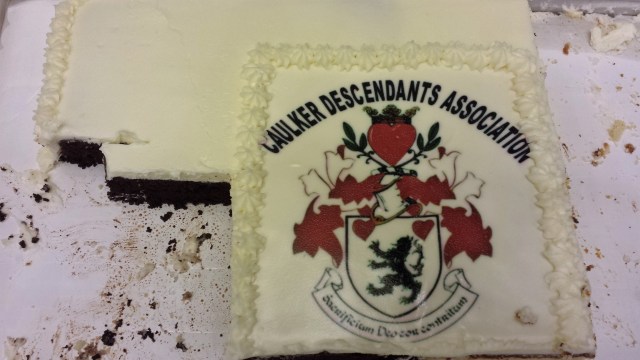
20160730_232654A family reunion wouldn’t be complete without a sheet cake to serve a crowd. But how many families can decorate their cake with a family coat of arms dating to the 1600’s. 
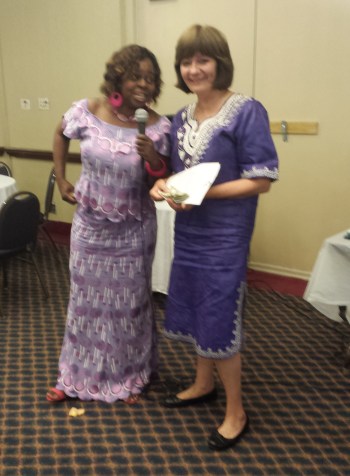
20160730_220831Arlene Golembiewski, Sherbro Foundation Executive Director, accepts the Caulker family Scholarship Fund donation from Enid Rogers, a Caulker grandchild, at their reunion banquet dinner.
Many extended Caulker family members remain in Bumpeh Chiefdom, including teenage girls who will benefit from Sherbro Foundation’s Girls’ Scholarship Program.

The Caulker family has long placed a premium on education. Sherbro Foundation is grateful for their support for girls education in Bumpeh Chiefdom. We hope this remains the basis for a strong partnership between the Caulker Descendants Association and Sherbro Foundation.


She is Why We Do What We Do – Where is She Now?

She is Why We Do What We Do – Where is She Now?

I wrote about Zainab last year in a post called “She is why we do what we do.” She’s now made it through seven years of secondary school against all odds. Her Sherbro Foundation school fee scholarship helped her reach her goal.

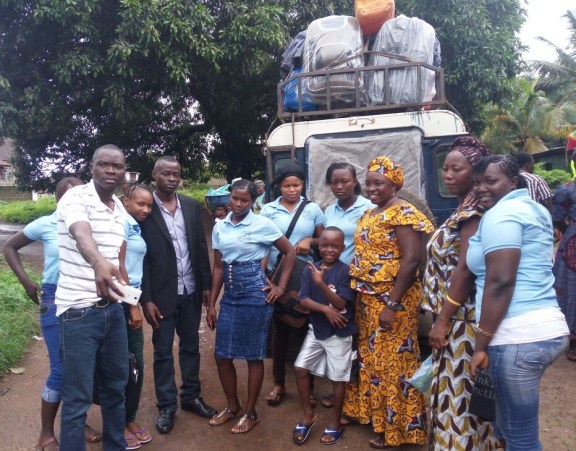
Here’s Zainab in July (center, hand on her hip) with a group of Rotifunk girls, all scholarship recipients, leaving for Freetown to take the WASSCE exam – the West African Senior School Certificate Exam. She’s one of a small group that are the first to complete senior high in Rotifunk and sit for this month-long standardized exam. Yes, I said month long.IMG-20160821-WA0005

Sherbro Foundation works to get girls like Zainab into secondary school with our Girls’ Scholarship Fund. But our real goal is that they graduate and move on to good careers and productive lives – and leave behind the poverty that has trapped their families for generations.

Zainab Bangura 2 - PGHS scholarship awardeeZainab’s story stated out badly. She’s one of many girls faced with poverty and an early arranged marriage when her mother could no longer pay for her to stay in secondary school. Zainab later left this older man, who already had a wife, and she returned to school.

Zainab’s story is all too common in Sierra Leone.  But she caught my eye with her determination to complete school and go to college. I was impressed with her maturity when she matter-of-factly asked if Sherbro Foundation would be helping to set-up a science lab for her school needed to complete the senior high science curriculum.

Life had already dealt Zainab a bad hand, but she was determined to pursue science and become a doctor. When I asked her why a doctor, she said, so I can save lives. And that conversation was before Ebola hit.

I was excited to hear Zainab returned to school when it reopened last year after Ebola. I’m now thrilled she is among the first group of girls finishing senior high and taking the completion exam.

Zainab’s story could have ended sadly. When girls reach 15 or 16, it’s too much of a burden for many parents to keep paying for school. An arranged marriage like Zainab’s is an easy solution and eliminates one mouth to feed.

Imagine the strength and determination of Zainab to pursue a new life and realize her obvious potential. I can still see it in her latest picture above. It all starts with getting girls like her into secondary school and keeping them there.

This is why Sherbro Foundation maintains the Girls Scholarship Fund and is pushing it hard this year.

Bumpeh Chiefdom’s Paramount Chief Charles Caulker underlined the importance of reaching this year’s stretch goal to double the program and send 300 girls to school in September.

“Over the past three years we’ve made successful efforts to get girls into secondary school. There were more girls enrolled than ever before when school ended in July.

“But I fear half the girls enrolled are at risk of dropping out this year because their parents just can’t pay their school fees. The economy is that bad now.”

“I’m passionate about this. I want to take the lead in asking all our family and friends to go the extra mile to save these children from dropping out and the abuses so many girls face with teenage marriage and pregnancy. Let’s not let all their efforts to get an education go in vain,” Chief Caulker said.

Sherbro Foundation is determined to keep girls in school. The dollar is strong now and goes further than ever in Sierra Leone. Just $50 will pay school fees for three junior high girls for the whole year.

We need your help: we’re at 75% of goal. We’d love to surpass our goal — hundreds more girls need scholarships! 

You can do it now by donating here — send a girl to school.   

Thank you!

Arlene Golembiewski
Executive Director, Sherbro Foundation

Let Sierra Leone Girls Learn

Let Sierra Leone Girls Learn

Girls 2016-17 8-13-16 - Copy

When food costs skyrocket, school is out of the question for many Sierra Leone students. Especially for girls. When girls are forced to drop out, they’re at risk of early marriage. Or getting pregnant with no marriage. Their lives change forever.

The Ebola health crisis may have ended in 2015, but a country-wide economic crisis has followed. Families can’t send girls to secondary school — which is not free — if they can barely feed themselves.

But we can help, and change their lives for the better. Learn more here.

If you’re ready now, DONATE HERE.

The Feminist Paramount Chief: Why Girls Must Go to School

The Feminist Paramount Chief: Why Girls Must Go to School

PC CaulkerFor years, the longtime traditional leader of Bumpeh Chiefdom dreamed of ways life could improve for its 44,000 rural residents.

Most of Paramount Chief Charles Caulker’s chiefdom is made up of small, inaccessible villages of 200-500 people, living a subsistence farming existence scarcely changed in 100 years. These are among the poorest people in the world, living on $1 a day. It’s hard to ever get ahead and break the cycle of poverty on $1 a day.

For Chief Caulker, one fundamental is key:  girls must go to school.

Today, only an estimated 10 to 20 percent of girls in his chiefdom make it to secondary school. If it became the norm, he believes his chiefdom’s and the country’s culture – and fortunes – would change.

IMG_4342 - Copy

“With education, women can assert themselves and can get their own jobs, or start or expand their own small businesses. They’ll take their own decisions,’’ Chief Caulker told us during a recent discussion about the importance of Sherbro Foundation’s Girls Scholarship Program.

Chief Caulker is emphatic: “There’s a growing understanding that educating girls brings more benefit to the family than educating boys.

IMG_0411“Girls are more serious and work harder. They get better jobs. They take their family responsibilities seriously, and ensure their children and parents are taken care of.

“Women are more industrious,’’ he explained bluntly. “As Rotifunk grows and business opportunities open up, women will be the ones to start restaurants, shops and expanded markets for the growing middle class.”

And if girls aren’t educated?

“Women in rural Sierra Leone continue to suffer indignities dictated by outdated customary practices and unenlightened male chauvinism,’’ Chief Caulker says.

What kind of indignities do women suffer, we asked. We got an earful.

IMG_3559 - Copy“Women do 70 percent of the work on the family farm but are not allowed to make decisions on running the farm or selling crops. Their husband controls the money and may carelessly spend it on himself for things like gambling with his friends,” he said frankly.

“The woman is up at dawn and making a fire to warm bath water for her husband and reheat food for breakfast, if they have it. When going to work on the farm, pregnant women can be seen carrying loads on their head and another baby on their back. Her husband may accompany her to the farm without helping carry anything, do a couple hours work and return home to sit out the rest of the day.

IMG_3174“His wife returns late in the day as the sun is going down. She may still need to go buy fresh produce and collect firewood and water before making a fire to cook the family dinner. Her husband will then expect her to have sex that night and she can’t refuse.”
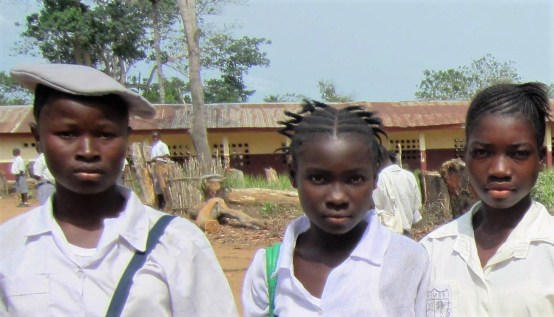
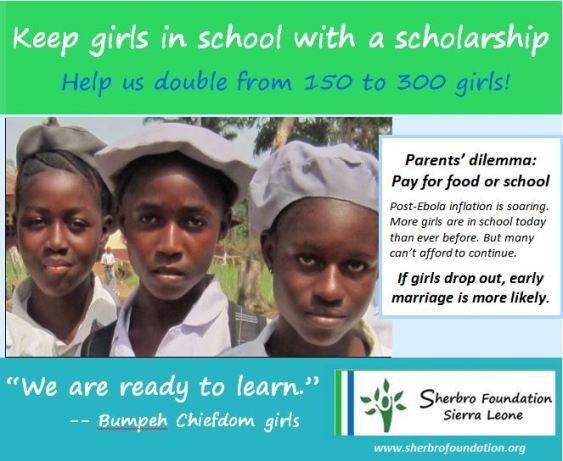
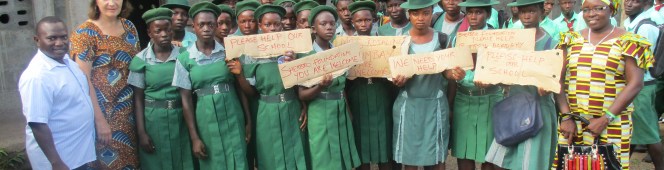
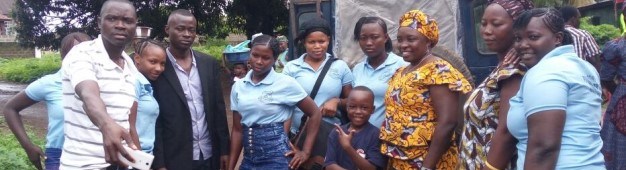
That is rural life as it has been for hundreds of years. “Women are treated like beasts of burden,” Chief Caulker says.

“Today by 14 or 15, girls not in school are seen as grown up and ready to work and get married. If they marry, it means their family has one less mouth to feed.”

But with our help, we can send – and keep – more girls in school.  They will be able to avoid early marriage and dangerous early pregnancies.

IMG_0352 - Copy

Chief Caulker is determined to empower parents to send their children beyond primary school and get a good education. “With education, women will be more enlightened and understand their rights.” They’ll act on these rights, to the benefit of the whole chiefdom.

Chief Caulker is grateful for Sherbro Foundation’s goal to send 300 Bumpeh Chiefdom girls to secondary school this year.  He sees these girls as the future of his chiefdom.

Help us meet this goal and send a girl to school:  DONATE HERE

Save

Save

Keep Girls in School

Girl appeal image 2016

When food costs soar, school is too often out of the question for Sierra Leone students.

The Ebola health crisis may have ended in 2015, but a country-wide economic crisis has followed. Inflation has skyrocketed with no end in sight. Everyday needs like rice, cooking oil and public transportation have risen 30% in less than a year.

All at a time when rural farmers and small market traders are still trying to recover incomes slashed in half during the Ebola period.

Families can’t send girls to secondary school — which is not free – if they can barely feed themselves.

The good news in Bumpeh Chiefdom is that more girls are in school than ever before. Nearly 900 girls were enrolled in the chiefdom’s five secondary schools as the school year ended in July.

Over three years, Sherbro Foundation’s scholarship program has helped 300 girls enter – and stay in — secondary school. With every year of school, a young woman earns 10% more income.  She marries later and has fewer, healthier children, when her body is ready for them.

The bad news is many of these girls will now be forced to drop out. Unless they get a helping hand.

Our goal this year is to double the number of scholarships from 150 to 300 girls.

Bumpeh Chiefdom’s Paramount Chief Charles Caulker told us why the Girls Scholarship Program is important to him. “With education, women can assert themselves and take their own decisions. They can get their own jobs, or start or expand their own small businesses,” he said. “They won’t suffer the indignities of outdated customary practices and unenlightened male chauvinism.”

Girls with secondary education will have skills to get wage- paying jobs or start small businesses. Some girls will complete senior high and may be able to go on to college. They want to become the nurses, teachers, lawyers, accountants, social workers and environmental managers their country desperately needs. They’ll move beyond a subsistence lifestyle and break the cycle of poverty they grew up in.

One silver lining – since the US dollar is strong and now worth much more in Sierra Leone, your donation goes further than ever before!

Just $50 will cover a whole year’s school fees for three junior high girls.

It means three girls will make the transition from primary to secondary school. Three girls now in junior high will stay in school and keep learning.  We’re helping girls progress to senior high, and the first group is ready to graduate.

Bumpeh Chiefdom school girls have told us, “We’re ready to learn.”

And we want to help. Our 2016 Scholarships goal is $5,000. We’re 40% of the way to our goal. But that won’t cover 300 girls.

Most Bumpeh Chiefdom female students are the first in their families to get any education. They can escape the subsistence lifestyle that’s trapped generations.

You can help these girls change the direction of their lives and their communities.  Just click here, and it’s done:  DONATE

Thank you!

Arlene Golembiewski, Chris Golembiewski, Cheryl Farmer and Steve Papelian
— the Sherbro Foundation Board of Directors

P.S. If you can give a little more, you’ll ensure our goal is reached when school starts in September!


Save

Girl Scholarship Students Dream Big – I Want to Become President

Girl Scholarship Students Dream Big – I Want to Become President

Going to secondary school should be about more than reading and writing. It should be a place where Sierra Leone girls learn what’s possible in life. They should learn to dream big at this early age.

Form 5 (11th grade) student Adama Sankoh at Bumpeh Academy has a big dream. When asked what she wants to do after finishing school, Adama said,

“I want to become a president.”

She’s clear on where to start. “Education is the only way I could change the social and economic status of my family. School prepares my mind to be useful and influential in my community and country as a whole.”

IMG_0257

Bumpeh Academy Principal David Rashid Conteh, Arlene, BA scholarship students, CCET Executive Director, Rosaline Kaimbay. Adama is front row, 3rd student from right.  Signs read: Sherbro Foundation, You are welcome. Please help our school.

In school, Sierra Leone girls like Adama are being exposed to the opportunities open to them beyond the small rural communities they come from. Even becoming president. They’re learning the first practical step to achieving those dreams is completing their education.

Sherbro Foundation’s girls scholarship program helped 150 Bumpeh Chiefdom girls continue their education for the school year starting August 2015.

My motivation for starting the girls scholarship program in Bumpeh Chiefdom was simple.  I wanted girls to learn to dream big and start on the path to reaching their full potential with education.  I’ve met more high potential Bumpeh Chiefdom girls like Adama who want to become doctors, nurses, lawyers, journalists, teachers, accountants. Their first step – completing secondary school – is still a hurdle and huge accomplishment for most girls in Sierra Leone.

Sherbro Foundation helps eliminate financial barriers to girls attending secondary school. This year we provided school uniforms for girls in five Bumpeh Chiefdom schools.

The Sierra Leone government paid school fees this year with post-Ebola funding. But uniforms cost as much as school fees, and present a big burden for parents still recovering the past year’s Ebola crisis.

Sherbro Foundation’s 2015 scholarship program helped remove that barrier for 150 of the chiefdom’s most vulnerable girl students. The program is administered by our local partner, the Center for Community Empowerment & Transformation (CCET). Here’s more of this year’s scholarship students.

—– Arlene Golembiewski, Executive Director

WSSS scholarshipsWalter Schutz Memorial Secondary School students


2015 scholarships WSSS, Ah, BAScholarship awardees from three schools flanked by CCET Executive Director, Mrs. Rosaline Kaimbay (left) and CCET Child Welfare program director, Abdul Foday (lower right).  Schools left to right: Walter Schutz SS, Ahmadiyya SS, Bumpeh Academy SS
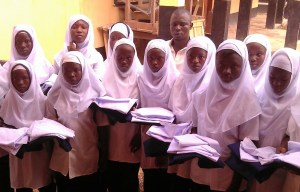


Ahmadiyya scholarshipsAhmadiyya Islamic Secondary School students


2015 scholarship Mosimbara bEarnest Bai Koroma Junior Secondary School in Mosimbara village, Bumpeh Chiefdom’s newest secondary school. Children from small villages can start secondary school here close to home, and later transfer to Rotifunk for senior high.


2015 Bellentine primaryVain Memorial Primary School, serving six villages in Bellentine Section.  Primary school students got 2 uniforms each. Mothers of many children in this school are in our Women’s Vegetable Growing project.
What Do Mothers Want on Mother’s Day?

What Do Mothers Want on Mother’s Day?

It’s nearly Mother’s Day. So, what do mothers really want on their special day?

It would be the rare mom — or grandmother, or aunt, or godmother, or wife — who wouldn’t say, “I just want to enjoy time with my children.” Cherishing time with family is more important than gifts. They already have enough “stuff.”

Here’s a simple way to make this Mother’s Day truly special: Give her the satisfaction of knowing she’s sending a deserving Sierra Leone girl to school. A gift to the Sherbro Foundation Girls Scholarship Fund will have happy ripple effects for a struggling West African family for a long time to come.

IMG_0097Can an American mother empathize with a Sierra Leone mother? If they could meet and chat, I think they would find much in common. They want the same things for their children — good food, shelter, a safe and healthy childhood. And importantly: an education and the opportunity to do as well or better than they did.

I asked mothers in Sierra Leone what they want. Here’s what they told me:

IMG_1642Thirty-year-old Mary Bendu was born in the same small village of 200 people as her mother and grandmother. They had to abandon their farm and home during the civil war, and hide from rebels for a year. They lived in the bush, sleeping on the ground and surviving on wild bananas and coco yams and catching mud skippers.

She now lives by the work women usually do – selling things in the market. She collects firewood, smokes fish caught in the river and grows sweet potatoes. She would make more money if she could take these to a bigger market, but she can’t afford to pay for public transportation.

Mary has five children, from five to 15 years old. What makes her most proud is sending them to school. She wants her children to have the education she never had. These are the kind of girls for whom Sherbro Foundation scholarships make secondary school possible.

Zainab Caulker, 28 yrs, wants to become a nurse.Zainab Caulker, 28, has 7- and 9-year-old children in school. She herself went through primary school but the war interrupted her education. She’s opened a small business buying farm goods in small villages and reselling them in the Rotifunk market. She used micro-finance loans of $60 – $100 to start her business. She was able to repay them, but with the high interest rates, she could see she was never getting ahead.

She wanted to learn more and help her children with their studies, so she decided to start Adult Literacy classes Sherbro Foundation sponsors in Rotifunk. “I knew nothing before Principal Kaimbay encouraged me to come back to school. Now, I can get up in public and represent myself.”  She’s also helping board some teenage girls from nearby villages who attend secondary school with Sherbro Foundation scholarships. Her dream is to become a nurse.

IMG_3280Zainab Sammoh lives in Rotifunk with her two children, 10 and 6. Her husband wanted to go away to college, so she stayed home with the children. He then left her and married an educated woman. Zainab started Adult Literacy classes so she can follow her children’s progress in school and make sure they’re doing what they should.

“I want to be able to ask them, ‘what did you learn in school today,’ and know what it means.” The day I met her she was learning to write her name. She hopes to get a job as a secretary.

Despite their overwhelming struggles, these mothers prize education as the key to a better life for their families.

You can help them create better tomorrows. And make Mother’s Day special for the special woman in your life.

A $30 donation to the Sherbro Foundation Girls Scholarship Fund will send a girl to school – making a powerful difference in the lives of girls and women in Sierra Leone for years to come.  

Click here to make a gift in the name of your special woman. Include her email address, and we’ll let her know she’s helping another mother give her daughter a good start in life.  Or if you’d rather personally deliver it, we’ll send you an acknowledgement of your thoughtful gift in her name.

We’ll make it more special.  We’re matching all donations until May 15, doubling the impact of your gift.

You’ll make a difference in your family, too. Show Mom she taught you well in helping make the world a better place.

Think your help doesn’t matter? Think again.

Think your help doesn’t matter? Think again.

People often think, how can I, as one person, make a dent in the world’s problems?  Well, I’ve found change starts with one person here making a difference in the life one person somewhere else.

The first step is to get involved. Just take one positive step.  Many small  positive actions add up to real change. That’s what movements are all about.

Not sure what kind of positive action you can take? Sherbro Foundation supports girls’ education and addressing extreme poverty in Sierra Leone.  Here’s a list of actions you can take to help us help the people of Sierra Leone.

Help promote Sherbro Foundation’s work in your personal network

  • Like us on Facebook. Then share a SF news item to your Friends saying you support this work.
  • Like a post on www.sherbrofoundation.org. Send a Comment on why this work is important.
  • If you use Twitter, Tumblr, Pinterest, Stumbleupon, etc. – share a Sherbro Foundation post
  • Speak out: Letter to the Editor or article – your organization newsletter or local media

 Connect us with others that might want to support a project    

  • Advocate for us with: Churches doing mission & outreach work;  School public service projects; Civic & Professional groups funding nonprofit projects; Clubs holding charity Walks & Runs
  • Host a Club program or salon for your circle of friends
  • Investigate your Company’s corporate Foundation for nonprofit projects & how to apply         Employee sponsorship usually needed
  • Find used or in-kind donations for schools and children:
    • Collect used baby clothes
    • School supplies
    • Sports shoes & sports equipment – a big need
    • Educational videos (National Geographic, Planet Earth, etc.), Math tutorials, etc.

Be a Sherbro Foundation Volunteer

  • Write a guest Blog post – why you care about Girls Education or other development issues
  • We can use your skills
    • Advise us on Nonprofit Marketing & Fundraising
    • Consult with us on our Website – especially on use of WordPress & SEO
    • Advise us on optimizing use of social media
    • Produce a short video for our website

Donate to Sherbro Foundation projects   www.sherbrofoundation.org/donate/

  • Send a girl to school with a uniform – $30
  • Sponsor a vegetable farmer to get back on her feet with fast growing cash crops – $50 
    • Seed & fertilizer for a half acre vegetable garden + bag of rice to feed family now
  • Give in honor of someone special – birthday, Mother’s Day, memorial, special day
  • Support other projects www.sherbrofoundation.org/about-us/projects/
Blaming the Victims – Pregnant Girls Banned from Sierra Leone Schools

Blaming the Victims – Pregnant Girls Banned from Sierra Leone Schools

There will be a number of Sierra Leone girls who want to come back to school when they reopen that won’t be allowed to.

Pregnant girls are being banned from school.  From an outsider’s point of view (mine), this smacks of blaming the victim.

Fatu is one of the Bumpeh Chiefdom girls who should have been taking the senior high entrance exam last week.  Instead, she’s waiting to give birth as a single mother.

Walter Schutz Secondary School studentsWhen Sierra Leone President Koroma first made his announcement in February that schools would reopen, he publicly stated all children should return. He specifically encouraged pregnant girls and young mothers to come back to school.

The Ministry of Education recently recanted this, saying pregnant schoolgirls are a bad moral influence on other students.  They will not be allowed to attend school while “visibly pregnant.”

These pregnant girls were victimized once, and now they’re being made to pay again.

It’s been estimated as many as 30% of Sierra Leone schoolgirls became pregnant during the Ebola crisis. I doubt there was a sudden lapse in morals in this many girls in the last nine months. There have been many reports of an increase in sexual violence across Sierra Leone triggered by the Ebola crisis. Men lost employment and girls were home, out of school. Constant stress from fear of Ebola, lost income and restricted movement is fuel for sexual predators, as described in this BBC interview.

There’s many variations on this, from rape to coercion, from “transactional sex” to misplaced emotions. Emotions were running high for all during the Ebola crisis, including teenage girls. When you’re bored, depressed and feeling hopeless, it can be easy to seek comfort in the wrong place. Add to this the lack of health care services and contraception during the Ebola crisis. Needing money to cope financially or seeking to boost self esteem resulted in terrible consequences for many girls.

Behind the statistics there’s real people, and their life stories are not simple.

Center for Community Empowerment & Transformation Executive Director, Rosaline Kaimbay told me about some of these girls in Bumpeh Chiefdom who won’t be returning to school in April.

Fatu finished JSS3 (junior secondary school 3) last July and was ready to start senior high. Her mother separated from her stepfather when he made it clear he wanted to take another younger wife; a girl of eighteen, not much older than Fatu. He abandoned the family, including his own five year old son, Fatu’s stepbrother.

Fatu’s stepfather is actually her uncle. He was a local warrior called a Kamajor that fought to save Rotifunk when it fell under rebel control during Sierra Leone’s long civil war. His entire family was killed by rebels, including his younger brother – Fatu’s father.

He took Fatu’s mother as his wife, which is common. A widow needing support and protection often becomes the wife of her brother-in-law. Now over ten years later, he wanted another young wife of his choosing. It would be easy to cast him the villain, but he’s led a difficult life. He’s been a victim, too.

It’s not clear how Fatu became pregnant. Girls like Fatu are ashamed to talk with Principal Kaimbay about what happened and hide their pregnancy as long as possible.

Fatu lost her father; then she was abandoned by her stepfather and the father of her baby.  Now she’s forbidden to take the one route that could be a way out for her and her baby – returning to high school to complete her education at a high enough level to give her job skills.  She’s banned at least until after the baby is born.

What are her options? If her mother can manage to take of the baby – supporting another child – Fatu could return to school after she gives birth.  If they live in town where the schools are, or have friends where she could stay, she may be lucky and pick up again on her education. These are big if’s.

If not, she would be another statistic among the five out of six girls who don’t complete high school. Another who remains stuck in a cycle of rural poverty so hard to escape.

Sherbro Foundation’s girls scholarship program focuses on helping the most vulnerable students like Fatu who are serious about their education. As more girls progress into senior high, we especially want to help senior girls stay in school and graduate. This includes young mothers.

Fatu fits the profile in all respects. Mrs. Kaimbay calls her a brilliant student. She could do well.

There’s hope for Fatu and girls like her if she can make her way back to school. She needs our support, not blame.

You can support girls like Fatu.  Donate to Sherbro Foundation’s Girls Scholarship Program.

Remember – Sherbro Foundation is all-volunteer. So everything donated goes to the Scholarship Program.

She is why we do what we do

She is why we do what we do

School is slated to reopen in April across Sierra Leone. It won’t come any too soon for both teachers and students weary of the seven month limbo they’ve been in since the Ebola crisis closed schools last September.

Zainab Bangura 2 - PGHS scholarship awardeeZainab is one of the girls I’ll be watching for. She’s gone to one of Rotifunk’s secondary schools with scholarships from Sherbro Foundation.

Last year, I talked with Zainab and found she has a big dream.  It’s a dream we want to help her achieve.

Zainab has had a difficult time completing secondary school.  I worried she might be one of those not returning.  At 19, she’s a young woman, and it’s hard to find the means to stay in school. The longer teenagers stay out of school in Sierra Leone the less likely they are to return, especially the girls.  Ebola has only made that worse.

Village on road heading to Freetown

Zainab comes from a small village like this one on the road leading to Freetown.

Zainab comes from a small village about seven miles outside Rotifunk.  It’s ten mud houses, she told me, with an emphasis on “mud” houses. Her mother is a very poor farmer and old. When she told me her mother’s age, I laughed and said, “Well, that makes me old, too.”  “But you are strong,” was her reply.  Strong in Sierra Leone means healthy.  It also means I’m privileged to have the means to be this strong at my age.

Zainab attended junior high in a nearby town.  Four years ago when she was ready for senior high, her aging mother could no longer afford $30 to send her to school.  So, she sat home for a year.

An older man then persuaded her mother to let Zainab move in with him in Rotifunk.  He promised to help her finish school and then marry her. Zainab’s mother thought this was the only way to ensure her future. But he didn’t pay her school fees and didn’t marry her.  He was already married. He forced her to work for him by selling goods in the market. I’ll let you fill in the rest.

IMG-20150103-WA0011 - CopyPrincipal Rosaline Kaimbay seeks out village girls like Zainab and encourages their parents or guardians to send the girls to high school.  Zainab started senior high with Sherbro Foundation scholarships two years ago. A teacher heard of her living situation and convinced her to leave the man and move to a friend’s home.

Zainab has now completed 10th and 11th grades, a real accomplishment.  Only one in six Sierra Leone girls is able to complete high school.  Zainab’s school will be starting its first twelve grade class this year. Zainab should be one of the first seniors in that class.

10356312_349283451885472_4392104421503392972_n[1]I want to become a doctor.

I spoke with Zainab last July before Ebola suspended  school.  Principal Kaimbay had told me she’s interested in studying science. When I asked Zainab why she likes science, she said with no hesitation, “I want to go to college and become a doctor.”

Not a nurse or a teacher, the usual responses. But a doctor. When I asked why, she immediately replied, “I want to save lives.”  She’s no doubt seen lives lost in her short life because there’s so little health care available.

With school now reopening, my thoughts returned to Zainab. I asked Principal Kaimbay if she’s been in contact with her, and will she be returning to school. Zainab has been living with her mother now. Mrs. Kaimbay regularly stopped by to see them since their village was near one of the Ebola check points on the way to Freetown. They’ve been scraping by, growing a few vegetables to sell.

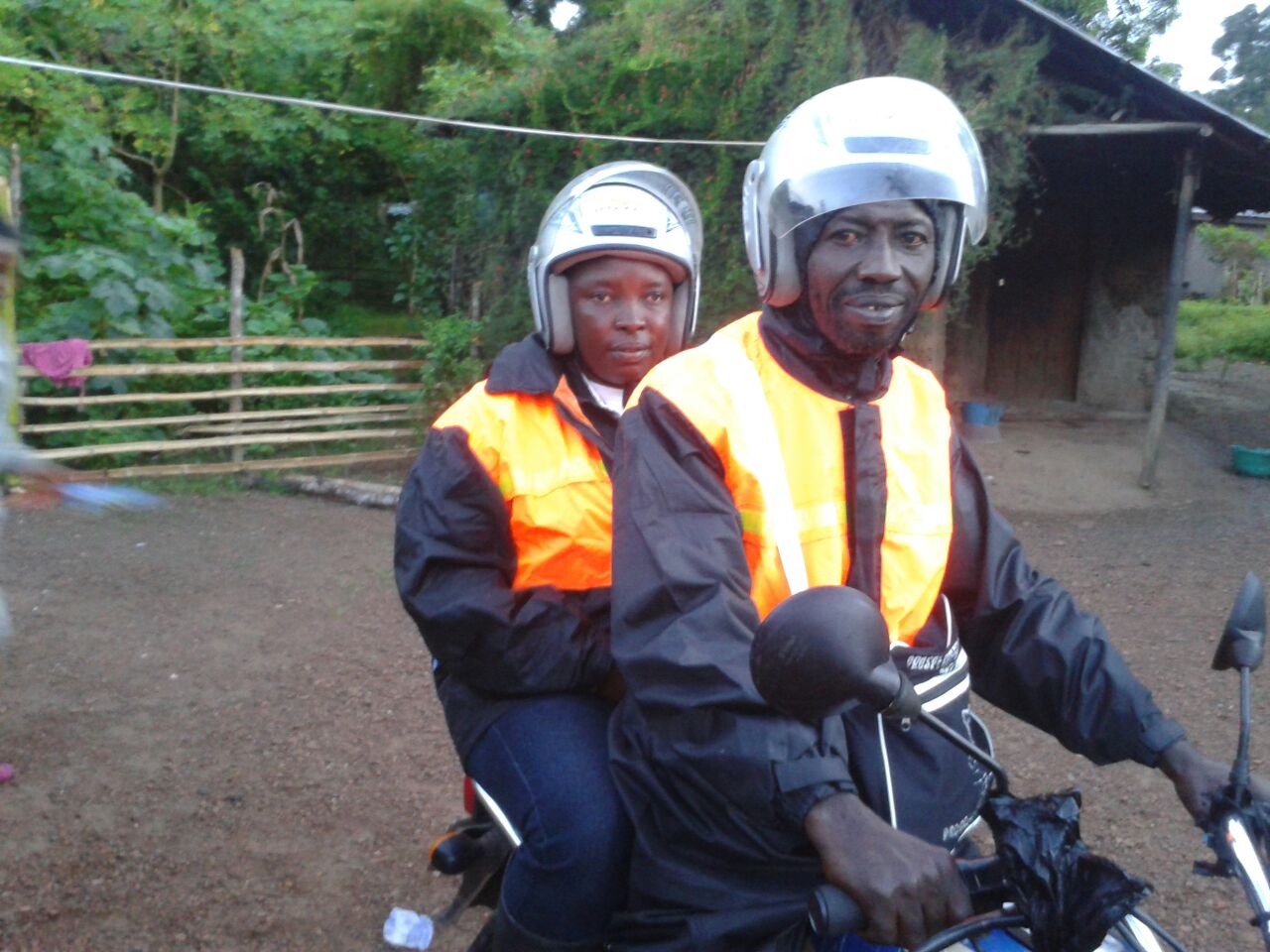
IMG-20141120-WA0000Mrs. Kaimbay is more than a dynamic principal and a gifted teacher. She’s an advocate for girls like Zainab, and a champion for girls and women everywhere in Bumpeh Chiefdom. During this long Ebola crisis, she’s made a point to connect with girls and their families whenever she could. She resorted to the back of a motorcycle to monitor and support the chiefdom Ebola control program — and visit village girls. She encourages and motivates the girls to stay focused on their education. School will reopen; we want you to come back. We’ll help you wherever we can.

Now she told me, yes, Zainab is ready to return to school.

Last July, I asked Zainab if she had any questions for me. She immediately asked: will I be helping with university scholarships? With girls like Zainab finishing high school in Rotifunk and determined to go to college, that’s something to be planning for.

God knows Sierra Leone needs more doctors and nurses. Now, they need to replace those who sacrificed their lives in the Ebola crisis caring for others.

Zainab gave me a message last July to bring back here:

“Thank you for helping us. We come from poor homes, but we are ready to learn. Without scholarships, we should drop out.”

Girls like Zainab are the reason I started the girls scholarship program. I think how many other bright, determined girls like Zainab won’t achieve their dreams without getting through that first formidable hurdle in their lives — secondary school. And the hurdle amounts to just $30 a year.

Zainab is the reason Sherbro Foundation does what we do.

You can help Zainab and other girls come back to school now.   http://www.sherbrofoundation.org/donate

Why I Give to Sherbro Foundation

GT_SunglassesMy #Unselfie for Giving Tuesday
Why do I give to Sherbro Foundation Sierra Leone?

I want the girls and women of Sierra Leone to have the same opportunities for education I had.  With education, they’ll lead their community and country to prosperity.

I had help along the way. They deserve no less than I had. With that help, they’ll do as much as the women in the US have done. I’m sure of that.

Students have their first computer lesson.

Students have their first computer lesson.

Top on my helping hand list to Sierra Leone is computer literacy and IT skills.  With those skills, the girls and women of Sierra Leone will lead their country into a 21st Century economy, build a middle class and a bridge to stability.

That’s how Sherbro Foundation started. It was my desire to give girls in the rural community of Bumpeh Chiefdom a first class secondary school education – and cap it off with computer literacy.

We’re ready to get back to both of these – as soon as we can get through this Ebola thing. Teachers are anxious to get back to teaching. We’re starting to rebuild our girls scholarship fund after diverting money for community Ebola response.

The community computer center has been built with 50 computers waiting for students. It will have its grand opening when the schools reopen. (For now, Ebola dictates no public gatherings.) Next step is raising the balance of funds needed for a solar energy system. With solar, we can run into the evening, doubling the classes and offer adult literacy night school.

So, stay tuned for 2015. It looks to be a promising year.

Join us to kick-start the new year. Do some good.  You’ll feel very good.

sherbrofoundation.org/donate

Arlene Golembiewski
Founder & Executive Director, Sherbro Foundation Sierra Leone

Guest Post: Turning Education into Leadership

Prosperity Girls assembly

Subira Popenoe is a junior at Mount Holyoke College working with Sherbro Foundation this summer. 

When discussing why educating girls is important, it helps to think about the long-term potential. In Sierra Leone, the problem is not so much societal opposition but rather a lack of access. Women are often faced with financial difficulties, family problems, or early marriage and motherhood. In addition, the country is still recovering from the crippling civil war which left its infrastructure years behind many other African countries. Although many more girls and women are now going to school, there is still progress to be made.

Across the continent, African women are increasingly advocating for themselves, becoming leaders in their communities, and improving their quality of life. Particularly in post-conflict societies, women have had an influential role in recovery and rebuilding. Liberia, which neighbors Sierra Leone and also experienced a civil war, already has a female president, Ellen Johnson Sirleaf. Another notable example is Rwanda, a country which has made great strides towards gender equality. After the 1994 genocide, many women had to take over for their husbands who had been killed or imprisoned. They began running coffee farms, joining the police force and the army, and becoming engineers and government ministers. In part due to quotas, nearly two-thirds of the parliament now consists of women.

Leadership itself can take many forms be it as a mother, teacher, community organizer, entrepreneur, businesswoman, or politician. Regardless, education is the key to meeting women’s potential. Educating both men and women is what will translate government policies into change at the local level. When women know their rights and abilities, along with the concrete skills needed to achieve their goals, they can help a country such as Sierra Leone develop.


For more information:

Women’s Struggle in Sierra Leone- http://www.worldpress.org/Africa/3777.cfm

Sierra Leone Women Struggle for Political Role- http://www.voanews.com/content/sierra-leone-women-struggle-for-political-role/1554869.html

Rwanda: A revolution in rights for women- http://www.theguardian.com/world/2010/may/28/womens-rights-rwanda

Rwanda’s women make strides towards equality 20 years after the genocide- http://www.theguardian.com/global-development/2014/apr/07/rwanda-women-empowered-impoverished

Twenty years after the genocide, Rwandan women bring the country back to life- http://www.washingtonpost.com/blogs/she-the-people/wp/2014/04/08/twenty-years-after-the-genocide-rwandan-women-bring-the-country-back-to-life/

Rwanda: The Land of Gender Equality?- http://www.washingtonpost.com/blogs/she-the-people/wp/2014/04/08/twenty-years-after-the-genocide-rwandan-women-bring-the-country-back-to-life/

The Role of Women in Reconstruction: Experience of Rwanda-  http://www.unesco.org/new/fileadmin/MULTIMEDIA/HQ/SHS/pdf/Role-Women-Rwanda.pdf

Sierra Leone School Girls Are Safe!

People have been asking about safety of school girls in Sierra Leone. Are they safe? Absolutely. Muslim and Christian parents alike want their girls going to school in Sierra Leone.

This country is one of the most religiously tolerant countries I have ever seen. People of all faiths live together in harmony as next door neighbors, send children to the same schools and intermarry. Religion is more of a non-issue in Sierra Leone than in most developed countries.

2012-13 Girl Scholarship awards - Bumpeh Academy (green) and Ahmaddiya Islamic School (white)

2012-13 Girl Scholarship awards – Bumpeh Academy (green) and Ahmaddiya Islamic School (white)

Sherbro Foundation is happy we have awarded scholarships to girls of all faiths.  This picture shows girls at last year’s scholarship award ceremony from the Islamic Ahmaddiya school in their uniform that includes white head scarves.  But girls from Muslim families may go to Rotifunk’s other secondary schools and don’t wear a head scarf with that school’s uniform.

In fact, I  seldom see a woman or girl in town with a head scarf. I usually have no idea who in town is Muslim or Christian – man or woman.

Abduction of girls and women is a sore issue in Sierra Leone after years of sexual violence in their rebel war. Here’s a story of Sierra Leone women demonstrating at the Nigerian embassy in support of the abducted Nigerian girls.
http://awoko.org/2014/05/14/sierra-leone-news-sierra-leone-women-call-for-release-abducted-girls-in-nigeria/

Arlene Golembiewski
Sherbro Foundation Executive Director