Schools reopening in Guinea. Is Sierra Leone far behind?

School re-opened this week in Guinea. Liberia has targeted for February.  This is a big milestone in the whole Ebola crisis to be celebrated. Happy new year for students and parents alike.

Schools must have practical procedures in place, including hand washing stations around the school, daily temperature taking with no-contact thermometers, an isolation area set aside for anyone with illness symptoms until they can be safely moved, and ongoing contact with health authorities.  Liberia Gov’t Ebola protocol for reopening schools.

Sierra Leone needs to get their new Ebola cases at or near zero before they can re-open schools. Principal Kaimbay in Rotifunk said it’s more practical to re-open schools in the provinces as compared to Freetown & the bigger cities. They typically have fewer students and more room in classrooms to keep students observing “no touch.”

Hopefully, this day is not too far off. The Ministry of Health’s daily Ebola case report had only 7 new cases for January 20th from only 3 of 14 reporting districts!

January 19 NPR story:  School’s Back on in Guinea: Reading, Writing, Temperature Taking 

Connecting the Dots: Sierra Leone – US Shared History

Connecting the Dots: Sierra Leone – US Shared History

Today is Martin Luther King Day in the U.S. to honor Dr. King.  Soon it will be African American History month in February. When I think of these dates now, I think of the shared history between Sierra Leone and the U.S.

I thought I would repost an article I wrote last year. Click here: “Connecting the Dots: Sierra Leone – US  Shared History.”

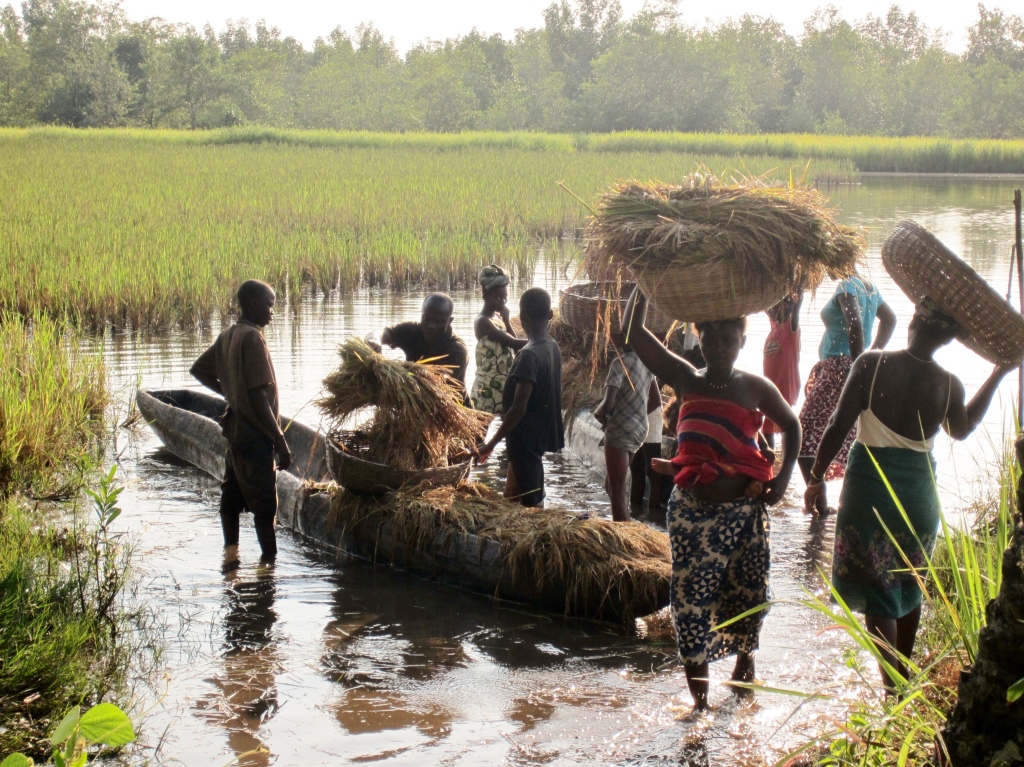
Unloading rice to the threshing floor

Unloading rice harvest Bumpeh Chiefdom – Nov 2013

I sometimes ponder the events that would have taken place in Bumpeh Chiefdom where Sherbro Foundation works. It’s a coastal area involved in the slave trade long ago in the 18th century.

But I think about more than just the slave trade. I’m thinking again today about the deep connections between our two countries – connections most people have no knowledge of.  Last year I wrote:

When I now travel down the Bumpeh River and visit traditional rice farms and villages, I remain mindful that there is a special link between Americans and the people of Sierra Leone.  Our people are kin.  Whether black or white, our histories and cultures are inextricably linked.”

A number of African Americans who have tested their DNA have found they’re of Sierra Leone descent. DNA can be matched to various tribal group in Sierra Leone. I keep reading of more people, like Maya Angelou and Colin Powell who found they are DNA – Sierra Leoneans.

I hope when tourism resumes in Sierra Leone, more people will make a trip to Sierra Leone to learn about our shared history. People of all races will find it fascinating to learn about where and how this whole story started.

My own journey changed the way I think of our two countries today, not just in the past. We are connected – and should remember that.

From Ebola Hotspot to Zero

From Ebola hotspot to zero new cases. This isn’t a dream.  It’s reality today in a number of  parts of Sierra Leone.

The media was blasting news through December about a country out of control with rising Ebola numbers.  Yes, the capital Freetown and northern cities like Port Loko have had high levels of new cases making Sierra Leone now the hardest hit country in the Ebola epidemic. They also put the whole country at continued risk because people continue to travel between districts.

So, am I an optimist talking about zero? I drafted this story a week ago and hesitated to post it for concern people would think this is just wishful thinking.  It isn’t.  In the last month, numbers have been steadily coming down. The Sierra Leone Ministry of Health’s daily postings of new Ebola cases have gone from 72 cases per day December 1, to 55 cases per day December 24, to 29 cases January 2.  January 12  was 19 new cases – for the entire country.

Eight of 12 districts in the country have achieved zero new Ebola cases for varying lengths of time.

So, what’s going on? I’m in weekly phone contact with Bumpeh Chiefdom in Moyamba District. I hear what Paramount Chief Caulker and paramount chiefs around the country have been doing in the last month. “Christmas was canceled.” Instead chiefs and other local leaders visited all parts of their chiefdoms with the task of influencing those resident behaviors that have been so resistant to change. In Sierra Leone’s culture, it’s the chiefs who have the authority to give people the difficult expectations on Ebola, like no traditional burials with washing of dead bodies  And chiefs can hold their people accountable.  More on this in another post.

Minister of Local Government and Rural Development, Hon. Diana Finda Konomanyi celebrates 42 days without Pujehun district recording a single new case of Ebola.

Minister of Local Government and Rural Development, Hon. Diana Finda Konomanyi celebrates 42 days without Pujehun district recording a single new case of Ebola.

Today, many parts of Sierra Leone have learned how to control Ebola, and they have achieved zero new cases.  Quarantines are lifted after 21 days. To be declared “Ebola free,”  the magic number is zero new cases for 42 days.

Pujehun District was just declared the first Sierra Leone district Ebola free, now more than 42 days.  Pujehun is in the southeast corner, away from current outbreak areas.  They’ve only had 31 cases total to date. But they note they share a border with Liberia, and only their strict procedures have kept Ebola out of the district.

Kailahun and Kenema districts are the two original Ebola hotspots in the East where the disease first crossed over from Guinea. They both declared themselves with no new Ebola cases for 21 days or more. A few cases returned, but with fast reporting and treatment facilities available, they’ve been able to stop further spread. Five other districts are at or near zero for a number of days.

This Reuters story describes where Kailahun district is today and how they did it.  The last 21-day quarantine on a home was lifted on December 30.

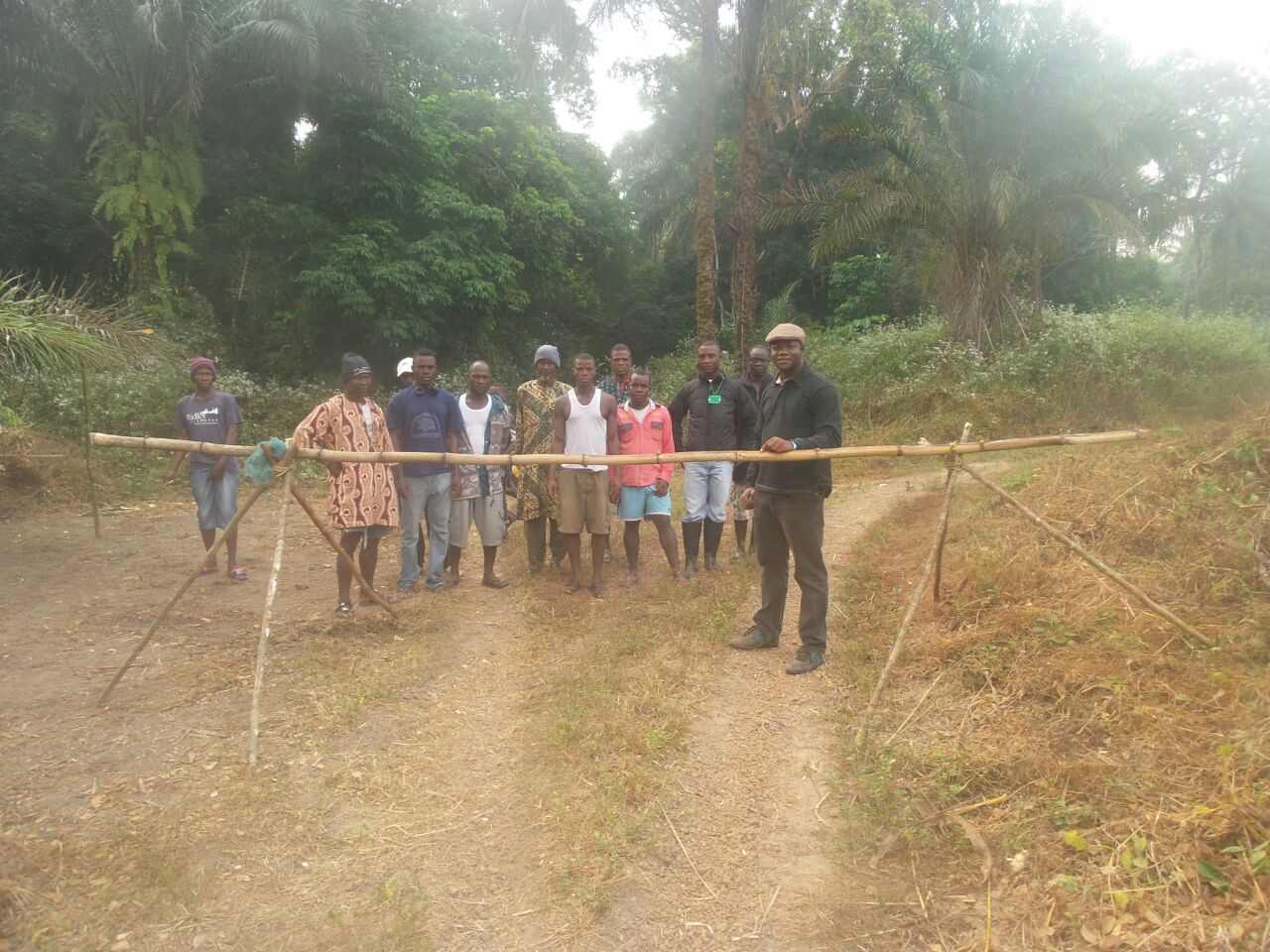
Opening new check point between Bumpeh & Ribbi chiefdoms

Opening new check point between Bumpeh & Ribbi chiefdoms

Bumpeh Chiefdom, where Sherbro Foundation does its work in Moyamba District, lifted a 21 day quarantine last week, leaving them today with no Ebola cases.  They had gone more than 42 days Ebola free.  Then a family in the remote SW corner of the chiefdom crossed back and forth between Bumpeh and neighboring Ribbi chiefdom, carrying Ebola with them. It resulted in two deaths in early December in Bumpeh Chiefdom, and more in Ribbi Chiefdom.

The village homes involved were quarantined. New chiefdom led check points were set up to stop movement between the chiefdoms with 24/7 monitoring .  Bumpeh Chiefdom’s Paramount Chief Caulker had no choice but to arrest and fine the Section chief and village chief involved for not reporting these Ebola cases.

This was the first instance in the country of chiefs being arrested for not carrying out their duties under the new Ebola by-laws.  They’re subject to six months imprisonment. It’s this kind of strict accountability that will stamp out Ebola.

It’s now been about 21 days and surprisingly, no new Ebola cases came out of the Bumpeh Chiefdom village quarantine.  Chief Caulker speculated that perhaps all the earlier sensitization training paid off. Perhaps villagers involved in the burial understood they could become infected and improvised ways to protect themselves.


Ebola treatment – doing it right

We could have used this approach to Ebola treatment in Sierra Leone a while ago. Small and decentralized – placed in the community where needed.  Fast start-up.  But we’ll take it now.  At least we’re learning from the whole Ebola experience and how to respond.

**********************************************************

From Deputy Chief of Mission Kathleen FitzGibbon, US Embassy, Freetown  https://www.facebook.com/sierraleone.usembassy?fref=nf

January 5, 2015

Today, we participated in the opening of a 20-bed Ebola Treatment Unit in Kontorloh Community, Wellington. With USAID’s Office of Foreign Disaster Assistance funded this collaborative effort with the local community, a local non-governmental organization called Lifeline, the Ministry of Health and Sanitation, Oxfam, and Med Air, an international NGO that will operate the facility. The U.K. government provided funding for construction. This facility is a “pilot” in the sense that it is a small facility, constructed in just a few weeks time, right in the heart of a deeply affected community. The scale of this operation allows us to be flexible and responsive to local needs. There are approximately 105 workers at the facility. I was inspired by the enthusiasm of the health care workers, who proudly showed off “scrubs” made by a local tailor. Most of these young health care workers are from the surrounding area and many of them are Ebola survivors. MedAir officials told us that they made hiring survivors a priority because they had been through Ebola and could provide motivation and encouragement to others going through the illness. The health care workers demonstrated for the community how patients are admitted and informed them that the decontamination solution does not spread Ebola. We hope that this local solution engenders trust and can convince residents to send sick relatives and neighbors to the treatment unit. What I saw today is a community determined to stop Ebola.

Innovations aid Ebola health care workers

Good things can eventually come out of crisis. Like these two innovations for Ebola health care workers.

The first is a much improved design for the “space suits” health care workers must wear when caring for Ebola patients. Lives of workers have been lost because of contamination, especially when removing their protective equipment. Vital patient care is probably missed because workers can’t tolerate the heat generated in wearing these suits and have to leave hospital wards within an hour.

from National Public Radio

from National Public Radio

US Agency for International Development staged a competition for improved personal protective equipment design.  Researchers and students at Johns Hopkins University Center for Bioengineering Innovation and Design (CBID) had the winning design.

Simple but critical changes should make their design easy to produce at cost comparable to today’s PPE.  The suit opening is in the back, away from where most workers would encounter infectious fluids during patient care. A break-away zipper design makes it easy to remove without touching yourself. A battery operated pump blows cool air into the suit.

Any worker around the world needing full protective equipment  will benefit from the improved design. For the whole story, go to National Public Radio:

Another innovation is paying Sierra Leone health care workers using mobile money.

Health Care workers are putting their lives on the line every day. They’re putting their families at risk of exposure as well, should they become ill, and of financial ruin if they, the family breadwinner, are lost.  To compensate them, they’re being paid extra hazardous duty pay.

Timely distribution of payroll is difficult around a country like Sierra Leone without electronic payment systems. Or even efficient and safe ways to distribute paper vouchers in all corners of the country.

with mPesa, a worker sends money to their rural family by mobile.

With mPesa, a Kenyan worker sends money to their rural family by mobile.

Here’s how you can ensure Sierra Leone health workers get paid on time: mobile money. This works like direct deposit, except it doesn’t go to a bank account – which most people don’t have. It goes instead to your mobile phone account – which most workers do have, even in rural areas.

You can then use your mobile kind of like on-line banking, where you send money by keying in commands on your phone. You can send money to remotely pay bills to a vendor’s mobile phone account – all without using a bank or the hassle of getting and transferring cash. It’s done similarly to purchasing minutes for your mobile phone.

Mobile money systems like mPesa have become popular in bigger African countries like Kenya and Nigera. They’ve recently found its way to Sierra Leone, but with limited use. Perhaps this application for health care workers will demonstrate its value to more people and accelerate its use.

The UN is responsible for paying the extra hazardous duty pay to Sierra Leone’s health care workers. Mobile money is a good way to ensure secure and fast transfer of payment to hundreds of workers around the country.

“In two months, we’ll ensure Ebola becomes a thing of the past”

“In two months, we’ll ensure Ebola becomes a thing of the past”

Here’s one of the most under-reported stories in Sierra Leone’s Ebola saga – and potentially one of the most impactful.

“The chairman of the Council of Paramount Chiefs, PC Charles Caulker has said that within the next two months [paramount chiefs] will ensure that Ebola will become a thing of the past.

“He made this statement at a meeting with the Deputy Minister of Local Government …. at the Bo District Council Hall on December 3.” (ExpoTimes – Dec 6)

Chief Caulker (blue sports suit) inspecting chiefdom checkpoint.

Chief Caulker (blue sports suit) inspecting chiefdom checkpoint.

How can Chief Caulker make such a bold statement?  He can because he has done just this in his own Bumpeh Chiefdom. He’s sustained no new Ebola cases now for nearly 60 days, despite Ebola present all around in neighboring chiefdoms. 

Why have more paramount chiefs not had a greater impact to date in eliminating Ebola? A clear game plan was needed describing the few high impact activities to control Ebola. The chiefs have pooled their collective experience in facing Ebola and defined this plan through the National Council of Paramount Chiefs (NCPC). They call it “Breaking the Chain of Ebola Transmission.” The plan leverages the chiefs’ unique responsibilities and local authority at the village and neighborhood level to stop the virus from being transmitted person to person.

The other gap has been lack of funding to implement the necessary activities in all chiefdoms.  On December 3, the government finally addressed this with $1.2 million in funding for the 149 chiefdoms across the country provided by the World Health Organization.

The Spectator newspaper reported: “The Chief Executive Officer (CEO) of the National Ebola Response Centre (NERC), Major (Rtd.) Alfred Paola Conteh, on Wednesday 3rd December, 2014, disclosed that US$1.2 million has been sourced by his office for the 149 Paramount Chiefs in the country. … the CEO maintained that Paramount Chiefs are very instrumental in the fight against Ebola.

The money, according to Major (Rtd.) Alfred Paolo Conteh, is meant to get the Paramount Chiefs up and running in their continued fight against the Ebola disease …”

The National Council of Paramount Chiefs (NCPC) Chief Caulker leads developed a concept paper that outlined steps he and other paramount chiefs have used to keep Ebola out of their chiefdoms. The paper serves as a template for each chiefdom to enact byelaws on this chiefdoms use as their local “law.”

Bumpeh Chiefdom launches Ebola program.

Bumpeh Chiefdom launches their Breaking-the-Chain-of Transmission program.

The NCPC used the paper to co-author a “Breaking the Chain of Ebola Transmission” document with the Ministry of Local Government and Rural Development (MLGRD). Changing long held beliefs and customs on burials and caring for the sick has stymied ending the Ebola epidemic.  MLGRD Minister Diana Konomanyi-Kabba said, “solutions to end Ebola need to be fashioned out of and implemented within the framework of local leadership.” (Awareness Times)

In a second meeting last week in Kenema launching this initiative, the Kenema mayor declared Ebola eliminated from Kenema District. Two months ago Kenema city was plastered in the news as one of two early epicenters out of control, with hospitals overflowing and bodies in the street.  Mayor Keifala said, “they had encouraged local authorities to form taskforces in their respective chiefdoms to coordinate activities for the eradication of Ebola.” Politico – December 6

Deputy Minister of Local Government and Rural Development Hadiru Kalokoh, who came to Kenema to launch the paramount chiefs’ project there said, “his government recognised the role of Paramount Chiefs in ensuring development in their localities. He said the president was convinced that the chiefs were the answer to the fight against Ebola.

What will paramount chiefs actually do to eradicate Ebola from their chiefdoms? They are leading a four-prong approach:

  1. Daily door-to-door home visitations by village headmen to check for sick people and isolate them from the rest of the village. Immediate calls to district health teams will initiate Ebola testing to confirm and move cases for treatment.
  2. Safe burial procedures with immediate reporting of all deaths to chiefdom authorities. Paramount Chiefs have the authority to take custody of dead bodies in their chiefdom and ensure Ebola testing and safe burial teams are arranged.
  3. Checkpoints at chiefdom borders manned 24/7 to monitor all movement in and out, and turn away people who are not residents or who appear sick. Checkpoints are strategically placed for vehicle, river and foot traffic.
  4. Continuing sensitization of residents to reinforce Ebola symptoms and actions to protect themselves.
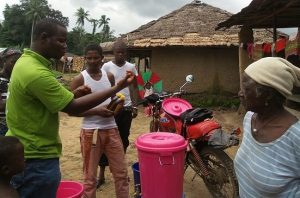
Bumpeh Chiefdom volunteers educate in small villages.

Bumpeh Chiefdom volunteers educate in small villages.

$1.2 million for this program may sound like a lot of money.  But divided among 149 chiefdoms, it averages only $8000 per chiefdom.  This is far less to achieve far more than funding for large NGO programs to “sensitize” the population.  Short one-time visits to towns and villages by NGO staff unfamiliar with the people will not change deep seated behaviors. Many inaccessible villages will be missed.

The paramount chiefs’ plan will not alone be the silver bullet to end Ebola. It has to work in concert with government services to isolate, transport and treat Ebola cases. More hospital beds are still needed. But it’s a major component that’s been missing to date. With Ebola so widespread across the country, a systematic way to identify any and all sick people and dead bodies, and immediately isolate them from the rest of the community has been needed. It’s also the most effective way to influence safe behaviors  countrywide using known and trusted community leaders and repeated contact.

This is why the chiefs call their plan “breaking the chain of transmission.” It goes to the source of the problem at the community level and stops further transmission.  Ebola started locally in a village. It will only end with comprehensive local action.

With Ebola now raging in urban centers in the west and north, the whole country remain at-risk. I asked Chief Caulker what can be done to control these areas. Handle them in the same way as a chiefdom, he said.

Divide a city like Freetown into sections and assign responsible section leaders to coordinate activities like chiefdom section chiefs. Further divide sections into neighborhoods for village equivalents. Use neighborhood leaders to do the daily home visitations and respond to suspected Ebola cases and deaths.

Sounds simple.  But it’s simple, strategic plans that usually works.  Chief Caulker, other Paramount Chiefs and Kenema District have shown what does works. With traditional leaders now fully engaged and funded, a major proven strategy is moving into place. Hopefully, the country can soon call Ebola a thing of past.

Sherbro Foundation is proud to have provided early funding for Chief Caulker’s Bumpeh Chiefdom Ebola program. It saved lives and allowed them to demonstrate the program’s effectiveness.

Arlene Golembiewski
Executive Director, Sherbro Foundation


Why I Give to Sherbro Foundation

GT_SunglassesMy #Unselfie for Giving Tuesday
Why do I give to Sherbro Foundation Sierra Leone?

I want the girls and women of Sierra Leone to have the same opportunities for education I had.  With education, they’ll lead their community and country to prosperity.

I had help along the way. They deserve no less than I had. With that help, they’ll do as much as the women in the US have done. I’m sure of that.

Students have their first computer lesson.

Students have their first computer lesson.

Top on my helping hand list to Sierra Leone is computer literacy and IT skills.  With those skills, the girls and women of Sierra Leone will lead their country into a 21st Century economy, build a middle class and a bridge to stability.

That’s how Sherbro Foundation started. It was my desire to give girls in the rural community of Bumpeh Chiefdom a first class secondary school education – and cap it off with computer literacy.

We’re ready to get back to both of these – as soon as we can get through this Ebola thing. Teachers are anxious to get back to teaching. We’re starting to rebuild our girls scholarship fund after diverting money for community Ebola response.

The community computer center has been built with 50 computers waiting for students. It will have its grand opening when the schools reopen. (For now, Ebola dictates no public gatherings.) Next step is raising the balance of funds needed for a solar energy system. With solar, we can run into the evening, doubling the classes and offer adult literacy night school.

So, stay tuned for 2015. It looks to be a promising year.

Join us to kick-start the new year. Do some good.  You’ll feel very good.

sherbrofoundation.org/donate

Arlene Golembiewski
Founder & Executive Director, Sherbro Foundation Sierra Leone
Do Good. Feel Good. #GivingTuesday – Dec 2


GT_Phone_2014Do Good. 
Feel Good.

Send help to
Sierra Leone
battling Ebola.

On Tuesday, December 2 people around the world will come together to celebrate generosity and to give.  #GivingTuesday

Help Bumpeh Chiefdom in Sierra Leone emerge from the Ebola crisis and build a better future.

Here’s why I give to Sherbro Foundation and what I want to see in their future.
Share the reason for the season.  Even small gifts make a BIG difference.

$25 pays for:

  •  A week’s food & transportation for a chiefdom Ebola Team Volunteer    
  •  Part of a solar panel bringing power to the Community Computer Center
  •  One girl’s scholarship to attend Jr High School for an entire year   

 It’s easy to Give.  

 btn_donate_SMHERE            

logo-segoe printDOUBLE your money now  –  1:1 matching!
Help Sierra Leone more.  Pass this on to a friend.


www.SherbroFoundation.org


What are You Grateful for? #GivingTuesday

“Around the world, #GivingTuesday is a grassroots movement that illustrates the impact we can have when we all pull together.”
President Obama

untitled

Through millions of online clicks and offline acts, we expect #GivingTuesday will take many forms, but all will be energized by a common impulse to make life better, especially for those in need.


Primary school in Moyeamoh.  All but one of this sixth grade class are girls.What are you grateful for?  Reflect. 
Then give back.


#GivingTuesday – Dec 2
www.sherbrofoundation.org/donate

After All the Eating and Shopping ….It’s Time to Give Back

10730891_746250242120351_4711102638509785596_n


logo-segoe printGive to help Sierra Leone emerge from the Ebola Crisis and build a brighter future.

 www.SherbroFoundation.org/donate  

Your donation is now DOUBLED with 1:1 matching.

Help Sierra Leone more. Pass this on to a friend.


P.C. Caulker interviewed on role of chiefs in Ebola crisis

Paramount Chief Caulker of Bumpeh Chiefdom talks about being a chief and their role during the Ebola crisis. As leader of the National Council of Paramount Chiefs in Sierra Leone, Chief Caulker was interviewed by Radio France Internationale.  Read the transcript here. 

Paramount Chief Charles Caulker

Paramount Chief Charles Caulker

Most Westerners don’t understand paramount chiefs are distinct from the Sierra Leone government.  They’re a separate form of governance that represents every Sierra Leone resident in every part of the country, and pre-dates colonial rule. They deal with local affairs and are the first level of action in addressing resident safety, including in time of disasters.  In a rural country with difficult roads and many remote villages, paramount chiefs are the first and often the only authority figure their residents will encounter.  Their role is critical for something like the current Ebola crisis.

Chiefdoms enact byelaws to document the customs and practices of the area. Two sets of byelaws on the paramount chief’s role in addressing the Ebola crisis were defined in recent months.  President Koroma has been admonishing paramount chiefs of late to fulfill their role in breaking the chain of Ebola transmission, as defined in the byelaws.  Chief Caulker discusses in the interview the need for adequate resources if chiefs are to deliver this role.

Peace Corps Volunteer’s Africa Book Honored at Smithsonian

Fellow former Sierra Leone Peace Corps Volunteer Monica Edinger was honored yesterday at the Smithsonian for her children’s book – Africa is my Home: Child of the Amistad.  It tells the story of a child captured into slavery on the Amistad ship and her eventual return to Sierra Leone.

edinger coverThe Smithsonian’s National Museum of African Art (NMAA) held their  22nd annual Children’s Africana Book Awards (CABA) in Washington, DC.  CABA was created by Africa Access and the Outreach Council of the African Studies Association to honor authors and illustrators who have produced exceptional books on Africa for young people.

Four books were honored in this category for young people, including a book authored by Desmond Tutu. Not bad company to keep, Monica.  Congradulations!

I introduced her book on the blog last September. Check it out.  Looking for an Xmas gift for a child in your life?  This would make a great one. Beautifully illustrated to tell a compelling story.

Read her own account of her November 10 trip to Washington, DC to collect the award.


It’s working – No More Ebola Cases in Bumpeh Chiefdom!

December 8th Update:  55 Days & counting  –  No new Ebola Cases!

Chiefdom Ebola Task Force is doing a fantastic job – but they need our continued support.

There are no more Ebola cases in Bumpeh Chiefdom since they embarked on their Breaking-the-Chain-of-Transmission program  October 22nd. Even though they earlier lost 21 people to Ebola and the epidemic rages around them.

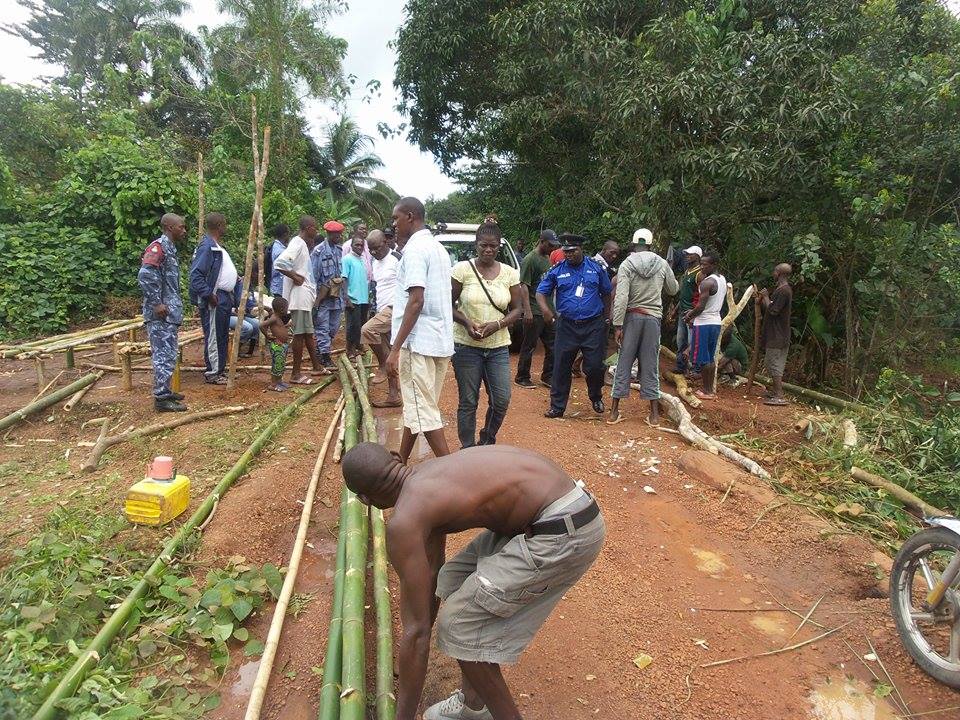
Setting up check point.

Setting up check point.

What’s changed? The single biggest intervention is rigorously managed checkpoints at the main roads to stop “strangers” from entering the chiefdom and carrying Ebola with them.  Village chiefs are the next level of defense going door to door daily to verify no one has taken ill and there are no unexpected visitors.  Reporting is real time with cell phones.

Imagine if every chiefdom in Sierra Leone mounted this kind of systematic offensive to identify and isolate Ebola cases for even 21 days.  It would literally break the chain of Ebola transmission and the outbreak would be on its way out.   Read the whole story here.

Sherbro Foundation continues to support Bumpeh Chiefdom in their Breaking-the-Chain-of- Ebola-Transmission program.  Without our donations, they could not have launched this comprehensive effort.

You can make a difference and help eliminate Ebola, too.  Join us and donate at www.sherbrofoundation.org/donate. We need your help to keep this effort going for the coming months.

You’ll know exactly where your money goes, and that it’s actually working to stop the spread of Ebola.

Bonus: 100% goes directly to the chiefdom Ebola program. Every penny. We’re an all-volunteer organization and our small administrative costs are paid by a separate donation.

2nd Bonus: It’s tax deductible for US residents. Sherbro Foundation is a 501(c)(3) tax exempt organization.

Help us even more – forward this to a friend.

It’s Working – No More Ebola Cases in Bumpeh Chiefdom

November 19 update – Ebola-free 32 days and counting

“Things are better, relatively speaking.” Rosaline Kaimbay emphasized the “relatively speaking” when I called yesterday for an update on Bumpeh Chiefdom. But it was the first positive news in some weeks. There are no more Ebola cases in the chiefdom since they embarked on their Breaking-the-Chain-of-Transmission program two weeks ago.

Yet Ebola is raging in Waterloo, a large town on the main highway and the source of recent Ebola cases in Bumpeh Chiefdom. There are reports of over 700 dead of Ebola in the Western Rural area in the last 5-6 weeks, most coming from Waterloo. Ebola “refugees” have been fleeing places like Waterloo and carrying Ebola to rural villages. Places like Bumpeh Chiefdom in close proximity.

Setting up check point.

Setting up a check point.

But today there’s no Ebola cases in Rotifunk or the rest of Bumpeh Chiefdom. Why? The single biggest intervention is rigorously managed checkpoints at the main roads to stop “strangers” from entering the chiefdom and possibly carrying Ebola with them.  There are also checkpoints on the Bumpeh River that traverses the chiefdom and is the main traffic route for many of its 208 villages “downriver” as they say.

Young chiefdom men volunteered to supplement government security forces at checkpoints and monitor all traffic in and out of the chiefdom. They’re the ones rigorously enforcing, keeping chiefdom borders tight, and ensuring outsiders are turned away. They’re the ones sitting up for all night vigils with nothing to protect them from mosquitos except a camp fire. They take turns for naps in a 3-sided palm branch lean-to on hard benches of split bamboo – their improvised shelter.

Rosaline Kaimbay interviewed at chiefdom meeting.

Rosaline Kaimbay interviewed at chiefdom meeting.

Rosaline visits the checkpoints daily to be sure all is going well and lend support. She is Executive Director of Sherbro Foundation’s partner organization, the Center for Community Empowerment and Transformation, CCET, and principal of Prosperity Girls High School. And now, she’s part of the chiefdom’s Ebola task force. Rosaline is a do-er. If you need something done, get Rosaline. If it’s important to Bumpeh Chiefdom, you won’t need to look for her. She’ll be there.

Rosaline said she goes to the checkpoints daily for at least 30 minutes, maybe an hour, to personally assess. She heads out each day with the CCET motorcycle and a driver, the only practical way to get around these days. Maybe the only way.

We have six chiefdom men assigned to each checkpoint, Rosaline said. They rotate through, with five days on and two days off. I talk with people, bring them drinks, something to boost morale.

And the checkpoints are working. I asked what they do if someone tries to enter the chiefdom who doesn’t live there. They send them back where they came from, she said, the way they came in.

Chiefs like Mr. Kamara monitor village families.

Chiefs like Mr. Kamara monitor village families.

It sounds rather medieval. But much of the country is under similar isolation orders, trying to isolate districts, and chiefdoms within districts, that have surges in new Ebola cases. This is Public Health 101 to isolate disease cases and keep them from spreading. It works.

Village chiefs are the next level of defense in the Breaking-the-Chain-of-Transmission program. Bumpeh Chiefdom chiefs are going door to door daily to verify no one has taken ill with Ebola-like symptoms, and there are no new visitors.  Reports are by cell phone real time, wherever possible.  Section Chiefs are responsible to report their village results to the Chiefdom task force.

Imagine if every chiefdom in the country mounted this kind of offensive to fight Ebola for even 21 days – the upper range for Ebola incubation. It would literally break the chain of Ebola transmission and the outbreak would be on its decline.

Identify – Isolate – Treat. If all three legs of the infectious disease control stool were reliably there, Ebola would come under control. Actively engaging and supporting traditional leaders to identify and isolate cases in their chiefdoms is the key. They play a role in getting cases promptly sent for treatment. No one else can do this systematically with cooperation of the people. No one else is already in place in every corner of the country.

There’s still a long uphill battle to eliminate Ebola. But for the first time in a long while, you get a sense the runaway train is starting to be controlled and slowing down.

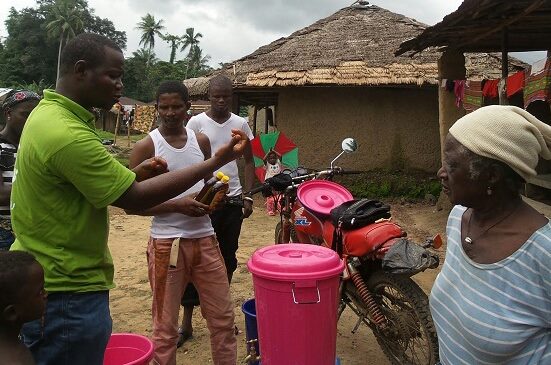
Sherbro Foundation will continue to support Bumpeh Chiefdom in their Breaking-the-Chain-of- Transmission program. Our donations go to support the checkpoints teams with small weekly per diems, transportation costs and cell phone coverage. Village chiefs receive a $5 honorarium to recognize their service for three months of house to house checks. With gas at $5/gallon, transportation costs are high. Our support enables the Chiefdom task force to get around and ensure work gets done. We continue to supply villages with hand washing stations and disinfectant for public places.

You can make a difference and help eliminate Ebola, too.  Join us and donate at www.sherbrofoundation.org/donate

You’ll know exactly where your money goes, and that it’s actually working to stop the spread of Ebola.

Bonus: 100% goes directly to the chiefdom Ebola program. Every penny. We’re an all-volunteer organization and our small administrative costs are paid by a separate donation.

2nd Bonus: It’s tax deductible for US residents. Sherbro Foundation is a 501(c)(3) tax exempt organization.

Help us even more – forward this to a friend.

Ebola – All We Need to Do

All we need to do to make this work is restrict movement (into the chiefdom) and don’t touch.

Setting up checkpoint at chiefdom border.

Setting up checkpoint at chiefdom border.

These were Chief Caulker’s words to me two days after he launched his “break-the-chain-of-transmission” program to stop Ebola in Bumpeh Chiefdom. He spent the previous evening at one of the key checkpoints set up to control anyone trying to enter or leave the chiefdom on a drivable road. Additional checkpoints are being set up at strategic points for river traffic and frequented footpaths.

Chief was there until nearly midnight to personally observe checkpoint activity. And I need to boost morale, he said, so I stayed there late into the night.

Chief Caulker (blue sports suit) inspecting checkpoint.

Chief Caulker (blue sports suit) inspecting checkpoint.

The chiefdom has been under a government isolation order for a month with no traffic in or out except those with an authorized pass. Waterloo and Moyamba Junction are both market towns on the main highway now decimated by Ebola. Many there have family and personal connections in Bumpeh Chiefdom. You turn off the highway at either of these points to reach the chiefdom. Both towns have been the source of three cases of Ebola infected people fleeing quarantine there to chiefdom villages. Each incident was isolated and contained, but Bumpeh Chiefdom’s proximity puts it at risk of a bigger outbreak.

Army or police manned checkpoints on roads are supposed to stop all traffic without authorized passes, including any vehicle, motorbike or foot traffic. But borders are “porous,” as they say. “Lots of compromising going on,” Chief said. These are nice ways of saying people can pay or otherwise talk their way through.

Checkpoint night watch.

Checkpoint night watch.

This is why Chief Caulker has added his own chiefdom volunteers. Young men committed to their chiefdom and willing to sit up all night in a palm lean-to with a camp fire, and actually stop traffic without an official pass. Four trucks per day are allowed to bring supplies to Rotifunk.

A week later Chief Caulker said, the checkpoints are being very effective. The presence of checkpoint volunteers is making the army or police personnel do their jobs.  Traffic is finally being halted and turned away. Volunteers call in reports on cell phones.

The only problem, chief said, is that the police and army personnel are asking for food and ”incentives.” In the local vernacular, this means money and things like cigarettes, because they’re not being paid by the government, or payments are skipped. I’m not using donations the chiefdom received to fight Ebola to pay staff the government is responsible for, Chief said.

I’ve come to better understand all the petty corruption from police, army and other government employees, trying to extract small bribes from local people. When they don’t get paid, they still need to eat and support their families. They’re in effect imposing their own tax. If that’s all that’s at stake it’s one thing. But allowing Ebola infected people to pass through checkpoints during this crisis in inexcusable.

On the no touch side, one of the biggest sources of new Ebola infections have been traditional burials – now considered unsafe. People now understand (at least in Bumpeh Chiefdom) the need to report all deaths to first check for Ebola.

We’re having a good response on our side on reporting, Chief said. I got five cases of natural deaths reported to me last week I wouldn’t normally get. We need to know cause of death in each case. Swabs are taken for Ebola testing  by the community health officer.  There’s been a better response now on testing requests.

Local chiefdom burial teams have been organized and started doing burials under the supervision of official burial teams from the district capital, Moyamba. This includes proper use of personal protective equipment they received a few days ago that’s WHO funded. Teams have to undress and throw the PPE into the grave, chief said, so the supply won’t last for long. The first few burials will be supervised; then local teams are on their own. Bodies won’t be waiting two, three or more days for burial. Or be thrown in the river, as was recently done.

Let’s hope the chiefdom program to stop Ebola results in few Ebola burials to come, and new protective equipment isn’t in demand. So far, so good.

Sherbro Foundation is proud to be supporting Bumpeh Chiefdom in their program to break the chain of Ebola transmission with helping fund the checkpoint teams.