Procter & Gamble Alumni Foundation Grant Boosts Sierra Leone Farmers

Procter & Gamble Alumni Foundation Grant Boosts Sierra Leone Farmers

Sherbro Foundation is honored to announce that the Procter & Gamble Alumni Foundation Fund of the Greater Cincinnati Foundation has awarded us a grant to expand our transformative Let Them Earn project in Sierra Leone. With this funding, 50 more Bumpeh Chiefdom village farmers (majority women) can replicate the success of early participants improving their incomes, livelihoods, and futures.
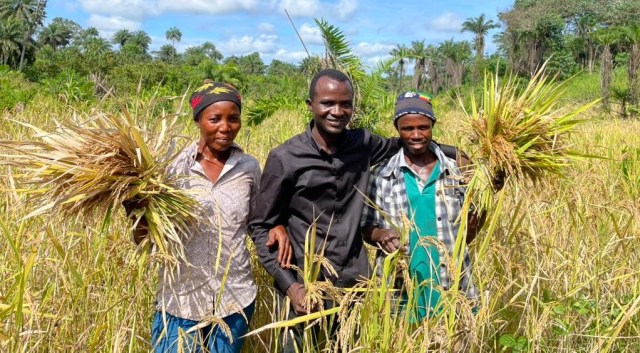
Let Them Earn Project farmers, Bumpeh Chiefdom, Sierra Leone

Through our local partner CCET-SL (Center for Community Empowerment & Transformation—Sierra Leone), Let Them Earn provides smallholder farmers with:

  • Interest-free loans to expand their operations     
  • Year-round training on improved farming practices
  • Classes on basic numeracy and small business management

After covering operating costs, setting aside family food, and repaying their loans, participants have net cash income to improve daily life and reinvest in their farms.

“This grant is a big leap forward that’s adding momentum to what we’re doing with village farmers,” said Bumpeh Chiefdom Paramount Chief Charles Caulker. below right with women farmers. “I want to create a culture of increased productivity where farmers continue to grow more, earn more, and villages lead their own development. I’m deeply grateful to the P&G Alumni Foundation for standing behind us with their support.”

Transforming Lives Through Economic Empowerment

Musu Koroma, below, a mother of three, was one of the first farmers to join Let Them Earn. Last month, she showed me how new earnings from her loan changed her life. She reinforced her mud brick house with strong concrete stucco, safeguarding it for years to come from erosion and collapse in Sierra Leone’s heavy monsoon rains. She installed sturdy hardwood doors and windows that keep out rain and mosquitoes. With pride and confidence, Musu is now sending her son to secondary school in a larger town. 
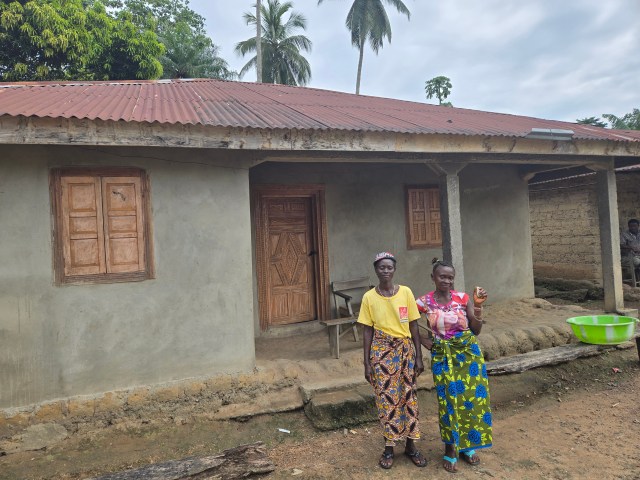
With earnings from her three-acre farm, Musu Koroma, above left, strengthened her house, before like the mud brick house next door.

“Let Them Earn has helped me so much,” Musu said. “I can now do things I never thought possible.”

Results Speak for Themselves

The impact has been dramatic. Families are sending children and grandchildren for higher levels of education. They have more food and can afford protein like fish, important for child development and disease resistance. Homes become safe and healthy places to live with dignity. Villages are becoming debt-free, and communities are rediscovering hope.
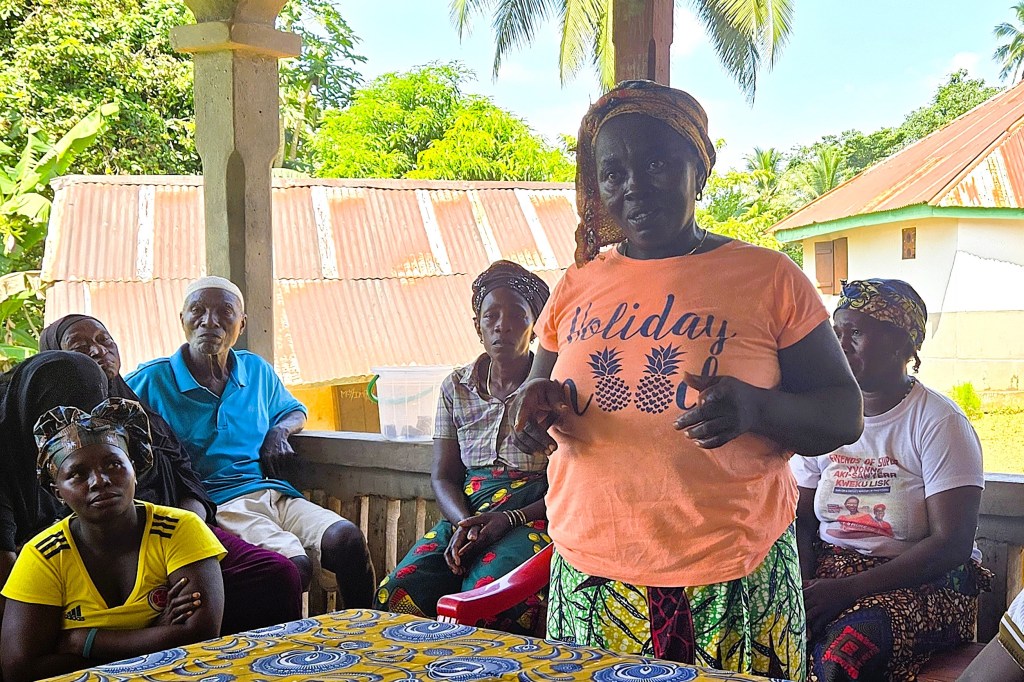
Aminata Sandy, above joined Let Them Earn after losing both her husband and the brother-in-law she became dependent on. With her loan, she hired labor for her farm, secured food for her children, and paid their school fees. As the loan recipient, she manages her farm and a household of eight. She’s repaid most of her loan, with the remainder coming with the year-end harvest.

Aminata confidently stood up in front of her village and Paramount Chief Caulker to tell her story. When women are direct loan recipients, Let Them Earn empowers them to make farm and financial decisions. They’ve gained respect and a voice in managing their village.

Microfinance schemes in rural areas frequently fail. Our partner CCET-SL proudly reported 95+% of year one loans were repaid with the combination of interest-free loans and year-round training tailored to farmer needs. Year two Let Them Earn loan repayment promises to reach the same high level. Repaid loans are reloaned to the next group of farmers eager to improve their lives.

Why This Approach Works

After 14 years working with Sierra Leone, we’ve learned a vital truth: sustainable development doesn’t begin with what you construct — it begins with who you empower.

Schools, wells, and roads are important, but villages can’t develop or sustain growth unless individuals become economically self-reliant. Lasting change happens when you invest directly in people, giving them the means and skills to lift themselves out of poverty.

The Let Them Earn program brings together what truly works: financial access, practical skills, and local empowerment—helping farmers move from subsistence living to building viable, income-generating small businesses. Loans are repaid on schedules that match farm harvests.

Yes, it’s riskier to provide loans to subsistence farmers and small traders. It’s time-intensive to deliver hands-on training in remote villages and provide ongoing coaching. But this is what actually works. This is what moves people and entire communities beyond survival mode to genuine economic opportunity.

Sherbro Foundation sends our deep thanks to the P&G Alumni Foundation for their continued confidence and partnership in Let Them Earn. Year three of the project will bring even greater growth and opportunity to the villages of Bumpeh Chiefdom.

For program details: https://conta.cc/4oVfeom

You can help support Sierra Leone farmers: https://sherbrofoundation.org/donate/
Don’t Just Celebrate Women Today. Hire them.

Everywhere I turn today, women are being “celebrated” on International Women’s Day. Skipping this advertising opportunity would be a conspicuous absence for retailers and marketers.

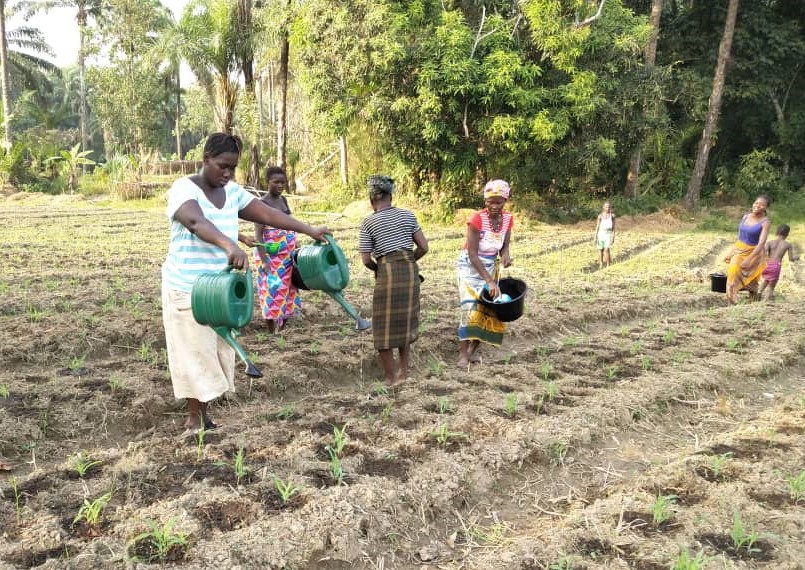
Meanwhile, we’re hiring women. One of the best ways to celebrate Sierra Leone women is to give them the chance to earn actual wages for their labor – still uncommon in most of the country.

Peppers d 3-6-19 (2)

The Inland Valley Swamp (IVS) project (above) we just helped our partner CCET start is growing vegetables. It hires women to care for tender young vegetable seedlings in raised beds built in a wetland area. It’s one of the only wage-paying job opportunities for these women who missed the chance for an education.

I’m hearing today women’s wages globally average sixty-three percent that of men. We pay 100%. The daily wage for these Rotifunk women workers is the same as wages for men workers.

The other way we’re celebrating Sierra Leone women is helping them grow their own peanuts. The Women’s Vegetable Growing project gives women a head start on becoming small farm entrepreneurs.

To celebrate women around the world, give them economic empowerment.  Everyone wins. What bigger boost to the economy is there than half the population producing to their full potential?


Our Lives Have Been Transformed: Women Vegetables Growers


“We are sure and proud that what is happening in Bumpeh Chiefdom is not happening in any other chiefdom.”

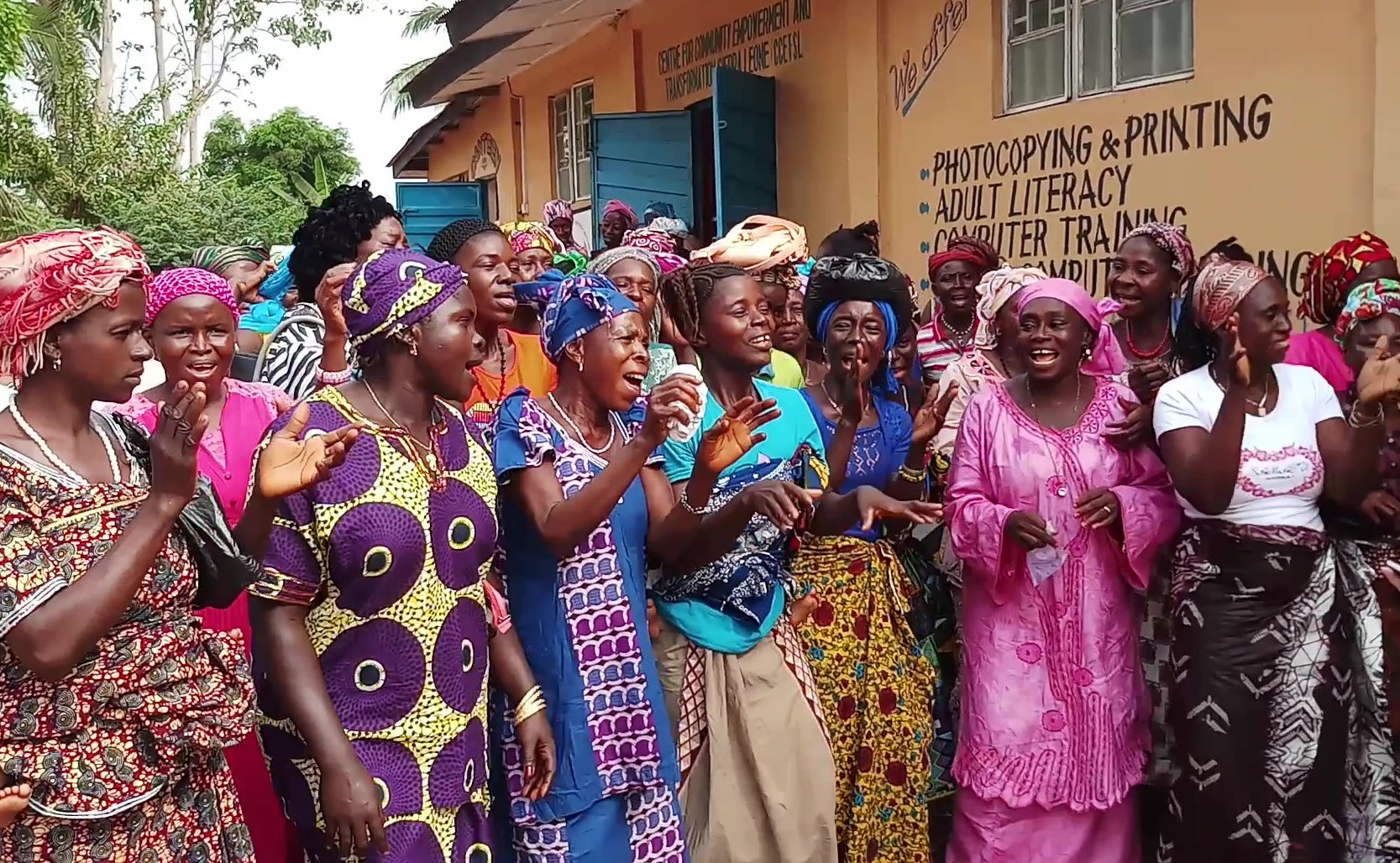
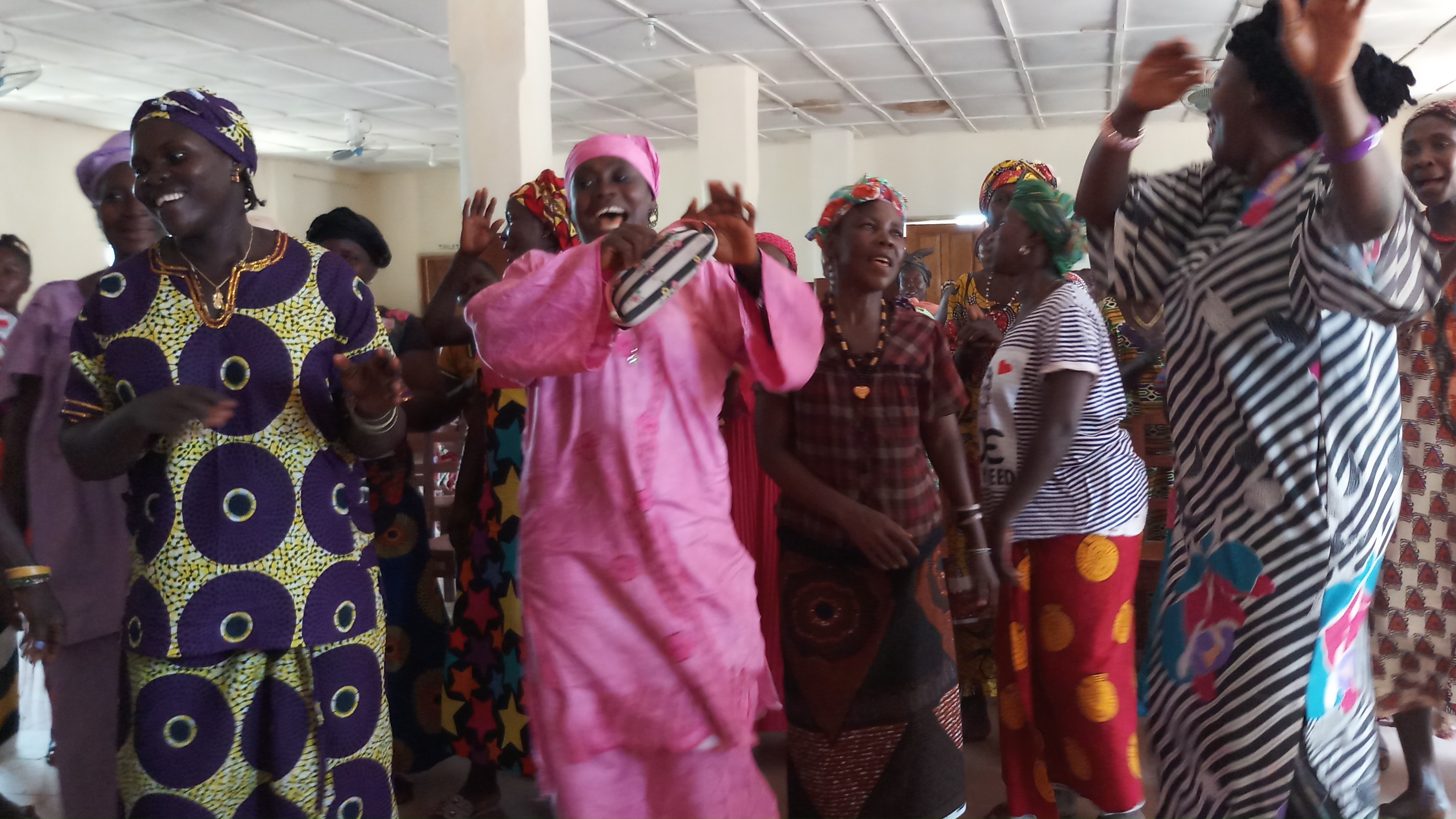
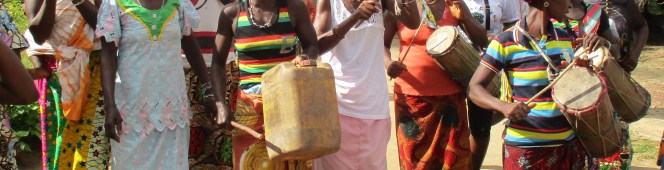
Before we reached the CCET Center to meet women from the Women’s Vegetable Growing project, we could hear them. Bumpeh Chiefdom women greet visitors with a welcome done in song. See video. (It may take a moment to load.) Their distinctive style with voices in harmony sounds like a minor key. They’re singing as one with syncopated clapping. You feel embraced by their warmth.

As we took our seats inside, the hall was thundering with the women’s song and clapping.

Their welcome song is one they sing among themselves while working as teams in each other’s gardens. They sang that if they are united and help each other, together, they will all individually benefit. There’s a Sherbro word for unity and working together: Lomthibul.

They gathered to thank us for helping them grow groundnuts (peanuts) in a project they say is not found in any other chiefdom.  

Started in 2015 as an Ebola relief effort, Women’s Vegetable Growing is now entering its fifth year. Sherbro Foundation funded it for three years, with Rotary Clubs stepping in last year.

The women are proud to be part of the program, as they should be. They receive a modest grant of two bushels of groundnut seed, a drying tarpaulin and a 100 lb. bag of rice. With that, they grow enough groundnuts to sell for income and keep seed for another harvest. For once, they have their own discretionary income they use to feed and care for their families.

In 2018, the program started supporting women for two harvests to give them a strong enough base to then keep planting and gain self-reliance.

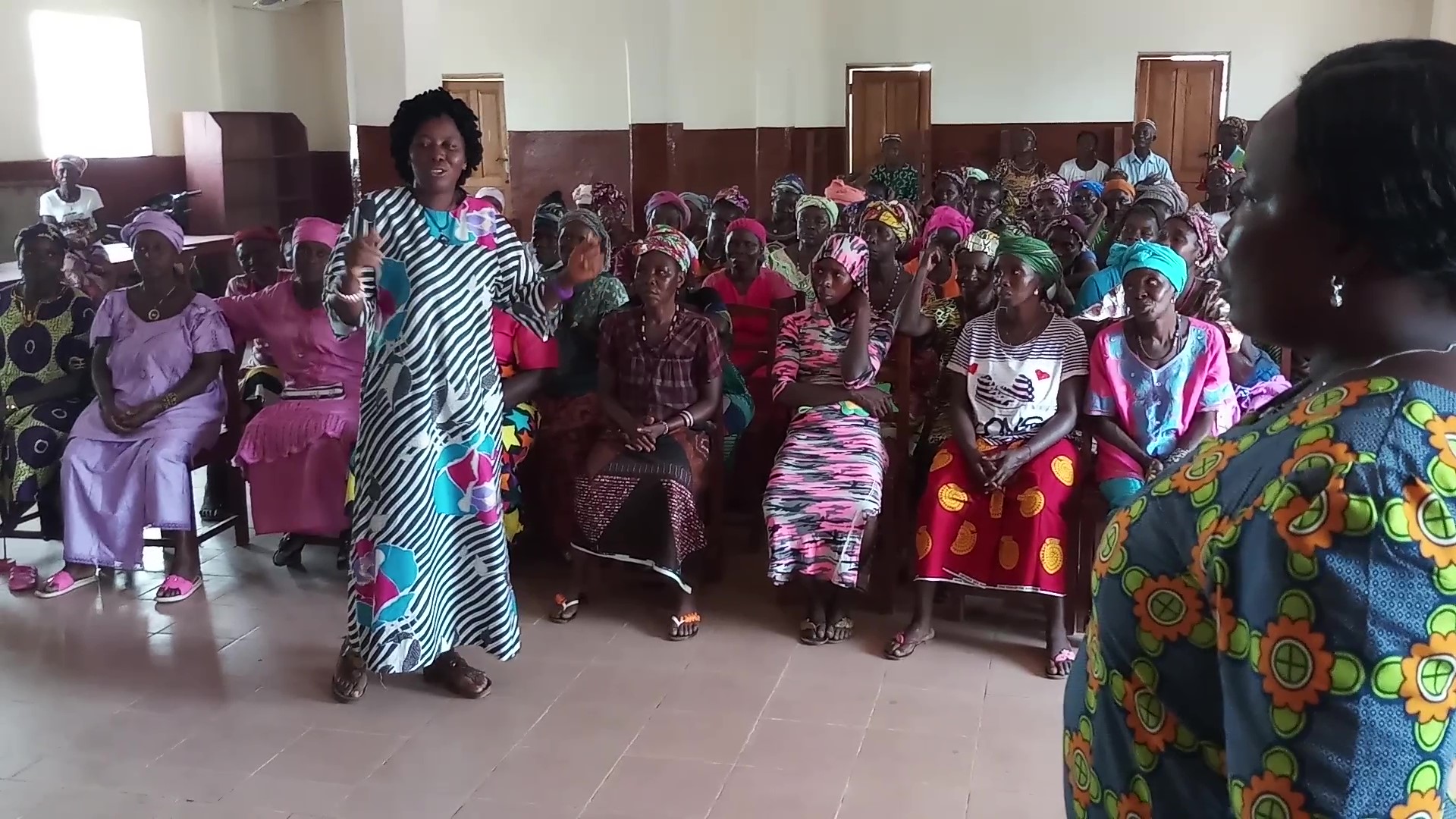
As we sat together, their spokesperson Hawanatu Sesay (above) explained, income in this rural area is dependent on agriculture. “Our only means of survival is though agriculture.”

These were representatives of the last group of 106 women selected for the project because they’re mature and vulnerable. “Most of us are widows. Some lost their husbands, and other men are not able to work now; they’re too old. Some [don’t take] responsibility for our welfare.” Hawanatu herself is a widow. She has more education than most, dropping out of junior secondary school to marry when she became pregnant. Her husband died and left her with two young children. She depends on her garden for income to feed her children.

When women first join the project, Rosaline Kaimbay, director of CCET-SL (the Center for Community Empowerment & Transformation) (above, right), explains the goal is to help them transform their own lives. They’re being helped with funding from Sherbro Foundation and now Rotary Clubs.

Today, the women told us, “Indeed, it’s a reality. Our lives have been transformed and we’re happy!”

They no longer need to rely on men to feed their families. “When we don’t have money, we take a few groundnuts [we grew] and sell them in the market and buy what we need to cook.”

“Before this time, ” Hawanatu continued, “our children were forced into early marriage because we don’t have much to give them. They go to school hungry. Because of this, they’re prone to getting boyfriends who give them money [and get them pregnant]. Now, we’re able to feed our children and they don’t get into early marriage.”

The women are also grateful to be beneficiaries of other CCET-SL programs. “You’ve given our children [in the girls scholarship program] uniforms and books. Through your help, some of our children are now at university with the college scholarships you’ve given them.”

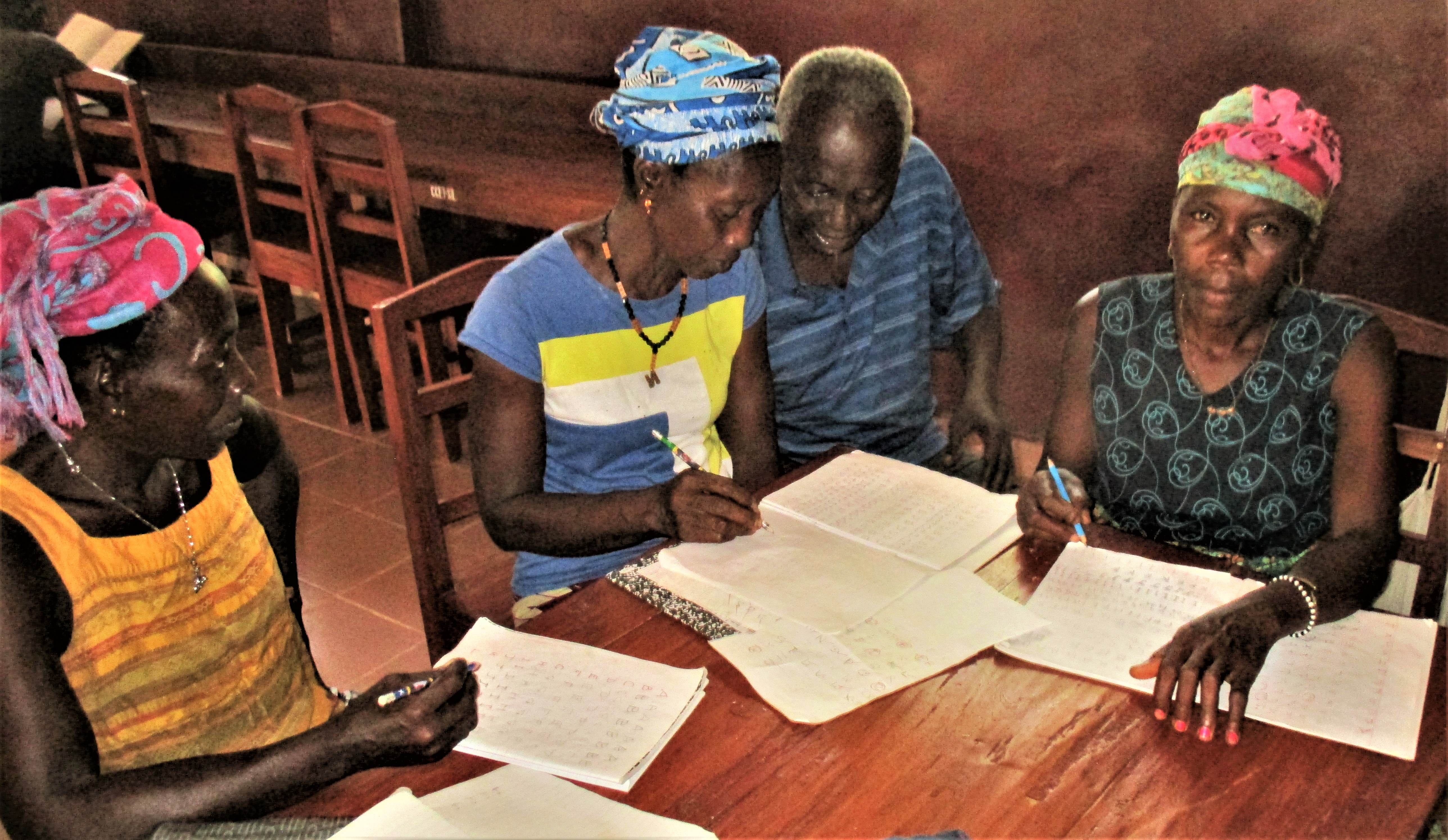
“Through the efforts of CCET-SL and the Adult Literacy program (above), most of us are now able to sign our names. Before, we were unable to read the [school] results of our children. Now we can look at their [report card] and see whether they passed their exams or not.”

The women also appreciate their 9th grade children could participate in the after-school tutoring program preparing for them for the senior high entrance exam, the BECE. They saw their children being fed three times a day in the intensive study camp before the exam – while they only have money to feed once or twice a day. “Because you did this, most of our children passed their BECE exam and we’re grateful.” All these things “are a big lesson to us.”

By now, tears were rolling down my face as I recalled the dark days in early 2015 when Ebola was nearly over, but a 3-year economic crisis just starting. We asked Bumpeh Chiefdom’s Paramount Chief Charles Caulker what Sherbro Foundation could do to help. Fund women to grow vegetables as a quick way for them to earn income, he said. The women today rightfully said Chief Caulker is “the brains behind this program.”

Women’s Vegetable Growing has grown from the first group of 30 to 106 women last year. By investing in them with several programs, CCET-SL enables the women to focus on growing groundnuts and maximize the seed they save to grow another and larger next crop. Nearly 400 women in total have been supported to move towards self-reliance. With families of five and more, the community impact is significant.

The women are proud to also contribute to the success of the program. It’s become a tradition spontaneously started by the first group of grateful women growers that they donate some seed back to help the next group.

“Because we are united, that is why the groundnuts you’ve given us we’re able to reproduce them and help other women. We’re happy and proud to help other women.

When starting a new program, you hope it will be embraced by the community and beneficiaries helped in a measurable way. It’s a priceless reward to now hear these women as a group say their lives have been transformed.

Let me thank all who have supported Women’s Vegetable Growing over the years. I hope you, too, now feel rewarded by your generosity.

We hope to expand Women’s Vegetable Growing with new funding to help the most successful of these women entrepreneurs develop their gardens into small businesses. They can then hire workers, creating local wage-paying employment.

Women farmers have great potential to become a driver of local economic development. As they said, they are united.

—- Arlene Golembiewski, Executive Director

Giving Tues – Put a Woman on Path to Self Sufficiency

Giving Tues – Put a Woman on Path to Self Sufficiency

givingtuesday-16Give for Good
Nov. 29
We’ll double your gift =
Twice the Good!


women-veg-grow-nov-16-c

Read more about the Women’s Vegetable Growing Project.

We ran out of funding for more women. Any donation welcome!

Give HERE   Thank You!


Women’s Vegetable Growing Project – Making millionaires out of peanuts

Women’s Vegetable Growing Project – Making millionaires out of peanuts

Seventy five women farmers have a chance to become Sierra Leone millionaires. Sherbro Foundation just funded a new group of 75 women to grow groundnuts (we call them peanuts) in the Women’s Vegetable Growing Project – one of our most successful projects to date.

 I can still vividly remember last November when I approached Mobainda village to visit the first women’s project. Women had gathered and filled the narrow dirt road. The car stopped, so I got out to see what was happening. The women began singing and dancing around me. They had come out to honor me and escort me into their village — the traditional way of the women’s society.

No words, no speeches. They just surrounded me with their harmonized singing and drumming on hand-made drums, and slowly moved towards the village.  So, I moved with them, their singing filling the air for the last quarter mile.

They were thanking me – thanking Sherbro Foundation – for helping them plant peanuts in April 2015, right as the Ebola crisis was lifting. These are women who normally live on the slimmest of margins, earning an average of less than $1 a day. They couldn’t even earn that during Ebola, when much farming stopped and markets for selling their produce closed for over four months.

“The Women’s Vegetable Project is one of the most successful projects introduced in my chiefdom,Paramount Chief Caulker said.

Veg - Groundnut harvesting3It was conceived as a way to quickly help women earn income again. We started small with 30 women, supplying each with enough peanut seed for a half-acre garden and other vegetable seed like cucumbers and corn. They also got a 50Kg (100-pound) bag of rice to feed their families before their harvest.
Leave it to women to make the best use possible of resources they were given. Most women grew a bumper crop of peanuts in four short months, harvesting 6-7 bags of peanuts for each bag of seed they received.

We jokingly said we were making millionaires out of peanuts. A large bag of peanuts went for 160,000 leones. So, 7 bags are worth over a million leones. Or about US$200.

TIMG_0211hat may not sound like much, but it was three times more than the women would make in cash in a whole year of traditional rice farming, an incredibly labor intensive crop. And they still had the rest of the year to grow rice and do fishing in the Bumpeh River.

Leave it to these women to be grateful for this help. In these small, close-knit villages of 200-300 people, the women wanted to help other women do what they just did. They came up with the idea of each donating back a half-bag of groundnut seed for the next group to plant. They showed me their donated seed, left.

A local survey found 450 more women in this area of eight villages want to be part of the program. This part of Bumpeh Chiefdom was selected because it has the largest concentration of active women farmers. They were the most severely affected when Ebola abruptly curtailed their normal farming.

13177990_689055534567081_9185847638175857474_n[1]
Executive Director Rosaline Kaimbay, right, of CCET, our partner organization, distributes seed and supplies to the May 2016 group of women farmers, holding white drying tarps they received on their heads. We bought any seed locally available, saving transport cost for both buyer and sellers.

So, the program is expanding to 150 women per year in two groups of 75 women each in the spring and fall.  The program is meant to be a stopgap measure to help women farmers get back on their feet after Ebola. It will continue for three years and cover all 450 interested women. The women draw lots to select who will be in each group.

Veg - drying groundnutsThe 2014-15 farming year was exceptionally hard with Ebola. The first group of women peanut farmers unfortunately didn’t become self-sufficient with just one peanut crop in 2015. They were forced to eat a large part of their first peanut harvest to avoid hunger. But this allowed them to save some of the previous year’s rice as seed to grow their next rice crop. We’re giving these first 30 women partial support again in the current project to ensure they can make enough profit in 2016 to go from there.

This year we are also giving each woman a large tarpaulin to safely dry their harvest of groundnuts (or peppers) and avoid losses due to rotting.

I’m already looking forward to my next visit when I can join the women and again celebrate their success. I learned the song the women sang for me last November loosely translated said: “If you wake up in the morning and just work hard, you will succeed.”

And succeed these hard-working women did. In only five months after my first long-distance phone call that conceived the project, the women were harvesting a bumper crop. Their success became our success. And now we’re expanding to help more women succeed.

Arlene Golembiewski, Executive Director