And Then There Was Light – CCET-SL’s new Solar System

And Then There Was Light – CCET-SL’s new Solar System

Just when we thought we were ending a banner year – our best yet – it got even better.

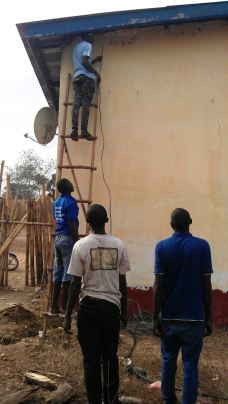
When our partner CCET-SL’s new Community Education Center opened in 2015, we knew we would need solar power to meet the center’s promise of computer and adult literacy classes, chiefdom meetings, NGO-led educational workshops and other services. But we never dreamed this critical chiefdom resource would have its own 24-hour solar power system today.

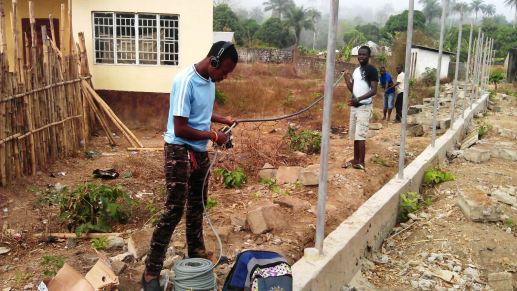
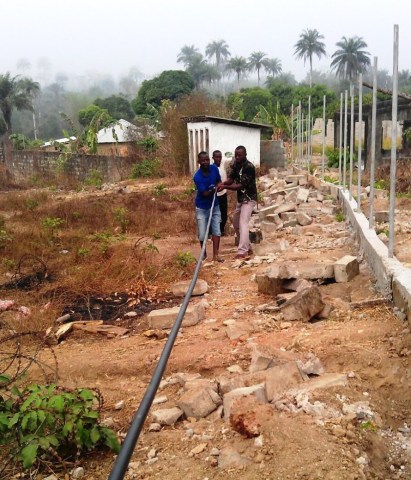
Then it happened – quickly.  All thanks to a donor we have never met! From the very first email contact in early September to final installation of the new solar system in November was only 11 weeks.

solar panels in place 11-19-17 (4)


The Center can now operate late into the evening, seven days a week as needed, and power all equipment for its growing printing service and computer training.

The gift from the Beaman Family Fund (the actual donor wishes to remain anonymous) was made after another thoughtful donor recommended the work of Sherbro Foundation Sierra Leone and our Bumpeh Chiefdom partner, the Center for Community Empowerment & Transformation (CCET-SL).

The funding installed a 6,000-watt solar power system, including a little extra capacity for the future. We had to carefully plan out all energy use, and still ration hours per day of usage. With solar, you can’t use power faster than you can make and store it.

For perspective on how far 6000 watts will go, a standard women’s hairdryer uses 1875 watts and a basic microwave is 1000 watts. Two simple devices would use half the available power. While solar equipment continues to get cheaper, installing a system to cover all energy needs is still expensive.

With a 6000-watt system, CCET-SL can:

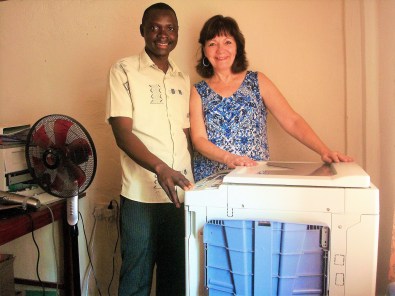
  • Operate the printing service, with a low-energy duplicator and color printer. The only such public service in Moyamba District of 300,000, it’s expected to keep the center self-supporting.
  • Light the building with 26 LED bulbs and cool with 16 small ceiling fans and standing fans.
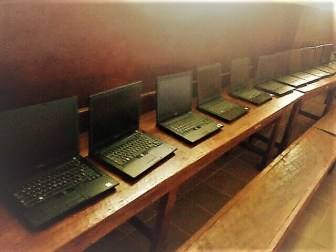
  • Run computer classes with up to 20 laptops at a time for a maximum four hours a day.
  • Run equipment for two profit-making services – a small canteen and public cell phone charging.

CCET-SL’s Center started as a burned-out shell of a building destroyed during the rebel war. But it was a central site, and local labor transformed it into a 2,600-square-foot multifunctional space, all built during the Ebola crisis when the chiefdom was under isolation order for months.

Scholarship awards CCET bldg

Now look at it! The center is not just a bright place for evening classes, to get a photo printed or a copy, hold a meeting or enjoy a cold drink. It’s a model for the entire country on self-supported community education. It’s lighting the way for market women to learn to read and for high school students to use a computer for the first time.

We can’t thank the Beaman Family Fund enough for their generosity in funding the solar power system. Thanks also to all of you who supported us along the way. It’s been a four year journey, but with your help, we’ve reached the finish line.

Inspiring girls to come to school

While we were busy wrapping up this year’s successful Girls Scholarships campaign, CCET-SL’s Rosaline Kaimbay was making the rounds of the four Bumpeh Chiefdom participating secondary schools.

IMG-20170927-WA0006

She’s been visiting each school to check their enrollment of girls. And telling girls to tell their friends at home who didn’t report to school to come back. If they can’t pay school fees or buy a uniform, we will help them.

Mrs. Kaimbay is an inspiring role model for these girls, having been born and raised in the chiefdom. We’re fortunate to have her at the helm of CCET-SL.

Mrs. Kaimbay and Bumpeh Academy Secondary School students, left. BASS has both junior and senior high classes and their enrollment of girls is growing.

We doubled our scholarship campaign goal this year!

Our partner, CCET-SL, is now distributing 466 school fee scholarships to the girls that need them most. We added uniforms this year, and have 360 to combine with scholarships.

We expect that every Bumpeh Chiefdom girl who wants to attend senior high will receive a scholarship and a uniform! Helping girls progress through senior high is our goal.

IMG-20170927-WA0000

When girls see such a successful woman as Mrs. Kaimbay coming from among their ranks, they think, I can do this, too. And it starts with going to school.

Rotifunk’s Ahmadiyya School, left, is a junior secondary school.  Mrs. Kaimbay’s visit is motivating and encourages girls to come to school.

Why not them? Young mothers want to return to school.

Why not them? Young mothers want to return to school.

“Hawanatu is 22 and the mother of two children, but she is desperate to go back to school.”

Bumpeh Academy Vice Principal, Daniel Koroma told me about girls and young women, many now mothers, forced to drop out of school. They come to him looking for help to return. Hawanatu, left,  dropped out after the 8th grade.

The picture Daniel sent of Hawanatu shows her with a plaintive look on her face and a T-shirt emblazoned with “School” across her chest. People buy discarded used clothes from piles sold in the market, and I thought her choice was not coincidental.

Hawanatu is typical of girls pushed into early marriage by the age of 16 or 17 by parents who can no longer feed and care for them. Few local men go beyond primary school. Girls marry someone of their own background, and soon they’re pregnant.

Sherbro Foundation has helped 450 girls go to junior and senior secondary school with school fee scholarships over the last four years.

Many girls had repeat scholarships keeping them in school. Now, we’re emphasizing helping girls stay in senior high – when drop-out rates are highest – so they can graduate.

We include young mothers who want to return to school and improve their lives.

Young mothers like Hawanatu soon understand the way to make a better life for their kids is to complete their own education. They also want to be able to help their children with their studies.

IMG_4224 (2)Hawanatu’s husband, an “unqualified” primary school teacher, didn’t complete high school. He has the opportunity now to get basic teacher training, but it means he’ll be away from home and can’t support his family.

Both Hawanatu’s parents are dead and she stays with her in-laws in a village outside Rotifunk. To earn money, she makes coconut cakes and a treks five miles each way to sell them in the Rotifunk market.

Bumpeh Academy is happy to accept young women like Hawanatu back into school if they can find the money for school fees. But there isn’t much to spare selling coconut cakes for pennies apiece.


Bumpeh Academy 11th grade class, left

Local young women who are drop-outs and mothers see a few professional woman visiting Rotifunk, like government officials and nonprofit organization workers. And they see Rosaline Kaimbay, former high school principal and now managing director of our local partner, CCET.


“They admire them so much, “ Daniel says. “They know they themselves are intelligent, and say ’if this woman can do this, why not me.’ ”

Exactly. Why not them?

There’s more young mothers like Hawanatu anxious to return to school who need a second chance.

You can help these young women get back into school for a full year and put their lives back on track with a $17 scholarship. Amazing.

They’ll be expanding their lives. They’ll raise healthier children and see they are educated. And they’ll break the cycle of subsistence living that’s held their families back for generations.

Add a school uniform to the scholarship for a new 10th grader and it’s only $35 to let a young woman return to school for a whole year.

It’s easy. Just click here: I’ll send a young woman to school.

Open up her world. Give a girl a scholarship.

Campaign 7-25-17 (2)

Isatu is a remarkable girl.  She’s an orphan determined to stay in school.  With help from Sherbro Foundation scholarships, she has made it to her senior year!

Each day is a challenge in Bumpeh Chiefdom, Sierra Leone. Isatu lost both her parents as a young girl. She lives with her aunt, a farmer, in their small village of mud houses outside Rotifunk. There’s no public transportation. Isatu and her friends get up before dawn and walk six miles to school.

After school, Isatu walks six miles again home, and then helps her aunt in the field, tending cassava, rice and greens. They grow their own food, but have little left to sell for income for school fees. Darkness comes by 6:30 year-round near the equator. Isatu can’t afford a lamp to study in the evening.

Yet Isatu has big plans. She wants to become a lawyer. She learned in Civics class that lawyers use the law to protect people. “I want to fight for my colleagues and people in the village against violence” and for better conditions, she says.  If Isatu hadn’t received a Sherbro Foundation scholarship, she wouldn’t be in school, and wouldn’t be learning about a world of jobs and careers.

Bumpeh Academy students – Isatu, left, Hellen and Alima

More Bumpeh Chiefdom girls than ever are in school. Nearly 900 girls were enrolled in the area’s five secondary schools at this term’s end.

But hundreds more want to go to school and don’t have $17 to pay the annual fee! Their families are struggling to earn $1 per day to put food on the table. Sierra Leone’s economy went into freefall after Ebola and has not recovered. Families can’t continue to support teenage girls, and many are pushed to marry at 16 and 17. They get pregnant too early. The cycle of poverty continues. Teen pregnancy keeps Sierra Leone’s maternal and infant mortality rates among the world’s highest.

In four years, Sherbro Foundation’s scholarship program has helped 450 girls enter – and stay – in school.

Girls with scholarships work harder in school in order to keep them. They know there’s competition. They now have bigger goals, and pregnancies are reduced to only a few.

Some graduates will go on to vocational training. Some like Isatu are determined to go to college. They want to become the nurses, doctors, teachers, accountants, policewomen and lawyers their country desperately needs. With education, they all can move beyond the cycle of subsistence life that has long trapped their families.

But our scholarships have only helped a third of the girls enrolled. Even more want to go to school.

Now is a crucial time. With the new school year starting soon, you can give more of these girls the gift of attending school. You can:

  • Ensure 350 girls have the chance to go to school this year with a $17 scholarship.
  • Help girls progress into senior high and bring new 7th graders into junior high.
  • Provide a new uniform for 7th graders and 10th graders starting in new schools.

With a strong U.S. dollar, giving is a great bargain. Your $50 will sponsor three junior-high students to make the important leap to secondary school. Or ensure that three older girls can focus on graduation.

$35 will send a girl to school for an entire year AND outfit her with a school uniform. Where else can $35 do as much good as educating a girl?

More good news:  Our Board pledges to match each gift. You’ll help twice as many girls!

It’s easy to donate online: Click here. We welcome checks sent to: Sherbro Foundation, 3723 Sachem Ave., Cincinnati, OH 45226.

Bumpeh Chiefdom’s girls tell us: “We’re ready to learn.”

You’ll open up their world to new possibilities by giving girls a scholarship.

Thank you!

Arlene Golembiewski, Chris Golembiewski, Cheryl Farmer and Steve Papelian

— The Sherbro Foundation Board of Directors

P.S. Isatu and her fellow students are so grateful to you for expanding their world. Won’t you help a few more of her friends? If you do so now, they can be ready for school in September!


The Embrace of Sierra Leone

The Embrace of Sierra Leone

Sierra Leone doesn’t just say hello. It embraces you in a rush of sights, sounds, crush of people, heat, humidity, smells, women’s clothes the colors of tropical birds, drumming, music, throngs of kids with smiles from ear to ear. Life spills out onto the street and the village front porch. Here’s some of my images and impressions in returning to Salone after 14 months.

img_1918.jpg
In Freetown, you invariably find yourself on Siaka Stevens St., the center of town, in a crush of traffic with the famous 200-year old cotton tree in front of you. The winter’s harmattan dust was hanging in the air, making it hazy all day, but much of that haze is now diesel exhaust pollution.

USD cash exchangeI have two visual barometers for the Salone economy. Freetown’s beaches were empty. No tourists, which adds to unemployment. People can’t afford to go to their own gorgeous beaches.

The other is how big a pile of leones you get when exchanging dollars. 5,000 and 10,000 denominations are used, and so devaluated, they’re only worth $0.70 and $1.40 each. 

The leone devalued about 25% during 2016. Petrol prices soared. People say the economy is at its worst in years.
IMG_4885
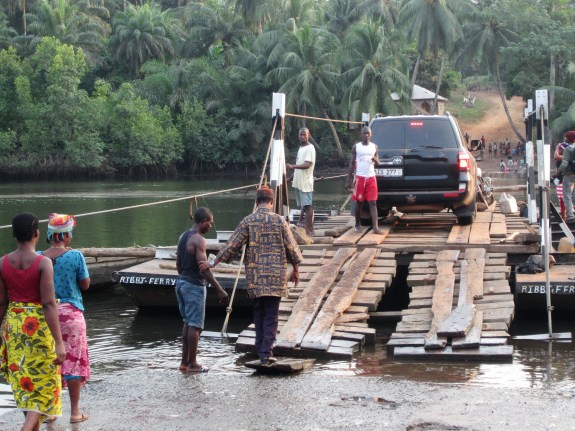
Leaving the highway for small feeder roads to Rotifunk is entering another world. The Ribbi ferry is virtually unchanged since I used it 40 years ago as a Peace Corps Volunteer; a platform on pontoons and you’re manually pulled across. A crowd of small children collect on the other side chanting, Ah-bey, ah-bey, ah-bey — Temne for chief. They know Paramount Chief Caulker is coming bringing them sweets. He started this during Ebola and continues it with every crossing. “I can’t do much to really improve their lives, but I can at least make them smile for a couple hours.”

IMG_5115
Our first week included a trip down the beautiful Bumpeh River to Mamu village to celebrate the opening of new primary school. Taking a big boat with the Paramount Chief, front right, for an official visit is not an everyday activity. So, it’s a party on a boat. Gliding down this unspoiled river, pure joy.
IMG_5140
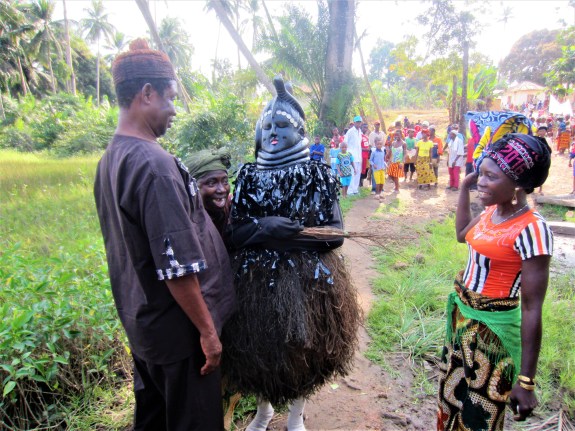
Bundu devils from the women’s society join drummers and singers to welcome the chief to Mamu village. Traditions in a small village like Mamu are very much alive and well. Opening a new school is a happy day, this school built with donations from young Norwegians.

IMG_2788  IMG_2769
Back in Rotifunk, there’s simple pleasures of seeing friends again and meeting new friends.
IMG_2105
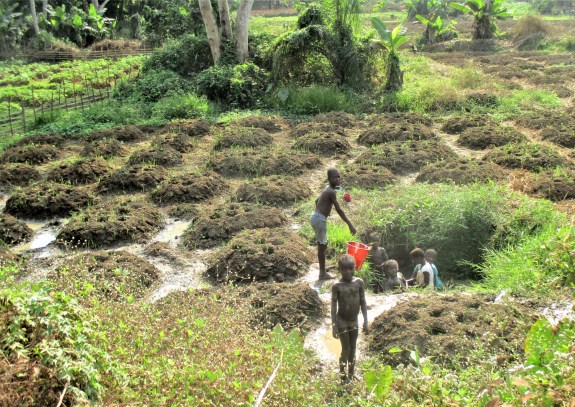
Early evening is a favorite time of day to stroll down the hill to see vegetable gardens being planted and tended in the rich flood plain of the Bumpeh River. Raised beds of various leafy greens, a diet staple, and peppers were coming to life. Kids “fished” in a field well, bringing up salamanders from the mud. They’re probably added to the pot for dinner.

IMG_4972
Another moment of joy was walking into our partner CCET’s new education center at 5 p.m. when it was abuzz with activity. Three adult literacy classes and the first regular high school computer class, all going on in the main hall. Most adult literacy students are single parents. Babies are welcome.
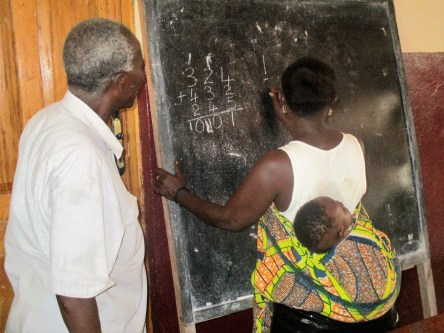
IMG_2109This mother of twelve shows us it’s never too late to learn your ABCs for the first time, and how to “carry over” when adding three digit numbers.

Women have graduated from Adult Literacy and entered other vocational training as primary school teachers, nurse aides, a policewoman and one ready to start as a surveyor’s assistant.


IMG_2372 (2)
Computer training classes for Bumpeh Chiefdom students and adults was a dream five and a half years in the making. It grew from offering classes in one school to a full education center in its own 2,600-square-foot building built during Ebola. I learned to dream big; then it happens.

vlcsnap-error383   IMG_2036For Bumpeh Academy, one of the Chiefdom’s newer schools, progress happens in small steps. Very small steps. Senior high classes, previously run “second shift” in a primary school, moved to the main school addition, still in progress as funds are available. In 2015, a concrete slab was poured for three classrooms. In 2016, a zinc roof and partial walls between rooms were added, and classes started. I was happy to hear from Vice Principal Koroma, above, SFSL funded part of the addition with the school fee scholarships we paid for girls. They used the money to buy bags of concrete. Still, children at Bumpeh Academy are in school learning. 98% of Academy students taking the 2016 senior high entrance exam passed! And they have a new Peace Corps teacher, Ethan Davies, above, right corner.  

MVI_2603_Moment
Visiting Bumpeh Chiefdom’s small villages is always a trip highlight. Nyandahun, one of the oldest and smallest villages with 25 houses is the birthplace of Chief Caulker’s grandmother. It has a long tradition of women village chiefs. Chief Lupe Bendu, above left, definitely has a chiefly demeanor. By tradition, she’s considered the queen of Nyandahun. Asked how their village orchard will help them, she immediately replied, “It will help our children and we’ll use it for their education.” 
IMG_2625 (2)
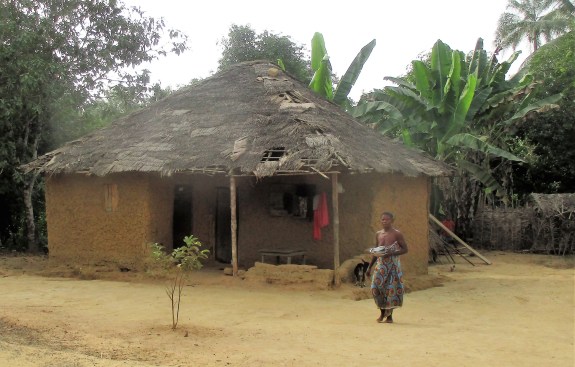
Passing village homes like this one, I’m reminded why our Women’s Vegetables Growing and Village Orchard programs are so important. They’re simple to implement, following local agriculture traditions, income can be earned quickly, and it goes directly to families that need it the most.  With cash income, their children can go on to secondary school in Rotifunk.
IMG_2296
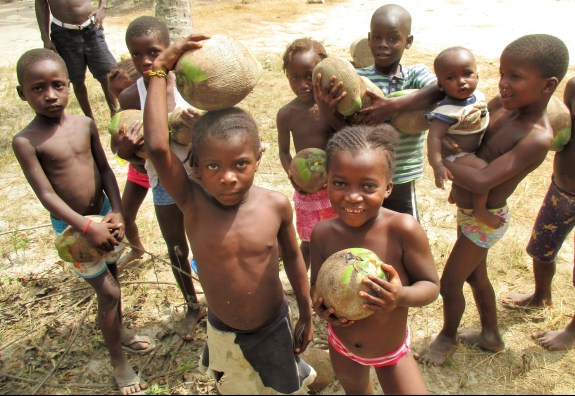
There’s little for a village child to look forward to without education. But we don’t want them to be leaving their villages. We want to teach schoolchildren and their parents they could be earning a good living growing coconuts like these, and guava and cashews. Make agriculture a small business.

IMG_2538
Developing the local village economy includes having cash to set up a small front porch shop for neighbors. A dilemma is not losing your small profits to transportation costs of going to Rotifunk or Freetown to buy cheaper goods to sell. There’s little public transportation from a village like Mosundu.
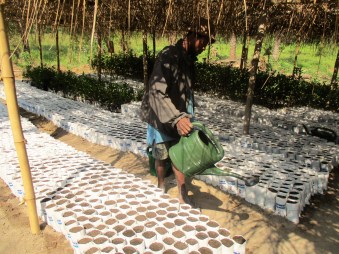
IMG_2190  IMG_2168In full swing, CCET’s fruit tree nursery grows a variety of trees from seed: orange, grapefruit, lime, avocado, guava, cashew, mango. Three workers plant seeds collected from local fruit, and water and nurse them for a year+ until ready to plant in the Village Orchard program. Some go to newborn parents, restoring the tradition of “baby trees.” Some will be sold for income to continue to operate the nursery. Abdul learned to write and make signs in Adult Literacy class.

IMG_1992  IMG_1988Bumpeh Chiefdom is a prime coconut growing area. Pa Willie personally raises coconut seedlings in a closed pen behind his house to keep out thieves. The coconut, husk, shell and all, is embedded in soil until it sprouts. It’s a longer-term venture taking two years, but they’re worth more. Pa Willie’s tree-growing skills date back to working in a Liberian rubber plantation before the war.


Sherbro Foundation wins P&G Alumni grant to expand the Computer Center

Sherbro Foundation wins P&G Alumni grant to expand the Computer Center

Sherbro Foundation is awarded a P&G Alumni Foundation 2016 grant

vlcsnap-error310


The $12,235 grant is awarded on behalf of our Sierra Leone partner, the Center for Community Empowerment & Transformation (CCET), and will help expand their computer center.

Left, Oliver Bernard, CCET volunteer facility manager at the Center


pg_logo

Former Procter & Gamble employees fund their alumni foundation with the mission of economically empowering those in need.

DSC04545Sherbro Foundation Executive Director and P&G Alumna Arlene Golembiewski, left with Sulaiman Timbo, submitted the proposal. She said, “CCET’s new Center offers practical education programs, before unavailable in this community, that improve student earning potential, like computer training and adult literacy.
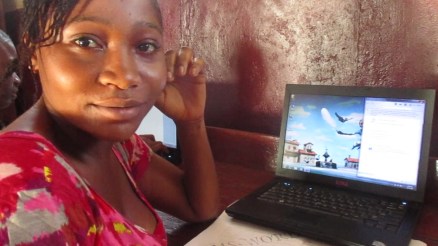
They are preparing impoverished people to find wage-paying jobs in the formal economy. And providing skills to develop small businesses.”

The Computer Center has a slate of education programs and community services that satisfied all three Alumni Foundation objectives for the grant. 

MVI_2758_MomentHigh school students like Zainab, left, get practical job skill training on computers. 
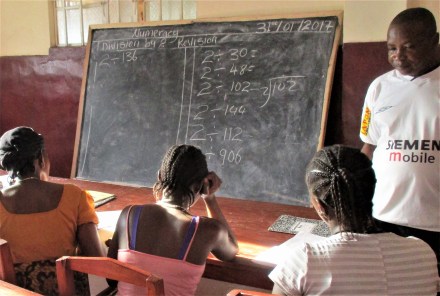
She wants to become an accountant and knows she must be able to use a computer to get a job.

IMG_2031 (2)Adults develop small business skills. Left, Francis Senesie teaches petty market traders and farmers math and business basics like computing profit.

Adult computer students apply their own small-business examples with instructors available to guide them.  

MVI_2260_Moment(7)The Center itself is a new entrepreneurial venture, offering previously unavailable services like copy & printing that fund its nonprofit education programs.

The grant will pay for adding new computers to the Center and a color printer for the new printing service. CCET will buy remaining equipment the Center needs, like a generator to back-up their solar power service and a chest freezer to expand a canteen service.

The grant will also be used to pay initial operating costs while the new Center develops its customer base for copy and printing and other Center services.

The Computer Center is bringing the first and only IT technology access and training to rural Bumpeh Chiefdom’s 40,000 people. It’s the only place in Moyamba District with 300,000 people to get an IT certificate covering all Microsoft Office software programs.

The grant required a P&G alum to participate in the project. Arlene Golembiewski, Sherbro Foundation founder and Executive Director, was a 30-year P&G employee and is a member of the global Alumni Network.

How a small, rural nonprofit becomes self-reliant

How a small, rural nonprofit becomes self-reliant

MVI_2260_Moment(5)Mr. Bendu, a primary school head-teacher, came into the new printing service at the Center for Community Empowerment & Transformation (CCET) to get some UN Children’s Feeding Program forms printed. He walked out of the new Community Computer Center 20 minutes later with his copies.

It was effortless. It would have taken less time if I hadn’t stopped to interview him. Four months ago, it could have been a 2-day trip.

IMG_2795CCET’s new printing service in Rotifunk is scoring a home run for their customers and for themselves.

CCET’s mission is to help community members become self-reliant. But they can’t keep assisting residents unless they themselves become self-reliant.

Left, CCET staff Oliver Bernard, Sulaiman Timbo, Rosaline Kaimbay

The first few years in the life of a small nonprofit are tricky. You’re getting projects off the ground, and need a little cash to fall back on when the unexpected happens. Donors are just learning who you are. Grant applications are often a year-long process before you see any funding – IF you’re approved.

Grant givers ask for your sustainability plan, which can feel like wishful thinking. How can you ensure the future success of your programs when you’ve just started to deliver something using donor money?

vlcsnap-error688It takes a paradigm shift.  You can help people while you earn income offering needed services that fit your nonprofit mission.

Left, CCET Managing Director Rosaline Kaimbay at CCET’s new Center

Our Sierra Leone community partner, the Center for Community Empowerment & Transformation, laid early groundwork for self-sufficiency with new, much needed community services that earn income to fund their nonprofit programs.

IMG_4244Only four months earlier, to get anything printed Mr. Bendu faced an all-day or an overnight trip to the capital, crammed into a minivan bus or on the back of a motorcycle taxi on treacherous roads. His transportation costs alone would have been 10 to 20 times the cost of the printing. The time wasted is just accepted, a common inefficiency holding back developing countries like Sierra Leone.
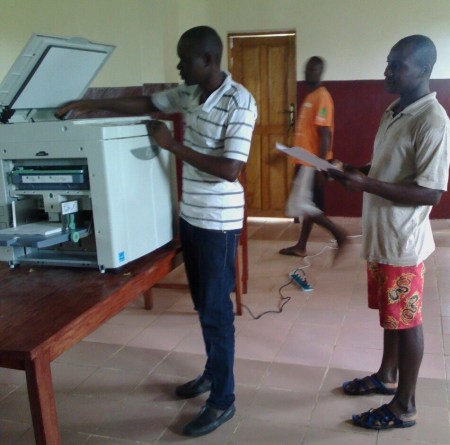
Today, there’s a win-win in Rotifunk. Mr. Bendu and other Bumpeh Chiefdom customers no longer waste their time and money. Instead CCET provides local printing and other services people need. And CCET is making money to fund their nonprofit programs like computer training and adult literacy.

The Rotary Club of Ann Arbor, the Procter & Gamble Alumni Network and Sherbro Foundation funded CCET to start their new services.

img-20160820-wa0000-1These three grant makers were happy to invest in projects giving this rural community services they never had before, knowing income goes to support nonprofit programs.

CCET’s printing service can make simple photocopies or print 500 school report cards or church memorial service programs.

IMG_4916 (3)Sulaiman Timbo, left, and below left, is printing service and IT manager

Sulaiman can prepare custom layouts and type up forms and documents for customers, and then immediately print them.

A color printer is on its way that will expand the business, offering full-color election posters and event flyers, and color photos. More business opportunities.

No one else in their district of 300,000 people provides a printing service like this.

IMG_2018Cell phones are now a way of life, and this means daily charging in a rural town with no electricity.

CCET charges phones in a secure drop-off service seven days a week. People may now bring a battery pack to charge as well.

NGO training session Mar 2017The CCET Center rents meeting and workshop space for NGO and government programs during the day, when no classes are in session. It’s the only place in town and for miles around with a facility to hold professional meetings for 20 to 100 people.

The building’s solar power lets participants use their computers. And they can print meeting materials right there. It’s also a good venue for wedding receptions and other special parties.

IMG_2016.JPGNext on the list to introduce is a small canteen for cold drinks, snacks and catered meals. The room next to the main hall, left, is ready.

Across the street is the only small hospital within a two-hour drive. Staff and visitors want meals and refreshments in a comfortable sit-down space — as well as market day visitors, teachers and NGO workers.  A refrigerator is coming soon to kick off this service.

IMG_2248There’s also a growing need for internet service. People may not own their own computer, but they want to be connected to the world around them by email and Facebook.

The local professional community of teachers, religious leaders, chiefdom authorities, nurses and health care technicians, and NGO reps needs to communicate with organizations around the country and beyond.

CCET plans to start a small pilot internet service and grow from there, based on demand.

So, when a small, rural nonprofit wonders how to become self-reliant, leaders should ask who are their customers, and what do they need?

More girls in school than ever, but more want to go

More girls in school than ever, but more want to go

I was excited to see enrollment of girls was up when I visited Bumpeh Chiefdom’s secondary schools in February. Girls, in fact, were now equal in numbers to boys enrolled. This is a big step forward in Bumpeh Chiefdom, where poverty forces most girls to drop out by junior high.

But I soon found still more girls want to go to secondary school and can’t afford to.

The Sherbro Foundation Girls Scholarship program is changing this. We set a goal last summer of doubling the number of scholarships from 150 to 300 girls.

Thanks to your support, we met that goal and sent 300 girls to secondary school last September.

A small donation of $25 meant a Bumpeh Chiefdom girl could attend school for a full year.

Hear from some of the girls I recently met,  what it means for them to get a scholarship and how hard they work to stay in school:

vlcsnap-error123Some like Alima Kanu, left, JSS II (8th grade), are the oldest and first child in their family to go to secondary school.  She comes from a small village where her parents are rice farmers. Her scholarship to Bumpeh Academy made the difference in her continuing in secondary school.
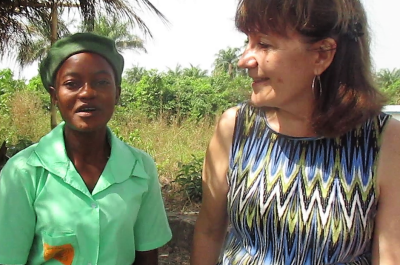
Alima told me, “This scholarship helps me and my family is happy when I have this scholarship because they don’t have money to pay for school fees. Me too, I’m happy. I thank all the people that give me the scholarship.”

The purpose of SFSL’s scholarship program is to not only get girls into secondary school, but to support them in finishing high school.

With her scholarship, Isatu Kargbo, left, completed JSS III (9th grade) and got the highest result of 127 students taking the senior high entrance exam.
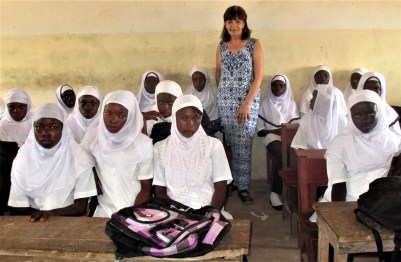
Now in SSS I (10th grade) at Bumpeh Academy, she said, “My father couldn’t pay my school fees. CCET help us and give me a uniform. I’m very happy to be in school and give thanks.” CCET, the Center for Community Empowerment & Transformation, is our local community partner that administers the scholarship program.

Like many girls, Aminata, SSS IV said, “Thank you for donating your funds to enable me to continue my schooling. I appreciate it so much. Honestly, had it not been for your support, I have to stop going to school because my parents are poor and therefore cannot pay my school fees.”

Emilia, JSS III, wrote in a thank-you, “I am happy and delighted when I got this scholarship which every girl wish to have this opportunity. If not the intervention of you I would have been a drop-out because my parents find it difficult to pay my school fees. Through the help of Sherbro Foundation I am continuing my schooling.”

“I have been out of school for many years…You are now my light to see in the world.”  — Thuma, SSS III, on her scholarship

Sherbro Foundation supports five Bumpeh Chiefdom secondary schools of all faiths with scholarships. I met with the 50 girls at Ahmadiyya Islamic Secondary School receiving scholarships this academic year.
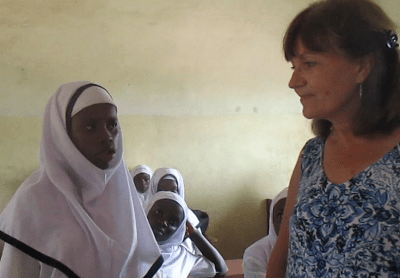
Fatmata, left below, said, “On behalf of the girls in the school, we express our thanks and appreciation for the scholarships. Also, last year for the uniform scholarship.”

vlcsnap-error362She went on to talk about the challenges the girls face in going to school. There are 208 villages in the chiefdom and only five secondary schools. Many girls must walk 4 or 5 miles or more each way to reach one of schools, often making them late for class. And the tropical sun is hot walking home on an empty stomach to get their one meal of the day.

Some just drop out after primary school. Other girls may get rides to school from motorcycle taxi drivers common on the rural roads, who may then coerce them into sex. A number have become pregnant.

vlcsnap-error133 (2)Kadiatu, left, told me most girls have no lights at home and have difficulty studying at night. By the time they get home and do chores, it’s dark. At the equator, it’s dark by 7 p.m. year-round.

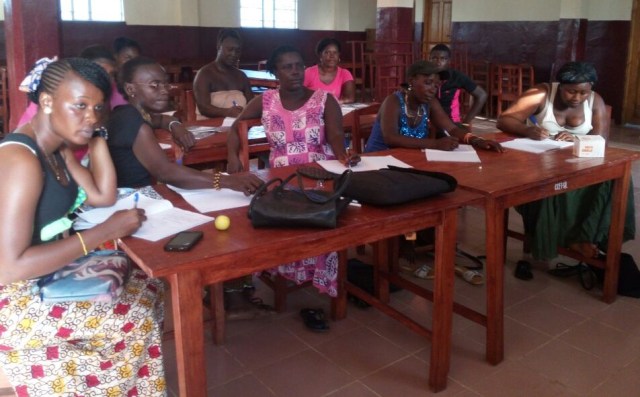
Rechargeable solar lights are one possible solution the program can evaluate. Another girl added that they would like to have a library where they could study after school.

These are problems girls face in all Bumpeh Chiefdom secondary schools.

But the most poignant message was from a girl in the back of the room who stood to speak as our meeting was ending.

vlcsnap-error946 (2)“Please add more scholarships so we are all able to go to school. There are girls at home waiting for this same opportunity. I am fortunate, but there are others who can benefit and want to become educated and literate.”

With girls waiting for their chance to go to school, we want to set our sights higher and grow beyond 300 scholarships in the next school year.

Stay tuned for more in the coming months on Sherbro Foundation’s 2017-18 Girls Scholarship campaign.

Adult Literacy – Never Too Late to Improve Lives

Adult Literacy – Never Too Late to Improve Lives

Adult Literacy is the simplest of programs Sherbro Foundation has supported. And one of the most gratifying. Seeing women I recognize, below, resuming classes in October in the new Computer Center made me smile, amid some happiness tears. They were back to eagerly learning after a long hiatus caused by the Ebola crisis and its aftermath.

img-20161025-wa0010-copyThe Adult Literacy program was a fast start and one of our first. Only committed students, dedicated volunteer teachers, a classroom and a blackboard required. No cajoling needed.
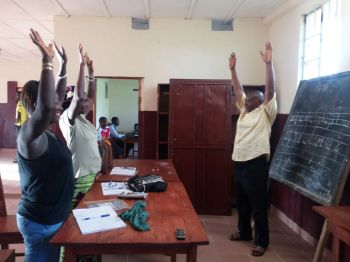
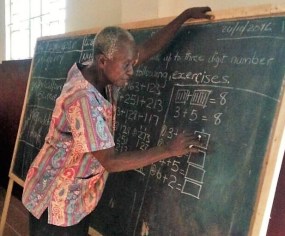
Women in the community came to Mrs. Rosaline Kaimbay, Prosperity Girls High School principal, not long after she arrived to start the new high school. They leaned on her, pressing for their own chance to learn to read and write.

In 2013, I saw Mrs. Kaimbay after her school day, leading lessons for the women with a blackboard on her small house’s porch. As PGHS grew and she hired more teachers, they were willing pitch in and teach after-school classes. Sherbro Foundation provided supplies, and adult classes moved to a primary school at 4:30 p.m., after the day’s work. Class was over by 6 when it was too dark to see with only open brick grids as windows.

The women now have a comfortable place to learn in CCET’s new Community Computer Center — new adult-sized tables and chairs, ceiling fans and solar lights.

One thing hasn’t changed — volunteer teachers, including some new instructors. Some retired primary school teachers in the community want to help the new learners.

.img-20161025-wa0007  oct-24-2016-1st-adult-lit-uncle-stalin-teaching-2

Mr. Francis Senesie, PGHS teacher, left, leads a stretch break for the ABC Group, learning the alphabet.

Mr. Stalin Caulker, right, tutored schoolchildren struggling to learn to read for many years as a second career in Freetown. Here, he’s teaching addition to a Rotifunk group. Like many retirees, he finds it satisfying to help.

img_3388I remember the women I met in 2013 and why they wanted to start learning now.  Kadiatu, left,  was chief instigator and lobbied for classes for two years. She was her family’s breadwinner and head of Rotifunk’s women trader’s union, otherwise known as market women.
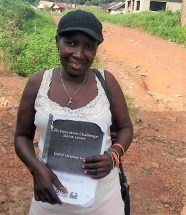
These petty traders sell by the tray and bushel in markets everywhere. She was tired of representing the group at district meetings and workshops and could only use her thumbprint to sign a document.

I talked with over 30 women one on one, and their stories were much the same.  Most were single heads of household, struggling to earn a living as market traders while raising their children. Some were also raising children sent by relatives in small villages to go to school in a bigger town, or children whose parents had passed away.

Some women wanted to learn to read and write their names for the first time, and to count so they wouldn’t be cheated in the market. They knew they could better run their small businesses with practical skills like figuring best prices and sales profits. Others had finished primary school, and after a long break, wanted to resume learning GED style.

All wanted to monitor their children’s progress in school and help with homework, learn more about children’s and their own health, and better run their households.

I wondered why they were so committed to study at the age of 30 and 45. I learned they were getting something priceless: Self esteem. No one is lower in society’s informal caste system than an illiterate woman.  She is belittled, taken advantage of, often abused.

With education, they’re holding their heads higher and not letting others take advantage.

Some of the best news — some women are progressing to other job training programs.

img_4317-copyimg-20161005-wa0000Magdelaine, with me on my far left, took a co-op style nurse’s aide training program in the district capital. Back home in Rotifunk, she works at the hospital.
Mariatu, near left,  is part of a more advanced group preparing for primary school teacher training program entrance exams.

First Computer Training Class Starts – Finally Joining the 21st Century

First Computer Training Class Starts – Finally Joining the 21st Century

October 24 was one of my happiest days since founding Sherbro Foundation. It was just days more than five years ago that I formed my first goal, with one of the Rotifunk high school principals, to start a computer training program for students. We had no building, no computers and no electricity, only the determination realize this dream.

Our goal was simple: to give high school students and adults (especially dropouts) computer skills that will make them more competitive in the growing job market.

That grew into teaching adults how to use computers in their jobs, and to start or further develop small businesses. People with computer skills in the community also will help attract new business to the area.

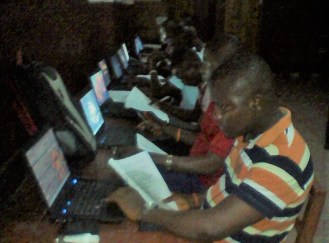
img-20161031-wa0000On October 24, students took their seats for the first evening computer training class in the new Computer Center building. With two months left in the year, it’s a self-paced evening class for adults. An afternoon class for high school students will follow in the next term.
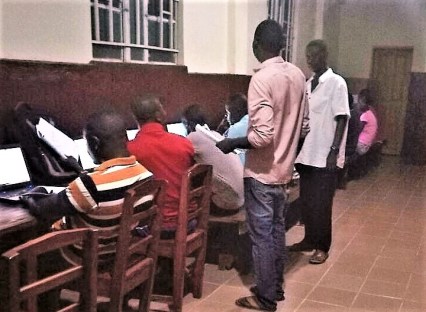
Many of the first adult students are teachers in town. They may have been exposed to computers in college, but without owning one themselves, their practical skills are limited.

img-20161031-wa0008Our Rotifunk partner, the Center for Community Empowerment & Transformation, CCET, hired their first full-time employee to lead computer training classes and run the new printing service.

Sulaiman Tumbo, standing left, had been a local teacher and CCET volunteer. His IT skills and demonstrated commitment made him a great choice for the computer program.

Paramount Chief Charles Caulker, standing right, has championed computer training and the Computer Center concept.

He took on constructing the 2,600-square-foot building from the burned out ruins of a war-torn building during the height of the Ebola crisis. The chiefdom was under an isolation order, so he used that time to build the building that now houses computer and Adult Literacy classes and a new printing service.

The transformation shown below is nothing short of remarkable.

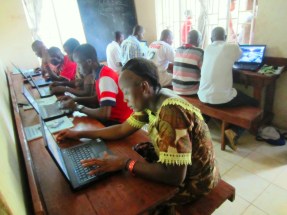
computer-class-open-nov-1-2016The Center can handle 20 computer students in a class. A long table lines a wall so students can plug into wall outlets now powered with solar energy.

Students will complete four training units leading to an IT certificate CCET will issue. With little hands-on experience, they start with Windows, learning to navigate the programs and Apps available, and to create and find documents. They’ll then master basics of Word, Excel and Powerpoint.

Chief Caulker ensured the viability of the program with the Center’s new copy and printing service. Its profits will go to funding  nonprofit education programs in the building, including computer training and Adult Literacy.

I’ll never forget the words of one the adult computer students I talked with. “Arlene,” he said, “I feel like we’re joining the 21st Century.”

— Arlene Golembiewski, Executive Director

Let Sierra Leone Girls Learn

Let Sierra Leone Girls Learn

Girls 2016-17 8-13-16 - Copy

When food costs skyrocket, school is out of the question for many Sierra Leone students. Especially for girls. When girls are forced to drop out, they’re at risk of early marriage. Or getting pregnant with no marriage. Their lives change forever.

The Ebola health crisis may have ended in 2015, but a country-wide economic crisis has followed. Families can’t send girls to secondary school — which is not free — if they can barely feed themselves.

But we can help, and change their lives for the better. Learn more here.

If you’re ready now, DONATE HERE.

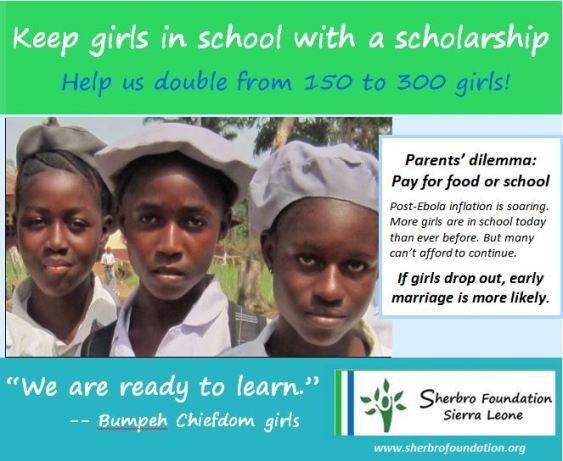
Keep Girls in School

Girl appeal image 2016

When food costs soar, school is too often out of the question for Sierra Leone students.

The Ebola health crisis may have ended in 2015, but a country-wide economic crisis has followed. Inflation has skyrocketed with no end in sight. Everyday needs like rice, cooking oil and public transportation have risen 30% in less than a year.

All at a time when rural farmers and small market traders are still trying to recover incomes slashed in half during the Ebola period.

Families can’t send girls to secondary school — which is not free – if they can barely feed themselves.

The good news in Bumpeh Chiefdom is that more girls are in school than ever before. Nearly 900 girls were enrolled in the chiefdom’s five secondary schools as the school year ended in July.

Over three years, Sherbro Foundation’s scholarship program has helped 300 girls enter – and stay in — secondary school. With every year of school, a young woman earns 10% more income.  She marries later and has fewer, healthier children, when her body is ready for them.

The bad news is many of these girls will now be forced to drop out. Unless they get a helping hand.

Our goal this year is to double the number of scholarships from 150 to 300 girls.

Bumpeh Chiefdom’s Paramount Chief Charles Caulker told us why the Girls Scholarship Program is important to him. “With education, women can assert themselves and take their own decisions. They can get their own jobs, or start or expand their own small businesses,” he said. “They won’t suffer the indignities of outdated customary practices and unenlightened male chauvinism.”

Girls with secondary education will have skills to get wage- paying jobs or start small businesses. Some girls will complete senior high and may be able to go on to college. They want to become the nurses, teachers, lawyers, accountants, social workers and environmental managers their country desperately needs. They’ll move beyond a subsistence lifestyle and break the cycle of poverty they grew up in.

One silver lining – since the US dollar is strong and now worth much more in Sierra Leone, your donation goes further than ever before!

Just $50 will cover a whole year’s school fees for three junior high girls.

It means three girls will make the transition from primary to secondary school. Three girls now in junior high will stay in school and keep learning.  We’re helping girls progress to senior high, and the first group is ready to graduate.

Bumpeh Chiefdom school girls have told us, “We’re ready to learn.”

And we want to help. Our 2016 Scholarships goal is $5,000. We’re 40% of the way to our goal. But that won’t cover 300 girls.

Most Bumpeh Chiefdom female students are the first in their families to get any education. They can escape the subsistence lifestyle that’s trapped generations.

You can help these girls change the direction of their lives and their communities.  Just click here, and it’s done:  DONATE

Thank you!

Arlene Golembiewski, Chris Golembiewski, Cheryl Farmer and Steve Papelian
— the Sherbro Foundation Board of Directors

P.S. If you can give a little more, you’ll ensure our goal is reached when school starts in September!


Save

Paramount Chief Caulker’s Message to the US

Paramount Chief Caulker’s Message to the US

Paramount Chief Charles Caulker brought a focused message on his first visit to America this month:

Sierra Leone has no social safety net for its children — not even ensuring they can go to school. So, he is creating his own.

He’s doing it using the only resources his chiefdom has, the natural ones of land, water and sun.

20160406_191637 - CopyDuring an April 6 public program Sherbro Foundation hosted in Cincinnati, Chief Caulker told the rapt gathering about the stark realities of life in Bumpeh Chiefdom. Conditions actually have worsened in the last 20 years. The partial recovery following a brutal 11-year rebel war was dealt a big setback with the recent Ebola epidemic. People are struggling to feed their families.
When Paramount Chief Caulker took the podium in his flowing embroidered blue robe, you knew this man didn’t just have the title of paramount chief. He’s clearly a leader with presence that commands your attention. Maybe it’s his 32 years as paramount chief of Bumpeh Chiefdom, where he’s the second-longest serving traditional ruler in Sierra Leone. And his leadership as the chairman of the National Council of all 149 paramount chiefs in Sierra Leone. And his 40 years of experience in various senior government roles.

Chief Caulker’s darkly intense eyes have seen much sadness in those 32 years as chief. But his face lit up as he told the April 6th group he brings them a traditional African greeting, addressing them as “my dear friends.”

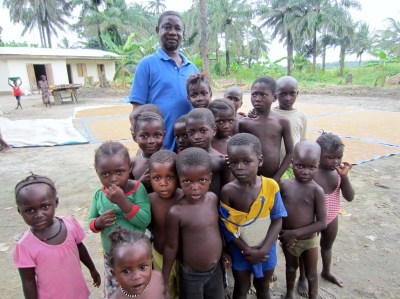
Chief Caulker with village children.

Chief Caulker and village children.

His face also lights up when he talks about the children of Bumpeh Chiefdom. Protecting children and striving to give them a better life has become his life’s work. A better life starts with education, and Chief Caulker spoke of how widespread illiteracy in his rural chiefdom weighs on him.

Only 40% of children there attend poorly equipped primary schools. Many drop out before secondary school, which only exist in the main town of Rotifunk. Most families live in small villages miles away.

Distance and cost (just $US30 a year for school fees!) are insurmountable roadblocks for most families.

For 20 years, this remote area waited for government and foreign nonprofit organizations (NGOs) to bring aid that never came. The chiefdom of 40,000 must take charge of its own development, Chief Caulker said, and find sustainable “roots” for education.

“We set a goal that, in 12 years, every baby born [in my chiefdom] will have access to secondary school education.”

Mother bring her baby to register education savings account.

Mother brings her baby to open education savings account.

“To do this, we are opening education savings accounts for each newborn baby. To date, we have opened 2,000 baby accounts,” Chief said.

How? By helping his villages raise fruit trees. He has an innovative program for expanding their subsistence agricultural tradition into profitable local businesses.

Fruit trees are raised from seed and given to rural villages to plant in community orchards. The orchards will produce income for their children’s education for years to come. And they’ll also fund village development projects like digging wells and building roads, primary schools and health clinics.

Chief Caulker said the program is becoming a model for community-led development in Sierra Leone. “We have accomplished big things in a short time under difficult circumstances,” he said. “We are confident about building a prosperous future as we fight to break barriers to development.”

Bumpeh Chiefdom’s program has grown in two and a half years to include two tree nurseries that have raised over 40,000 fruit tree seedlings — with seed from local fruit. Six villages have planted 15,000 trees in their community orchards. Families of newborn babies have been given over 4,000 seedlings to raise in their backyard gardens. Some seedlings are being sold to private farmers to raise funds to expand the program. And 2,000 babies have their education savings accounts. Ebola delayed but did not derail the program.

Chief Caulker has plans to cover the chiefdom with fruit orchards that will support new fruit-based cottage industries and create wage-paying jobs. He intends to transfer his knowledge to help other chiefdoms start their own self-sustaining programs.

Chief Caulker ended his presentation saying, “We are also confident that you’ll be by us since we share a common aspiration to serve mankind.” Read the full text of his speech here: April 6 PC Caulker – Cincinnati

Sherbro Foundation assists Bumpeh Chiefdom in their goal of giving every child access to education with our “Growing a Baby’s Future” program. We funded the first fruit tree nursery and helped the chiefdom create their own birth registration system, as no government system exists for rural areas. We’ve funded 1,200 of the newborn education savings accounts to date.

You can also “grow a baby’s future” by donating here. For $20, Sherbro Foundation will:
• Open a newborn baby’s education savings account
• Give families three fruit trees of their own to help fund their baby’s education savings.
• Help families secure their baby’s birth certificate.

100% of donations to Sherbro Foundation go directly to fund Bumpeh Chiefdom programs. We pay our own administration costs. Chief Caulker’s US trip was privately funded and with accommodations from family and friends.

And then there was light – and fans

And then there was light – and fans

And then there was light. Solar, that is. Rotifunk’s new Community Computer Center is nearly ready to open with power from a nearby solar system. Sherbro Foundation just funded wiring to bring the solar power to the new center.

Feb 2016 2 - CopyThe pieces are falling into place for Rotifunk’s first computer center, a project over four years in the making.  When we first identified a proposal to teach computer literacy in 2011, we had no computers, no building and no power. Nor did we know where we’d get any of these. No one in town had a computer, and only three teachers had any PC skills.
And we never imagined Ebola would throw us a big curve for over a year.

But the need was compelling – to introduce computer literacy as a way of giving job skills to students and adults in rural Bumpeh Chiefdom. So, you just get started.

With an unexpected and generous donation of fifty laptop computers late in 2013, we actually did start the project.

Computer class at CCET officeOur local partner, the Center for Community Empowerment and Transformation, CCET, started teaching adults in the living room of a borrowed house. There was only room for ten students at a time, but it was a start. Then Ebola hit in mid-2014 and all public gatherings were banned. Classes stopped.
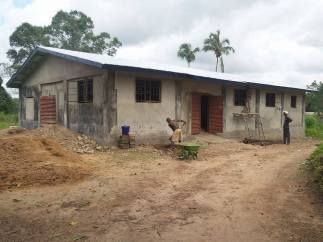
Paramount Chief Caulker made good use of the Ebola period when all travel in and out of the chiefdom halted to build the new computer center building. He donated land that had the shell of an old building burned by rebels during the war. It was in the center of town with a good concrete slab. The transformation was no less than amazing. Built with mud bricks and local lumber and labor, then stuccoed and painted inside and out – and voila, a new 40×60 foot computer center.

Computer Lab 6      Computer Center 9-15-14

IMG_0164

IMG_0104

But there still was no power. Operating with a generator would be costly, noisy, unreliable and spewing pollution. Estimates for a limited solar system for this building were $30,000+.

As luck would have it, a nearby community solar system had been installed and had excess capacity. It was feasible to wire power over. Last month wire was laid in conduit between the two buildings and buried in the ground.

Feb 2016 6

Feb 2016 5 - Copy Feb 2016 3

IMG-20160223-WA0003

I did a dance last week when I got word it’s connected and we finally have power!

LFeb 2016 4est you think we’re now all set, well, not quite. I’ve learned a lot about solar systems and their capacity. The parent system we’re drawing from, shown here, is considered large at 5000 Watts. We’ll be able to use 3000 – 4000 Watts on most days. But this will just cover basic operation of the computer center running 25 laptops at a time, a twenty 11 W LED lights, six small ceiling fans and a desktop printer.

Running larger printers for the printing service we plan to start will still require a generator for the excess power needed.

I learned my lesson on power use when I tried to use a standard women’s hairdryer in a house with a generator. I asked first if it was OK, and then proceeded to shut down the generator. No wonder. Our hair dryers are 1875 W – for one hair dryer! As Westerners, we take for granted having all the power we want.

The computer center’s solar power is based on having sunny days. In the rainy season, we may use power faster than the solar batteries can recharge. A back-up generator is still a necessity.

But today, I’ll put those things aside.  I’m celebrating. The building is built. And the lights are on.


“Why Africans Cannot Get Depressed”

“Why Africans Cannot Get Depressed”

“This is why Africans cannot get depress…Only white people suffer from depression. Africans are always joyful…They have a community oriented. Every one comes to the festival.”

Snapshot 20 (12-24-2015 10-58 AM)I just had to share this recent comment on my YouTube Devil Dancing video from someone in the UK, obviously African.

And my comment back: “Thanks.  I couldn’t agree with you more. People in Sierra Leone manage to find joy in everyday life with their community. It’s expressed in dance and music that’s irresistible – and joyful. Westerners need to take lessons here.”

It’s a bit of a stretch this year in Sierra Leone to be joyful with the post- Ebola economic crisis. But I know its music and dance that people are relying on there today.

So, on this Christmas Day, I hope you’re finding joy wherever you may be.  Merry Christmas and Happy Holidays.

PS: The YouTube video captures a Rotifunk event with a local dance troupe. It shows them marching into town from their nearby village and getting the devil ready for his dance.  To skip this and get to the main event, skip to about 1:20 on the video.  There’s over 30,000 views on YouTube. Check it out.