Visit a Scholarship Girl’s Family Village

Imagine if $20 was a barrier to you sending your daughter to secondary school.

I’ve written before that many of the girls receiving a scholarship in Sherbro Foundation’s Girls Scholarship program might not otherwise be able to attend secondary school  because their families can’t pay the $20 annual school fees. But I haven’t showed you an actual village these girls come from and what their lives are like.

So, here’s a little tour of what it’s like to be a family living on $2 a day in a small subsistence agriculture village in Sierra Leone. You can click on each picture for a larger view.
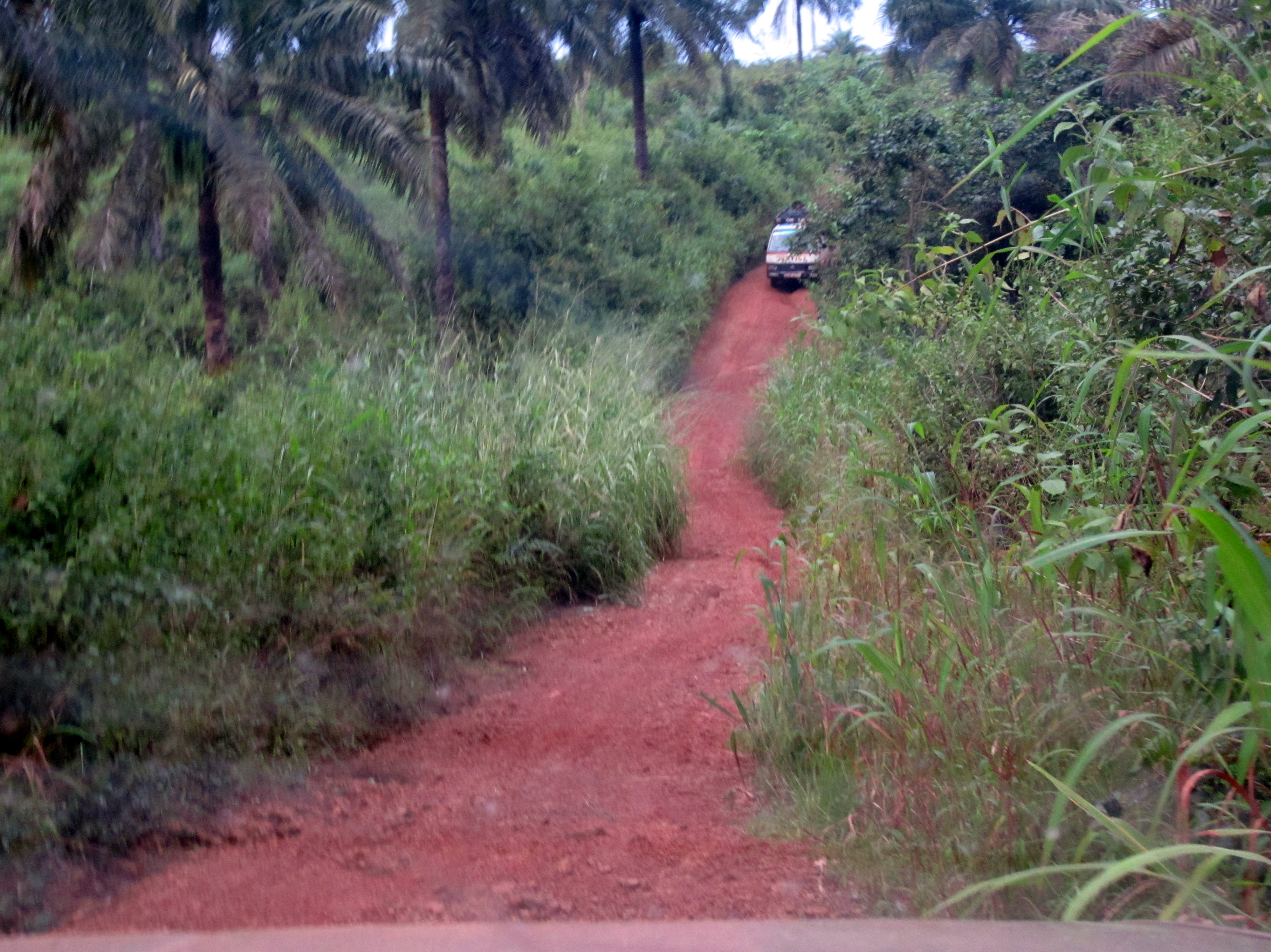
Road to MokairoWe are on the road from Rotifunk to Mokairo, a small village where the road dead ends in the southern reaches of Bumpeh Chiefdom. The road is narrow with little visibility from wild grass overgrowing the road.  You need to be vigilant, watching for other infrequent vehicles. You’re more likely to have to dodge a motorcycle taxi, goats or farmers on foot.
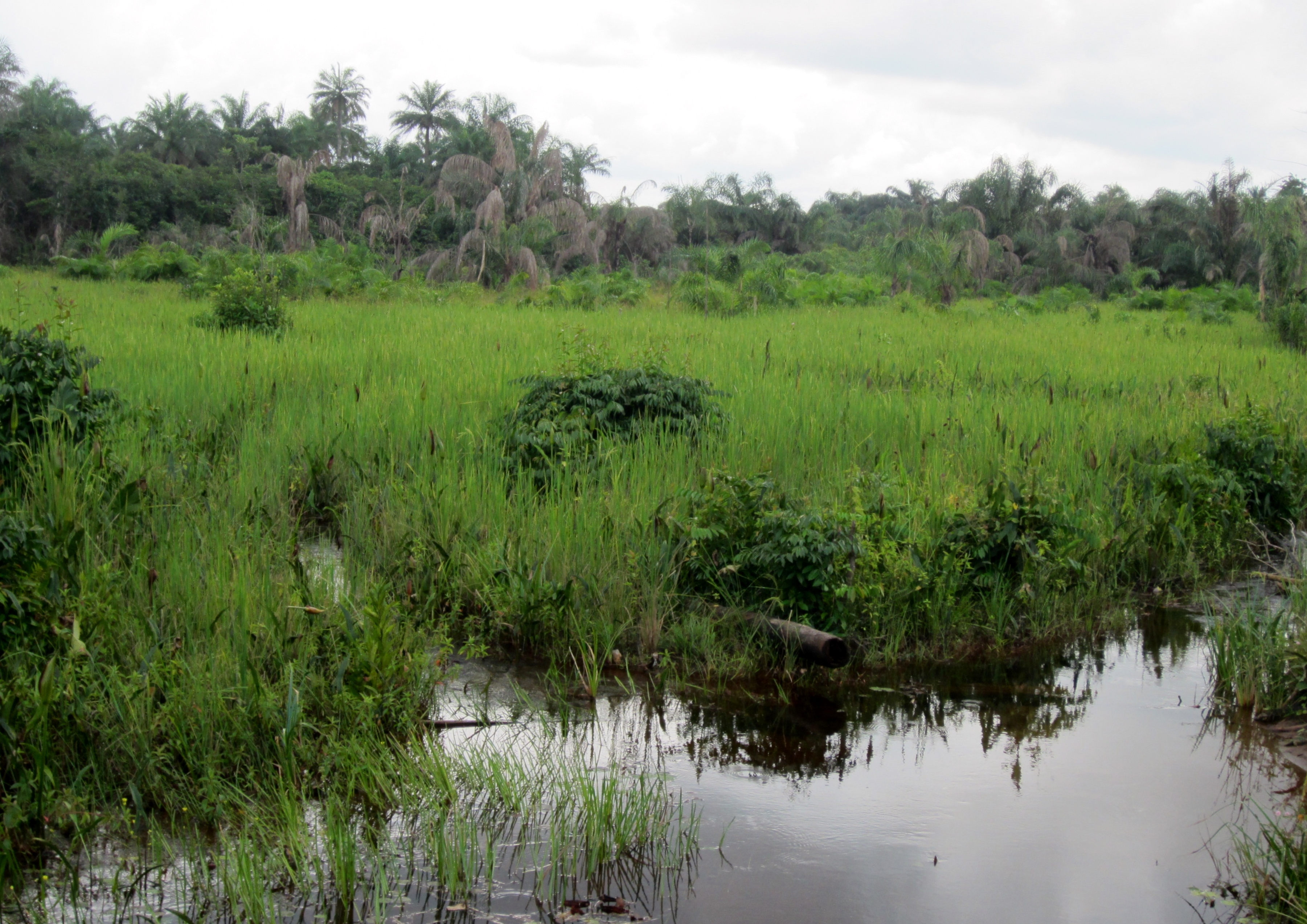
roadside swamp


The area is lowland tropical rainforest, with many natural wetland areas that swell and shrink with the rainy season.  Forty inches of rain is an exceptional year where I live in Cincinnati, Ohio.  This area gets 120 – 140 inches.  Great for growing rice; not so great for people and establishing towns of any size. When you see the land, you know why maps of this area are largely blank  – unlabeled. This is a traditional farming area of tiny villages, too small to be marked on most maps.  This is one of the most rural parts of Sierra Leone where life goes on much as it has for hundreds of years.
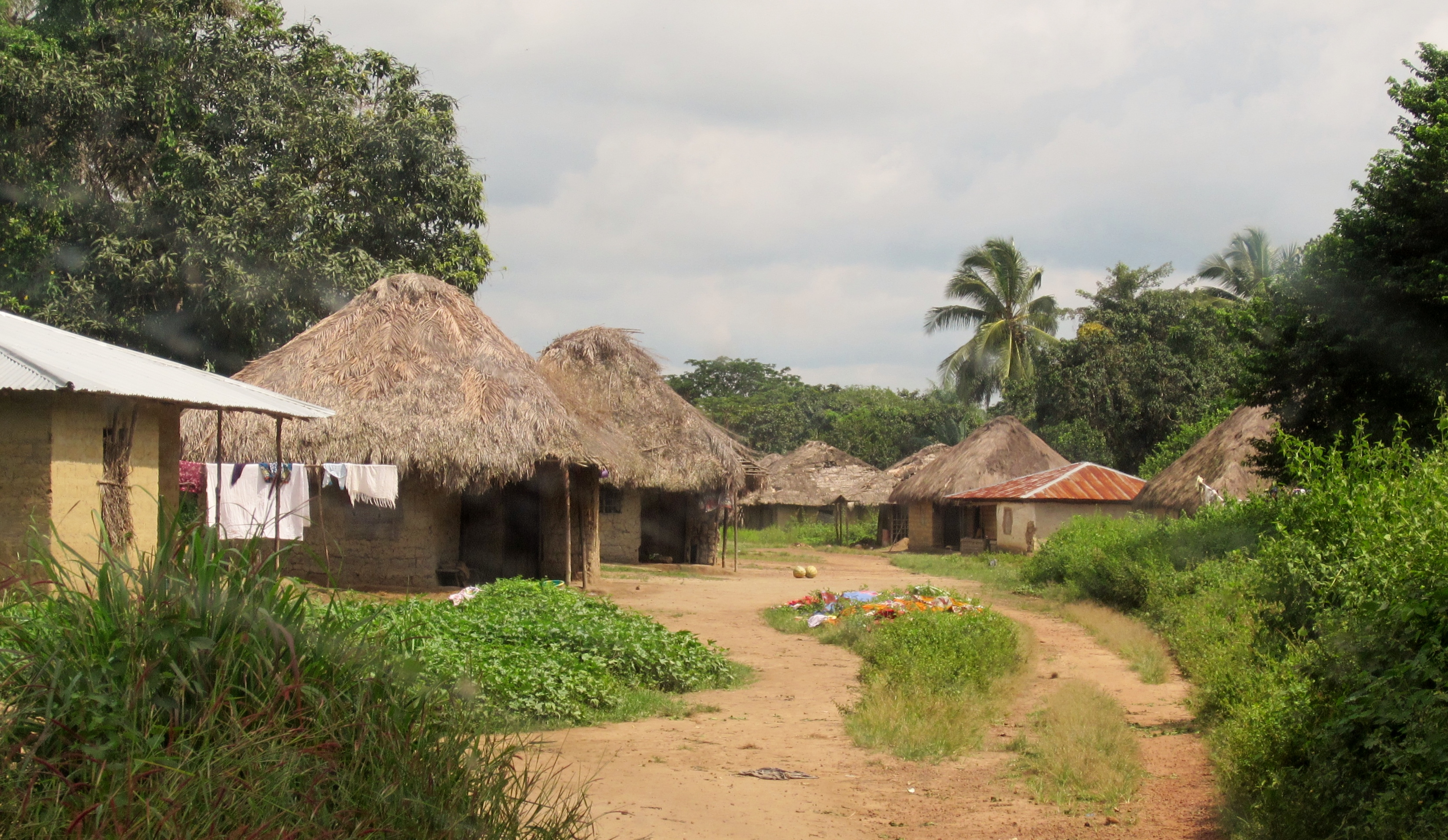
Roadside village

We pass a number of small villages like this one, which is one of 208 villages in Bumpeh Chiefdom.  Usually about twenty houses, more or less.

mud house construction


Mud packed on a frame of tree branches is standard construction, which won’t last too long in this rainy climate.  Here’s a house either being repaired or expanded. The biggest complaint I hear from people here is they need money to buy a zinc metal roof. Their thatch roof leaks and it’s miserable in the rainy season.


Mokairo villageThe end of the road is Mobainda village, where I stayed. We walked the half mile over to the next village, Mokairo, and met met families of girl scholarship students.  Mokairo is a bit off the road among rice farms – both swamp rice and upland (dry) rice. Here, we’re entering the center of Mokairo, a typical village of dozen or so houses.  Someone’s harvested rice is invariably spread out to dry in the central area that most houses surround.


Bangura'sThe Bangura’s live on the corner as we enter Mokairo.  Their daughter, Aminata, has received a scholarship to Prosperity Girls High School. The Bangura’s, like their neighbors, are farmers and live as a multigenerational family. Mr. & Mrs. Bangura are here with one of their mothers. There’s usually only a few extended families in a village, and they’ve lived here for generations.

Mr. BanguraMr. Bangura proceeded to tell me he was proud to have his daughter attend secondary school, even if that meant she had to leave her home village to attend school in Rotifunk.  Mokairo together with several nearby villages can support a primary school, but not a secondary school. Mrs. Bangura went back to finishing her laundry in a plastic basin as we talked.
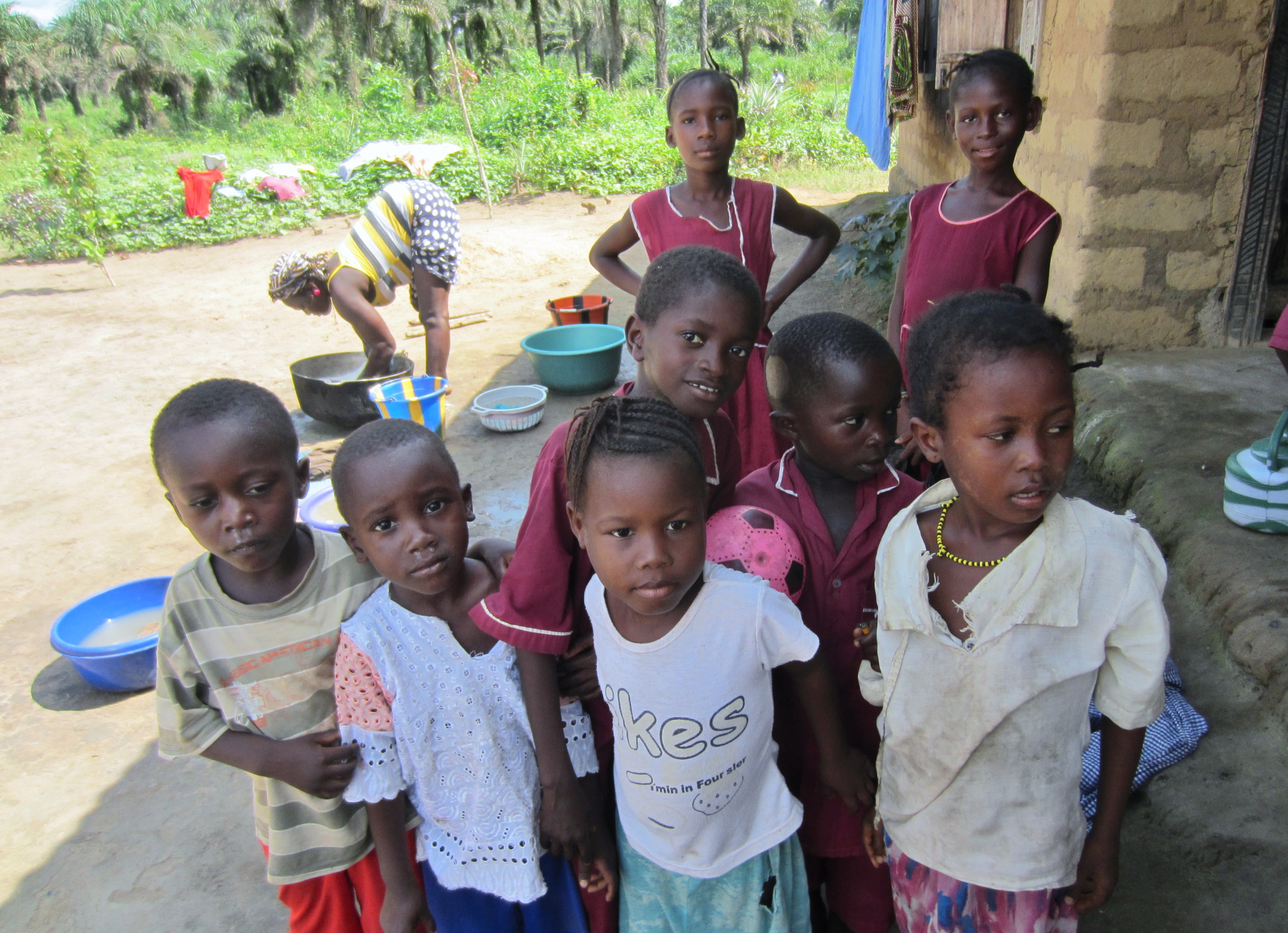
Mokairo childrenPrimary school students who had finished the school day crowded around us.  I have other children, more girls, I hope to also send to secondary school, Mr. Bangura told us with a smile.

This is one of the changes I’ve been happy to find in returning to Sierra Leone after many years.  Girls are now attending school in equal numbers to boys in primary school and junior high.  It’s poverty that’s holding both back from completing high school.

By high school, girls are dropping out faster than boys. Poverty makes marriage and pregnancy (not necessarily in that order) more likely outcomes than continuing school for many teenage girls.

Sherbro Foundation’s girls scholarship program is starting to change this trend.  The scholarship is coveted, and girls know they have to apply themselves in school and do well academically to keep it for the next year. In addition to learning more, the scholarships are helping keep girls focused on school and out of trouble. Student pregnancies are down, keeping girls in school longer.

2nd scholarhship student house


I asked about other scholarship students in the village.  There’s another girl in the house across the way, they said.  But no one was home in this thatch roofed house to meet.


Mokairo mosqueWe next came across what looked like a tiny house. I peered in to see what kind of house could be so small.  It was the village mosque.

inside mosqueHalf of Sierra Leone is Moslem.  Christians and Moslems live side by side in tiny villages like this, respecting each other’s faith and often intermarrying.  We could learn a lot about diversity here.

canoe among rice swampsYou can also enter Mokairo from the estuary that branches off the main Bumpeh River. It’s a beautiful area of swamp rice and creeks, as they call the small waterways that are deep enough to paddle a canoe.  Strong tides from the nearby ocean make the Bumpeh River rise and fall twice a day, causing these small waterways to swell or decline every six hours.  You have to time work according to the tide schedule and when you can navigate your canoe.


making palm oil in canoeAs we approached the back side of Mokairo in a canoe, I saw a woman “making” palm oil in her canoe at the edge of the village.  Palm oil is the third main component of the local diet together with rice and fish. Fibrous palm fruits are first boiled with water in a drum to soften them. Then they’re mashed by hand in a canoe to separate the oil from the fibrous mash left behind.

This is typically women’s work. Women will take the oil they prepare to sell in weekly markets in bigger villages or towns. You can’t mistake the neon orange color of palm oil. This is messy work and it makes eminent sense to do it in a canoe by the water. I understand the added benefit is the oil protects the wood of your canoe.

Come, come, the woman working on her oil was yelling urgently to her friends. Come quickly if you want to see the woman with the skinny nose. They came running to the shore to greet me, and remark to each other about my nose.  We chatted and were all laughing as we backed our canoe out and made our way back to main canoe landing. They made my day to see the palm oil work, and I apparently made their day as well, giving them much to gossip about back home.

cooking on three stonesThe day was winding down back on shore and we came upon a woman finishing the day’s meal for her family.  Cooking on three stones with tree branches you break up with a small ax is standard.  People might burn down wood to make charcoal, but they’d take that into town to sell for income.  Here it’s cooking on wood.  You need a shelter for your outdoor kitchen from the hot sun of the dry season, and the heavy rains of the rainy season.
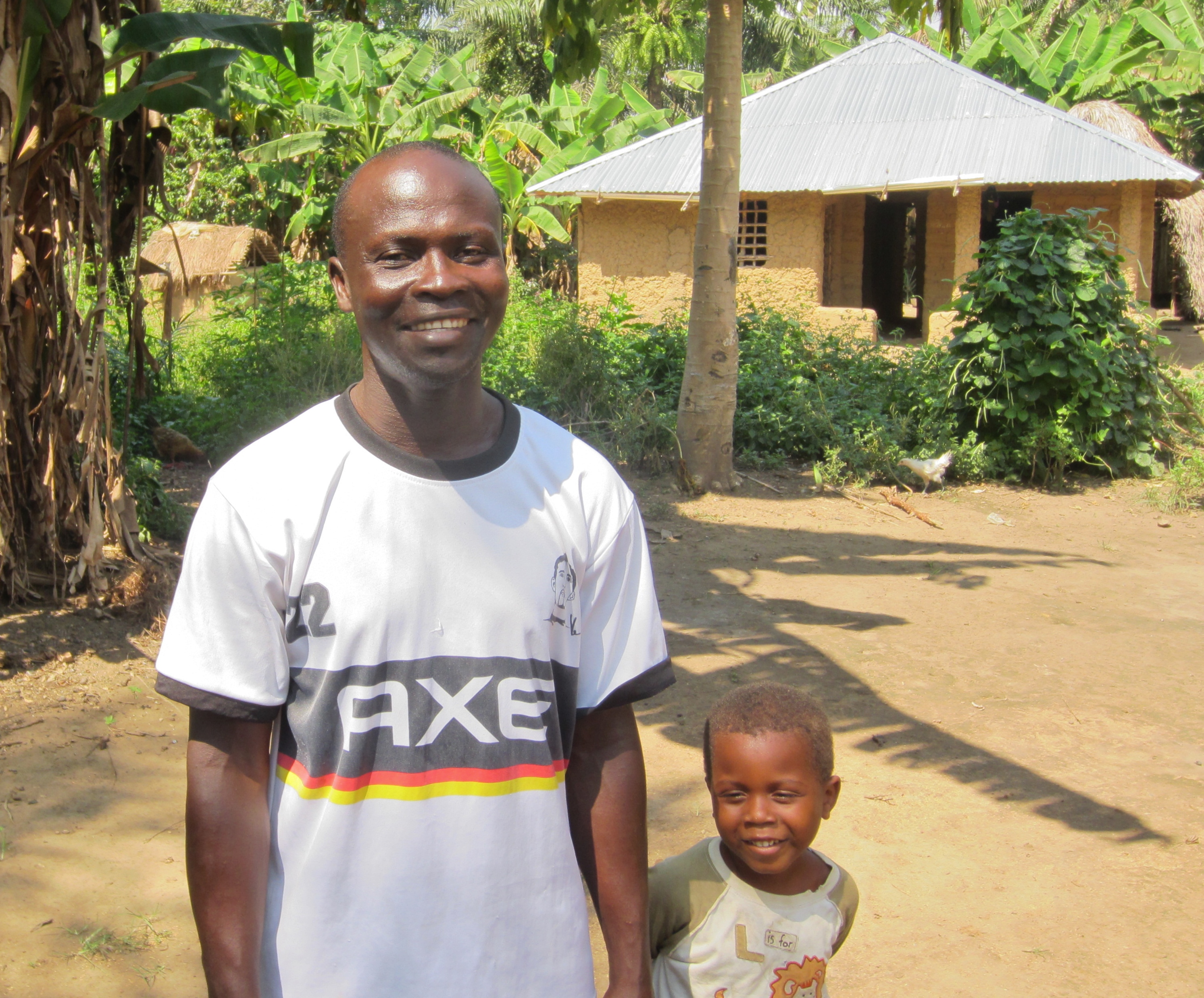
Rachel's fatherAs we were starting our way back home, we ran into Mr. Bendu, the father of another scholarship girl.  I was happy to meet him as I had heard of his daughter, Rachel. Rachel is the top student at Prosperity Girls High School.  She routinely comes out first in the her class.

Stands to reason. Her father is the local primary school teacher, and he takes education of his children seriously.

It proves once again that a humble origin is not necessarily a barrier to academic achievement.  Rachel has made good use of her opportunity to get an education.  She’s now a top student in one of the top schools in Moyamba District.

It was a good way to end a good day – meeting student families and seeing first hand that Sherbro Foundation’s scholarship program for girls is indeed making a difference in the lives of these girls and their families.

The Girl Effect

Walter Schutz Secondary School students

Walter Schutz Secondary School students in Rotifunk

It’s September. School is starting again and I’m thinking of the Girl Effect.  Getting girls into secondary school in rural Sierra Leone, and keeping them there, is at the core of Sherbro Foundation’s work.

If I ever stop to think of why I put my personal effort into working on this, I only have to be reminded of one thing.

The Girl Effect.

The message is simple. “Invest in a girl, and she will do the rest.”

She’ll invest in her family and community.  With millions of girls in the world, that’s millions of chances to make the world a much better place.  I like those odds  – and return on my investment – when compared to most other development programs.

But I don’t need to explain it. This video says it all.   Click here:  The Girl Effect   

“If you change the prospects of an adolescent girl on a big enough scale, you will transform societies.”    

Mark Lowcock, DflD Permanent Secretary
Prosperity Girls High School 7th graders

Prosperity Girls High School 7th graders

You can be part of the Girl Effect transforming Rotifunk and Bumpeh Chiefdom, Sierra Leone.

Please contribute to Sherbro Foundation’s Girls Scholarship Fund.  Your $25 will pay school fees to send a girl to secondary school In Rotifunk for the year.

The school year is starting and she needs your help.

Click to Donate here

Donations from all countries are welcome through this Paypal link.

Scholarship program celebrates girls’ education in Rotifunk

I admit it. I sometimes thought my sister Arlene was a bit crazy for trying to start a non-profit organization all by herself to help people with such great needs on the other side of the globe.

But when you look at what’s been accomplished in its first six months, I’m amazed and proud – and my faith is being restored in the generosity of people coming together to improve life for others. We are linking with strangers around the world, interested in what is happening. (And of course, I volunteered to help.)

The Sherbro Foundation’s first round of scholarship awards to young women in Rotifunk’s four secondary schools is the latest point of pride.

2012-13 Girl Scholarships awards - Prosperity Girls High School (blue shirts), Walter Schutz Secondary School (white shirts)

2012-13 Girl Scholarships awards – Prosperity Girls High School (blue shirts), Walter Schutz Secondary School (white shirts)

First, it’s amazing that Prosperity Girls High School, a four-year-old school, achieved an impressive feat last fall when 100% of their students who took the West African standardized senior high entrance exam passed it – a feat for which they received special recognition from the national Ministry of Education for exceptional results!  Each girl passed on her first try AND the school had complete success on its first time sending girls for the exam.

It’s amazing that an impoverished rural community created its first all-girls secondary school. It’s amazing that Rotifunk’s new nonprofit, the Center for Community Empowerment and Transformation, voluntarily formed by teachers at the new Prosperity Girls High School, is administering the scholarship program as a foundation partner. It’s amazing that 138 girls benefited from this year’s scholarship program ranging from 7th to 10th grades.

So it was time to celebrate. To read Teacher Osman Kamara’s account of the recent scholarship presentation ceremony for the young women is heart-warming. It would convince anyone that the Foundation must keep growing.

“The activities of Sherbro Foundation have become visible and the people of Bumpeh Chiefdom are hopeful and have the belief that their lives (are improving) and the burden of their children’s education has been lessened with the involvement of Sherbro Foundation,” he said.

“The people of Bumpeh Chiefdom were very happy and appreciative of the scholarships.”

The celebration was attended by 200 parents and guardians and many community leaders of Moyamba District. Master of Ceremonies S.P. Gibril pointed out that it was the first time in the history of the District that so many female students in all the secondary schools of Bumpeh Chiefdom received scholarships.  He also thanked Paramount Chief Charles Caulker for connecting Arlene with the community.

Chief Caulker and Arlene were fellow teachers more than 35 years ago, when she was a Peace Corps volunteer in Rotifunk.

2012-13 Girl Scholarship awards - Bumpeh Academy (green) and Ahmaddiya Islamic School (white)

2012-13 Girl Scholarship awards – Bumpeh Academy (green) and Ahmaddiya Islamic School (white)

Principals of each school nominated their own students from the junior high and senior high levels. It was decided that female students at all of the community’s schools should benefit. The count:

* Prosperity Girls High School, 41 students

* Bumpeh Academy Senior Secondary School, 20 students

* Walter Schutz Memorial Secondary School , 30 students

* Ahmadiyya Muslim Secondary School, 30 students

* Children of adult literacy students, 17 students

Four categories of students were awarded scholarships:

* Vulnerable students (low income, single parents, orphans, students who had to leave their village and board in town to  attend secondary school)

* Academic achievers

* At least six female football (soccer) players from each school

* Pupils whose parents are students themselves in the new adult literacy program operated by CCET, who are mostly single parents

Home visits were required in most cases, in order to verify economic status and school enrollment.  In a remarkable approach to trimming red tape and ever-present bureaucracy, parents were directly awarded the scholarship money. This was done because this first round of scholarships was awarded for the just-completed 2012-2013 school year. Most of the parents and guardians anxiously awaited the funds because either they could not afford to pay the school fees, or had taken loans for which they still owed.

The nation’s Education Ministry for Moyamba District was also represented at the scholarship event.  Abdul Karim Kanu, who is the Moyamba District Inspector of Schools, commended the Sherbro Foundation.  He promised to report the CCET’s successes to the Education Ministry in the capital of Freetown. The foundation’s partner on the ground has the potential to become a model for the country.

Wish I could have been there.

— Chris Golembiewski

Breaking the barrier of illiteracy

Junior Secondary School 3 students (JSS3 or 9th grade in the U. S.) across Sierra Leone last week completed the BECE exam.  The Basic Education Certificate Examination is a standardized exam administered throughout West Africa by the West African Examination Council to certify students are ready to progress to senior high school.

This is a quiet milestone. But progressing to high school should be celebrated as a big deal for a country where 56% of adults over the age of 15 years in 2011 have never attended formal school. (World Bank data) This number seemed high to me.  But if you stop to think, it’s again that group of young adults whose educations were interrupted by the war and its aftermath.

JSS3 students from four Rotifunk secondary schools are glad the rigorous BECE exam is over.  Twenty two subjects are offered, and students expected to test in 10-13 subjects that take 2 to 2 ½ hours each.  That means 5-6 days of testing for each student.

To pass the BECE, students must pass at least six subjects, including English and Math.  Sierra Leone pass rates last year were only 50% of test takers in Language Arts and 57% in Math; it’s not an easy exam.  Less than half the students taking the BECE in 2012 in the Southern Province where Rotifunk sits passed the overall exam.

Four Rotifunk secondary schools are taking the exam:  Walter Schutz Memorial Secondary School (where I taught many years ago), Prosperity Girls High School, Ahmadiyya Islamic School and Rotifunk’s Christian academy.

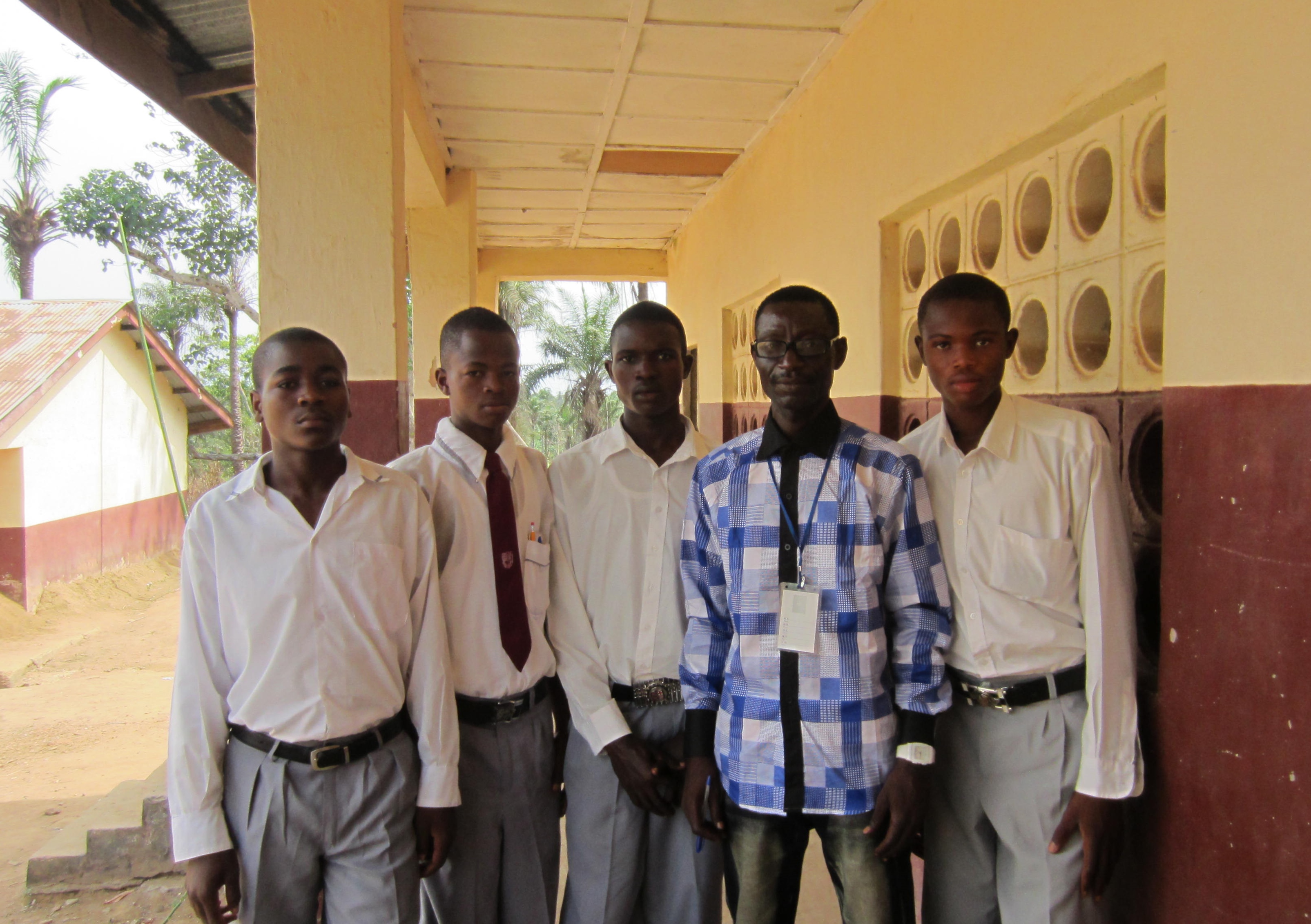
Student debaters at Walter Schutz Secondary School and their teacher after completing a debate.

Student debaters at Walter Schutz Secondary School and their teacher after completing a debate.

Prosperity Girls High School was the stand-out in 2012, not only in Rotifunk, but in Moyamba District (one of 12 administrative districts in the country). 100% of PGHS girls taking the BECE exam passed. This is significant given the area’s first all-girls secondary school had only been open three years when students first sat for the BECE last year.  It was the first time each individual girl took the exam, and the first time the school sent students to sit for the exam.  It was also the first year JSS3 – or 9th grade – had been offered at this new school.

Prosperity Girls High School was recognized by the Ministry of Education for their exceptional results.  It was noted their results could be compared with schools in the district open for a hundred years. Their net results were seen as second in the district, given their actual scores and smaller number of students.

So, how did PGHS pull this off?  It starts with an excellent principal and excellent teachers who are capable in their respective subjects and highly committed to their students.  But their secret ingredient is holding what Principal Kaimbay calls a camp – a month long study camp.

JSS3 students hunker down at the school and live there dormitory style all week while the teachers conduct comprehensive reviews of the whole curriculum.  Principal Kaimbay sleeps at the school with them, getting them up at 5:00 AM to begin an early study period before review classes start at 8:00 AM.  They have afternoon breaks for sports and rest, and evening review classes begin again after dinner til about 10 PM.  They can go home for the weekend, and return to begin the condensed study program again on Monday – for a whole month.

This approach delivered results.  Every girl passed in 2012, allowing PGHS to open their first senior high class (10th grade) for the current 2013 academic year.  Mrs. Kaimbay attributes their success to the comprehensive review and keeping the students focused.  We make sure we review every subject and the full curriculum before the exam, she said.  We try to verify knowledge and assist each student.  We provide the  focus and discipline for studying that they would not be able to get if they were studying at home.

Twenty eight JSS3 students from PGHS sat for the BECE this year.  So, it requires not only discipline for the students, but a huge commitment by the teachers and principal. As in countries everywhere, the teachers and principal are the heroes of this story.

I asked PGHS teacher Mr. Sonnah how it was going a couple weeks ago.  Great, he said.  They did a better job preparing the study camp this second time around, so he expects to see results on par with last year. 

Sherbro Foundation knows  JSS3 students from all Rotifunk’s secondary schools have worked hard to be ready for the BECE.  We wish them all the best as they await their results.

Growing the ranks of students ready for senior high is essential for this rural community – and for the country – to continue their development journey and move beyond poverty.  There will no doubt be barriers to the students completing senior high and then joining the workforce.  But academic readiness should not be one of them.  It should be an enabler.   Fortunately, in Rotifunk students are being given a good start. 

You can help.   One barrier Sherbro Foundation is helping to remove is the burden of school fees for rural families unable to pay them.  Consider contributing to the Girls Scholarship Fund that awards school fee scholarships to girls in all four Rotifunk secondary schools.   $22 USD pays fees for one senior high girl to attend school for the year.  $18 USD covers annual school fees for one junior high girl.   You can find an on-line donation button in the right hand column of the website.

How you can help

DSCN0359

Donations are great, but there’s other ways to help, too.

  • Like us on Facebook and “share” Sherbro Foundation Facebook news items to your Friends list.
  • Identify organizations interested in supporting girls education, solar energy & agriculture in West Africa.  eg., Churches doing mission & outreach work;  Schools doing public service & educational projects; Foundations & Nonprofits interested in these areas.  Help connect us and advocate for us.
  • Help design a logo for Sherbro Foundation with a .jpeg image.
  • Sponsor a girl for one year in secondary school by paying school fees:
    • $18  for Junior High
    • $22  for Senior High
    • $35  for a school uniform & shoes she’ll wear for two years or more
  • Find used or in-kind donations for schools:
    • Educational videos, tutorials on DVD (eg., math lessons), school supplies, books, computer mouse & mouse pads.
  • Support our current Projects – donate online using the “Donate” button to the right on each page
    • Fifty Laptop computer carrying bags for the new computer lab – about $15 /bag    Current need!
    • Solar Energy System for the Computer Lab
    • Office printer (need 220V equipment)
    • Sponsor a Science teacher for additional teacher training – $250/year
    • Community economic tree nursery – nurse seedlings for local families / create demonstration garden and train on growing
    • Village Cooperative Store – stock household items to sell at cost for a small, subsistence agriculture village; avoid markup costs & provide initial stock for a co-op store

Sherbro Foundation invited to be part of Cincinnati’s Freedom Center event

The Sherbro Foundation was delighted to be invited to participate in an important event for women worldwide May 22 at Cincinnati’s National Underground Railroad Freedom Center.

The free public evening kicked off with a 5:30 p.m. reception and Action Fair. National and local nonprofits – including Sherbro Foundation — offered information about their efforts to uplift women and eliminate oppression and discrimination, both here and abroad, and how you can help.

The event is a follow-up to the recent traveling exhibit at the Freedom Center, “Women Hold Up Half the Sky,’’ based on the bestselling book, “Half the Sky – Turning Oppression into Opportunity for Women Worldwide.” Both serve as wake-up calls to the injustices perpetrated against women worldwide and the ways to effect change.

The program began with a 40-minute version of the PBS Half the Sky documentary.  A short keynote address was presented via live satellite by Half the Sky Executive Producer Mikaela Beardsley and followed by a brief panel discussion with local volunteers and activists.

The evening wrapped up with a longer Action Fair at to give attendees an opportunity to learn more about organizations supporting women locally and globally and how you can get involved and support them through volunteerism, advocacy or giving.

For more information on the Half the Sky movement, visit: www.halftheskymovement.org

Become an Agent of Change - Half the Sky Event Invitation (2)