Procter & Gamble Alumni Foundation Grant Boosts Sierra Leone Farmers

Procter & Gamble Alumni Foundation Grant Boosts Sierra Leone Farmers

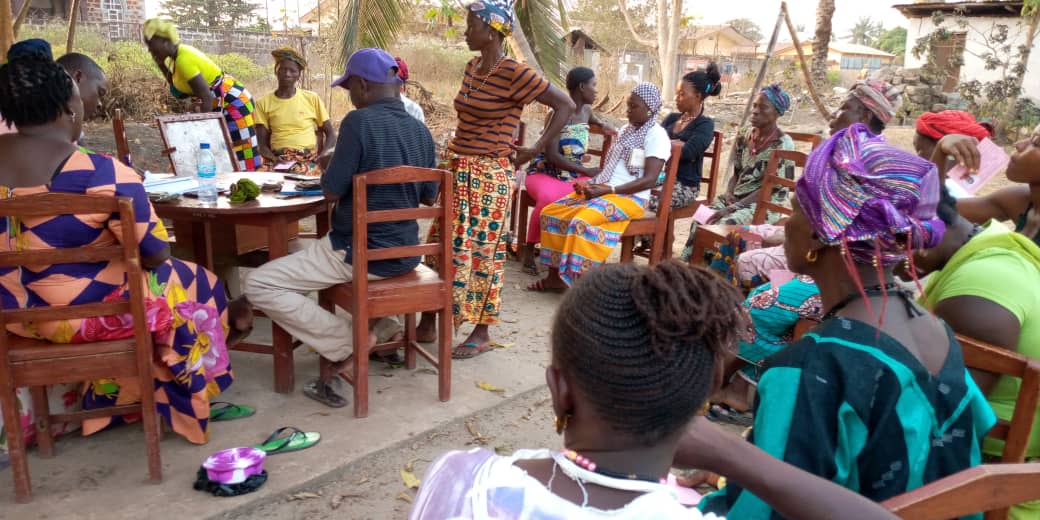
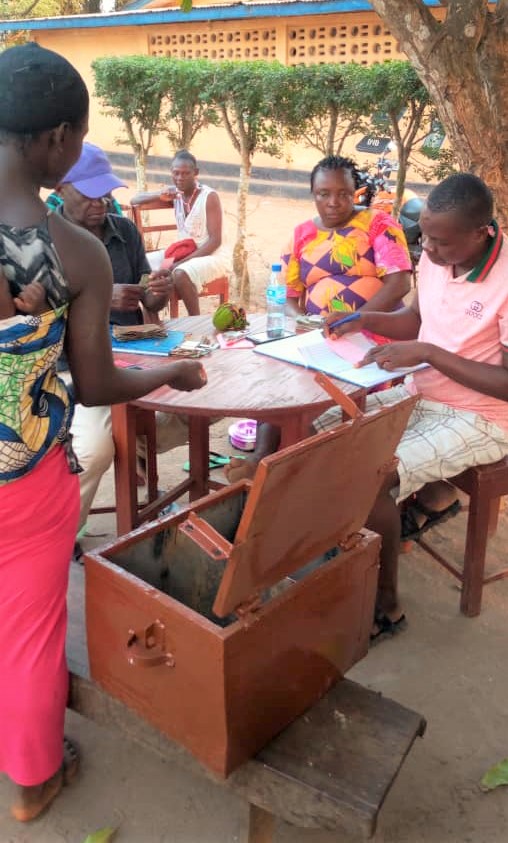
Sherbro Foundation is honored to announce that the Procter & Gamble Alumni Foundation Fund of the Greater Cincinnati Foundation has awarded us a grant to expand our transformative Let Them Earn project in Sierra Leone. With this funding, 50 more Bumpeh Chiefdom village farmers (majority women) can replicate the success of early participants improving their incomes, livelihoods, and futures.
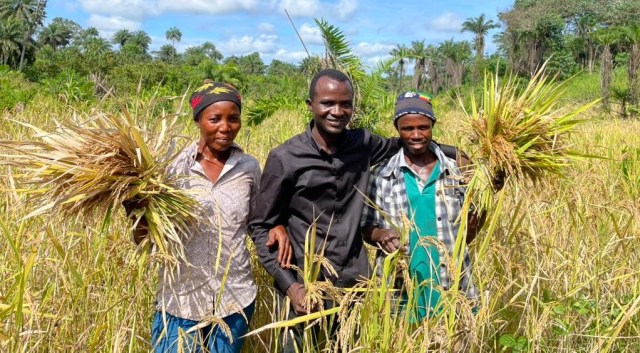
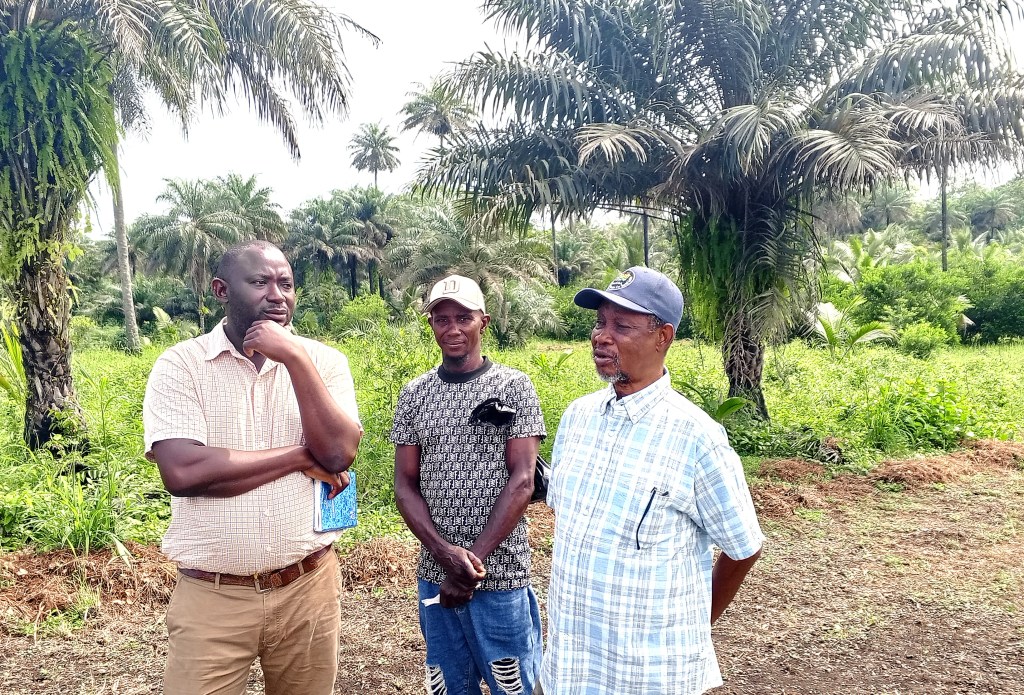
Let Them Earn Project farmers, Bumpeh Chiefdom, Sierra Leone

Through our local partner CCET-SL (Center for Community Empowerment & Transformation—Sierra Leone), Let Them Earn provides smallholder farmers with:

  • Interest-free loans to expand their operations     
  • Year-round training on improved farming practices
  • Classes on basic numeracy and small business management

After covering operating costs, setting aside family food, and repaying their loans, participants have net cash income to improve daily life and reinvest in their farms.

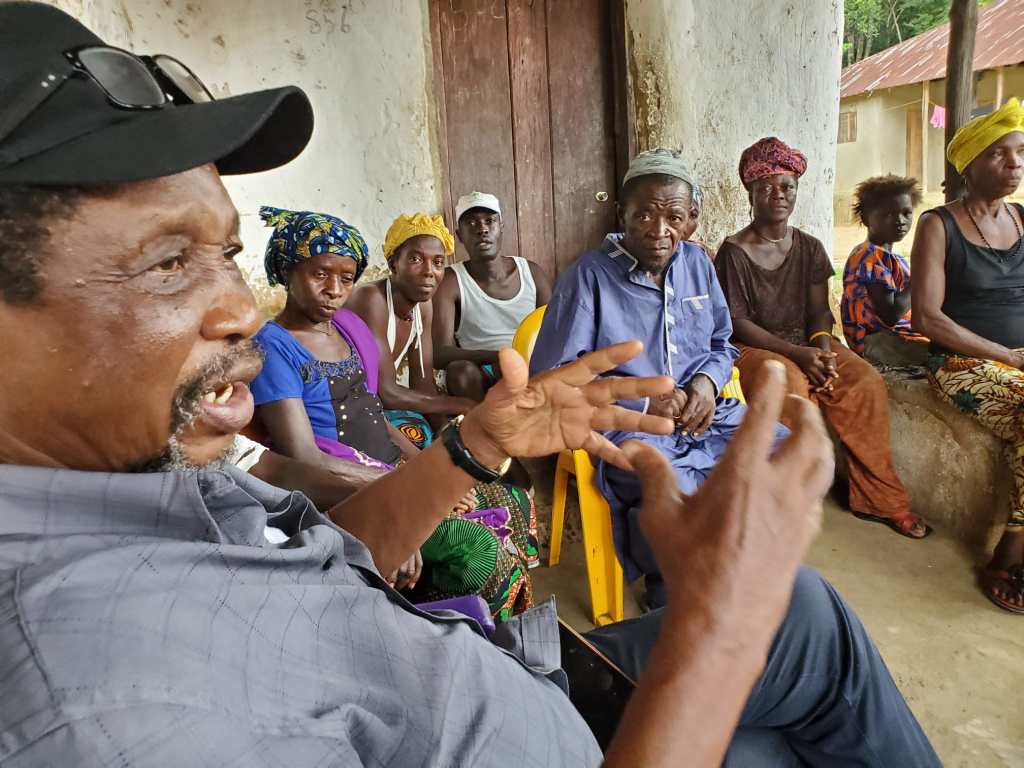
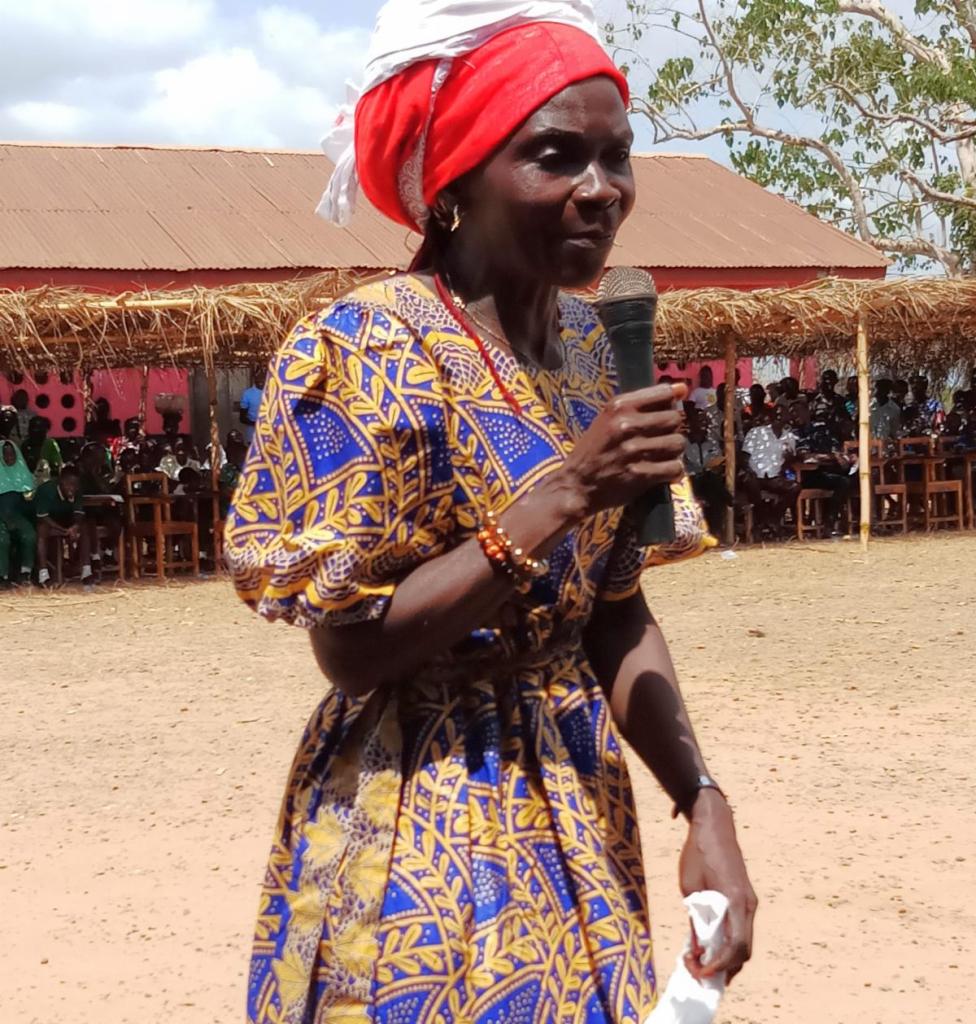
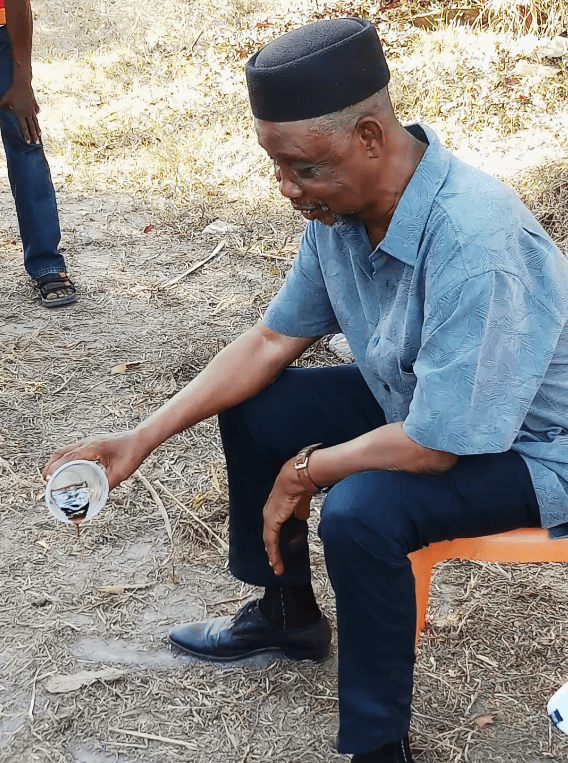
“This grant is a big leap forward that’s adding momentum to what we’re doing with village farmers,” said Bumpeh Chiefdom Paramount Chief Charles Caulker. below right with women farmers. “I want to create a culture of increased productivity where farmers continue to grow more, earn more, and villages lead their own development. I’m deeply grateful to the P&G Alumni Foundation for standing behind us with their support.”

Transforming Lives Through Economic Empowerment

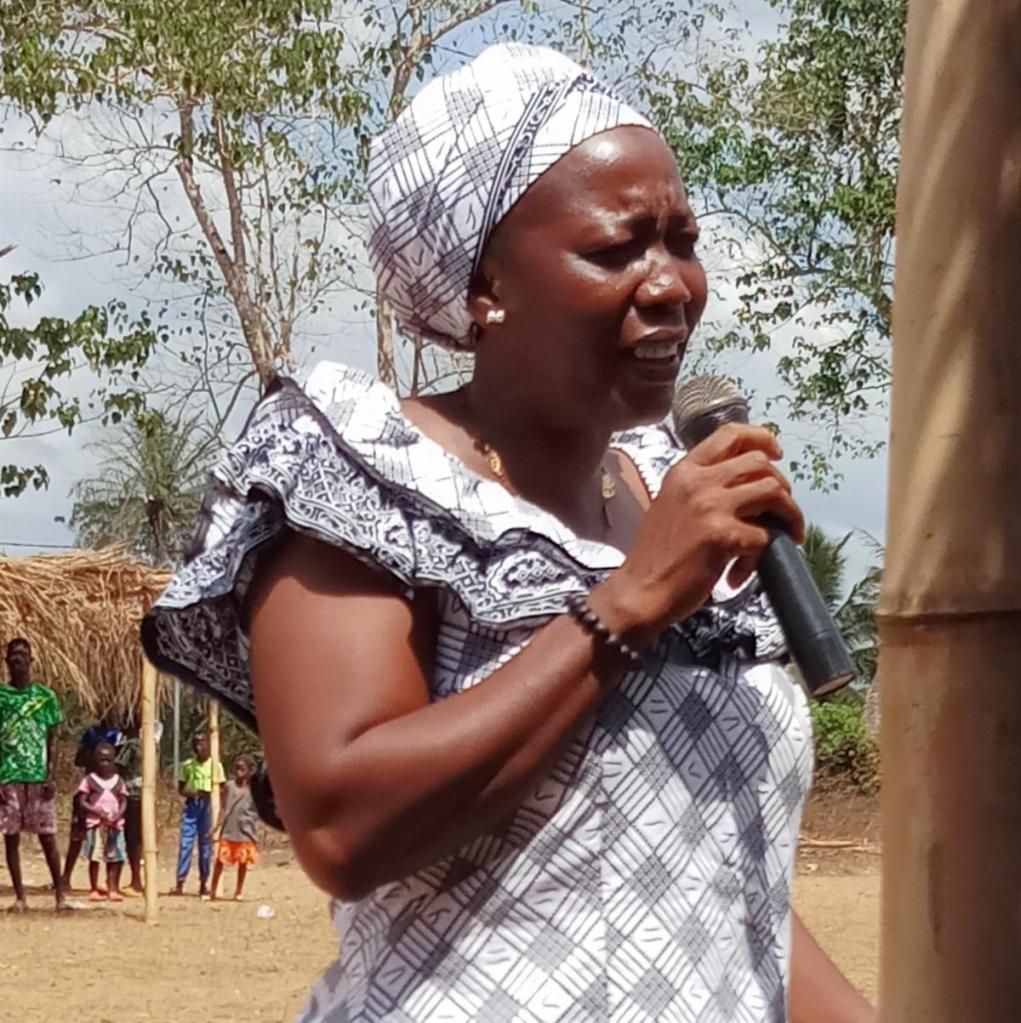
Musu Koroma, below, a mother of three, was one of the first farmers to join Let Them Earn. Last month, she showed me how new earnings from her loan changed her life. She reinforced her mud brick house with strong concrete stucco, safeguarding it for years to come from erosion and collapse in Sierra Leone’s heavy monsoon rains. She installed sturdy hardwood doors and windows that keep out rain and mosquitoes. With pride and confidence, Musu is now sending her son to secondary school in a larger town. 
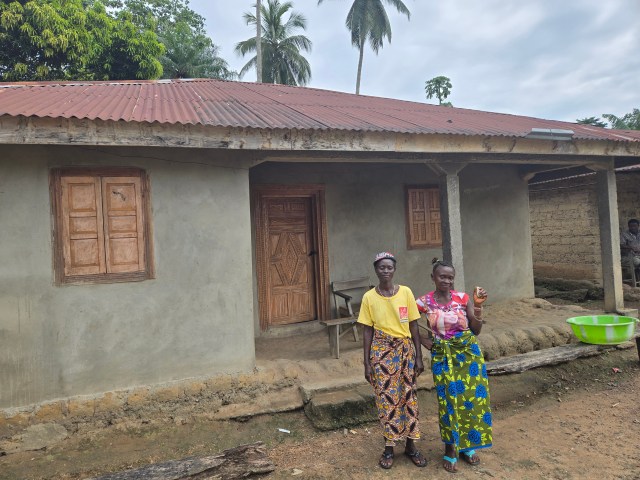
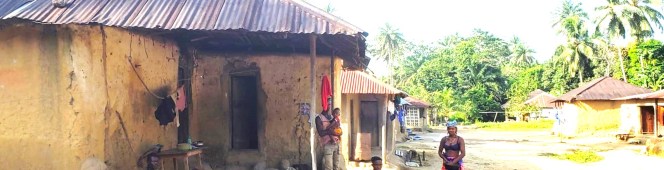
With earnings from her three-acre farm, Musu Koroma, above left, strengthened her house, before like the mud brick house next door.

“Let Them Earn has helped me so much,” Musu said. “I can now do things I never thought possible.”

Results Speak for Themselves

The impact has been dramatic. Families are sending children and grandchildren for higher levels of education. They have more food and can afford protein like fish, important for child development and disease resistance. Homes become safe and healthy places to live with dignity. Villages are becoming debt-free, and communities are rediscovering hope.
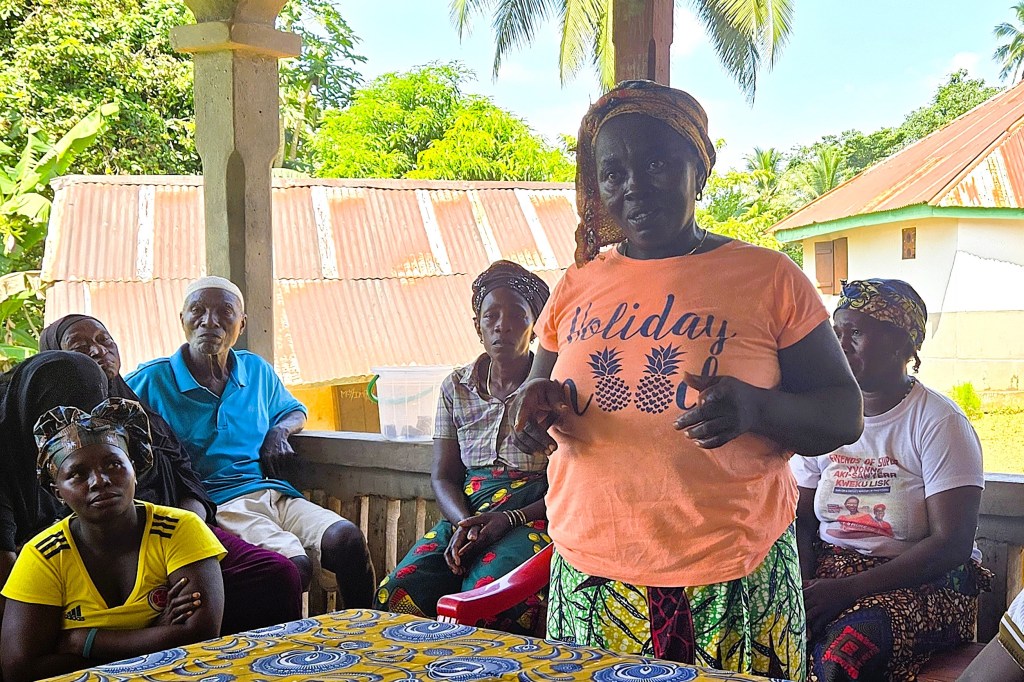
Aminata Sandy, above joined Let Them Earn after losing both her husband and the brother-in-law she became dependent on. With her loan, she hired labor for her farm, secured food for her children, and paid their school fees. As the loan recipient, she manages her farm and a household of eight. She’s repaid most of her loan, with the remainder coming with the year-end harvest.

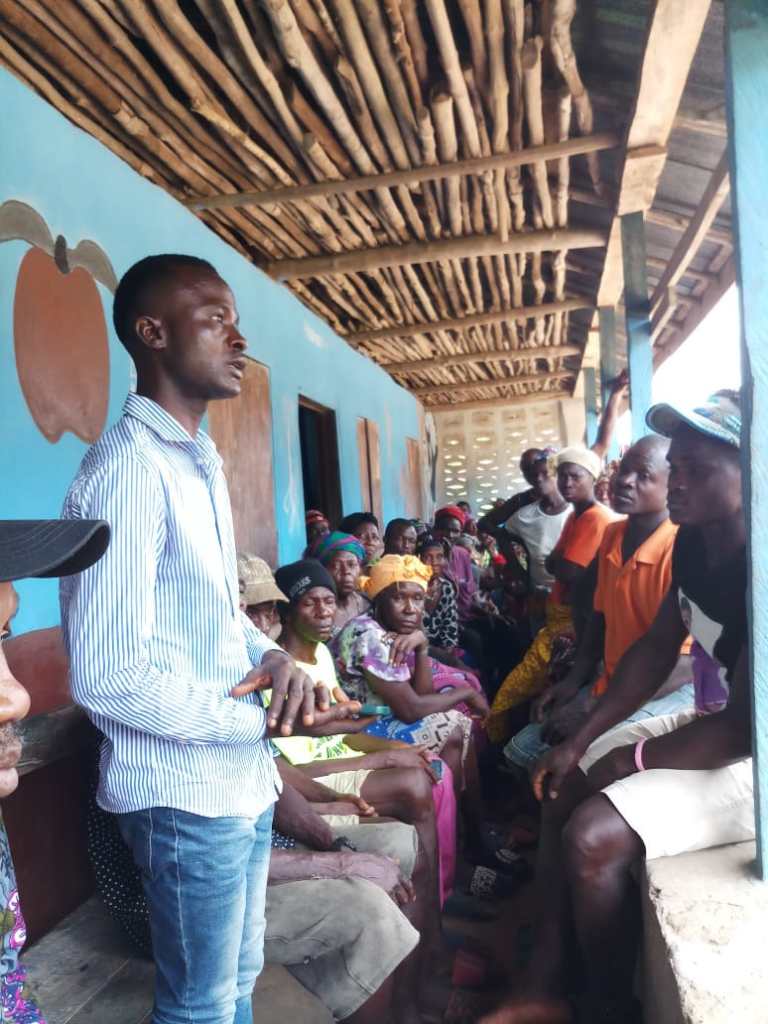
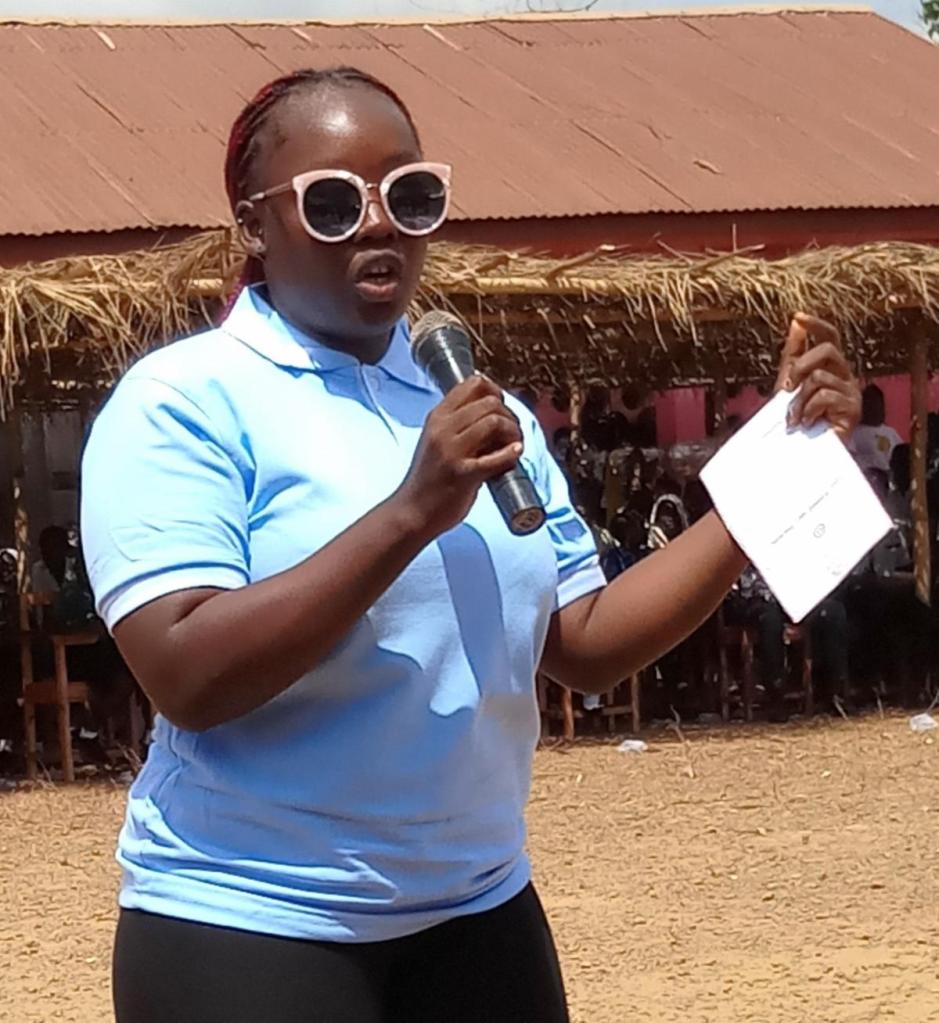
Aminata confidently stood up in front of her village and Paramount Chief Caulker to tell her story. When women are direct loan recipients, Let Them Earn empowers them to make farm and financial decisions. They’ve gained respect and a voice in managing their village.

Microfinance schemes in rural areas frequently fail. Our partner CCET-SL proudly reported 95+% of year one loans were repaid with the combination of interest-free loans and year-round training tailored to farmer needs. Year two Let Them Earn loan repayment promises to reach the same high level. Repaid loans are reloaned to the next group of farmers eager to improve their lives.

Why This Approach Works

After 14 years working with Sierra Leone, we’ve learned a vital truth: sustainable development doesn’t begin with what you construct — it begins with who you empower.

Schools, wells, and roads are important, but villages can’t develop or sustain growth unless individuals become economically self-reliant. Lasting change happens when you invest directly in people, giving them the means and skills to lift themselves out of poverty.

The Let Them Earn program brings together what truly works: financial access, practical skills, and local empowerment—helping farmers move from subsistence living to building viable, income-generating small businesses. Loans are repaid on schedules that match farm harvests.

Yes, it’s riskier to provide loans to subsistence farmers and small traders. It’s time-intensive to deliver hands-on training in remote villages and provide ongoing coaching. But this is what actually works. This is what moves people and entire communities beyond survival mode to genuine economic opportunity.

Sherbro Foundation sends our deep thanks to the P&G Alumni Foundation for their continued confidence and partnership in Let Them Earn. Year three of the project will bring even greater growth and opportunity to the villages of Bumpeh Chiefdom.

For program details: https://conta.cc/4oVfeom

You can help support Sierra Leone farmers: https://sherbrofoundation.org/donate/

Meet Our Partner CCET-SL’s New Manager

Meet Our Partner CCET-SL’s New Manager

When Mustakin Conteh arrived at the Center for Community Empowerment & Transformation last September, he didn’t just bring professional nonprofit experience—he brought a vision. As our partner organization’s first manager with formal NGO background, Mustakin has spent the past year moving CCET-SL from a small community organization towards his goal of a full-fledged Sierra Leone nonprofit.

Mustakin, left, reviews CCET-SL’s Orchards for Education with Paramount Chief Charles Caulker, right.

But his story begins much earlier, in a classroom in Bo.

A Teacher’s Calling

Like many first pursuing higher education in Sierra Leone, Mustakin started as a teacher. With a B.A. in Education, he taught secondary school English and English Literature for ten years in Bo, Sierra Leone’s second largest city. But as the country was recovering from its devastating rebel war, he witnessed firsthand how rural communities remained trapped in cycles of poverty that the conflict had only deepened.

That experience changed everything.

Armed with a Master’s in Rural Development from Njala University, Mustakin embarked on a second career dedicated to rural transformation. For 12 years, he honed his skills with Sierra Leone NGOs and international NGO programs like Save the Children and Welthungerhilfe, learning how to turn development theory into real-world impact.

Boots on the Ground Leadership

What sets Mustakin apart is his hands-on approach—still uncommon in rural Sierra Leone. I find him everywhere: meeting with school principals and teachers, visiting Let Them Earn villages, checking operations at CCET-SL’s Orchards for Education at 8am before continuing with his day. He doesn’t manage from behind a desk. He leads from the field and sets operating standards.

Staff and community members could see he’s there to improve the lives of everyday people. His respectful, engaging style quickly earns trust. CCET-SL’s small staff achieves broad community impact through local partnerships. Mustakin’s kind of relationship-building is everything.

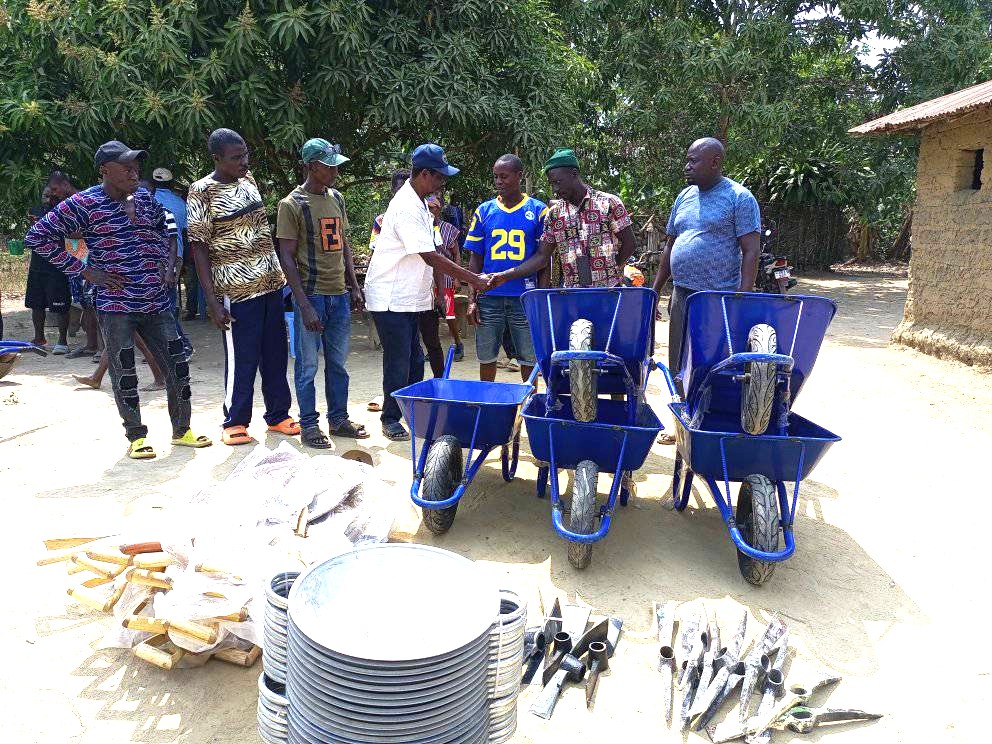
Mustakin, right, officiates a ceremony handing off Sherbro Foundation funded tools for village road repairs. He oversaw work where villagers manually dug roadside rain gutters and filled gullies, keeping roads drivable in the rainy season.

Results, Not Just Reports

Mustakin didn’t come to simply manage programs on paper. His NGO experience trained him to look beyond activities to long-term impact. “How are we actually improving lives?” he asks—a critical question as CCET-SL enters year two of its village farmer development program, Let Them Earn. He’s guiding the project team and villagers to identify early learnings and make modifications to be more effective.

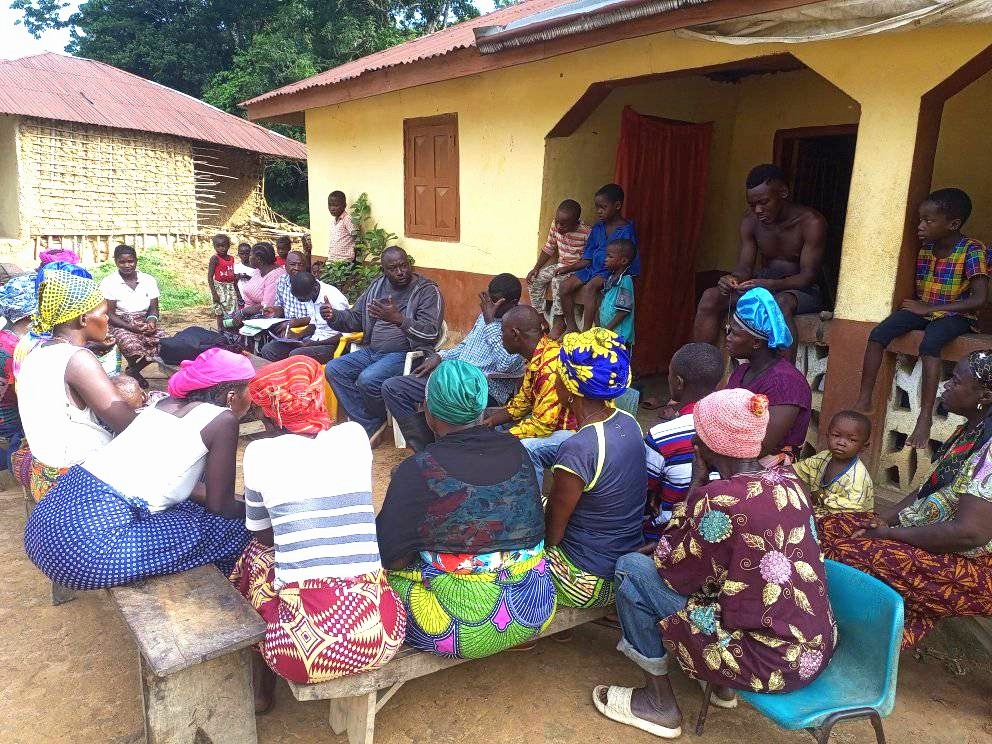
Mustakin, center, explaining Let Them Earn project objectives to Mokomrabai project participants.

Project Management expertise

This results-oriented mindset recently solved a pressing challenge. Climate change is threatening CCET-SL’s 60-acre Orchards for Education with rising dry season temperatures and erratic rainfall. When asked to address this, Mustakin sprang into action.

Within three months, he had:

  • Researched water system solutions, confirming a borehole as cost effective
  • Engaged government advisors for technical design
  • Secured the best borehole contractor
  • Delivered a complete system reaching 220 feet to an aquifer providing plentiful clean water

Today, elevated storage tanks and standpipes cover the 60-acre orchard, ensuring maturing trees have year-round water. Mustakin isn’t an engineer, but he knew how to analyze problems, find technical resources, and execute solutions—exactly the project management skills rural communities desperately need.

Mustakin here supervising installation of a nine-foot water storage tank platform.

Building a Legacy

For Mustakin, this work transcends employment. “I’m here to create my own legacy,” he tells us. His commitment to the people of Bumpeh Chiefdom runs deep, driving him to push through the daily challenges of rural development work. Like getting to project sites on roads, left, he found even his motorbike had trouble passing in the rainy season.

As CCET-SL – and Sherbro Foundation – continue our mission of lifting communities out of poverty, we’re grateful to have a leader who understands sustainable change requires both professional expertise and genuine heart for the people being served.

Thank you, Mustakin, for choosing to invest your talents where they’re needed most—and for showing us what dedicated leadership looks like in action.

— Arlene Golembiewski
   Executive Director

Casting Off Barriers – Investing In Young Minds

Casting Off Barriers – Investing In Young Minds

When I visit Bumpeh Chiefdom villages, I see the story of Mariatu Turay’s mother played out again and again. Ya Ramatu is a widow who toils away in her garden using only her own backbreaking manual labor. Foremost in her mind is educating her children. But she hardly earns enough to feed them, let alone take care of school expenses.

Ya Ramatu didn’t have the opportunity for education. Too many children still follow in her footsteps, trapped for generations in the same cycle of illiteracy and poverty.

Too many young minds have been wasted for too long. You can change that. You are changing that.

You helped Mariatu break the mold. We’re kicking off our annual Education Fundraiser so more students repeat her success story this school year. Together we can cast off education barriers and invest in developing more young minds.

Mariatu, left, just managed a feat few rural girls achieve, as a standout secondary school graduate. She was also a school prefect, selected to lead students and enforce school standards.

She now wants to go to university to study accounting. Without our help, she could have been back in her village like her mother, struggling to support two or three children.

Instead, Mariatu and other junior high students you earlier helped, are today’s high school graduates. With early success, they stayed in school, prepared to tackle senior high and now continue for advanced training.

Today, girls and boys routinely graduate from Rotifunk secondary schools, thanks to programs from our partner, the Center for Community Empowerment and Transformation (CCET-SL).

For Paramount Chief Charles Caulker, it’s a transformation. “Our schools have now returned to where they were before the war. Our children no longer have to leave Bumpeh Chiefdom to get a full education.”

Doing what works

Over 11 years, CCET-SL has greatly improved education in Rotifunk. At its core, CCET-SL’s tutorial programs give students the extra teaching support they need to advance to the next level of their education: to junior high, senior high and now higher education.

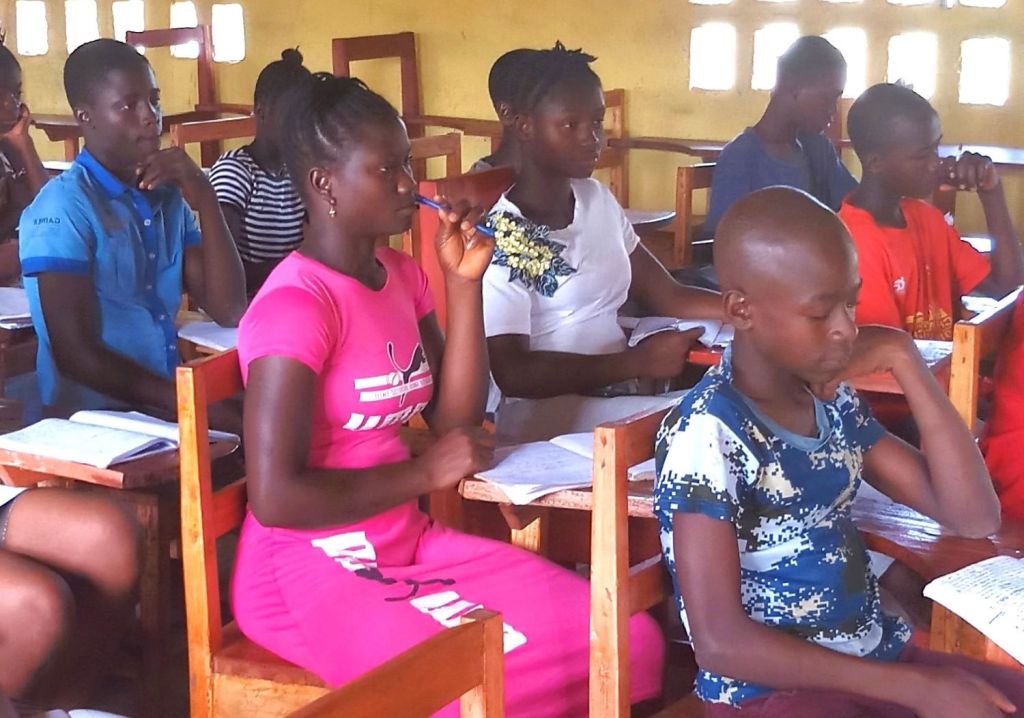
9th grade students, above, intent on passing to senior high return for another 90 minutes of CCET-SL led after-school classes. This tutorial ensures they complete the full curriculum before the national exam.

In a rural area with limited resources, you must be practical. CCET-SL organizes teachers with the best qualifications to prepare students in grades 5, 6, 9 and 12 for their national exams.

The tutorials use existing teachers and existing facilities to achieve better results. Much better.

Over 90% of students in tutorial classes now pass to junior high and senior high better prepared than ever and continue to perform at a higher level. High school graduates are among the first to qualify for college in 30 years.

Charles Caulker, left, got the highest 2023 senior high entrance exam score ever achieved at a Rotifunk school and in his district of 40 schools. He topped students in five other rural districts. A number of his fellow students were close behind. Rotifunk hospital surgical officer and CCET-SL board director, Mohamed Tommy stands proudly with him.

Today’s lowest senior high entrance exam scores were just few years ago the highest scores Rotifunk students achieved.

For Mariatu – and her mother – CCET-SL’s tutorial programs made all the difference, enabling her to graduate with good grades at no extra cost. Sierra Leone schools often charge fees for extra after-school classes to prep for exams. Or parents pay teachers to tutor their children for national exams.

With Sherbro Foundation funding, CCET-SL tutorial classes are free, giving all students equal opportunity to get a full education.

Women often care for children of other family members. Kadiatu, center above, has responsibility for seven children; three are hers, four her brother’s. The family burden to educate children is great.

Program impact

Paramount Chief Charles Caulker sees the impact of CCET-SL program as “a big leap forward.” He told me, “CCET-SL is closing the huge gap left in chiefdom schools by the [11-year] war. For years, few students passed. Now, nearly all students pass. Grades are significantly improved to the point many graduates now qualify for university or [three-year] diploma courses.”

Chief was blunt about the state of Rotifunk schools for years after the war. “Only the students seen as useless remained in our schools.” Bright students found their way out and parents made every effort to send their children to better schools in bigger towns and cities.

Paramount Chief Caulker, above center, is a strong advocate for women. He knows the greatest long-term impact he can have on his chiefdom is helping to educate their children.

Chief Caulker now sends his granddaughters to Rotifunk schools. “This shows my conviction. I wouldn’t send my own children to school here if I didn’t believe the learning process was good,” he said. “I see no difference in their learning compared to Freetown schools. Look at Naomi. Her English is good, and she does very well in math. I’m so happy.”

Rotifunk schools are not overcrowded like those in Freetown. Children get more individual attention and they do better.

Chief Caulker’s dream 11 years ago was to educate his grandchildren in their own chiefdom. Today, granddaughters, Naomi, 7th grade, above left, and Grace, 5th grade, are thriving in Rotifunk schools.

Raising the bar

CCET-SL’s collaborative approach with Rotifunk schools is helping set a higher standard of education. They review and analyze student national exam results with schools by subject and agree on improvements they can work on together. Teachers get help with teaching materials and classroom coaching on teaching methods.

“CCET-SL is creating competition among Rotifunk schools, causing them to rise to a higher level,” Chief Caulker added.

With your support, we’re in the fourth year of CCET-SL managed teacher certification scholarships. CCET-SL handpicked 19 promising primary and secondary school teachers, especially for English, math and science. Women teachers are in short supply. CCET-SL sought out local female high school graduates to develop as teachers. Teachers go to classes during school breaks and apply each term’s learnings back in their classrooms. Nine schools are improving as their teachers improve their own educations.

Young minds are no longer wasting in Rotifunk. With CCET-SL programs, more and more students are graduating high school and at younger ages.

Seventeen-year-old John Sandy, left, just sat for the national graduation exam he’s optimistic will gain him admission to university. Graduating at 20 and 22 years of age had been the norm.

Also, students often must retake the graduation exam to improve results before getting admitted to universities and technical institutes.

They’ll lose a year or two and have to raise funds to pay to repeat the exam and maybe a review class. It’s an expense many can’t afford.

The big education leap Chief Caulker credits CCET-SL with is not just academic success. It also clears a huge financial hurdle for the poorest families – avoiding lost time and substantial cost before students can gain advanced education and productive job skills.

Bumpeh Chiefdom greatly needs highly skilled trades people, not just university grads. We’re planning new scholarships for young people to pursue training in areas like construction, electrical systems, mining technology, agriculture and animal husbandry.

Chief Caulker knows opportunity will open with education. “People get enlightened with education. They’re creative. They’ll use their creativity to create their own opportunities and develop small businesses.”

Ya Ramatu’s life would have been vastly different with even basic education. Our challenge is to help the next generation of Mariatu’s and John’s get the head start they need in school for better, productive lives.

School starts in September. For only $50, you can give a 9th or 12th grade student ten months of instruction to ensure they’re ready to advance to the next level of their education.

A student prepared and confident of progressing to senior high or college for only $5 a month. A bargain!

“It takes a village” to educate Bumpeh Chiefdom children and we’re an essential part of it. Join our village and give a child an opportunity that changes their life.

On behalf of students and parents, thanks so much for all the support you provide!

— Arlene Golembiewski,
 Executive Director

It Takes Money to Make Money – the Let Them Earn Project

It Takes Money to Make Money – the Let Them Earn Project

It takes money to make money. This could not be more true than with the plight of subsistence farmers in Bumpeh Chiefdom.

When you only net $50 to $100 a year in cash from your farming, you don’t have enough to eat and live on. There’s nothing extra to send your children to school; pay unexpected heath care expenses; fix your leaky roof.

You definitely don’t have money to put into expanding your farming so you can grow more and earn more.

We are going to start changing that with the support of The Procter & Gamble Alumni Foundation. We are beyond grateful to start the Let Them Earn Project with a $24,000 grant from the P&G Alumni Foundation Fund of the Greater Cincinnati Foundation.

Subsistence farmers are limited by what they can grow with manual labor. Most harvests are for household food; some is bartered for local goods. That leaves little to nothing to sell for cash.

There are two things I’ve been wanting to do for some time. First, is take our work to the villages beyond Rotifunk, Bumpeh Chiefdom’s headquarters town. 75% of the chiefdom’s population lives in small, hard-to-access villages that the government and NGOs never reach. But with Paramount Chief Charles Caulker and our partner CCET-SL, we can.

Secondly, I’ve long wanted to help village women. Chief Caulker describes women as beasts of burden. They’re constantly working — farming, caring for their house and their children, cooking, lugging water and firewood. They walk miles taking a small amount of produce to market in a basin on their heads. They’ll be lucky to earn a dollar. They do all the work, and their male partners and relatives take control of the money they make.

Chief Caulker, lower left, screened villages for the project with a series town hall meetings. He looked for industriousness (eg., backyard gardens) and willingness to comply with project terms.

The Let Them Earn Project combines microfinance farm loans in five villages with specialized training on growing and marketing to ensure participant success. 70% of participants targeted are women.

Let Them Earn will teach small farmers to raise quick-growing vegetables as cash crops and market them in bigger city markets where prices are higher and they can earn more money. The project will help protect their earnings so they can quickly invest in expanding and growing second and third crops. This will help assure they pay back their loans and make the funding available to a new group the next year. 

Typical microfinance loans charge 30% interest. That eats up the small profit farmers earn, leaving them where they started. Let Them Earn will charge zero interest. We want all earnings in their pockets, not ours. We’re commercializing CCET-SL’s tree seedling nursery to finance administrative costs when the grant ends.

Practical training

We’ve hired a professional agriculture manager with a Bachelor of Science degree in Agriculture Economics. Chief Caulker and I are impressed with Tommy Sankoh’s knowledge and the practical advice he offers on managing agriculture in a traditional rural setting.

Tommy will provide guidance on the best crops for local growing conditions. Uneducated farmers need training. But not in a classroom. To boost their success rate, he will train small farmers in demonstration gardens at their level of literacy and monitor progress of their individual farms. Training this extensive for illiterate farmers has never reached the village level.

Left, at a village meeting, Tommy is well-spoken, understands project management and is hard working. Born and raised in a Bumpeh Chiefdom village, he was glad to come home after his degree and accepted Chief’s job offer.

Tommy treats the illiterate project participants with respect and quickly developed rapport. They are like his home village family and neighbors. We’re excited to think of the impact he’ll have as CCET-SL’s agriculture manager and in helping subsistence farmers develop successful small businesses.

Changing village cultural practices

Paramount Chief Caulker is using the project to change two long-held cultural practices that hold back overall development.

Chief is a tireless advocate of women. But village women traditionally don’t make decisions on use of family land independent of husbands and male relatives and embark on business development. Yet, they shoulder the responsibility to feed and care for children and elderly relatives.

Laws were enacted giving them these legal rights. But remote villages are the last to hear of laws and change comes slowly in traditional societies. 

Chief Caulker will be a visible champion of Let Them Earn and use it to create women entrepreneur role models at the village level.

This will not be a simple or quick change. But Chief is skillful in using strategic carrots to change behaviors that influence longer term cultural change. 

Chief Caulker, above, explained his project vision in each village and expectation for majority of women as participants. Most villages welcomed the opportunity for their women. A couple needed calibration.

Project manager Tommy Sankoh, left, interviews each candidate to verify they meet project criteria and are credit worthy for a small loan of $225.

Fatu Kallon, right, of Mobinchi village is typical of most village women with six children. Two are grown, but she cares for the others with no husband.

The project will help Fatu earn more to better sustain her family. Sending children to school is a priority for mothers. This means sending them away for secondary school to a town like Rotifunk, an expense many, if not most, families cannot afford.

It’s common that women care for 7, 8 and more children, including those of other family members, like deceased or disabled siblings.

The other practice Chief Caulker wants to eliminate is using children as farm labor. It’s common for children 8 and 10 years old to leave school and work as free labor on family farms. Once out of school, they’re unlikely to return.

A condition of being in the project is no children 15 years of age and under can be used as labor during school hours. It will be strictly enforced, with participants kicked out for violating the rule.

Project launch

I returned last week from a six-week trip to Bumpeh Chiefdom where I helped launch the project. We were excited in seeing its potential and got off to an auspicious start.

Women rejoiced in song and dance as they thanked their paramount chief for bringing them this opportunity.

Their traditional Sherbro song says, “Hold yourselves tight. Keep the family together.”

We decided to expand right away from three villages in the grant with 35 participants, to five villages and an additional 15 participants. Fifty village farmers will now get opportunities they’ve never had before.

I decided to fund the additional 15 positions. When you see how great the need is, I felt there’s no time to waste in improving the lives of village farmers. Year by year, we want to expand to cover more families in the initial villages and add on more villages.

We can’t thank the P&G Alumni Foundation enough for getting Let Them Earn off the ground. You’re helping us make an important intervention that will have generational impact! A loan of just $225 for a village farmer is life changing.

We’re feeling grateful for a successful 2023. Our partner CCET-SL delivered the best education program results yet to date. Thanks so much to all of you for helping make this happen. Because of you, children from primary school to the university level got new or improved education opportunities!

We’re looking forward to all 2024 will bring.

Sherbro Foundation wishes you and yours very Happy Holidays, Merry Christmas and Happy (belated) Hanukkah.

— Arlene Golembiewski,
 Executive Director

Celebrating Ten Years Working in Rural Sierra Leone

Celebrating Ten Years Working in Rural Sierra Leone

2023 is Sherbro Foundation’s tenth anniversary! We have much to celebrate from a ten-year partnership with our friends in Bumpeh Chiefdom. We formed a joint vision back in 2013 with Paramount Chief Charles Caulker. We would send girls to school and start on his dream of growing fruit trees to fund future education programs. Chief founded our partner group, the Center for Community Empowerment & Transformation (CCET-SL), and I started Sherbro Foundation.

There’s been twists and turns over the ten years and adventures we couldn’t have imagined that only made our relationship stronger. We’ve passed the test of time, met our early goals and expanded beyond them.

This called for celebrating!
Chief Caulker and CCET-SL put on a weekend-long event for their program beneficiaries and 300 chiefdom people. Sherbro Foundation Board directors Steve Papelian and Cheryl Farmer, Mary Avrakotos, Ann Arbor Rotary Club and I joined government officials and other VIP’s as honored guests.

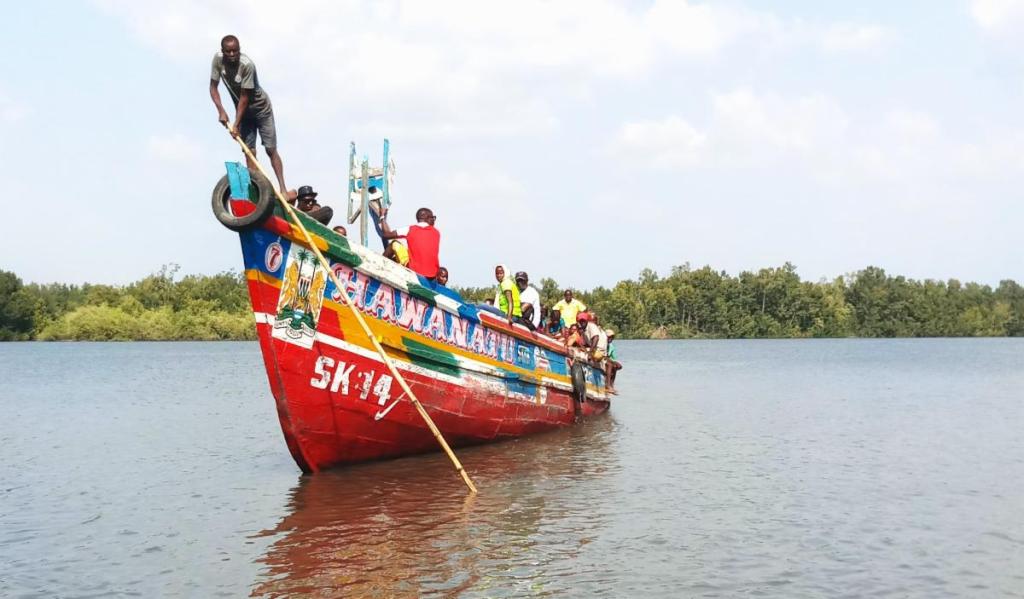
Rotifunk was abuzz with activity for an event this big. To bring people from across the chiefdom, Chief Caulker arranged boats carrying them from villages up and down the Bumpeh River.

Women set up in locations around town cooking to feed all the guests. Massive pots cooked rice and plassas for 40 or 50 people each.

Baffa shelters were built on a school sports field from bamboo cut and lashed together. Big palm branches laid on top shaded us from the hot tropical sun. Hundreds of chairs borrowed from schools were carried over to seat guests.

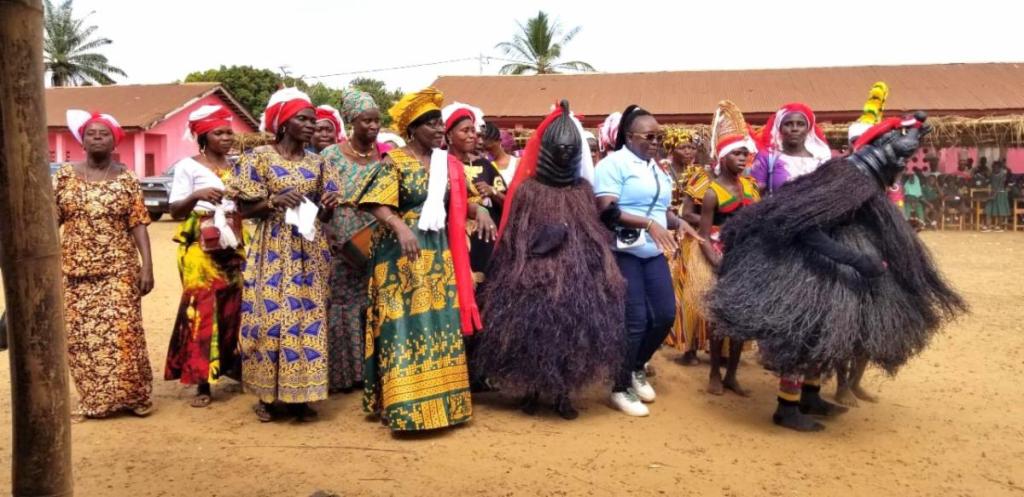
On the big day, the women’s society created a festive atmosphere. Their pulsating drumming and dancing with their Bundu devils, below, energized the crowd. 

Reflecting on our early days
As I sat waiting for the event to start, I was thinking of our early days. CCET-SL and SFSL in 2013 would be unrecognizable today. For four years CCET-SL was a group of volunteer teachers, offering their services after school and on weekends to start new programs.

The living room of Chief Caulker’s small guest house was CCET-SL’s office. I carried the first computers over in a suitcase, and only a couple teachers knew the basics of using them. Memos were written by hand and snapped to send as a photo. Project photos often served as reports. With limited phone service and few smart phones, most business was (and still is) done by Whatsapp calls and texts.

But we got started. SFSL has always followed the principle that we support goals and objectives our partner sets for itself. I still remember Chief Caulker’s words that we will start with “small, beautiful things.” Things we can start quickly that will have an impact on improving the lives of chiefdom people within months, not years.

Chief had already waited for ten years after Sierra Leone’s war for government or NGO funding that never came. With SFSL’s help, he could take charge and act on projects he knew were greatly needed. But SFSL was new. So, we picked things that were simple to start with little funding and achievable in the short term. Concrete results from these fledgling efforts encouraged more donations.

The first two projects SFSL funded in 2013 were $20 school fee scholarships for 120 girls and $600 for a tree nursery to grow fruit tree seedlings to start the Orchards for Education program. $350 to start adult education soon followed when local illiterate women said they want to learn to read and write. 

Today, there’s multiple programs and ten years of results to call out at our celebration.

CCET-SL director Rosaline Kaimbay, left, gave an impassioned review of how the organization developed over ten years.

She’s been there from the beginning and deserves the credit for creating innovative education and women’s programs and leading them to where they are today. Thank you, Rosaline!


CCET-SL program graduates who moved on to higher education filled a large part of the main seating area. Their blue T-shirts proudly declare they are CCET-SL alumni. Gathered together in one spot, below, they showed just how far CCET-SL programs have come over ten years.

Program beneficiaries illustrate results
CCET-SL wanted to showcase its results – educating and developing people. Beneficiaries of nine programs talked about the impact CCET-SL had on them and their peers.

Our first university scholarship graduate, Aminata Kamara, is an alumna of CCET-SL tutorial programs that prepared her for university. An outstanding student, she lost an opportunity to study in China. Now a B.S. degree graduate, she told young students they must seize the opportunities CCET-SL gives them from primary school to university to “learn book”.

She thanked us all for changing her life. We couldn’t be prouder of Aminata. Today, seven students follow her on their education journey with university scholarships.

Salamatu Fofanah, primary school headmistress applauded CCET-SL for coaching primary schools. This is where we build a strong education foundation, she said. Two years ago, Bumpeh Chiefdom primary schools were among the lowest scoring schools in Moyamba district. They’ve rapidly improved to be among the top schools with CCET-SL support. 

Salamatu is one of 13 local teachers completing teaching certificates with CCET-SL scholarships. “We are proud and honored to say we are trained and qualified teachers!”

Anne Marie Kaimbay didn’t get the college entrance exam scores for university admission on her first try. She repeated 12th grade in CCET-SL’s WASCCE preparation class and passed the exam the second time. She’s now a 2nd year civil engineering student at the University of Sierra Leone. 50 more students are in CCET-SL’s WASSCE preparation class.

Anne Marie proudly told the crowd, “Whatever a man can do, a woman can do better.”

Teacher James Kamara’s commitment to leading the 9th grade after-school tutorial program shows in its results.

He described the senior high entrance exam results steadily growing each year to 100% of all students passing in 2022.

“Bravo to CCET-SL,” he declared for offering this program free of charge to students. “Special thanks to our paramount chief for helping Bumpeh Chiefdom make the mark in education.”

Isatu Bendu has a special place in my heart. I met her eight years ago in CCET-SL’s adult education program. Now a primary school teacher, she told her story of being a primary school drop-out from an illiterate farming family. With CCET-SL’s help, she passed the entrance exam for a primary school teacher training program and today teaches class one.

She proudly said she’s gone from being “nobody” to a respected member of the community – a teacher.

Our first women’s program was for Ebola relief. Farming and markets had been shut down for months, slashing incomes.

Hawanatu Sesay explained how the Women’s Vegetable Growing Project helped her and her peers. With project seed for peanuts and vegetables, they harvested within 3 or 4 months, earning cash to feed their families. The project went on to help 400 women get back on their feet over three years.

Graduates of nursing and vocational training programs and primary school students gave their stories of how CCET-SL’s education programs moved them forward.

A Paramount Chief’s vision realized
I don’t think anyone that day was more proud than Paramount Chief Caulker. He realized his dream of educating Bumpeh Chiefdom people that today continues. He beamed as each speaker recounted their personal story of life-changing education made possible by CCET-SL. With education, they’re going on to develop the chiefdom.

Chief spoke of his own goal of bringing the Orchards for Education program to maturity. The orchards will soon begin generating income to fund education programs for years to come.

The self-sufficiency vision Chief laid out ten years ago was achieved with 60 acres of fruit orchards well on their way to fruiting stage. The first lime and coconut trees planted now tower over us.

We ended the day relaxing in the orchard we planted from seedlings grown in our own nursery.

Chief Caulker poured libation, left, to thank the ancestors for looking over the success of our work and asking them to continue to guide us and grant us all long life.


Chief could now lean back now among the orchard trees with friends and relish ten years of work well done. We enjoyed palm wine freshly tapped from orchard palm trees. This is what satisfaction looks like. Mary Avrakotos, Ann Arbor Rotary Club, above left, and Steve Papelian, SFSL Board Director and former Rotifunk Peace Corps Volunteer, right, join Chief Caulker.

You, the supporters of Sherbro Foundation, were called out and thanked many times that day. You weren’t there, but you were in our minds and part of the celebration.

Please stop now to take a virtual bow that you richly deserve. So many of you have continued to support Bumpeh Chiefdom people for years.

On behalf of Chief Caulker, CCET-SL and Bumpeh Chiefdom people, we send you our deepest thanks. We’re grateful that you’ve been part of our ten-year journey. You have truly changed the lives of many people.

Thank you!

— Arlene Golembiewski

Executive Director

Developing Sierra Leone Teachers as Agents for Change

Developing Sierra Leone Teachers as Agents for Change

Bumpeh Chiefdom now has six new college-educated teachers!

Thanks to Sherbro Foundation’s teacher training scholarships, six instructors in Rotifunk schools completed three-year Higher Teachers Certificates.

After passing the government certification exam, they’ll qualify to become government-approved teachers earning regular monthly salaries. And Rotifunk schools are starting to fill their ranks with trained and qualified teachers.

Four of the graduate teachers, above, smile after completing their certification exam. L to R: Salamatu Fofanah, Abul Aziz Bendu, Kadiatu Sesay and Idrissa Smart Kanu.

Long journey to qualified teacher

But that’s just part of it for these dedicated local teachers like Abdul Aziz Bendu, 30. After finishing high school in 2009, Aziz started teaching lower primary school and worked his way up as a Rotifunk secondary school teacher. Many teachers in rural areas have even less education and no training to properly teach the state curriculum.

Without funds for college, it took Aziz 14 years to reach this point where he proudly holds a secondary school teaching certificate. That’s not uncommon. He’s committed to keep teaching in Rotifunk.

“We were born and raised here,” he said. “If we can’t make this a better place, who would?”

Aziz has sacrificed to stay in this rural area. Without certification and government approval, teachers are considered “volunteer.”

Schools must come up with extra funds to pay them, maybe 400 or 500 Leones per month. That’s about $25 with Sierra Leone’s sky-rocketing inflation, and perhaps a third of a certified teacher salary.

And yet, he is supporting a younger brother and sister still in secondary school; they share two rooms with him in a Rotifunk colleague’s home.

Left, Aziz teaches geography and social studies.

Aziz was the seventh of nine children born to one of his father’s four wives. Most of his father’s children have no formal education. His father was a subsistence farmer who grew rice and peanuts in one of the most “deprived sections” of the chiefdom.

His mother died when he was young and he was raised by an older sister. “She didn’t go to school, but she had a passion for education,’’ he said.

He took that passion and ran with it, mastering English and dreaming about advancing his education. He now is one of the first from his home area with a college education.

Dedicated teachers, despite many challenges

With a three-year Sherbro Foundation scholarship, Aziz traveled an hour away for teacher training classes over school holidays. There aren’t textbooks and teacher trainees pay to download assignments at computer cafes.

His school principal pays volunteer teachers stipends with funds gathered from the government and parent donations. “But I can’t even buy a bag of rice for the month with it,” Aziz laments. In his spare time, he grew two acres of peanuts to earn extra money to live on and support his two siblings.

With Sierra Leone’s stunning 30% – 40% inflation rates, food and survival are his focus. Small pleasures are no longer affordable.

The home where Aziz stays is on Rotifunk’s new community solar grid system. But it’s expensive and most homeowners can only afford a few lightbulbs for evening light.

“Some people want to add TVs or freezers,’’ he said. Freezers are more reliable coolers than refrigerators. “But we only use it to charge phones.”

Service frequents shuts off in the rainy season.
He lets his young siblings occasionally play games on his phone for fun. For holidays, he tries to get them clothes. “But now, the focus is on food. I told them they have to use their old shoes for school this year,’’ he said.

The youths have never been to a city because travel is too expensive. Aziz doesn’t visit Freetown either. It costs $8 round trip to catch a minivan ride to the Capitol. The official price of gas just jumped from 20 to 30 Leones per liter – or $6 a gallon in US dollars.

Local teachers work as change agents

Still, Aziz said, “I’m proud to stay in Rotifunk, to be a ‘village boy’. I have a passion for teaching and love for my chiefdom. In the future, I want my name mentioned as one of those who worked hard to develop the chiefdom.”

“We have so many challenges,” he said. “Most schools don’t have the required infrastructure. We need qualified teachers and learning materials. We need computers and IT education.”

But Bumpeh Chiefdom is luckier than most. “We are fortunate to have a paramount chief committed to education,” he said.

It was Paramount Chief Charles Caulker’s vision that created Rotifunk’s nonprofit Center for Community Empowerment and Transformation. CCET-SL leads the innovative programs Sherbro Foundation helps fund, including teacher training scholarships.


“We are making progress. And with support, we can change,’’ Aziz said.

They are changing. Rotifunk schools achieved goals that were just a dream a few years ago. Nearly all students in CCET-SL tutorial programs now pass to the next level, from primary school to junior high to senior high. Many graduates now qualify for higher education. 

Teachers like Aziz are change agents in rural communities. Sustainable progress will continue when local teachers are developed from within the chiefdom. They plan to stay and help children from their families and neighbors go further in education than ever before.

Sherbro Foundation just funded CCET-SL to award thirteen more teachers with scholarships for three-year primary and secondary school teacher certificate courses.

Your support strengthens the leading edge of education and progress in Bumpeh Chiefdom.

We believe stronger teachers make stronger students – and stronger communities. We’re thankful that you do, too. Support more teachers with training scholarships here.

Chris Golembiewski
— Sherbro Foundation VP

Opportunity is Knocking – You can Answer the Door

Bumpeh Chiefdom students are eager for opportunities to advance their educations. You’re the key to opening the door to secondary school and higher education – the path to building better lives.  

We’re excited to now offer programs extending from primary school through university degrees!  

You can support chiefdom students: Join our Annual Education Campaign HERE. 

tutorial Tutorial Programs

9th and 12th grade students get extra classes in preparation for their national exams, the gateway to senior high and higher education admission. 

$60 gives a student 10 months of classes. 

Learn more here.

IMG_4342 (2) Primary School Tutorials

Our newest offering is after-school classes for grades five and six. Kids who do well in primary school are set up for success in secondary school and beyond.

At $18 each, we’ll cover 400 students!


Learn more here.

sierra-leone-off-grid (3)Vocational Scholarships

Ten students are entering the second year of 2-year vocational diploma courses. They learn practical job skills: construction, electrical installation, and IT.

$450 pays tuition, practicals, travel and the certification exam fee.     Learn more here.

img-20201118-wa0010-4Teacher Training Scholarships

Quality education starts with trained teachers. Six teachers are continuing the second in a 3-year Higher Teacher Certificate program. They keep teaching while attending their own classes during school holidays.

$700 covers a 1-year scholarship, including $350 tuition.   Learn more here.

Safiatu Bendu (7)Nursing & University Scholarships

We’re happy to report both of these scholarship programs are funded, thanks to our earlier appeal for the Community Health Nurses and another generous donor.

We appreciate the support!

Our successful tutorial programs are entering their fifth year. Because of you, students are also continuing into higher education – “once-in-a-lifetime” opportunities to achieve actual careers.

You are the key!

Please send your online gifts here.  Contact Us for sending checks.

Thank you for opening the door!

Light Up Izzy’s Life. She’ll Bring Light to Others.

Youth unemployment in Sierra Leone is staggering.

70% of those under the age of 35 are unemployed or underemployed. Erratic work in the informal economy, like market trading and day labor, is hard to even call employment. But that’s the best many can do. They have no skills.

Izzy is back in school now to avoid this fate. She’s in a vocational course teaching her electrical wiring. She chose that because it will lead to a wage-paying job with a future She’ll be poised on the leading edge of Sierra Leone’s solar revolution.

It’s back-to-school time. And time for our annual educational fundraising appeal – with another new twist this year.

Vocational training is one of four types of higher-education scholarships we’re sponsoring for chiefdom students. The successful after-school tutoring program will continue, as well.

Izzy is one of 12 Bumpeh Chiefdom students enrolled in a new vocational training program with Sherbro Foundation scholarships.

She was an 11th grade student aimlessly drifting in a conventional school that didn’t offer much to a student like her. Izzy (short for Ismatu) lost first one parent, then the other. She lives with her grandmother, helping in her catering business, which in rural Rotifunk, is down more than up.

Izzy is a quiet girl. In a month of being around her, I never got more than a “good morning, ma.” She’s always silent, her grandmother said. Just quietly doing tasks she’s asked to do. Fetch water, wash the pots, peel potatoes, pluck feathers off a chicken. You can see she’s had a painful past. Spending her time with older women who didn’t have their own chance for education, she never formed any goals.

The Sierra Leone government recognizes young people like Izzy need new opportunities. Most will never go to college. They need to get job skills. The government decentralized its Government Technical Institute, putting satellite programs in the district capitals where it’s practical for impoverished students to study. They made it affordable, with low tuition and avoid the capital Freetown’s high cost of living.

When Izzy’s chance for a new kind of education came up, she went for it. Electrical wiring is unusual for any girl to elect, but especially in Sierra Leone.

I asked her, why choose this, and Izzy softly said, “So I can do betta.” Meaning, so I can get a job and do better than the women around me.

Now she’s learning a skill that will set her up in a trade with opportunities, as Sierra Leone’s construction industry grows and electrical power takes off.

Until now, 90% of rural Sierra Leone has been in the dark.

Izzy didn’t choose this out of the blue. Last year, she was helping her grandmother cook for a group of Germans who came to install a solar system at Rotifunk’s mission hospital. They observed women have almost no options for jobs and are always working as “beasts of burden.” They encouraged Izzy, saying she could be doing solar installations and other electrical work. 

Not long ago, a group of illiterate Sierra Leone women went to India to be trained as part of a “barefoot solar” program, which successfully trains illiterate Indian women to do solar system installations. They show even uneducated women can learn what they need to know to run wiring and install solar panels. Women are disciplined and pay attention to detail. 

When Izzy was selected for one of the first 12 Bumpeh Chiefdom positions at the new technical institute in the district capital Moyamba, she saw electrical wiring was a course option. She didn’t hesitate.

Four young women and eight young men were accepted for Sherbro Foundation funded scholarships. Three women elected an IT course. The men are studying building and constuction, auto mechanics and IT.

The only female in her electrical course, Izzy is getting encouragement all around, including from the guys in the class. She’ll be finishing her first year soon, leading to a one-year certificate. If she does well, she can continue into a second year and get a full diploma.

Izzy’s timing is good. Small scale solar systems are spreading across Sierra Leone.

Easy Solar is one company bringing small solar units to rural African households. It installs solar panels with as little as 25 to 50 watts capacity, enough to run a couple LED lights and charge phones, plug in a radio or another small device.
Compared to always buying expensive alkaline batteries, this kind of small solar service is affordable for many. The smallest package is $70. You can buy your set-up outright, or pay it off monthly. Later, you can add on.

The exciting news is a solar mini-grid is being installed for the town of Rotifunk. It’s a public-private venture, that will be run like a small utility company. Households who want the service will get an electrical meter installed for pay-as-you-go service. Poles are going up around Rotifunk to carry electrical wires throughout town. The rest goes in soon, when the peak of the rainy season passes.

I smiled when I heard one excited resident say, with electricity, “Rotifunk will be New York City of the south [of Sierra Leone].”

The above solar mini-grid is an example of many being installed in rural Sierra Leone.

Imagine the anticipation of having even small-scale power and lights around Rotifunk for the very first time. It will no doubt keep growing, as power expands around the country. 

Izzy soon will be ready to take advantage with her new electrical skills. She can “do betta” and have a future in front of her. 

When asked to sponsor vocational training scholarships, Sherbro Foundation immediately said, absolutely.

It takes just $325 for a total scholarship package for the year to help one vocational student get job skills! This includes tuition and practicals fee, room rental and transportation for nine months.

The institute is impressed with Bumpeh Chiefdom’s response in sending students. It’s the only chiefdom in the district to fully sponsor 12 impoverished students and give them this opportunity.

You can help Izzy and 11 others like her get real job skills. Contribute towards a $325 annual scholarship here and these young people will soon join the job market – and avoid lives of poverty.

You’ll be making a great investment that feels great, too. Thank you!

  — Arlene Golembiewski, Executive Director

Our Sierra Leone partner CCET-SL has more education programs helping Bumpeh Chiefdom students move to self-reliant lives. Stay tuned to hear what’s next for the successful after-school tutoring program and two other scholarships for community health nurses and our first university student!

Celebrating a Life of Service

For a Sierra Leone community, a resident trained physician is a privilege. To have one in rural Bumpeh Chiefdom in 1950 was a blessing. A huge blessing. For women and their babies, it often meant life over death.

Winifred examining patient, Manjama, Sierra LeoneWe’re celebrating the life of Dr. Winifred Smith Bradford (October 20, 1922 – July 19, 2020), a remarkable woman who dedicated herself to serving women and children around the world.

Sherbro Foundation dedicates this year’s community health nursing scholarships to Dr. Bradford for her long medical career, beginning in an outpost clinic in Rotifunk, Bumpeh Chiefdom in 1950. 

Winifred Smith was born in Enid, Oklahoma just two years after women got the vote in the US. Imagine the vision and determination of a young woman from small town middle America who set her goal to become a doctor. In the latter days of the Great Depression and during WWII, she managed to put herself through college and medical school.

Dr. Smith was one of first women to graduate from York College of Medicine. With the goal of being a medical missionary to China, she continued on to Yale to study Chinese. But the Communist Chinese regime soon made clear they no longer wanted American missionaries.

Winifred and newborn, Red Bird Mission, 1946 or 47 (2)Dr. Smith’s time at Yale wasn’t for naught. There she met the love of her life and partner in service, Lester Bradford, a forestry major. Her goal of being a missionary doctor was undeterred and just changed geography to Africa – Sierra Leone, West Africa. The United Brethren in Christ (UBC), an arm of the Methodist Church, first sent her to prepare at the London School of Tropical Medicine.

Dr. Smith, left, delivering a baby before departing for the London School of Tropical Medicine

Lester had to be satisfied with letters until, her training completed, Dr. Smith began practicing in the UBC clinic in Rotifunk. He joined her and they were married in the historic Martyrs Memorial Church in Rotifunk.

That was the first of the Bradfords’ many joint assignments in developing countries around the world – she practicing medicine and he leading agriculture development projects.

During their 16 years of service in Sierra Leone, Dr. Bradford delivered thousands of babies and treated thousands of children. A working mom herself, she and Lester had five children of their own.

On their return to the US, Dr. Bradford did a second medical residency and continued in the baby business, now in Mt. Vernon, Washington. She helped women who wanted the option of home births and founded the Mount Vernon Birth Center.  Her compassionate approach to birthing revolutionized the whole birth industry in Skagit County.

Retirement was anything but retiring for Dr. Bradford and her husband. He took overseas assignments carrying out projects in South Sudan and Pakistan, and she continued her medical work there. Above left, she started a birthing center in Juba, Sudan and counseled families in Pakistan, above right. 

Today, the need for health care professionals in rural Bumpeh Chiefdom and Sierra Leone remains as great as ever. Devastated by its 11-year rebel war, Sierra Leone was struggling to rebuild the country and its health care services when in 2014 it was hit by Ebola.

It only had 136 physicians for a population of 6,000,000 at the start of the outbreak, and those mostly in cities. By the end, Sierra Leone lost 11 physicians, among its most senior, or 8% of its medical ranks. Many more of the 1000 nurses/midwives also succumbed to Ebola.

20190131_112500 (3)

Sierra Leone remains one of the most dangerous places in the world for a woman to give birth. And one in ten young children never see their fifth birthday.

In 2018, Sherbro Foundation started community health nursing scholarships to help build health care capacity in Bumpeh Chiefdom. Three young chiefdom women are now preparing to serve in small community health units that since Dr. Bradford’s time provide first level primary health care.

CHN AdamaBumpeh Chiefdom’s government-run health units are staffed by a community health nurse, usually operating alone, who diagnoses and treats common infectious disease like malaria and diarrhea, provides pre/postnatal care for pregnant women and serves as midwife to deliver babies. They vaccinate babies and monitor for malnutrition. They can provide family planning services, basic first aid like stitching wounds and screen for chronic disease for referral, like hypertension and diabetes.

Nine government-run health units serve Bumpeh Chiefdom’s 208 villages and 40,000 people. For most villagers, this is their only source of health care.

This year, we dedicate the community health nursing scholarships to Dr. Bradford and her legacy of serving Sierra Leone people – especially its mothers and children.

Three young women, Fatmata, Umu and Safiatu, above, will soon enter their second year of a three-year nursing program. Each $1100 scholarship covers tuition, practicals (when they’re placed in a Freetown hospital for hands-on experience), supplies, food and transportation for the year.

Join us with your gift here and return Fatmata, Umu and Safiatu to nursing school. You’ll keep them on a path to soon be caring for Bumpeh Chiefdom’s mothers and children – and all its people.  Thank you!  


Where There’s Community Will, There’s a Way – Fighting Covid in Sierra Leone

It’s July and we’re four months into the Covid pandemic. Sierra Leone and Bumpeh Chiefdom are living the same massive human health experiment we all find ourselves in.

But they’ve fared better than us for the same point in time after the pandemic reached each of our borders. Confirmed cases in Sierra Leone (per 100,000 population) are 50-fold fewer than the US to date, and mostly contained in the capital, Freetown and the surrounding area.

Thanks to your support, Bumpeh Chiefdom used Sherbro Foundation funding to take early and aggressive action. As of July 9, it can still report no confirmed Covid cases.

Following its Ebola experience, most of Sierra Leone’s 1584 confirmed Covid cases to date transferred to government isolation centers for the course of their infection – where they don’t infect more people. Contact tracing led to over 9000 people quarantined, with about 8000 released after 14 days with no infection.

But by the end of May, Covid moved around the country to all but one district beyond the Freetown area. Still, a ban on inter-district travel without a limited essential travel pass managed to keep over 60% of confirmed cases to the Freetown area.

20190131_105028Rural areas like Bumpeh Chiefdom have reported few, if any, cases. Life largely takes place outside where breeze offers natural dilution.

Population density is lower and 60% are young, under twenty-five years of age.

Of course, there’s little access to testing to verify how widely the virus actually spread. We now know youth is no protection, and young people are probably active asymptomatic spreaders of the virus.

Taking early action
Bumpeh Chiefdom’s Paramount Chief Charles Caulker’s didn’t wait to take action. He formed a chiefdom Covid committee in March and reinstated procedures successfully used to quell Ebola, while adding others.

IMG-20200620-WA0018Chiefdom meetings now take place with distancing and masks.
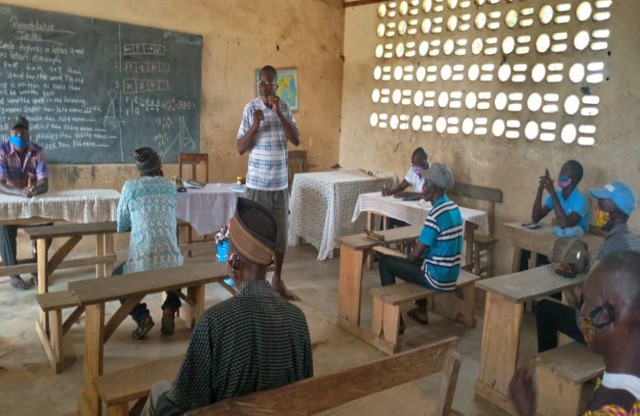
Checkpoints started monitoring nonresidents trying to enter the chiefdom in midMarch, before even a single case was confirmed in the country. This kept most people from high infection areas out. Local people also wrongly feared being quarantined if they traveled away from home, discouraging movement within the chiefdom.

Chief Caulker passed chiefdom bylaws in May, requiring social distancing and use of face masks in public – before the government took action. But just setting standards doesn’t mean people will follow them, or even hear about them or understand them.

Picture4

Safety teams for community-led prevention
In early June, 13 safety teams comprised of local leaders from across the chiefdom were trained on their Covid bylaws. Local health professionals and chiefdom Covid committee members went to every part the chiefdom, training 350 local leaders: section and village chiefs, heads of men’s and women’s societies, imams, youth leaders, checkpoint workers and others.

Picture5Trainers emphasized practical demonstrations, with participants practicing proper handwashing and mask use.

The safety teams were charged with teaching fellow residents how the Covid virus is transmitted and how social distancing, wearing masks and hand washing protects them.

Teams continue to monitor and enforce Covid procedures.

Taking training to the people in remote villages seldom happens. Rumors and myths about this unknown disease called Covid proliferated without TV, radio, newspapers or internet. Villagers didn’t know how the virus transfers or how to protect themselves.

Using locally known trainers speaking their own language invoked a level of trust. Health care trainers could convey much more understanding that in turn encourages more voluntary compliance.

Trainers explained people have the power to stop the virus through their own behavior. It’s in their hands.

Small group community training made people believers for an epidemic that has largely only been in cities. “Be an example now to your community,” trainers admonished.

Covid Safety team trg attendee VID-20200603_Moment (2)        Covid Safety team trg attendee woman VID-20200603_Moment(6)

“We learned so much for fighting against Covid-19. Especially about the interior (rural areas),” a youth leader, above left, said. “The interior is a problem with commitment of people. Not all people believe the sickness is in existence. Thank god brought you to communicate and explain how Covid-19 can come right into the interior.”

Asked what she learned, the woman, above right, said, “We learned about social distance and to not encourage ‘strangers’ (nonresidents who could be infected). And to wash our hands with soap and water to protect our families.”

Picture10 (3)Over 9000 Sherbro Foundation funded masks were distributed so residents can comply with chiefdom (and now government) requirements.

Picture3 (3)195 hand washing stations and soap were also given to village leaders for their public places. With no running water and few wells, this encourages handwashing where people convene.

Chief Caulker extends his “profound thanks” to all Sherbro Foundation donors for funding the program.

20200419_140951 (2)“I am very much delighted for the completion of the training of our section safety teams. I followed the process with keen interest and I am tremendously satisfied with the accomplishments. My section chiefs and their people constantly called me and expressed appreciation for the exercise while it was on.”

“They confessed that the training was the best ever conducted in the Chiefdom and it came out clearly … that participation was enormous and constructive. More importantly, they admitted acquiring the knowledge, skills, and tools to take on Covid ‘one on one’ for self-protection.”

Picture15

Community-led training brings value, as well as results. 350 local leaders comprising thirteen safety teams for every corner of the chiefdom were trained for less than $600! Trainers gave their time. Costs were mainly for participant and trainer transportation.

Sherbro Foundation encourages the chiefdom to build on the momentum of the safety teams with follow-up sessions. Community-led prevention is a powerful concept not only for Covid, but for prevalent and debilitating disease like malaria. Malaria weakens the immune system making people more susceptible to Covid, especially pregnant women and small children. Future sessions can reinforce Covid practices, and also empower villages to eliminate standing water and sleep under bed nets to avoid malaria.

Reopening the country
Like everywhere, Sierra Leone could only stay shut down so long. The majority of people live day by day, earning a dollar or two today so their families eat tomorrow. The pressure to resume local trading and international traffic is overwhelming. Sierra Leone is “reopening” its economy and borders this month. Increasingly, it gets pulled into the direction all West African countries are taking.

The inter-district travel ban was removed June 24, taking away Bumpeh Chiefdom’s main line of Covid defense. Flights and land borders will be opened shortly. Large outdoor markets and gatherings remain banned, including religious services, much to the objection of mosques and churches.

The back to school question
Sierra Leone now joins countries around the world in the massive experiment of sending school children back to school before the pandemic is stamped out.

School reconvened July 1 for three grades due to now take their national exams needed to move to the next level: 6th graders to junior high; 9th graders to senior high; and 12th graders seeking entry to higher education or to meet employer requirements for school completion exam scores.

facebook_1594170883672_6686437314070105164Our partner CCET-SL resumed its special all-day 12th grade school in its education center July 1, preparing Rotifunk’s graduating students for their national exam. Masks and distancing required.

Students will get a few weeks of classes before exams take place over July and August. The West African standard exams must be administered using the West African Examinations Council procedures and schedule – or risk the students losing a whole year until exams are offered again next year.

We’re awaiting word on how and when Sierra Leone schools will fully reopen in the fall.

Stay tuned for the next newsletter on Sherbro Foundation’s direction for the coming school year. You’ll see new things as our partner CCET-SL strives to keep improving the quality of education in the chiefdom. We’ll need your support more than ever.

— Arlene Golembiewski, Executive Director

How Do You Keep Coronavirus Out of Rural Sierra Leone

How do you keep the Coronavirus out? If you’re a country, you shut down flights and land borders and isolate yourself. If you’re a rural Sierra Leone chiefdom, you set up border checkpoints to keep all nonresidents out, too, and staff them 24/7 with your own local volunteers.

Bumpeh Chiefdom learned from the Ebola epidemic that people will try to cross their remote chiefdom borders undetected, bringing the Ebola virus with them. They are fleeing infected cities for a rural place they think safer. It’s also a place for people from Guinea to try to illegally enter the country “through a back door” – bypassing  Freetown and Waterloo by boat and making their way up the Bumpeh River from the ocean.

Once the virus gains entry, we know how it spirals out of control. Keeping it out in the first place is the name of the game. Checkpoints saved Bumpeh Chiefdom during the Ebola epidemic. It’s working now again – despite Bumpeh’s vulnerable position as a coastal chiefdom near Freetown and its suburbs.

The chiefdom was ready this time when Covid-19 was first confirmed in the country. They know the places around their borders to patrol and immediately set up checkpoints, like the one above at a river “bus stop.” Boats act as buses, carrying residents and goods up and down the Bumpeh River to Rotifunk.

How can you help Bumpeh Chiefdom keep the virus out? Join us in supplying all checkpoints with locally made face masks and handwashing stations and soap.

> $20 pays for a local tailor to make 50 cloth face masks for checkpoint volunteers.

> $25 buys three covered handwashing stations with spigots, like the one above, where all residents passing through a checkpoint are required to first wash their hands.

Sherbro Foundation is paying for small daily stipends for checkpoint volunteers to buy food and water from villagers during their 12 hour shifts away from home.
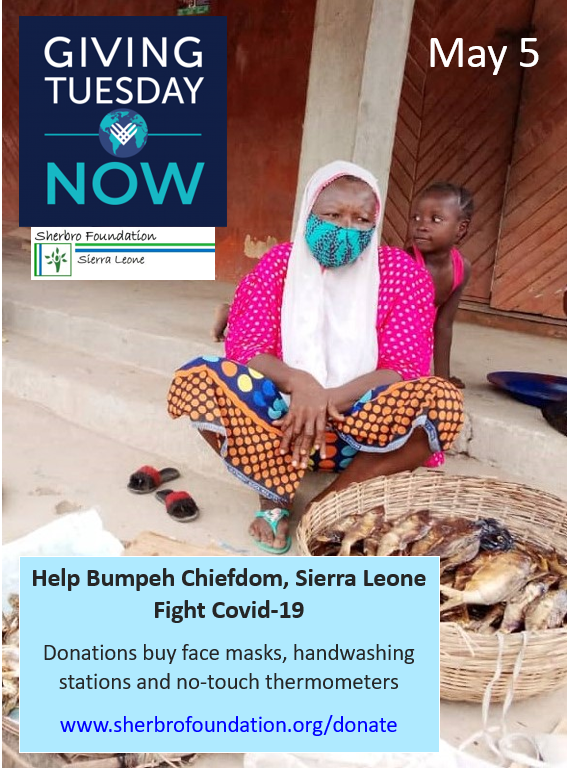
We also bought solar lights for checkpoint night shifts, sitting in these remote places in the dark.

We talk about unsung heroes in this crisis who do the jobs that protect the rest of us. In Bumpeh Chiefdom, it’s the men who sit all night keeping watch at these distant checkpoints.

By sitting in the dark all night, they’re keeping the virus out of the chiefdom – and saving lives.

In this global epidemic, none of us are safe for long unless we’re all safe. We’re all in this together.

Giving Tuesday is now – May 5th. Help equip these guys with face masks and handwashing stations so they can protect everyone else. www.sherbrofoundation.org/donate

Thank you so much!

— Arlene Golembiewski, Executive Director

Help Bumpeh Chiefdom fight Covid19 on May 5 – Giving Tuesday 2020

We can’t wait for Giving Tuesday in November to support charitable organizations as part of our Thanksgiving festivities.

If ever we needed a day to give, it’s now, while we’re all fighting Covid-19. The 2020 Giving Tuesday is moved up to May 5. 

Screenshot (131)Bumpeh Chiefdom, Sierra Leone, took immediate action in April against Covid-19 before any confirmed case reached them — and has kept the virus out so far. But it’s quickly spreading all around them.
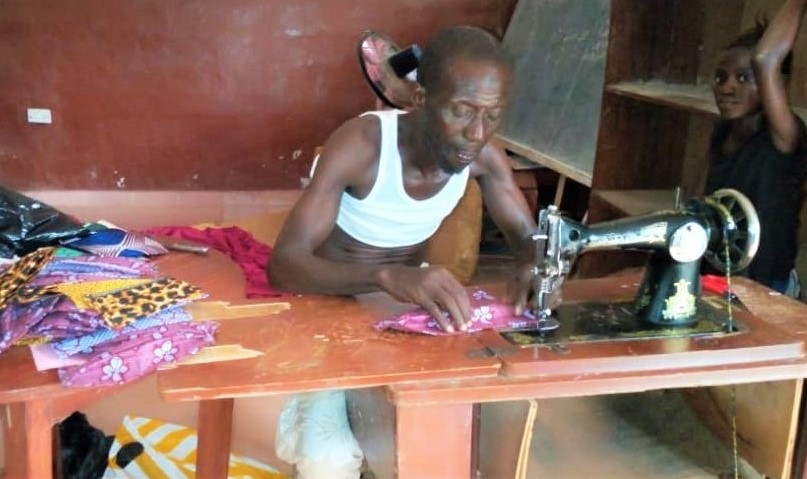
Here’s how you can help Bumpeh Chiefdom in their fight to keep Covid-19 out:

>>  $20 will pay to locally make 50 face masks for chiefdom residents, especially market women. These women, like the one at left, are one of the most at-risk groups — like grocery workers here.

>> $25 buys 3 hand-washing stations for border checkpoints and public places. With no running water, water must be hand-carried to covered buckets with spigots for hand-washing.

>> $50 buys a no-touch infrared thermometer to take temperatures, important in a place with no Covid-19 testing ability.

IMG-20200422-WA0009 (4)

This month the chiefdom will require face masks to be worn in public, and to observe 6-foot social distancing.

They want to supply 10,000 masks to make it easy for residents to comply. They have local tailors busy making them.

Bumpeh Chiefdom must keep the Covid-19 virus out. They don’t have a health care facility that can treat this disease. There’s only one ventilator for the whole country!

Chiefdom leaders understand what’s needed to stop transmission of the virus. They need our help.

We’ve learned in this global pandemic, no one is safe until everyone is safe. The virus must be stamped out around the world.

On May 5th — Giving Tuesday 2020 — support Bumpeh Chiefdom’s Covid-19 fight if you can. It’s a day for global unity.  www.sherbrofoundation.org/donate

We deeply appreciate your help. Thank you!

We Knew It Couldn’t Last – Covid-19 enters Sierra Leone

Sierra Leone had its first confirmed Covid-19 case on March 31.

With falling virus dominoes encircling the world, it was only a matter of time. Sierra Leone was one of the last countries the virus invaded.

Sierra Leone’s government used its hard-won experience with the deadly Ebola virus to quickly react. But its directives are very difficult to apply in rural areas and no help has been forthcoming to Bumpeh Chiefdom. Once again, the Chiefdom is on its own.

We’re proud to report that Bumpeh is the first, and perhaps the only, chiefdom to implement a rural Covid-19 control program, led by Paramount Chief Charles Caulker. And Sherbro Foundation is proud to support it, with a $6,000 grant sent in March.

See the source image We know Covid-19 is a stealth virus and hard to control. But Bumpeh Chiefdom has a head start, learning from its Ebola ordeal. Covid-19 starts as a traveler’s disease, first carried in by air travelers from infected countries. Sierra Leone has only limited flights and directly quarantined all arriving air passengers in Freetown throughout March; starting in February, for passengers originating in China.

First cases The first confirmed Covid-19 case was a traveler who briefly went to France and returned to Sierra Leone. At the end of his 14-day quarantine period, he started feeling Covid symptoms and tested positive.

By April 16, Sierra Leone had 15 confirmed Covid-19 cases. Seven of the first ten cases were quarantined air travelers. Two more cases appear to have been in quarantine after coming through Guinea’s land border. Border countries Guinea and Liberia have growing number of cases, especially Guinea. This is the biggest risk with Sierra Leone now closed to commercial air travel.

Community spread My own first few weeks of Covid-19 experience in Ohio were flooded with Ebola flashbacks. Now, watching Sierra Leone felt like a disaster movie unfolding where I know the plot. Ebola was first carried across an isolated land border with Guinea. As sick people sought treatment, health care workers were infected.

See the source imageSierra Leone’s second confirmed Covid-19 case was a hospital doctor who recognized early symptoms and immediately went for testing. With her positive result, the doctor’s contacts were asked to quarantine, including two university staffers who later tested positive. A hospital nurse in contact with the doctor also tested positive.

To its credit, the Sierra Leone government was ready after its Ebola experience to trace and quarantine contacts of identified or suspect Covid-19 cases in cities and district headquarters. Some 1,550 people have been quarantined to date, with 1034 discharged.

Emergency operation centers are in place for district surveillance and response. A lab technician in Kenema in the east, said to have recently worked in another Freetown hospital, just tested positive. Government teams are reported to have created a “ring” around his contacts to isolate and monitor them for a 14-day period.

No photo description available. But the April 17 report shows nearly a doubling of cases from 15 to 26. Most new cases are reported linked to the second case; they worked at the same hospital. But the doctor’s husband rightfully said it’s time to concentrate on community transmission. She appears to have been infected by community transfer. Her family, housekeepers and close hospital work associates have tested negative, while hospital nurses with little to no contact with her tested positive this week. They could have been community-exposed as the doctor was. As was the lab technician.

Those of us living the epidemic know what comes next. We can assume there are many more asymptomatic and untested cases now in the community, starting in Freetown and beginning to move around the country. There’s no defined plan to respond in rural areas.

Sierra Leone has more test kits than most US states started with. But logistically, it will be hard to test where and when needed. A lot harder for 60% of the population, in remote rural areas with little to no health care.

Community control The Sierra Leone government instated an initial three-day country-wide lockdown April 4-6. But too many people both in cities and villages must go out daily for food and to collect water.

The government’s control program now limits travel to within each of its 16 districts, set a 9 pm to 6 am curfew, limits public-sector business hours (the largest employer) and stresses staying at home wherever possible. Hand washing and social distancing are emphasized. They continue contact tracing and quarantines, but that will soon outstrip capacity to handle new cases.

This all sounds like reasonable guidance for urban areas and for literate people bombarded with Covid-19 information daily from TV, radio and internet. Now imagine the remote villages of Bumpeh Chiefdom with no communication other than a few people with only simple mobile phones for calls and bad connections.

Imagine people who line up daily to carry every bucket of water from a distance to wash. Imagine people who have no cash to stock their houses with food and supplies to stay at home for a week or more. People go to crowded local markets to sell goods to make enough money to buy the food needed for the next day or two.

These are people who need to take precautions to socially distance. To date, they’ve had no confirmed Covid-19 cases in their area. They’re disbelieving, never seeing or hearing of the illness. It’s all unreal to them. It was to us. Ebola attacked Bumpeh Chiefdom quickly, and it was deadly and ugly. Covid-19 has been a limited far-away city disease and only for the last 20 days.

In the back door With land borders to Guinea closed, people are finding ways to enter Sierra Leone through a back door – Bumpeh Chiefdom. Fishing boats coming from Guinea bypass the Freetown peninsula, stopping at the mouth of the Bumpeh River, the first settlements along a swampy coastline where passengers can find a way to move inland.

IMG_1871 (2)

Three weeks ago, a boat coming from Guinea stopped at Samu village to let out passengers. One didn’t make it off. A man died on the boat of unknown causes. A local chief quickly came to keep passengers from leaving. With Paramount Chief Caulker’s direction, they were ordered to quarantine. A few slipped away and likely hopped a motorcycle taxi. It took two days before police and the community health officer arrived at the remote village to investigate. By then, the body was buried after being carried to the next chiefdom (by motorcycle taxi). Chiefs there were alerted to quarantine those involved in the burial. After three weeks, none of those quarantined are showing any symptoms.

Bumpeh Chiefdom Covid-19 program By then, Paramount Chief Caulker had already started the chiefdom Covid-19 control program, as described in our last newsletter. With their Ebola experience still fresh, Chief quickly instated checkpoints at strategic chiefdom entry points with mandatory handwashing, and is now expanding those. This is the most effective means of monitoring for outsiders bringing in the virus.

IMG-20200322-WA0013Social distancing is initially hard to get used to. The weekly women’s small grant meeting, above, spread out, but not quite six feet. Chief not only stopped gatherings, but leads by example, applying the six-foot rule in his own interactions. Our partner CCET-SL leaders do the same. Hand-washing stations are set up in public places, and people urged to wash hands at home.

IMG-20200415-WA0000 (2)

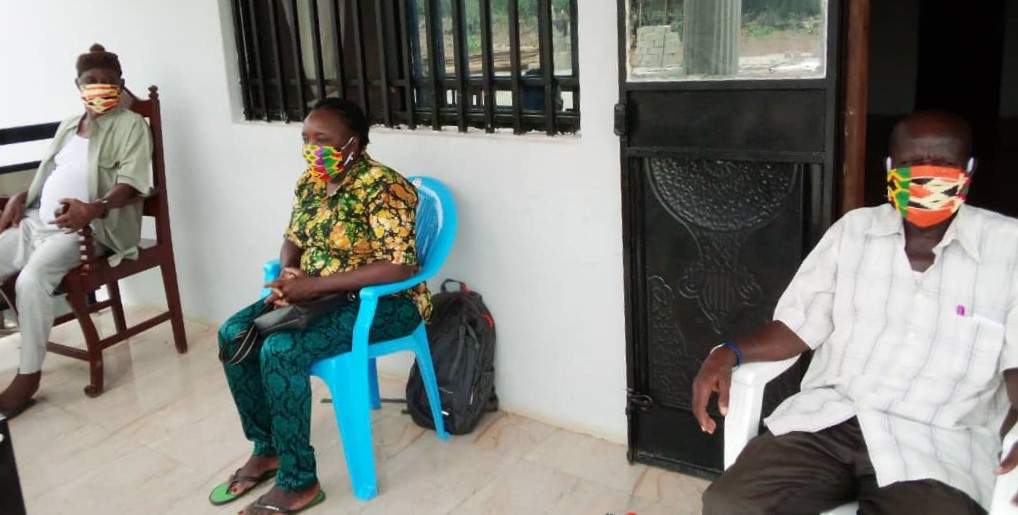
They’ve adjusted past Ebola practices for this virus that’s less lethal, but more contagious. Chief and CCET-SL leaders, above, are introducing use of face masks when in public, starting with themselves. A project to make cloth face masks hopefully will start soon. Market women, who are “essential workers” in providing a supply of food, are priorities for masks.

The Samu village experience – and Ebola — showed small remote villages need close monitoring. This can only be done by the chiefdom’s own grassroots authorities. As during Ebola, Chief Caulker is organizing village chiefs to monitor their own villages, regularly checking door-to-door for strangers and for residents who may be sick. They can isolate the sick and ask for help to send people for health care, as needed.

Once again, it will come down to the paramount chief orchestrating his own chiefdom authorities down to small villages to control this epidemic. This chief has immediately gone into action.

Developing countries with limited health care and Covid-19 testing have to rely on local human surveillance. Until simple and cheap Covid-19 test kits are available in quantity for rural areas without electricity, this will be the primary way to contain the virus.

Sherbro Foundation is watching how the epidemic unfolds in Sierra Leone and is prepared to help again as needed.

Today’s good news: Six of the first confirmed Covid-19 cases, including the index case who was hospitalized and the doctor, have been released.

More frequent Bumpeh Chiefdom Covid-19 updates will be on our Facebook page: click here.

  • Arlene Golembiewski, Executive Director

COVID-19: What About Sierra Leone? Sherbro Foundation’s Response

Does lightning strike twice in the same spot? Does Sierra Leone have the ridiculous luck of seeing two major global epidemics of life-threatening viruses within six years?

Sierra Leone is one of ten or so countries with the highest — or lowest -– rankings demographers measure. Mortality, life expectancy, literacy. Sierra Leone is again the country with an extreme. But this time that’s good. Very good.

As I write this (March 27), Sierra Leone doesn’t have a single confirmed case of COVID-19.

It’s one 10+ African countries (perhaps 20 globally) still with no confirmed COVID-19. Sierra Leone does have testing capability, in the capital and a couple cities where cases are most likely to first appear.

Sherbro Foundation just wired money this week for our Bumpeh Chiefdom friends’ COVID-19 prevention program. But first, here’s what’s happened leading up to this.

Quick response
I never thought I’d say Sierra Leone’s deadly Ebola experience was good for something. But Sierra Leone kicked into gear and, week by week, instituted early COVID-19 protective measures as they saw the rest of the world reel around them. The government and the people remember well the practical steps of managing Ebola and have responded quickly for the COVID-19 pandemic.

Air travel is the source of COVID-19 transmission for now, and Sierra Leone only has one international airport. Passengers on flights arriving from countries with 50 or more reported cases were put into automatic 14-day quarantine. This started in February 3 with passengers originating from China. Only a few airlines normally fly to Sierra Leone. Some European airlines started canceling flights in March.

w1240-p16x9-Pres. Bio at Covid-19 Press conference (1)

As of March 23, the Sierra Leone government banned any flight from entering the country, and President Bio, above, declared a national state of emergency. 500 previous air travelers were still in quarantine.

During Ebola, the rest of the world isolated Sierra Leone and tried to keep its travelers out. Now the tables have turned. Sierra Leone is keeping the world out of its country.

With cases starting to grow in neighboring Liberia and Guinea, Sierra Leone’s land borders are closed as of March 27. Essential commodities can still pass through with strict supervision.

Ebola 2.0
So far, so good. Sierra Leone has a basic pandemic preparedness plan. Its health officials say strategies being used by coronavirus-affected countries emanated from their Ebola outbreak. And they have to be prepared for return of Ebola or Lassa Fever anytime.

The government has been working with WHO and other supporters to improve their health care capability since the Ebola epidemic, including developing three laboratories with virus testing capability. They have 370 COVID-19 test kits, and it’s stated they could get 20,000 more within 24 hours.

Sierra Leone is focusing on standard strategies to clamp down on early stages of epidemics: case management and preventive action.

bio-lung1-400x240

President Bio washes his hands, left, before entering Lungi International airport terminal during a recent inspection visit. In a country with little running water, even in cities, buckets fitted with spigots introduced for handwashing during Ebola have now returned.

“We have one of the best contact tracing and surveillance [systems],” said the Deputy Health Minister. “Before Ebola, we had no epidemiologists. Now we have 176.” An isolation ward is ready in a military hospital, and more could quickly be set up. People who set up and ran MASH-style Ebola treatment centers around the country are still there.

All is critical in a country with few ICU units, let alone ventilators, and only in the capital.

Prevention in Bumpeh Chiefdom
When the dominoes started quickly falling in the US two weeks ago, Bumpeh Chiefdom leader Paramount Chief Charles Caulker called together his chiefdom council. Rural areas like Bumpeh Chiefdom must interpret and apply government guidance largely defined for urban areas. The chiefdom council quickly agreed to proactive steps that aren’t new for them. The next day they were in effect.

Chief Caulker fell back on their past Ebola program, with appropriate changes. Like us, they’re emphasizing social distancing and hand washing.

Per the government’s order:
> Religious services, sports events and other gatherings were closed.
> All schools close as of March 31, when current exams end. National exams for 9th and
12th grades are canceled until further notice. Same for colleges and vocational schools.
> Our partner CCET ends its education programs like after-school tutoring March 31.

Chief Caulker also set up chiefdom border controls to monitor for possible infected travelers, especially those coming from cities and larger towns. But it’s not as stringent as during Ebola when no traveler or returning resident could enter.
> Checkpoints with handwashing stations verify a traveler’s residency or business purpose at all places vehicles enter. Travelers must wash their hands before passing through.
> The old customary practice of “strangers” (nonresidents) reporting to the local chief was reinstated, including stating who their local hosts are.

Youth are being mobilized to educate villages on COVID19, going door to door and avoiding village meetings. Handwashing is emphasized, with washing stations set up in public places.

Bringing home delivery to Rotifunk
Social distancing at the big weekly market was the most problematic. Throngs of buyers and sellers crowd Rotifunk every Saturday.

IMG_2624 (3)

It’s the town’s lifeblood, serving as the grocery, Walmart, Target and Ace Hardware for locals.

20190119_104700 (3)Outside traders bring in fish, the main protein source for most.
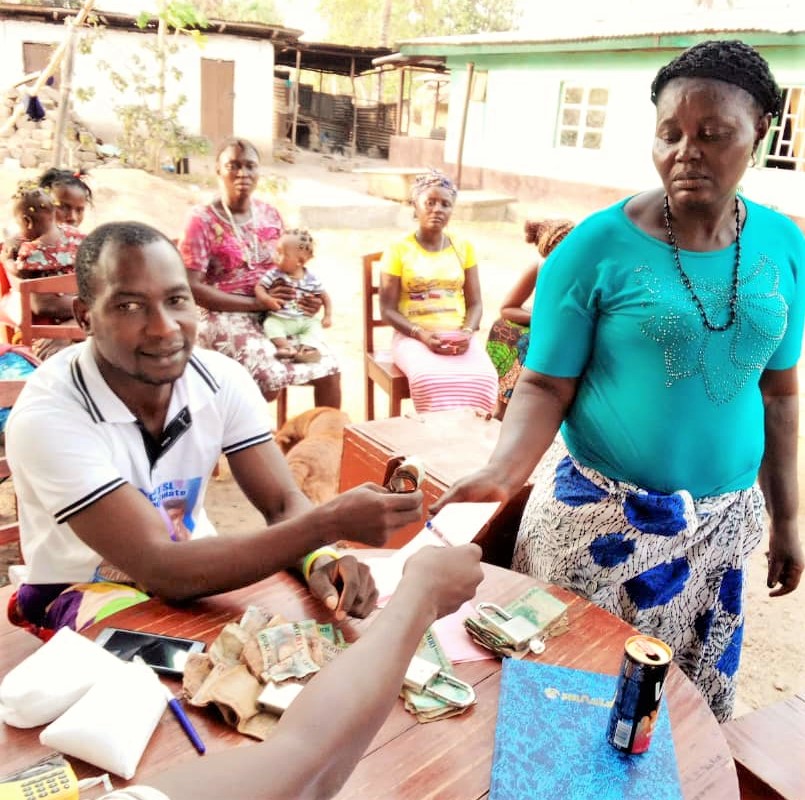
Villagers sell their produce to outside traders who supply Freetown and other cities. Outside traders could bring in COVID-19, but closing the market would be devastating.

When solving a problem, Chief Caulker tries to maximize the solution’s benefits. Kill two birds with one stone. Or three or four birds, if possible.

He needs to get essential food safely into Rotifunk and area villages. But he didn’t want to close the market, just thin the crowds.

First, he told chiefdom residents to use the market seven days a week and bring their goods to sell any day in the usual daily market, below; not just on Saturday.

20180709_093626 (2)

With business spread out over seven days, fewer outside traders come now. They can’t make as many sales on any one day so it’s not worth the long trip. Local villagers also get better prices for their wares with less competition.

But the biggest gain comes by taking the market to the people. Think of it as home delivery.

With Sherbro Foundation funding, Chief Caulker is expanding the Women’s Small Grant and Savings Program to add 40 more women traders. The women will use $100 grants to buy chiefdom fish or produce and sell them in designated neighborhoods, avoiding market crowds altogether. Creating job and income opportunities for the most impoverished local women is one of Chief’s ongoing priorities.

It’s a win-win all around. Outside traders who could be carrying in COVID-19 are reduced. Forty women are empowered to expand their trading businesses with capital and dedicated customers. Market customers and villagers who normally come to sell are protected by avoiding market crowds.

This solution will also keep more money in the local economy. Outside traders won’t take money outside the chiefdom. Rotifunk’s and the chiefdom’s overall economy will improve as the women traders succeed and use their increased purchasing power locally.

Pivoting for a compelling need
Sherbro Foundation is delighted to fund the 40 women traders with $100 grants.


IMG-20200322-WA0014 (2)They also become part of the savings plan of the new Women’s Small Grant Program, where women deposit part of each week’s earnings, left.

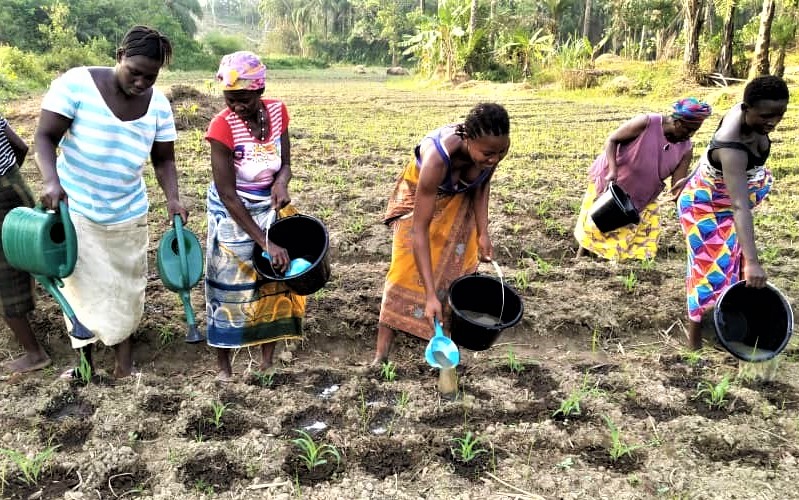
At the end of the year, their total savings will be like getting a new grant.

Sherbro Foundation is also contributing to daily food stipends for the checkpoint volunteers.

Bumpeh Chiefdom and Sierra Leone are hardly out of the woods with COVID-19. But, like us, they’re buying time until therapeutic drugs or the ultimate vaccine are found.

Sherbro Foundation pivoted from other issues and helped Bumpeh Chiefdom fight Ebola in 2014-15. Being a small organization, we can respond quickly. As in 2014, within two weeks of my first phone call with Chief Caulker on their COVID-19 plan, they will have our funding in hand and start acting.

Next week, women traders will introduce food home delivery to the chiefdom. Who knows where this goes long term?

One more thing the whole dreadful Ebola experience taught me: I know we’ll get through COVID-19. On the upside, a whole new program with the potential to transform Bumpeh Chiefdom may blossom – strengthening struggling women as successful small entrepreneurs.

— Arlene Golembiewski, Executive Director


Still Good News in the World

There still is good news to be found in the world. Sierra Leone has had more than its share of bad news and hardship. But it’s where I’m finding things to brighten my outlook now, thanks to our Bumpeh Chiefdom partner, the Center for Community Empowerment & Transformation (CCET-SL).

Twenty “market women” come together each Sunday at the CCET-SL building after the big weekly Saturday market to discuss what they bought and sold that week. But these small traders aren’t gossiping. They’re getting help to grow their small businesses. And every week they deposit part of their earnings they can save in an iron lock box the group manages.

IMG-20200119-WA0017

The group buzzes with talk on the week’s prices for palm oil, dried fish, peanuts and other things they buy and sell – and what they expect prices to be in the coming weeks.

Growing and Saving
The women are part of CCET-SL’s new Women’s Small Grant & Savings Program funded by Sherbro Foundation. Each participant received a small grant of one million leones. They now have enough money to buy new goods to sell in their small trading business. They earn more to better feed their families. And importantly, they save each week.

The women are hardly millionaires. One million leones is today worth only about one hundred US dollars. But these are women who never before held that much cash in their hands at one time.

The group serves as a peer network where they exchange what they know about trading and offer each other current advice. Such as: recently harvested peanuts will be worth far more two or three months from now when the harvest glut is down.

The experienced women advise, hold the peanuts and your bigger future profit will likely more than make up for slow weeks now. Things like peanuts and locally produced palm oil, the mainstay cooking oil, are commodities to be held as a reserve and sold when prices rise.

Targeting women with the least
These women are part of the program because they’re among the poorest women in the community. Most market women, below, have so little to sell, their weekly income is a pittance. It’s barely enough with which to eat and purchase another small lot of goods for the next week’s market. Or they sell things from small family farms and gardens or from trading with other villagers. Most can only bring what they can carry on their heads walking.

IMG_2621 (2)

There’s little cash flow among these women, and no capital to invest in a small business that could reliably return more income. They just scrape by week to week.

The women needed a boost to get ahead. A small grant. One with no ties attached.

Women’s Small Grant & Savings Program
The program  was conceived in January because of another dilemma CCET-SL faced. The twenty women in the new grant program were hired last year as part-time workers in CCET-SL’s Swamp Vegetable Growing project, below. They transplanted pepper and okra seedlings into raised beds, weeded and watered, and later harvested the vegetables. They continued to work their own small gardens and trade in the market. The women were excited to have their first wage-paying jobs, even if part-time and seasonal.

Peppers 3-6-19 (7)

But the vegetable project doubled in size since last year, and was planting 12,000 pepper plants this year. With seven acres of peppers to now water, it became clear having women hand-water would never work. The area was too big, and carrying water buckets all day too heavy for the women. A way of watering with pressurized hoses was identified that needed to be handed over to men.

Paramount Chief Caulker was adamant the women would not be fired. He considers one of CCET-SL’s agriculture projects’ successes to be job creation for the neediest chiefdom people.

CCET-SL Managing Director Rosaline Kaimbay offered another solution. Let the women focus instead on growing their small trading businesses with small grants. I was with them in January, and we worked out the terms of the program that Sherbro Foundation immediately funded. They began in February. At the meeting below, CCET-SL accountant Sulaiman Timbo records everyone’s savings deposits as the group is illiterate.

IMG-20200209-WA0002

Each participant starts with a small grant. This is not the usual microfinance program giving loans with high interest and short payback schedules. These women are the lowest tier of a desperately poor rural economy, and too poor to pay back a loan within months. Or if they tried, they’d use up the little income they produce. They’d never be able to put more money into their business and get ahead.

IMG-20200209-WA0003 (2)Under the Small Grant and Savings Program, women should be able to increase the size of their trading business with their small grant and the resulting income they earn. And with required savings, they’ll have another windfall at the end of the year.

To participate, women are expected to save some of their earnings every week that will be distributed back to them after 12 months.

The iron lock box, left, is made for small savings clubs. Built with three locks, it can’t be opened unless three people come with keys for the three locks. This encourages group self-management, as well as security for the savings.

Group savings clubs are popular for the poor because it’s an easy way to protect their savings. If left at home, it would invariably go to another immediate need or family demand. Banks are a one- to two-hour drive away, and their fees too high for the tiny amounts the women save.

Yeama’s business portfolio
Yeama was one of the hard-working women from last year’s Swamp Vegetable Growing group. She’s about 40 and a single parent with two children. Her husband left her for another woman, and kicked her and the children out of their house. She returned to Rotifunk, and had to start doing any available work to feed her family, which for women usually means farming.

In the new program, Yeama was advised to use her Le 1,000,000 grant to buy a diversified “portfolio” of things to trade. With half the money, she chose to buy various women’s toiletries and personal items in Freetown to set up a table in the market. It’s like the women’s aisles in Target or Walmart with skin creams, hair balm, toothpaste, soaps, nail polish, combs, etc. Below, a typical market table of women’s products.

20180709_095042 (2)

She also bought a large bale of peanuts for Le300,000 that’s already gone up to Le350,000. She’s holding this as her fall-back reserve. It could rise to Le500,000 or even Le550,000.

Sierra Leone, West Africa foodsWith her remaining Le200,000 from the grant, Yeama bought cassava, a starchy tuber, and made foo foo, left, traditionally eaten on Saturday with a meat soup.
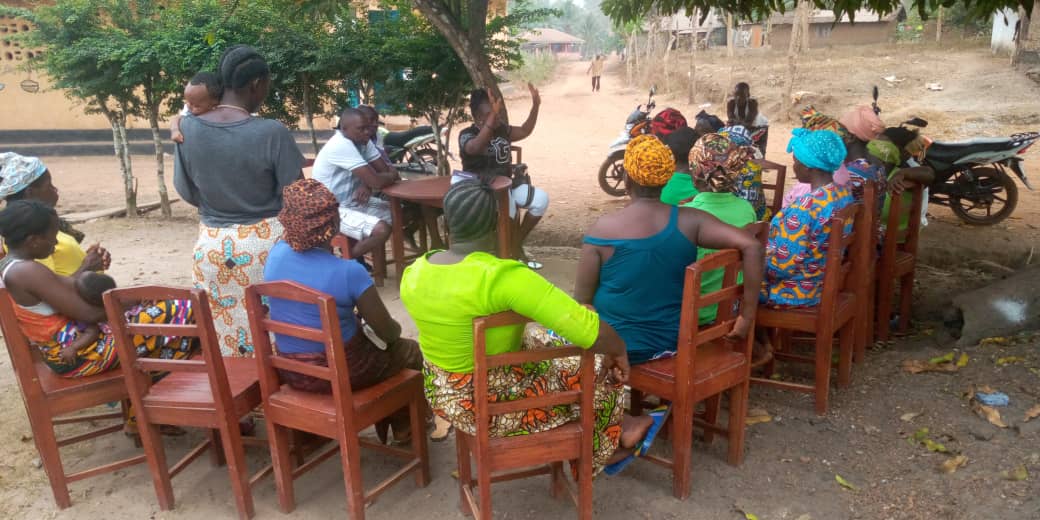
She “added value” to the cassava by pounding it and turning it into balls of foo foo. She sold them in Freetown at a higher price and made even more profit.

Yeama is already making money to put back into her trading business, or to buy another seasonal crop to sell.

Like most of the women, Yeama can only save Le10,000 to Le20,000 a week now, or $1 to $2. But if they do this each week, by the year-end, it will be like receiving another grant of Le500,000 to Le1,000,000, or more as they’re able to save more. The support – and competition – of the peer group encourages more savings.

IMG-20200119-WA0015

Only several weeks old, the Women’s Grant and Savings Program is already very popular. Women not in the initial grant group come to sit in on the weekly Sunday meetings to observe and learn from the group. CCET-SL Director Rosaline Kaimbay, above, hands raised, facilitates the weekly meetings.

Paramount Chief Caulker has had a parade of women from the group coming to thank him for starting the program. Others come pleading to also join.

For Sherbro Foundation donors, our total investment to start the program was $2050. That feels like an incredible bargain to help 20 women get more economic security in their lives and contribute to their building their local economy.

Chief Caulker says he believes this program will continue to be a real winner. I agree. Time will tell just how big of a winner it turns out to be – but the women themselves are now the drivers.