“Why Africans Cannot Get Depressed”

“Why Africans Cannot Get Depressed”

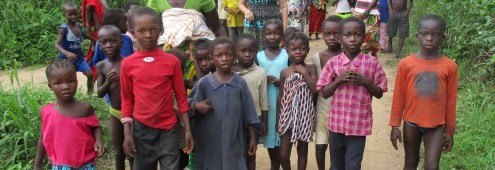
“This is why Africans cannot get depress…Only white people suffer from depression. Africans are always joyful…They have a community oriented. Every one comes to the festival.”

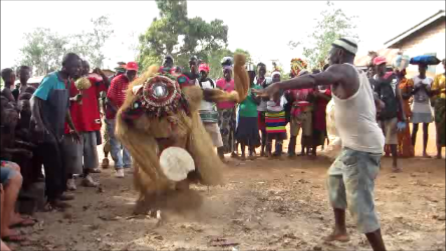
Snapshot 20 (12-24-2015 10-58 AM)I just had to share this recent comment on my YouTube Devil Dancing video from someone in the UK, obviously African.

And my comment back: “Thanks.  I couldn’t agree with you more. People in Sierra Leone manage to find joy in everyday life with their community. It’s expressed in dance and music that’s irresistible – and joyful. Westerners need to take lessons here.”

It’s a bit of a stretch this year in Sierra Leone to be joyful with the post- Ebola economic crisis. But I know its music and dance that people are relying on there today.

So, on this Christmas Day, I hope you’re finding joy wherever you may be.  Merry Christmas and Happy Holidays.

PS: The YouTube video captures a Rotifunk event with a local dance troupe. It shows them marching into town from their nearby village and getting the devil ready for his dance.  To skip this and get to the main event, skip to about 1:20 on the video.  There’s over 30,000 views on YouTube. Check it out.

Growing Self-Sufficient Futures – Dec 2015 newsletter

Growing Self-Sufficient Futures – Dec 2015 newsletter

Letterhead


Growing Self-Sufficient Futures:  Dec 2015 Newsletter

  • We’re helping people raise fruit trees and grow self-sufficient futures.
  • The new Community Computer Center is a four year dream now coming true.

IMG_0175 - Copy (2)

Give a holiday gift that keeps on giving

Give a holiday gift that keeps on giving

XmasSome gifts you remember.
Some gifts keep on giving.

Growing a Baby's Future 2


Change a Sierra Leone child’s life.

Empower a family to save for their child’s education by raising fruit trees.

When did a $20 gift feel this good?

Do good. Feel good. Give a gift here.

Order a gift by Dec 22, we’ll send a gift notice by Dec 24.

Need more – read it here.


Giving Thanks in Sierra Leone

Giving Thanks in Sierra Leone

Thanksgiving came early for me this year. I hadn’t planned my trip to be in Sierra Leone on the day the country was declared Ebola free. But I was grateful it worked out that way.

November 9th, the actual day, was quiet and rather anticlimactic. This chiefdom, like much of the country, hadn’t had an Ebola case since mid-January – ten months ago.  November 9th was a day for reflection, to remember those who lost their lives, especially health care workers.  It was a day to give thanks that the chiefdom and the country were delivered from this scourge.

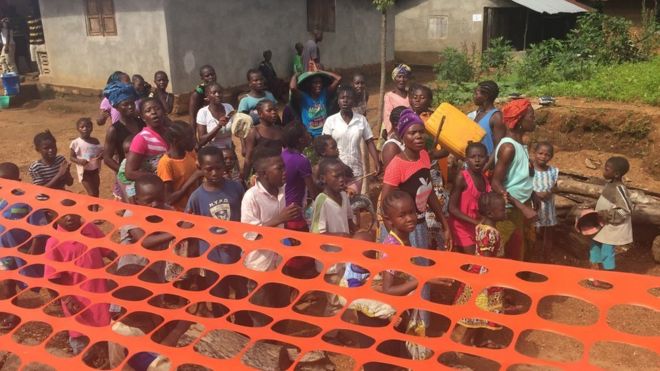
Bumpeh Chiefdom’s Ebola Committee decided at the last minute to have a small ceremony while I was still in the country to thank Sherbro Foundation for our support in their Ebola fight.

I was honored to accept their thanks on behalf of all Sherbro Foundation donors who came forward to help during Ebola’s darkest days.

Paramount Chief Caulker recognizing Nov 9th, the Ebola-free date.

Paramount Chief Caulker recognizing Nov 9th, the Ebola-free date.

One by one, leaders of the community came forward to thank Sherbro Foundation. An Imam and a Christian minister offered prayers, with people joining in to recite both.

A representative of village chiefs and a section chief were grateful SF funded over 300 hand washing stations they set up early when no other funding was coming. These were the chiefdom leaders on the front line as the epidemic was spreading. A year ago, it was unclear how easily the Ebola virus could be transferred with casual contact. It was a frightening time and people avoided each other. They didn’t know who they could trust.

The Local Councilor and Chiefdom Speaker were grateful SF stayed in touch throughout the outbreak and just asked, how can we help. When the Ebola Committee recognized they needed a more aggressive approach to keeping Ebola from entering their chiefdom, SF quickly responded. They thanked us for funding them to staff checkpoints, do house to house checks in every village and stop unsafe burials.

Paramount Chief Caulker has been vocal throughout that the chiefdom could not have done what they did without Sherbro Foundation support.

But as I was accepting their thanks, I was silently thinking, who’s more grateful?  Them, or me?

I was grateful lives were spared and my friends were safe.

I was grateful SF could play a role in enabling this chiefdom to become a model for the rest of the country in stopping Ebola.  I was never more proud to be part of an organization’s work than when I saw the dramatic 80% drop in Ebola cases last January as chiefdoms around the country implemented programs like Bumpeh Chiefdom’s.

IMG_4552I was grateful to work with our remarkable partner, the Center for Community Empowerment & Transformation who volunteer their efforts to protect and now develop their chiefdom.  They shifted from fighting Ebola to reopening schools closed for nine months to restarting our projects without missing a beat – all within a few months.

I was grateful to see children back in school – and more Bumpeh Chiefdom girls in secondary school than ever before.

I was grateful to go to the new community bank and see 1249 new savings accounts opened for newborn babies that can grow to fund their future education – more baby accounts than adult accounts.

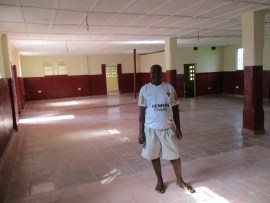
IMG_0104I was grateful to see the computer center built during the Ebola outbreak finished.  The floors are tiled floors and it’s wired for power we’ll bring over from a nearby solar system. Come February, we should be able to start initial computer and adult literacy classes.


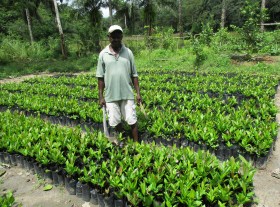
IMG_0138I was grateful to see our dream of transforming the chiefdom by planting fruit trees is becoming reality.  15,000 tree seedlings were planted this year that will transform six villages economically and environmentally.  I saw thousands more fruit trees started from seed growing in two tree nurseries, awaiting planting in next year’s village orchards. And plans to start thousands more in January – February.


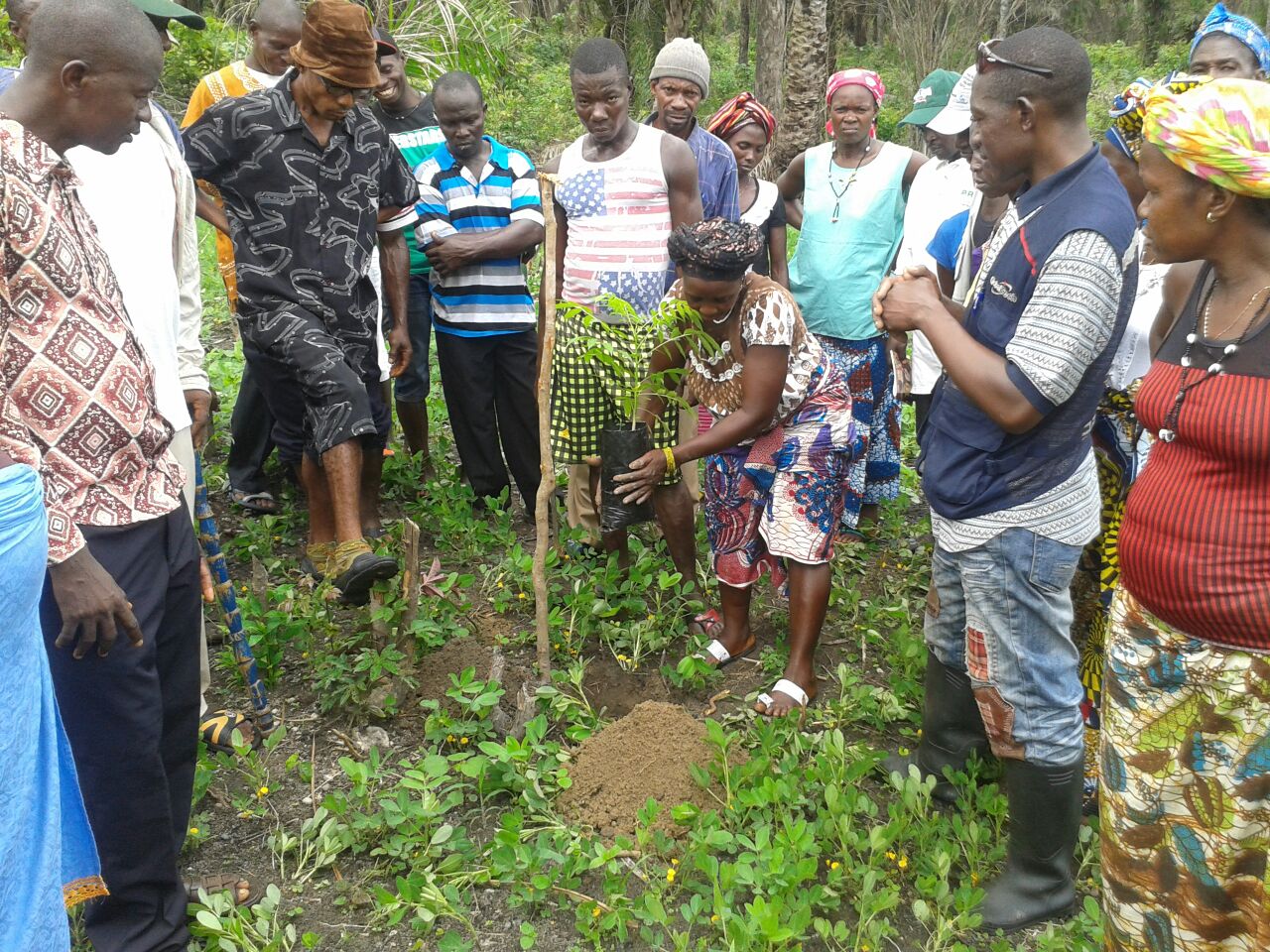
IMG_4684I was grateful to see firsthand the work spreading to the community level. More than a hundred people in six villages took ownership to clear 10-20 acres each and plant their community orchards.  Orchards that will provide income for them to build schools, dig wells, send their children to school and protect the environment for years to come.

All this had been done, in spite of the Ebola crisis.


I think most people just want to feel they’ve made a difference in the world and someone’s life has improved because of their efforts.  

I had ample evidence on this trip that Sherbro Foundation’s collaboration with Bumpeh Chiefdom was doing just that.

This work gets done because of the generosity of Sherbro Foundation’s donors. We are deeply grateful for all you have done to make this possible.

So, when you’re sitting around the Thanksgiving table this year giving thanks, pat yourself on the back for reaching out and making a difference in Sierra Leone. I’ll be thinking of you and thanking you again.

——- Arlene Golembiewski, Executive Director

Girl Scholarship Students Dream Big – I Want to Become President

Girl Scholarship Students Dream Big – I Want to Become President

Going to secondary school should be about more than reading and writing. It should be a place where Sierra Leone girls learn what’s possible in life. They should learn to dream big at this early age.

Form 5 (11th grade) student Adama Sankoh at Bumpeh Academy has a big dream. When asked what she wants to do after finishing school, Adama said,

“I want to become a president.”

She’s clear on where to start. “Education is the only way I could change the social and economic status of my family. School prepares my mind to be useful and influential in my community and country as a whole.”

IMG_0257

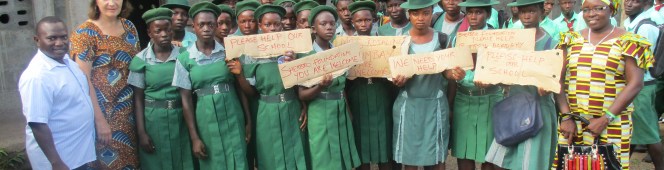
Bumpeh Academy Principal David Rashid Conteh, Arlene, BA scholarship students, CCET Executive Director, Rosaline Kaimbay. Adama is front row, 3rd student from right.  Signs read: Sherbro Foundation, You are welcome. Please help our school.

In school, Sierra Leone girls like Adama are being exposed to the opportunities open to them beyond the small rural communities they come from. Even becoming president. They’re learning the first practical step to achieving those dreams is completing their education.

Sherbro Foundation’s girls scholarship program helped 150 Bumpeh Chiefdom girls continue their education for the school year starting August 2015.

My motivation for starting the girls scholarship program in Bumpeh Chiefdom was simple.  I wanted girls to learn to dream big and start on the path to reaching their full potential with education.  I’ve met more high potential Bumpeh Chiefdom girls like Adama who want to become doctors, nurses, lawyers, journalists, teachers, accountants. Their first step – completing secondary school – is still a hurdle and huge accomplishment for most girls in Sierra Leone.

Sherbro Foundation helps eliminate financial barriers to girls attending secondary school. This year we provided school uniforms for girls in five Bumpeh Chiefdom schools.

The Sierra Leone government paid school fees this year with post-Ebola funding. But uniforms cost as much as school fees, and present a big burden for parents still recovering the past year’s Ebola crisis.

Sherbro Foundation’s 2015 scholarship program helped remove that barrier for 150 of the chiefdom’s most vulnerable girl students. The program is administered by our local partner, the Center for Community Empowerment & Transformation (CCET). Here’s more of this year’s scholarship students.

—– Arlene Golembiewski, Executive Director

WSSS scholarshipsWalter Schutz Memorial Secondary School students


2015 scholarships WSSS, Ah, BAScholarship awardees from three schools flanked by CCET Executive Director, Mrs. Rosaline Kaimbay (left) and CCET Child Welfare program director, Abdul Foday (lower right).  Schools left to right: Walter Schutz SS, Ahmadiyya SS, Bumpeh Academy SS


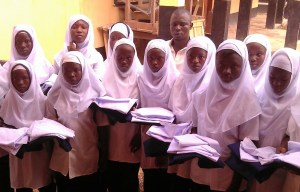
Ahmadiyya scholarshipsAhmadiyya Islamic Secondary School students


2015 scholarship Mosimbara bEarnest Bai Koroma Junior Secondary School in Mosimbara village, Bumpeh Chiefdom’s newest secondary school. Children from small villages can start secondary school here close to home, and later transfer to Rotifunk for senior high.


2015 Bellentine primaryVain Memorial Primary School, serving six villages in Bellentine Section.  Primary school students got 2 uniforms each. Mothers of many children in this school are in our Women’s Vegetable Growing project.

Back from a month in Sierra Leone

Back from a month in Sierra Leone

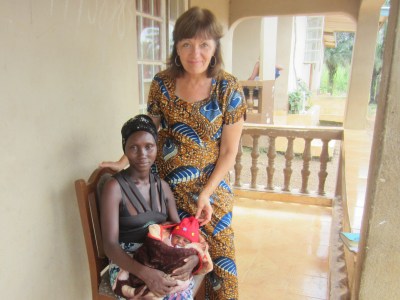
IMG_4630I’m just back Sunday from a month in Sierra Leone. Word is getting out to Bumpeh Chiefdom families about the Newborn Baby program. Kadijatu Kamara seen here presented herself to me with one-week-old Sheikfuad. She wanted to get him registered so he’ll have his education fund bank account opened and get three fruit trees to plant.

It was gratifying to be in Sierra Leone last week when they reached 42 days with no new Ebola cases and were declared Ebola-free. Bumpeh Chiefdom’s Ebola Committee warmly recognized Sherbro Foundation’s support in their Ebola fight – one that led to them being recognized nationally as a model program.

Big thanks go out to all Sherbro Foundation donors.  It was you who made that happen and you who helped save lives.

It was a great trip back to Sierra Leone – my first in two years.  All our projects are moving forward.  Our local partner the Center for Community Empowerment and Transformation mapped out big plans for 2016 that we are excited to assist them with. Look for more news here soon.

—- Arlene Golembiewski, Executive Director

Growing a Baby’s Future

Growing a Baby’s Future

They say money doesn’t grow on trees. But in Bumpeh Chiefdom in rural Sierra Leone, new parents are banking on it.

Through Sherbro Foundation’s Growing a Baby’s Future project, impoverished families in remote villages have a chance for the first time to save for their child’s education. Our grassroots partner, the Center for Community Empowerment and Transformation (CCET), is reaching places foreign aid – or even government funding — never reach.

Chief Caulker with village children.

Paramount Chief Caulker with Bumpeh Chiefdom village children.

The chiefdom is creating a living trust fund for the next generation by planting trees. And they’re doing it by relying on the Chiefdom’s only resources – its fertile land, water and agricultural skills.

Paramount Chief Charles Caulker realized the chiefdom can’t wait for outside help; for “someone” to create a social safety net for children. In a country devastated by both the Ebola virus and a long civil war, the wait is endless. He and CCET organized a major fruit tree planting project for the chiefdom, trees raised themselves from seed.

Only $20 will Grow a Baby’s Future in three steps:

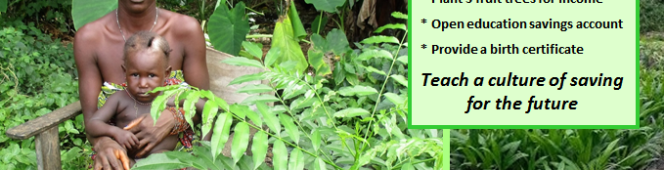
  • Three fruit trees are planted for each newborn baby. The income from fruit sales will go into an education savings account for each baby at the new community bank.  By age 12, there will be money to pay the child’s secondary school fees.
  • Sherbro Foundation is seeding the bank accounts by paying the $3.50 minimum deposits.
  • And to make every child count, we are also is helping the chiefdom start a birth registry. Rural areas today have no birth registration. Without birth certificates, people can be denied birthrights of land ownership, voting and health care.
IMG-20150523-WA0000

Two tree nurseries hold 40,000 seedlings grown from seed, maturing for next year’s rainy season planting.

CCET and the people of Bumpeh are determined to raise thousands of citrus, mango, avocado, coconut, cashew and teak seedlings for newborn babies and their future education. Families will reap their bounty for years to come.

CCET plans to expand their tree nurseries – already boasting 40,000 seedlings – to sell to local farmers, too. This will generate income for the program to become self-sufficient.

Growing a Baby’s Future is facing a backlog of 1,000 babies after it was interrupted by the yearlong Ebola crisis.

CCET only needs our seed money to secure a baby’s future. You can help – donate here.

Growing a Baby’s Future

Growing a Baby’s Future

Baby snip it 2

Join Sherbro Foundation’s fall campaign – sponsor a baby   

Only 30% of children in Sierra Leone can afford secondary school.  Without education, children are born into poverty and never escape. The post-Ebola economic crisis has made getting an education even harder.

Growing a Baby’s Future empowers Bumpeh Chiefdom parents to start saving for their child’s secondary education right after birth by providing 3 income-producing fruit trees to raise.

We also open a bank account for the child, paying the minimum balance. The program combines an old tradition of planting a tree with the baby’s umbilical cord and the new practice of education savings accounts.  Parents learn a culture of saving for the future – and gain a living safety net.

To make every child count, we are helping the chiefdom start a birth registry.  UNICEF reports “one in three children doesn’t exist.” In Sierra Leone, even fewer births are registered. Without birth certificates, people can be denied birthrights of land ownership, voting and health care.

For $20, please help parents secure their child’s future

www.sherbrofoundation.org/donate

Do good with good value

How We Spent Your Money

How We Spent Your Money

Sherbro Foundation Board members get annoyed with organizations we only hear from when they want money from us. We don’t want to be one of those organizations.

Rather, we want to let you know how we spent the money you already sent.  Below is a newsletter covering key projects over the last fifteen months.  You can judge if it was well spent, and whether you want to support us again. Or start supporting us.

If you’d like to subscribe for future e-news, please send an email with “Subscribe” in the title to sherbrofoundation@gmail.com . We only plan about three each year and the occasional special message.  We won’t flood your inbox.   (Likewise, send an “Unsubscribe” message to stop receiving them.)

Are you now thinking now, oh, they haven’t spent my money because I haven’t sent any. You can easily remedy that at http://www.sherbrofoundation.org/donate .

Thank you. Together, we are making a real difference in the lives of people in rural Sierra Leone.

Arlene Golembiewski
Executive Director

Letterhead


Eliminating poverty through education and economic empowerment
August 2015
Veg project distribution ceremony May 2015 - Copy


Click here:  Sherbro Foundation Newsletter August 2015


Getting to Zero – But Staying There?

Village quarantine released - from BBC

Village quarantine released – from BBC

The last chain of Ebola transmission is almost stamped out. This means the set of contacts exposed to the last confirmed Ebola case are accounted for.

It was one year ago August 10 that Ebola was becoming a runaway train and WHO declared a global emergency.

Here’s the key points from Sierra Leone’s National Ebola Response Network report for the week ending August 16:

  • For the first time since the disease worsened a year ago, the country has gone 12 days with no EVD reported case. The country’s last case was recorded on 7th August.
  • There are only two patients undergoing treatment – at IMC Makeni. One has tested negative and will be discharged in the next day or so. The other is responding to treatment.
  • 585 contacts from Massesebeh village near Makeni were discharged from a 21-day quarantine on August 14.  A rapid response team quickly responded to one of the last confirmed Ebola cases, and quarantined the entire village. A few households and contacts remain under quarantine after cohabiting contacts tested positive.
  • There were 79 remaining potentially exposed contacts in the country. If no cases are recorded, the last set of quarantined contacts will be discharged on 29th August.
The important thing for Sierra Leone now is no new cases have been confirmed that can’t be traced to another previously confirmed case. For over a month, there have been no new chains of transmission.
To declare the country Ebola free, it needs to go 42 days with no new Ebola cases after the last case is discharged from treatment and the last quarantine ended. The clock would start on August 29. 42 days are two sequential 21-day Ebola incubation periods.
The ban on public gatherings was released last week, allowing crowds to enjoy Freetown’s beaches and throng bars and nightclubs for the first time in a year.
Liberia’s had a new case pop up over three months after being declared Ebola free. WHO is now considering whether a 90 day Ebola free period is a more prudent criteria to declare a country Ebola free.
So – not out of the woods yet.  But getting close.
A US physician working in Liberia and treated for Ebola says, not so fast. Getting to zero is not good enough; you need to stay at zero.  He notes: “there were more physicians on staff at Bellevue Hospital in New York City, where I was treated for Ebola, than were practicing in the three most affected West African countries combined. The dearth of health care professionals means that for many responders, there has been little respite. And since the start of the epidemic, nearly 7 percent of health care workers in Sierra Leone and more than 8 percent in Liberia have died from Ebola.”
We’re all not safe from Ebola he says, until health care systems in the three Ebola affected countries are expanded and adequately staffed.

What’s Going On With Ebola? Quite a Bit.

“What’s going on with Ebola,” a friend asked me today. “We hear nothing in the US.”   Actually quite a bit of good news happened in the last couple weeks.  And some not so good.

Good News The lowest level of new Ebola cases in over a year were reported last week. Guinea and Sierra Leone both reported only one new case in each country! The previous week there were only a total of seven new cases. Liberia had none.

This comes after four or five months of results stubbornly plateauing out at 20 to 30 new cases per week. All new cases came from the same few areas where it has not been stamped out, like the densely packed slums in Freetown and the same few rural villages. http://www.nytimes.com/2015/08/05/world/africa/ebola-cases-fall-sharply-un-reports.html?ref=topics

New cases have also been coming from “known chains of transmission.”  ie., from the contacts of a person previously confirmed as Ebola positive. If they can keep focusing on known contacts, there’s more likelihood of stamping out the disease. When new cases pop up without any connection to a previously confirmed Ebola case, the epidemic is not under control.

Bad News –  Three of Sierra Leone’s recent new cases were in Tonkolili District in the north which hadn’t had a new case in over 150 days, like most of the country.

From WHO - contact tracers conduct interviews in Tonkolili District

From WHO – contact tracers conduct interviews in Tonkolili District

A man from a village there fell ill while in Freetown and carried Ebola back to his Tonkolili village. Family believed his illness was due to sorcery and a curse, and when he died, buried him (illegally) without following Ebola burial procedures.  Two of his family have since been confirmed as Ebola positive and moved to an Ebola treatment center.

This shows how easily Ebola can again spread, with just one case traveling across country. With new cases way down, this becomes a less likely event.

Good NewsRapid response teams are in place and immediately quarantined over 500 people in the affected Tonkolili village. They identified 29 high risk contacts to closely monitor. Rapid response teams are in place with WHO coordination and react quickly when new cases and any new chain of transmission are identified. The quarantined village has no additional new cases after a week. This is light years ahead of where things were last year at this time.

Farmers in this village will unfortunately be separated from their fields for 21 days during the rainy season, a critical time for planting rice and other crops. People understand the critical need for the quarantine and are cooperating. They’ll hopefully get support for the condition of their farms.  http://www.who.int/features/2015/tracing-ebola-tonkolili/en/

Great NewsA trial of a new vaccine was found to be 100% successful in protecting against Ebola!  Ring vaccinations were conducted because Ebola cases have dwindled to such a low level. This technique was used years ago in testing small pox vaccines.

Ring vaccinations means people at risk within the ring of known contacts of an Ebola case were vaccinated, instead of just random people. So, you’re testing and hopefully protecting at the same time – which proved to be the case now.  A control group of potentially Ebola exposed people were also vaccinated, but not until 10 days after potential exposure. Sixteen Ebola positive cases were found in this group, prompting study leaders to recommend immediately vaccinating all participants in future studies. They asked for the vaccine to be made available for all exposed people during the period of continued testing and vaccine approval. http://allafrica.com/stories/201508051574.html

And there needs to be expanded studies.. The two groups in the study had only about 2000 participants each. A large group for initial human trials, but not enough for high statistical confidence. In larger study groups, the effectiveness will likely drop below 100%. But even 80% effective is a real break through.  http://www.wired.com/2015/08/100-percent-effective-means-ebola-vaccine/

Good NewsThe vaccine was fast tracked by a global team of collaborators. This included the Division of Infectious Disease Control at the Norwegian Institute of Public Health, the Wellcome Trust, the government of Canada, Doctors Without Borders (MSF), the London School of Hygiene and Tropical Medicine and manufacturers Merck and NewLink.

It took only eleven months to reach this point of human trials with demonstrated efficacy. Other less promising trial vaccines were discarded along the way. The study team also had to coordinate with Guinea officials to reach urban slums and rural villages not easy to incorporate into a high profile study on short timing.

It shows this can be done. It’s not common for a new vaccine to be tested in the midst of an active epidemic. But this was no usual epidemic. It had global implications.

You’ll note the US doesn’t figure into the team of global collaborators. Our FDA drug testing procedures are more conservative and approval procedures more bureaucratic. I read under normal conditions, this kind of vaccine development and human testing could have taken a decade. US FDA take note.  http://www.nature.com/news/how-ebola-vaccine-success-could-reshape-clinical-trial-policy-1.18121

Still, the statisticians will have the last say.  http://www.wired.com/2015/08/100-percent-effective-means-ebola-vaccine/

So-so NewsHaving a vaccine quickly available in large quantities and easy to use in remote, difficult to reach rural villages remains a challenge. It’s hard today to administer well established vaccinations and health care in general in the affected Ebola countries. Rolling out a new vaccine to remote places with no refrigeration will not be easy.

Convincing suspicious and illiterate people traumatized by the Ebola epidemic will also take a strong outreach and education approach.

It’s not known how long protection from a new Ebola vaccine would last.  Small pox is a one time vaccination. Yellow fever lasts for ten years. Typhoid is only good for 3-5 years depending on oral or injection administration, and it’s only about 60% effective.

Hopefully, the global aid community will address vaccine cost as they have the vaccine study design and testing. Everyone has learned the whole world is at risk of Ebola until it’s permanently stamped out everywhere. Like small pox.

It was one year ago now that the Ebola epidemic in Sierra Leone was a run-away train. We watched paralyzed in fear, not knowing what action to take. What a difference a year makes. Especially when the best minds around the world join up together.

Concept to Harvest in 5 Months –  the Women’s Vegetable Growing Project

Concept to Harvest in 5 Months – the Women’s Vegetable Growing Project

Just shy of five months from our first March phone call on the Bumpeh Chiefdom Women’s Vegetable Growing Project, women are harvesting their first crops.

I got the pictures of the peanut harvest Sunday.  It’s a good crop, Mrs. Kaimbay told me. She leads our partner organization, the Center for Community Empowerment & Transformation (CCET), who organized and started this first time project.

She and local teachers Mr. Sonnah and Mr. Phoday got the vegetable project started in April – at the same time they were restarting school that had been closed for nine months because of Ebola.

Veg - Groundnut harvesting3

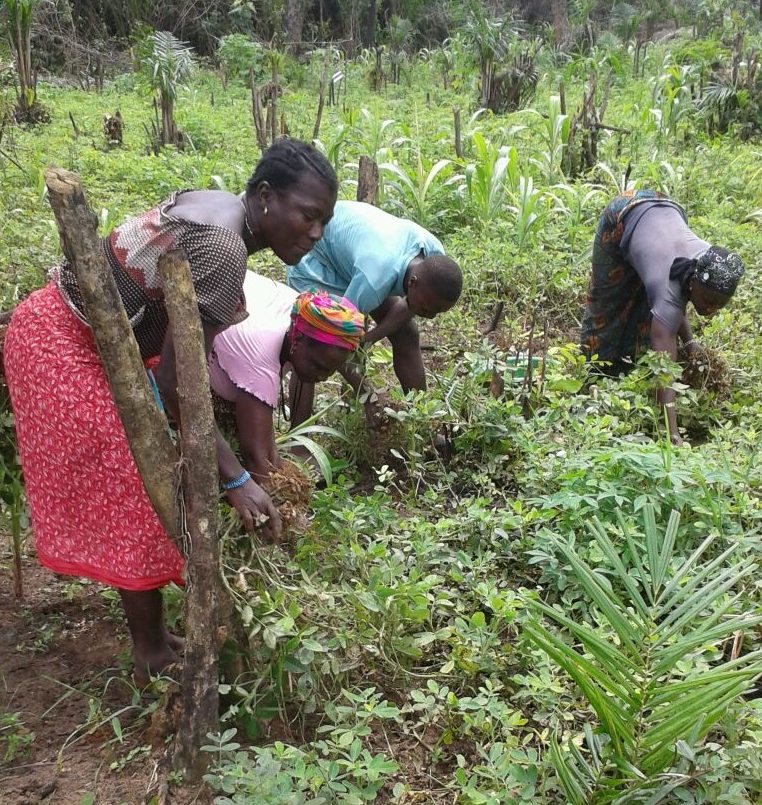
Now in late July, these women in the project’s first group of farmers were harvesting their groundnuts. The corn in the background will be ready soon, together with okra and cucumbers.

It was only in early March that I first asked, what can Sherbro Foundation do to help people whose incomes were slashed during the Ebola crisis.  Help women farmers start fast growing cash crops was the answer. Peanuts and vegetables.

Veg - grountnut harvesting 2What we call peanuts are groundnuts in Africa. That’s because they grow in the ground. They’re actually legumes, not nuts. They’re an important source of protein in the African diet, commonly ground into a paste for soups and stews.
Or eaten straight up, after roasting in a pan. Groundnuts are also enjoyed boiled in the shell.

Veg - groundnuts growing

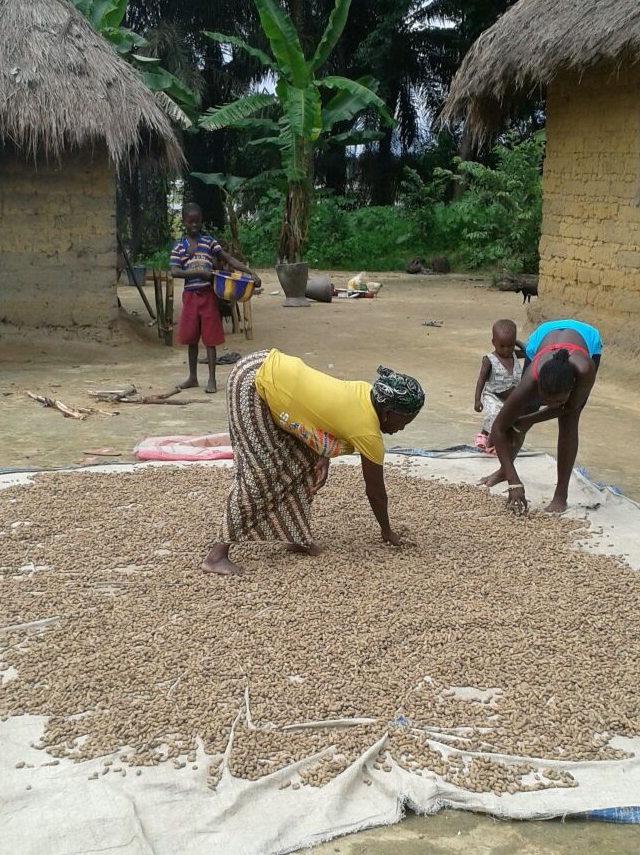
Here’s what groundnuts look like when they’re harvested.  They grow as nodules among the roots of the plant. You dig them up like harvesting potatoes. Then spread them out in the sun to dry.


Veg - drying groundnuts

The Women’s Vegetable Growing project will continue to expand and add new groups of farmers. The thirty five women in this first group will donate seed back to the project for the next group of farmers – a bag of groundnuts and a cup of seed from each of their three vegetable crops.

The women will still net at least three to four times our initial investment of $75 in each farmer. They’ll be ready to start their second crops in September themselves, followed by a third crop in their first year.

In the meantime, new groups of women farmers will be given their start.  In the project’s first twelve months, we should be able to have groups of 30+ farmers producing crops six times.

Workshop on erosion control.

Workshop on erosion control.

The women selected for the project are single heads of large households. They get the use of community land set aside in the chiefdom for special projects. They get training on topics like planting and erosion control, and ongoing support.

Importantly, they now know what empowerment feels like. They’re farming themselves and becoming self sufficient.

Sherbro Foundation and our partner CCET take on practical projects that are simple to implement and which quickly benefit the poorest people in the chiefdom.

We don’t wait years to see lives improved while bureaucracy and overhead are created. We do it within months.

Show Us the Money: How Ebola Crisis Money Was Spent

Show Us the Money: How Ebola Crisis Money Was Spent

Here’s an issue I’ve been waiting to see made public: how global aid money was spent in the Ebola emergency.

Amy Maxman’s recent Newsweek story will change the way you look disaster aid. Maxman managed to spend enough time in Sierra Leone and probe in the right places to illuminate some of the Ebola crisis’s most exasperating issues. I posted her February story on how the capital Freetown’s new Ebola case rate was not going to zero. She astutely noted Freetown has no traditional leaders with authority to lead the fight in their own communities, as they effectively did in the provinces.

Now she’s written about how global Ebola aid money was spent in Sierra Leone during the epidemic’s peak. Again, she’s spot on. How is it possible only 2% of foreign aid reached frontline Ebola workers?  Read on.

It’s hard for outsiders responding to an emergency to know how to donate efficiently — quickly and with the highest impact. Foreign governments and major foundations want to send money, but not actually spend it. They have to trust other organizations with local connections to act on their behalf.

Actually, foreign governments and foundations pledged Ebola aid money. The wheels of bureaucracy turn slowly, emergency or no emergency. Less than half the $3 billion aid pledged reached the affected Ebola countries by the end of 2014 when the crisis peaked and was declining.

Big Aid may have been frustrated in the past by immature and ineffective African government systems, and sometimes out-and-out corruption. So, many foreign governments and foundations bypassed the Sierra Leone government, and gave Ebola aid funds to the World Health Organization and Western nonprofit organizations. Some sent a few experts, like the US Center for Disease Control, to advise and train Sierra Leone government agencies or do diagnostic tests.

Most individual donors don’t understand how aid organizations actually spend money.  I didn’t until I got personally involved with a rural Sierra Leone community.

Crises don’t happen in convenient places. Aid organizations either don’t have staff in the affected country, or in the remote places they’re needed. And in the Ebola emergency, they didn’t have the right kind of staff. Infectious disease ward nurses, sanitation crews, burial teams and community mobilizers were needed — all speaking local languages and able to respond to local customs on life and death matters.
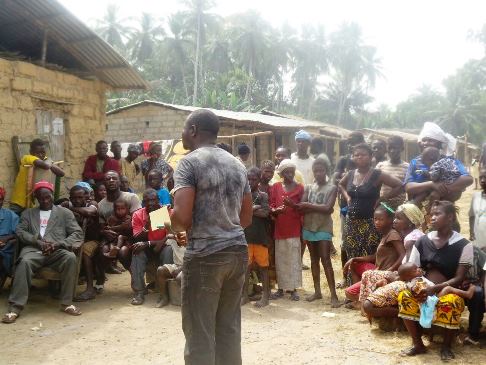
IMG-20150115-WA0000Ebola started and spread in remote villages. To reach these places, foreign aid organizations would be confronted with a total lack of familiar infrastructure. It takes 3-5 hours to drive 50 miles on impossible roads to reach small villages – with the right 4×4 vehicle. They’d find nowhere to stay or eat, difficulty buying bottled water or petrol, no electricity, no toilets, no internet connection, of course, and unreliable cell phone coverage. There’d likely be no Sierra Leone government presence, and therefore, no local host or suitable building to work in.

They might find no one to be go-between with the community. They wouldn’t speak the local language and could encounter suspicious, even hostile, villagers they’re trying to serve.

So, unless you’re Doctors Without Borders experienced in setting up mobile MASH units, you subcontract your work to locally based nonprofits. These nonprofits may in turn need to hire more local, but inexperienced, people to deliver emergency services.

Most local nonprofits are not rurally based. They typically are in Sierra Leone cities, and they don’t necessarily have rural relationships or speak tribal languages. But they are at least in-country. These nonprofit workers drive to a town or village for a few hours and leave, having limited impact. But they spend lots of money nonetheless on staff, new employees, training, new vehicles and travel expenses.

The funding pie quickly shrinks. Every time work and funding are handed off to another government, another agency within a government, or from a global aid organization to country and regional groups, a slice of the funding pie is eaten up.

Maxman found less than 2% of the billions of Ebola aid money made it to frontline Sierra Leone health care and sanitation workers. She found a UK report that only 7% of EU funding for a Liberian Ebola program reached frontline workers. This is not exceptional. Before the Ebola outbreak, I asked Bumpeh Chiefdom Paramount Chief Caulker about development aid distribution. He said it’s common for only 10% of aid money to reach people in his chiefdom as actual goods and services. Twenty percent would be good for non-emergency aid distribution.

Where did the rest of the Ebola aid money go? Much of donated money is going to highly paid foreign aid organizations and their employees. Or to pay for military flown in to build treatment centers that took so long they were hardly used. Salaries of foreign aid workers sent over – that could be 6-figures – are counted in the emergency aid figures. And they may get extra hazardous duty pay. They fly in, stay in expensive city hotels designed for foreigners, and travel in air-conditioned SUVs. Some were flown by helicopter daily to field centers. And they seldom engaged directly in what we thought we donated our money for – caring for people sick with Ebola.

In emergencies, spending money efficiently is not the prime objective, as Maxman found. Speed is. But without established programs, that speedy spending in the Ebola emergency led to many mistakes and missed objectives. And cost many lives.

A vicious circle continues. With the crisis over, foreign organizations pack up and go home. Under-developed local health care services are no better off. They can’t self-support the next crisis because we keep relying on foreign emergency aid organizations, instead of investing in building Sierra Leone’s health care capability. Yet we quickly forget how expensive emergency aid is.

What’s the moral of the story? Certainly, you should understand the organizations to which you’re donating in an emergency. What is their track record in the country you’re trying to help?

Consider small nonprofit organizations doing grassroots work in a country like Sierra Leone; don’t be automatically dubious. Find their websites and check what they’re doing.

Sherbro Foundation was able to quickly fund life-saving programs for 40,000 people with very few US dollars.

We funded 90% of the Ebola prevention work that Bumpeh Chiefdom led itself, with chiefdom leaders and volunteers.  They focused on prevention, not waiting for people to get sick. We sent $9,000 USD by wire transfer, and they directly received $9,000 in local currency within days after we agreed on objectives.

For $9,000, the chiefdom got results. They kept Ebola out for over 50 days, while it was raging all around them. After two isolated cases at Christmastime, the chiefdom again remains Ebola-free.

That $9,000 would have paid the hotel bill for a single foreign aid worker “consulting” in Freetown for only a month and staying at the Raddison Blu for $270 nightly.

Grassroots organizations like Sherbro Foundation are not involved in Sierra Leone for the short term.  We’re continuing the work of community development.

Empowering Women Post-Ebola – the Vegetable Growing Project

Empowering Women Post-Ebola – the Vegetable Growing Project

Veg project distribution ceremony I was excited to get the first pictures of the Women’s Vegetable Growing Project that’s just started in Bumpeh Chiefdom. Thirty women farmers are being empowered to grow groundnuts (peanuts) and vegetables that will quickly generate income in post-Ebola Sierra Leone.

Rosaline and veg farmer

CCET Executive Director, Rosaline Kaimbay and vegetable farmer receiving her seed & rice.

The project, designed and led by our local partner, the Center for Community Empowerment and Transformation (CCET), will jump start women’s efforts to get back on their feet after Ebola.  “Vulnerable” women were selected who are experienced farmers and low income, most single heads of household. I could recognize some faces among village participants receiving their seed and fertilizer in the distribution ceremony photo.

I still have trouble contemplating people living so close to the edge, they can’t afford $50 to maintain a business that’s their very livelihood. The Ebola crisis slashed small-holder farmer incomes – already tiny – in half. Women farmers were especially hard hit. They tend vegetable gardens requiring less back breaking manual labor, but resulting in smaller incomes. The Ebola epidemic then put the chiefdom under isolation orders, preventing farmers from taking crops to city markets where they can sell more and get higher prices.

Inception The Vegetable project had its inception during a phone call with Bumpeh Chiefdom Paramount Chief Caulker in early March about getting projects back on track. Ebola had sharply declined, but the full economic impact of the epidemic was now clear. I told Chief I couldn’t in good conscience myself, or ask Sherbro Foundation donors to return to our computer literacy project right now when I knew people were hungry.  That could wait.

Mature vegetable garden

Mature vegetable garden

The best way to help short term in his agriculture based chiefdom, Chief Caulker said, was to sponsor a vegetable growing project. You can grow a lot of vegetables like peppers in a small area and harvest in 3-4 months, fetching good prices. Farmers can quickly earn enough to feed their families, and then save seed and money to buy fertilizer themselves for the fall growing season.

The project would have to be started right away to be able to harvest when the heavy monsoon rains peak in August. CCET would run the project, but half its members were not yet in Rotifunk. They’re community teachers who volunteer to run CCET projects. They would return the first of April with the formidable task of first re-opening school closed for nine months by the Ebola epidemic.

I’ve seldom met a more dedicated and community-minded group than the Center for Community Empowerment and Transformation. They keep focused on their vision of empowering the most vulnerable in Bumpeh Chiefdom to become self-sufficient, and they just get to work. Within a month, school reopened and was in full swing, and women in small villages were planting vegetable gardens.

“Felt need assessment” CCET first talked directly with project participants to identify the most viable income generating crops right now. Peppers will earn more, the women said, but only in the dry season when supply is low.

It’s better now with the start of the rainy season, they said, to plant fast growing groundnuts, corn, okra, cucumbers and some pepper. These will bring higher market value in July-August, the peak hunger period when farmers have not yet harvested, and school is starting. Parents face the most economic stress then, striving to feed their farm family, and to pay their children’s school fees in September.

Veg project - women breaking ground2 May 2015Target Participants Thirty women were selected: 25 from  rural villages and five groups of two each from Rotifunk Township. Village women experienced in vegetable production and who are single parents with many children were given priority. In Rotifunk, women in the CCET–run adult education program who are single parents and interested in learning vegetable cultivation were identified.

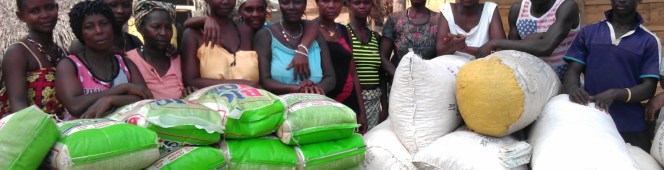
Getting started CCET bought recently harvested, high quality seed that is more potent and can sprout easily. It’s common to find imported seed in Sierra Leone past its expiration date, with poor yield. To further  motivate participants, each got a 25 Kg (~ 55 lb) bag of rice to help feed their family now.

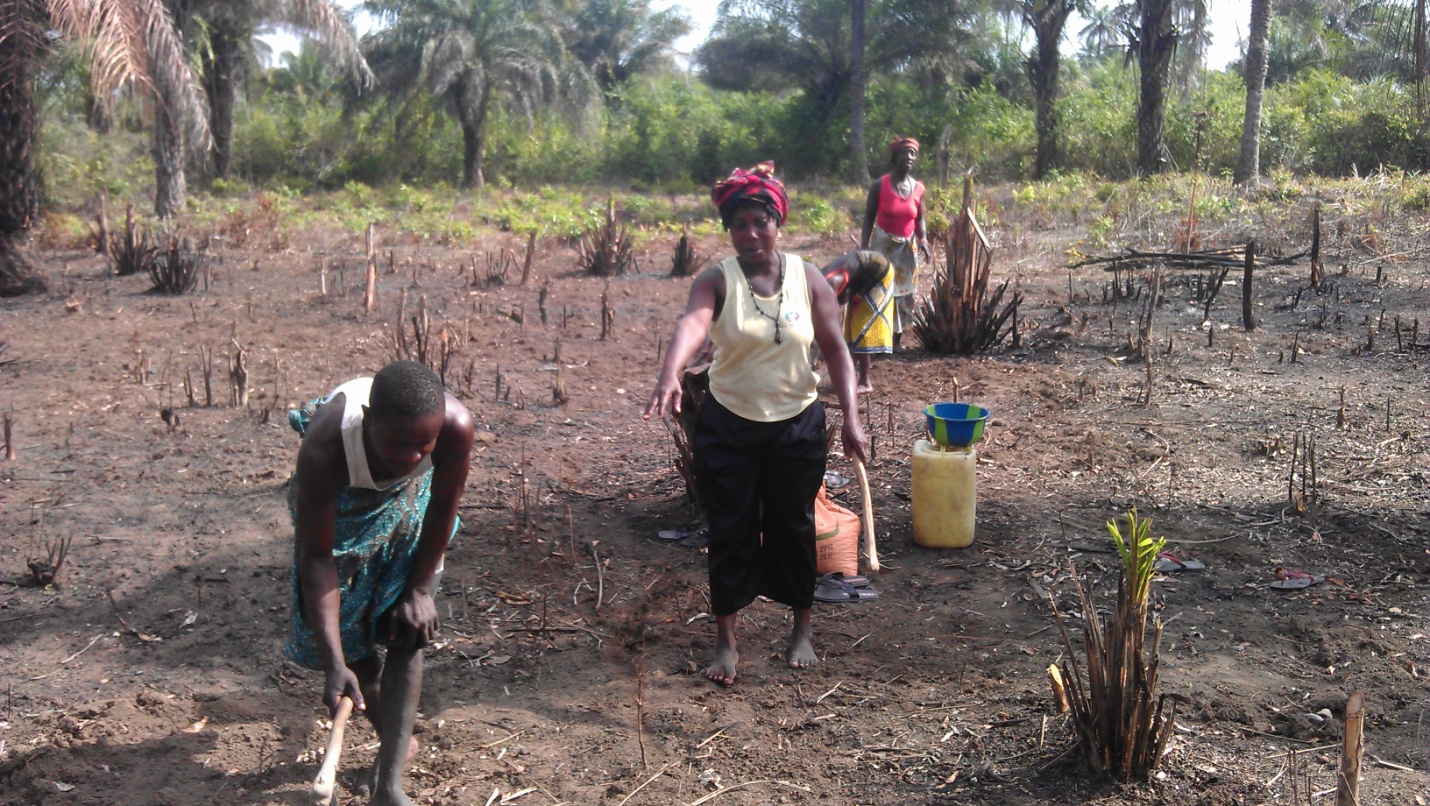
Veg project women breaking ground 5-15Clearing a field manually is really hard work. It’s typical in slash-and-burn agriculture to fell the biggest trees, and burn the rest of a field for planting. I’ve watched women farming  in Sierra Leone before. But sitting in the comfort my home looking at these pictures of bare foot women breaking ground in a hard, burned-out field with little hand-made hoes pulls at my heart strings. They’re determined to provide for their children and get on with their lives. And they somehow do, by sheer will – and hard labor.

Sustainability To make the project sustainable and continue providing support to other women, participants signed a memorandum of understanding. They will each give back a bushel of harvested ground nut equivalent to 50kg, and a cup each of corn, okra and cucumber seed to be redistributed to the other groups of vulnerable women in successive seasons. It also reinforces the women working together and supporting each other as a community.

CCET has already identified project improvements for the next planting season. They want to keep as much income as possible within the community. Instead of buying imported bags of rice for participants, they will arrange to buy rice from local rice farmers. Likewise, they will procure as much groundnut and vegetable seed as possible from local growers.

I can’t wait to see the next pictures. With the rain starting and growing advice from CCET project managers, these women should be weeding fields green with groundnuts and tall with okra soon.

The need to get Sierra Leone farmers producing again after Ebola is great.  The Women’s Vegetable Growing Program is one we definitely need to expand.  If you’d like to help, please go to Donate.

Arlene Golembiewski
Executive Director

What Do Mothers Want on Mother’s Day?

What Do Mothers Want on Mother’s Day?

It’s nearly Mother’s Day. So, what do mothers really want on their special day?

It would be the rare mom — or grandmother, or aunt, or godmother, or wife — who wouldn’t say, “I just want to enjoy time with my children.” Cherishing time with family is more important than gifts. They already have enough “stuff.”

Here’s a simple way to make this Mother’s Day truly special: Give her the satisfaction of knowing she’s sending a deserving Sierra Leone girl to school. A gift to the Sherbro Foundation Girls Scholarship Fund will have happy ripple effects for a struggling West African family for a long time to come.

IMG_0097Can an American mother empathize with a Sierra Leone mother? If they could meet and chat, I think they would find much in common. They want the same things for their children — good food, shelter, a safe and healthy childhood. And importantly: an education and the opportunity to do as well or better than they did.

I asked mothers in Sierra Leone what they want. Here’s what they told me:

IMG_1642Thirty-year-old Mary Bendu was born in the same small village of 200 people as her mother and grandmother. They had to abandon their farm and home during the civil war, and hide from rebels for a year. They lived in the bush, sleeping on the ground and surviving on wild bananas and coco yams and catching mud skippers.

She now lives by the work women usually do – selling things in the market. She collects firewood, smokes fish caught in the river and grows sweet potatoes. She would make more money if she could take these to a bigger market, but she can’t afford to pay for public transportation.

Mary has five children, from five to 15 years old. What makes her most proud is sending them to school. She wants her children to have the education she never had. These are the kind of girls for whom Sherbro Foundation scholarships make secondary school possible.

Zainab Caulker, 28 yrs, wants to become a nurse.Zainab Caulker, 28, has 7- and 9-year-old children in school. She herself went through primary school but the war interrupted her education. She’s opened a small business buying farm goods in small villages and reselling them in the Rotifunk market. She used micro-finance loans of $60 – $100 to start her business. She was able to repay them, but with the high interest rates, she could see she was never getting ahead.

She wanted to learn more and help her children with their studies, so she decided to start Adult Literacy classes Sherbro Foundation sponsors in Rotifunk. “I knew nothing before Principal Kaimbay encouraged me to come back to school. Now, I can get up in public and represent myself.”  She’s also helping board some teenage girls from nearby villages who attend secondary school with Sherbro Foundation scholarships. Her dream is to become a nurse.

IMG_3280Zainab Sammoh lives in Rotifunk with her two children, 10 and 6. Her husband wanted to go away to college, so she stayed home with the children. He then left her and married an educated woman. Zainab started Adult Literacy classes so she can follow her children’s progress in school and make sure they’re doing what they should.

“I want to be able to ask them, ‘what did you learn in school today,’ and know what it means.” The day I met her she was learning to write her name. She hopes to get a job as a secretary.

Despite their overwhelming struggles, these mothers prize education as the key to a better life for their families.

You can help them create better tomorrows. And make Mother’s Day special for the special woman in your life.

A $30 donation to the Sherbro Foundation Girls Scholarship Fund will send a girl to school – making a powerful difference in the lives of girls and women in Sierra Leone for years to come.  

Click here to make a gift in the name of your special woman. Include her email address, and we’ll let her know she’s helping another mother give her daughter a good start in life.  Or if you’d rather personally deliver it, we’ll send you an acknowledgement of your thoughtful gift in her name.

We’ll make it more special.  We’re matching all donations until May 15, doubling the impact of your gift.

You’ll make a difference in your family, too. Show Mom she taught you well in helping make the world a better place.