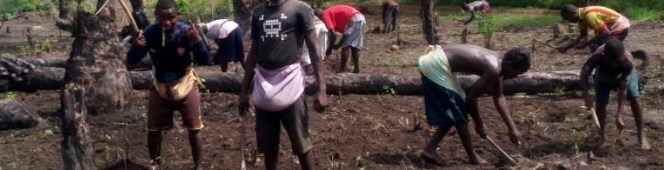
Paramount Chief Charles Caulker toiled for years to develop community-led agriculture programs that would help eliminate poverty in his chiefdom and make people self-reliant.
Now, seven cooperating Rotary Clubs are providing the critical boost — the “fertilizer” — to expand and firmly root “Growing a Community’s Future,” his innovative programs in Bumpeh Chiefdom.
Thanks to Rotary Club of Ann Arbor leadership, a multifaceted Rotary Global Grant totaling $49,500 will improve the lives of thousands.
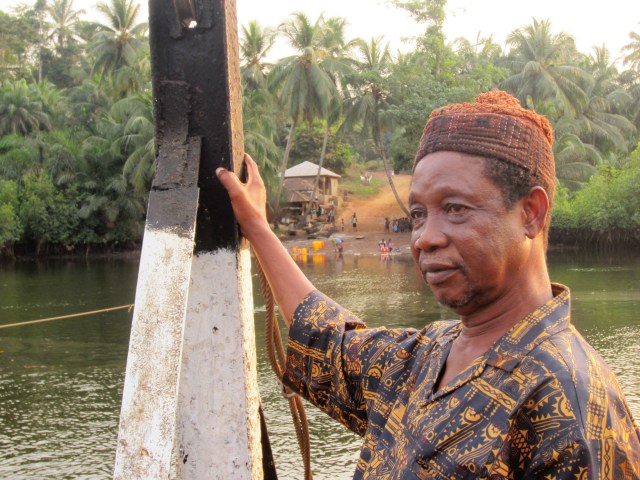
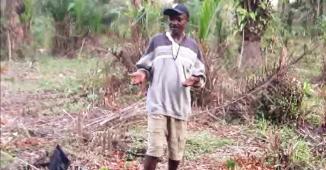
Paramount Chief Charles Caulker on the hand-pulled ferry crossing that’s the gateway to his chiefdom.
Helping a struggling community transform its economy
The Rotary-funded project called “Growing a Community’s Future” will do just that using the only things Bumpeh Chiefdom has in abundance to bolster its economy — fertile land, plentiful water and agriculture traditions.
For isolated Bumpeh Chiefdom, one of the poorest places in the world, the opportunity is huge. “This grant will ensure we can fully implement our program to grow our community’s own future. We’ll be able to fund children’s education, community development and protect the environment,” explained Chief Caulker.
Sherbro Foundation helped connect the seven Rotary Clubs with our chiefdom partner, the nonprofit Center for Community Empowerment and Transformation, CCET, which will carry out the project.
“Little did I know, a chance meeting with Ann Arbor Rotarians would lead to a grant of this size that will have such major development impact on the chiefdom of 40,000,” said Arlene Golembiewski, executive director of Sherbro Foundation

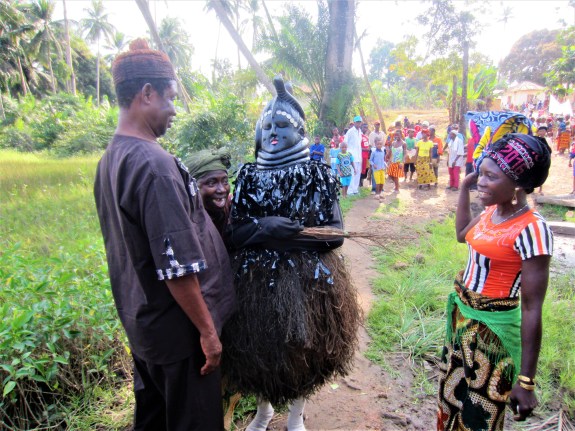
Chief Caulker, right, talks with residents of Motobon village.
International partnerships make it happen
The Ann Arbor Rotary Club contributed $10,000 and coordinated grant contributions from six other Rotary Clubs: Ann Arbor North, Dexter and Ypsilanti in Michigan; plus Cincinnati, Wilmington, N.C. and Pune, India. Rotary District #6380 and the Rotary International Foundation provided matching funds for this two-year global grant.
 A partnership between Ann Arbor Rotary and the Freetown Rotary Club in Sierra Leone will oversee the project’s progress.
Hawa Samai of Freetown Rotary Club, right, visits Rotifunk to kick off the project with CCET and Chief Caulker, left.
“It is a privilege to support the efforts of an extraordinary leader like Paramount Chief Charles Caulker who is working tirelessly to help his Chiefdom recover from an 11-year civil war and the recent Ebola epidemic,” said Mary Avrakotos, Ann Arbor Rotary Club lead for the Sierra Leone project.
“His expansive goals for long-term economic development and to assure that every child in his chiefdom receives a secondary education are exemplary of visionary leadership.”
Multifaceted grant
Rural villages will now be able to develop large fruit orchards on a commercial scale, earmarking income for children’s education and village development, like digging wells and building schools. Also, a women’s vegetable growing program is teaching subsistence rice farmers they can earn more money by diversifying crops and adding fast-growing peanuts and vegetables.
Grant funds will expand the chiefdom’s first birth registration program. And parents of newborns will receive fruit trees to grow for income they can save for their child’s education, reviving an old tradition with a modern goal.
A unique provision of the grant is creation of seven forest preserves to protect drinking water sources, wildlife and trees to benefit of future generations. These will be the first locally organized preserves in Sierra Leone, as Bumpeh Chiefdom strives to protect its all-important natural environment and counteract climate change.
Ashish Sarkar of the Rotary Club of Ann Arbor emphasized, “Projects with the greatest potential are ones like this where the vision is local and our role is simply one of empowerment.”


 I have two visual barometers for the Salone economy. Freetown’s beaches were empty. No tourists, which adds to unemployment. People can’t afford to go to their own gorgeous beaches.



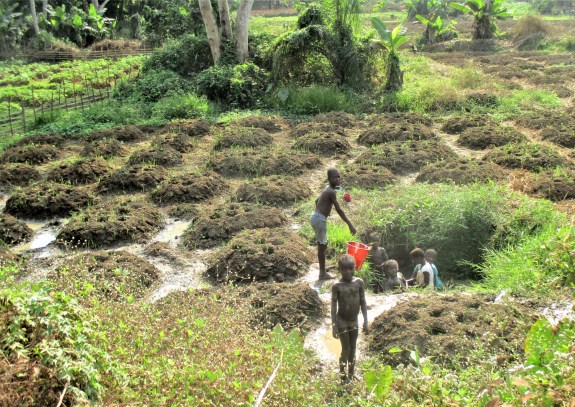

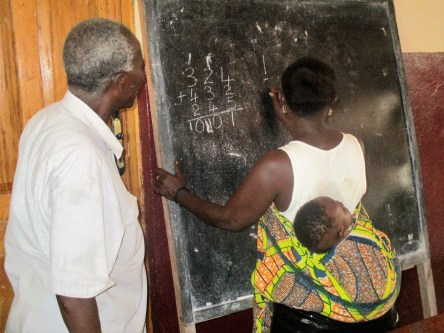 This mother of twelve shows us it’s never too late to learn your ABCs for the first time, and how to “carry over” when adding three digit numbers.

 For Bumpeh Academy, one of the Chiefdom’s newer schools, progress happens in small steps. Very small steps. Senior high classes, previously run “second shift” in a primary school, moved to the main school addition, still in progress as funds are available. In 2015, a concrete slab was poured for three classrooms. In 2016, a zinc roof and partial walls between rooms were added, and classes started. I was happy to hear from Vice Principal Koroma, above, SFSL funded part of the addition with the school fee scholarships we paid for girls. They used the money to buy bags of concrete. Still, children at Bumpeh Academy are in school learning. 98% of Academy students taking the 2016 senior high entrance exam passed! And they have a new Peace Corps teacher, Ethan Davies, above, right corner.
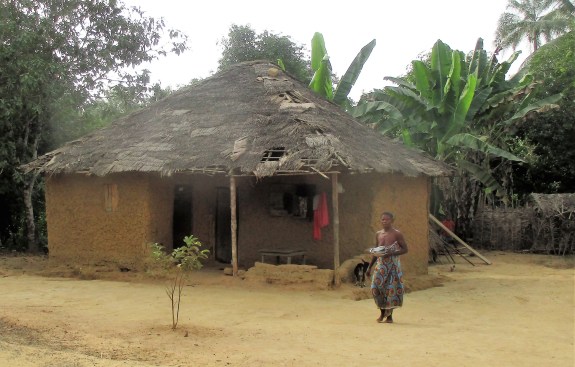
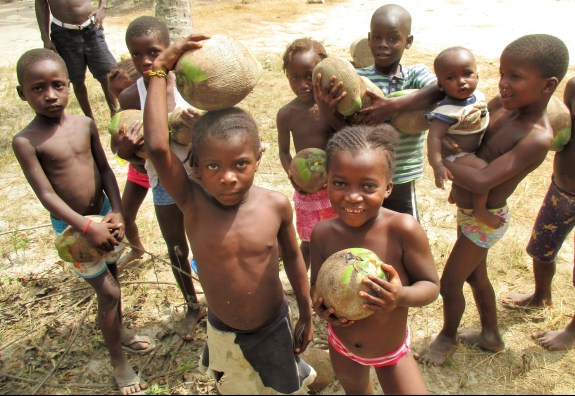

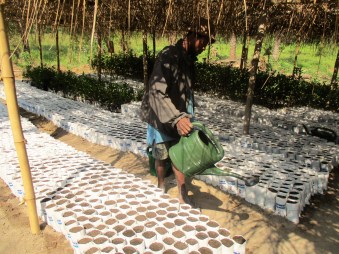
 In full swing, CCET’s fruit tree nursery grows a variety of trees from seed: orange, grapefruit, lime, avocado, guava, cashew, mango. Three workers plant seeds collected from local fruit, and water and nurse them for a year+ until ready to plant in the Village Orchard program. Some go to newborn parents, restoring the tradition of “baby trees.” Some will be sold for income to continue to operate the nursery. Abdul learned to write and make signs in Adult Literacy class.
 Bumpeh Chiefdom is a prime coconut growing area. Pa Willie personally raises coconut seedlings in a closed pen behind his house to keep out thieves. The coconut, husk, shell and all, is embedded in soil until it sprouts. It’s a longer-term venture taking two years, but they’re worth more. Pa Willie’s tree-growing skills date back to working in a Liberian rubber plantation before the war.


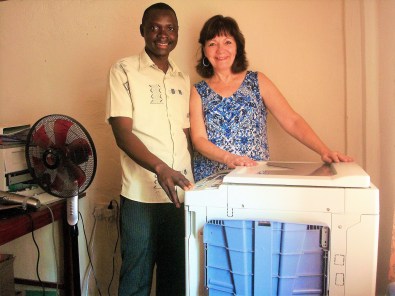 Sherbro Foundation Executive Director and P&G Alumna Arlene Golembiewski, left with Sulaiman Timbo, submitted the proposal. S
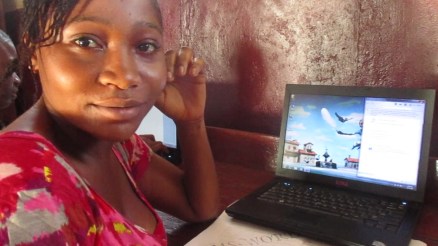 High school students like Zainab, left, get practical
 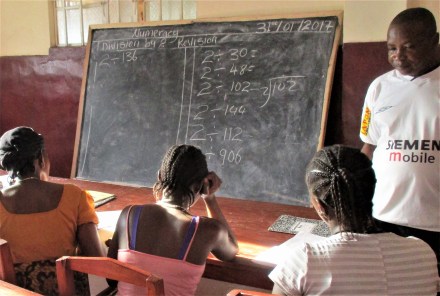 Adults develop
  The Center itself is a new
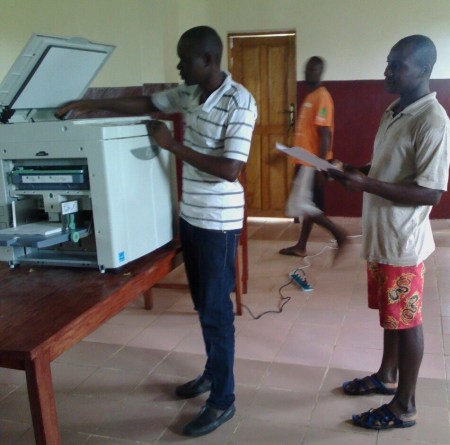
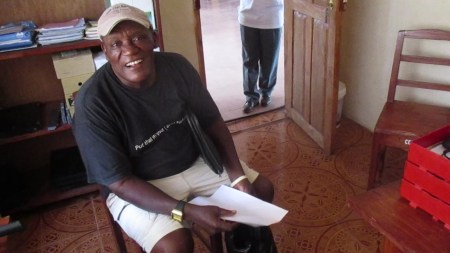 Mr. Bendu, a primary school head-teacher, came into the new printing service at the Center for Community Empowerment & Transformation (CCET) to get some UN Children’s Feeding Program forms printed. He walked out of the new Community Computer Center 20 minutes later with his copies.
 CCET’s new printing service in Rotifunk is scoring a home run for their customers and for themselves.
 Only four months earlier, to get anything printed Mr. Bendu faced an all-day or an overnight trip to the capital, crammed into a minivan bus or on the back of a motorcycle taxi on treacherous roads. His transportation costs alone would have been 10 to 20 times the cost of the printing. The time wasted is just accepted, a common inefficiency holding back developing countries like Sierra Leone.
 These three grant makers were happy to invest in projects giving this rural community services they never had before, knowing income goes to support nonprofit programs.
 Sulaiman Timbo, left, and below left, is printing service and IT manager
 Cell phones are now a way of life, and this means daily charging in a rural town with no electricity.
 The CCET Center rents meeting and workshop space for NGO and government programs during the day, when no classes are in session. It’s the only place in town and for miles around with a facility to hold professional meetings for 20 to 100 people.
 Next on the list to introduce is a small canteen for cold drinks, snacks and catered meals. The room next to the main hall, left, is ready.
 There’s also a growing need for internet service. People may not own their own computer, but they want to be connected to the world around them by email and Facebook.

 Some like Alima Kanu, left, JSS II (8th grade), are the oldest and first child in their family to go to secondary school. She comes from a small village where her parents are rice farmers. Her scholarship to Bumpeh Academy made the difference in her continuing in secondary school.
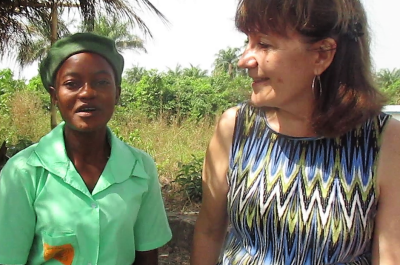 With her scholarship, Isatu Kargbo, left, completed JSS III (9th grade) and got the highest result of 127 students taking the senior high entrance exam.
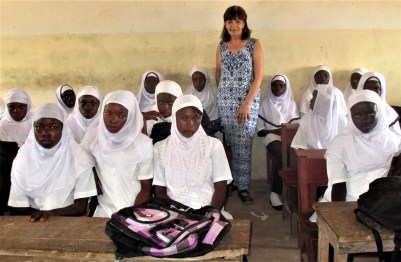 Sherbro Foundation supports five Bumpeh Chiefdom secondary schools of all faiths with scholarships. I met with the 50 girls at Ahmadiyya Islamic Secondary School receiving scholarships this academic year.
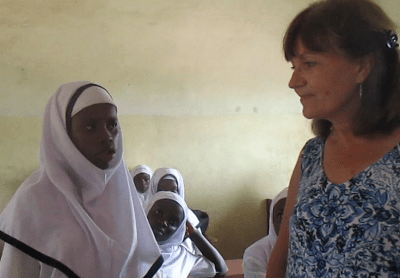 She went on to talk about the challenges the girls face in going to school. There are 208 villages in the chiefdom and only five secondary schools. Many girls must walk 4 or 5 miles or more each way to reach one of schools, often making them late for class. And the tropical sun is hot walking home on an empty stomach to get their one meal of the day.
 Kadiatu, left, told me most girls have no lights at home and have difficulty studying at night. By the time they get home and do chores, it’s dark. At the equator, it’s dark by 7 p.m. year-round.
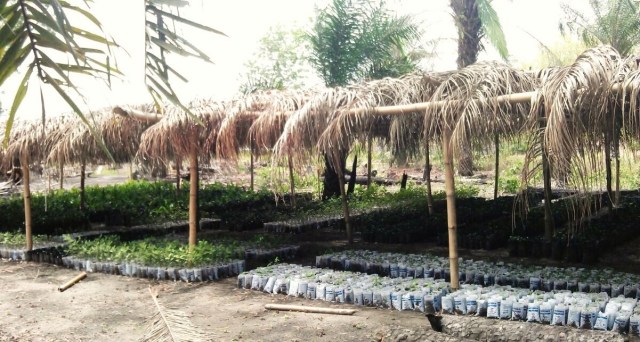
 Seedlings are tended and watered for one to two years, then given to villages to plant community orchards and to parents of newborns to raise for income for their child’s education.
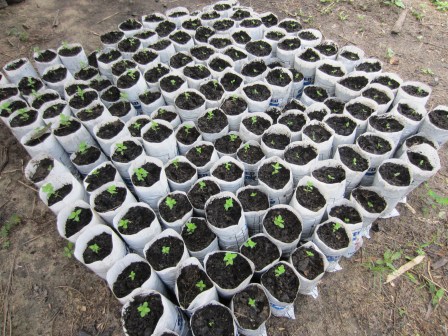 Here’s how an orchard gets started:
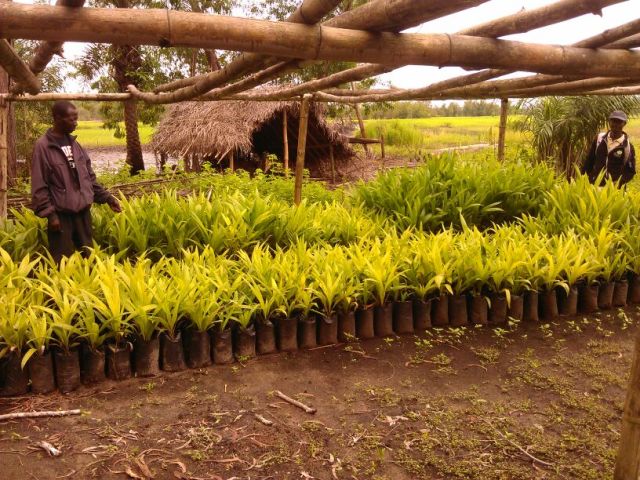 They position the nursery next to a swamp for a ready supply of soil and water. Nurseries are built inexpensively. They’re bamboo pergolas, made from bamboo felled in nearby forests. Palm fronds laid over the top shelter young seedlings from the hot, dry season sun.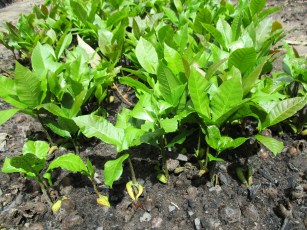
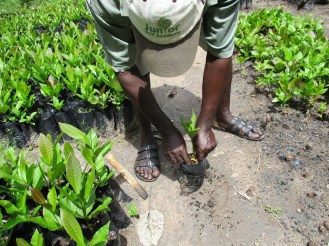
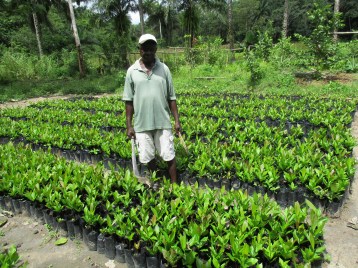
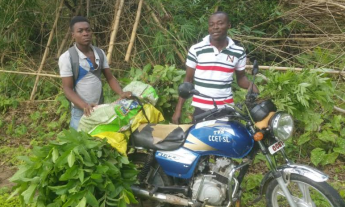
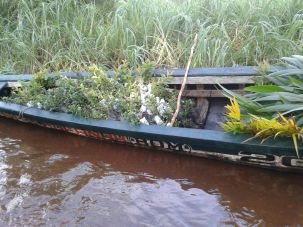
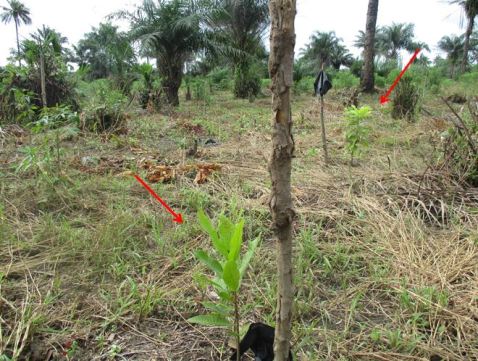 Orchard sites are usually 10 acres and hand cleared by machete, but not burned. The cut brush is laid down as an organic mulch.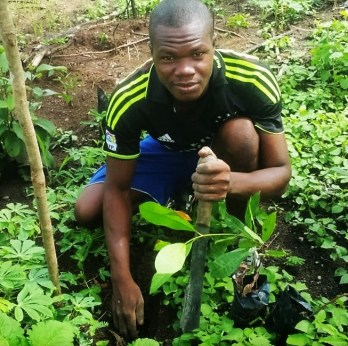
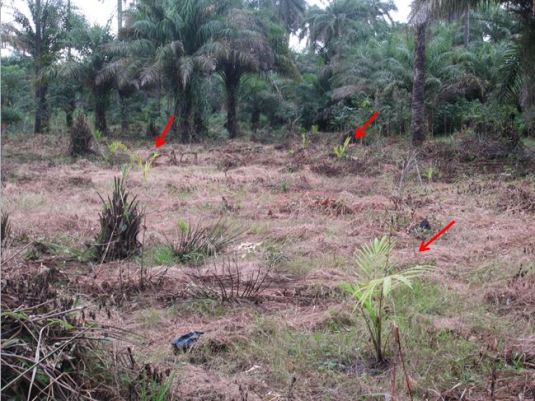
 Villages will earn money faster as fast-growing fruits and bushes shelter the slower growing fruit tree seedlings from the hot equatorial sun. Cassava bushes, left, shelter a two-year old mango, above.
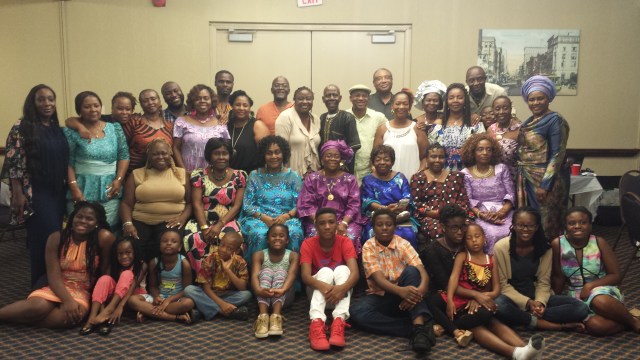 Members of the Caulker Descendants Association at their July 2016 family reunion – their 17th reunion.
 The Caulker Family tree documents their 350 year history starting at the base of the tree with Thomas Coker, born 1667 in Ireland. The tree was constructed by Imodale Caulker Burnett after many years of research into the family’s history she then chronicled in
 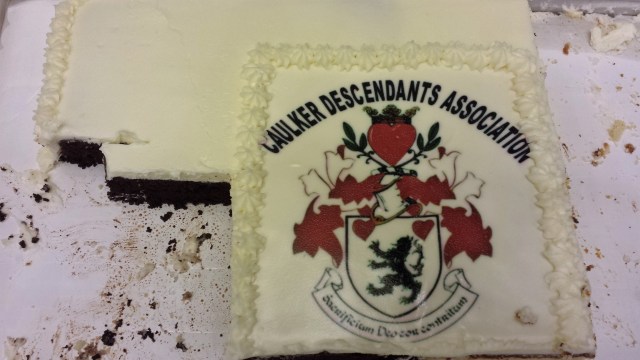 A family reunion wouldn’t be complete without a sheet cake to serve a crowd. But how many families can decorate their cake with a family coat of arms dating to the 1600’s.
 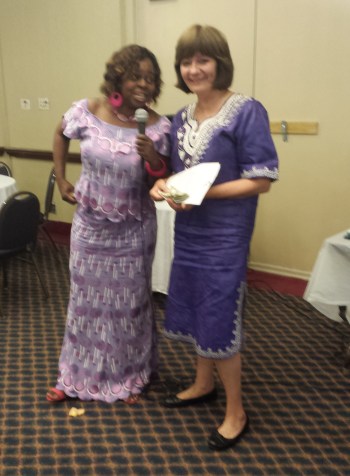 Arlene Golembiewski, Sherbro Foundation Executive Director, accepts the Caulker family Scholarship Fund donation from Enid Rogers, a Caulker grandchild, at their reunion banquet dinner.
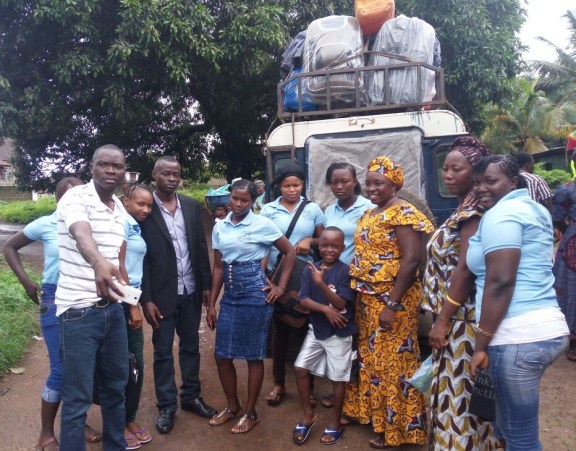
 Zainab’s story stated out badly. She’s one of many girls faced with poverty and an early arranged marriage when her mother could no longer pay for her to stay in secondary school. Zainab later left this older man, who already had a wife, and she returned to school.


 For years, the longtime traditional leader of Bumpeh Chiefdom dreamed of ways life could improve for its 44,000 rural residents.
 “Girls are more serious and work harder. They get better jobs. They take their family responsibilities seriously, and ensure their children and parents are taken care of.
 “Women do 70 percent of the work on the family farm but are not allowed to make decisions on running the farm or selling crops. Their husband controls the money and may carelessly spend it on himself for things like gambling with his friends,” he said frankly.
 “His wife returns late in the day as the sun is going down. She may still need to go buy fresh produce and collect firewood and water before making a fire to cook the family dinner. Her husband will then expect her to have sex that night and she can’t refuse.”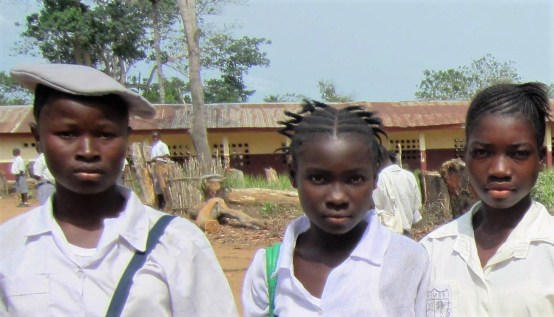

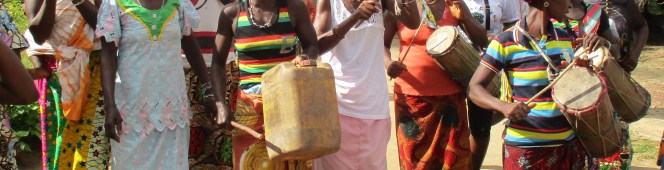
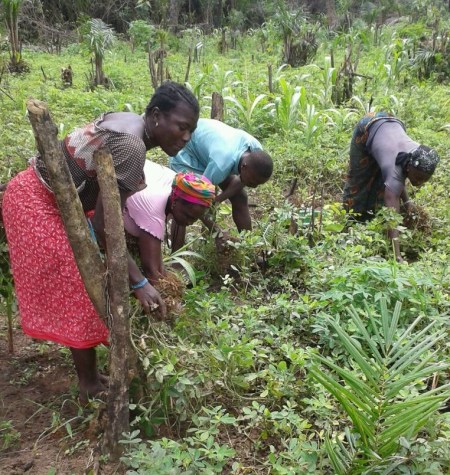 It was conceived as a way to quickly help women earn income again. We started small with 30 women, supplying each with enough peanut seed for a half-acre garden and other vegetable seed like cucumbers and corn. They also got a 50Kg (100-pound) bag of rice to feed their families before their harvest.
 hat may not sound like much, but it was three times more than the women would make in cash in a whole year of traditional rice farming, an incredibly labor intensive crop. And they still had the rest of the year to grow rice and do fishing in the Bumpeh River.
![13177990_689055534567081_9185847638175857474_n[1]](https://sherbrofoundation.org/wp-content/uploads/2016/05/13177990_689055534567081_9185847638175857474_n1.jpg?w=640)
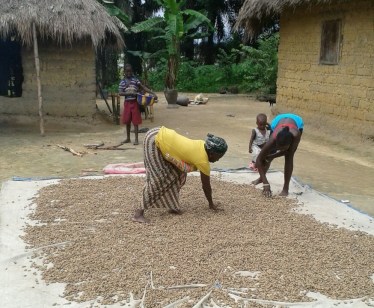 The 2014-15 farming year was exceptionally hard with Ebola. The first group of women peanut farmers unfortunately didn’t become self-sufficient with just one peanut crop in 2015. They were forced to eat a large part of their first peanut harvest to avoid hunger. But this allowed them to save some of the previous year’s rice as seed to grow their next rice crop. We’re giving these first 30 women partial support again in the current project to ensure they can make enough profit in 2016 to go from there.
 During an April 6 public program Sherbro Foundation hosted in Cincinnati, Chief Caulker told the rapt gathering about the stark realities of life in Bumpeh Chiefdom. Conditions actually have worsened in the last 20 years. The partial recovery following a brutal 11-year rebel war was dealt a big setback with the recent Ebola epidemic. People are struggling to feed their families.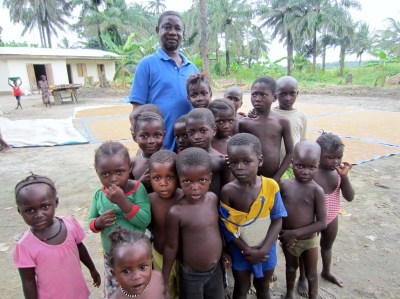



 Sherbro Foundation