Sherbro Foundation celebrates its seventh anniversary next month. To understand this success, just look to the head of the community-led program with whom we partner in Sierra Leone. We’ve been honored to work with Paramount Chief Charles Caulker since 2013 and support his chiefdom development efforts. And now we salute his 35th anniversary as paramount chief!

Nearly 2,000 cheering people packed the celebration of Paramount Chief Charles Caulker’s dedication to traditional rule of Bumpeh Chiefdom. He is the second longest serving paramount chief in Sierra Leone. I knew I wouldn’t see a traditional ceremony of this significance again anytime soon. I went to Sierra Leone in December to witness it myself – and now share it with you.

“You have stood tall to achieve unity in this chiefdom and brought development … [that has] no boundaries between your rivals and your allies. May our god continue to keep you on your throne for 10 years, 20 years and even more.” –Bumpeh Chiefdom-born businesswoman Alice Conteh-Morgan at Chief’s celebration
Chief Caulker’s feat is not just one marked by length of service, but by 35 years of uninterrupted peace and unity in his rural chiefdom. Sierra Leone’s highly centralized government is far away in the capital Freetown. It’s the paramount chief who keeps law and order on a day-to-day basis, and maintains peace and stability.
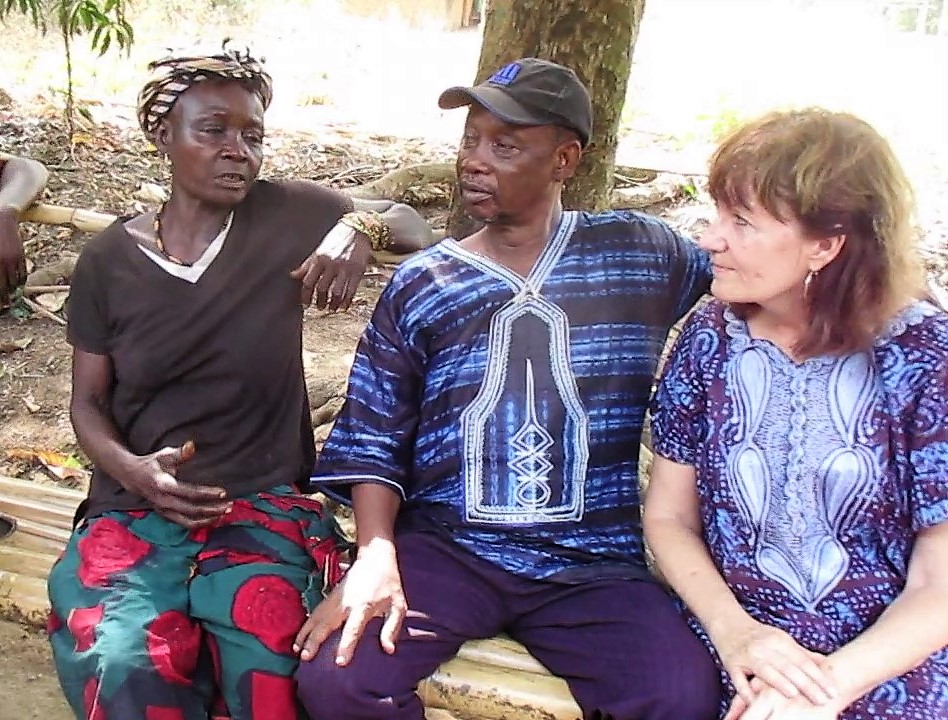
 Ms. Conteh-Morgan, right, with Chief, far right, continued, “It’s not easy for someone to rule for 35 years without his people rising against him.”
Chief Caulker has served through a dynamic period in the ’80s of the country’s still-young democracy, an 11-year rebel war, five presidencies with alternating and hotly competing political parties, and the Ebola crisis. Imagine a U.S. governor retaining office with strong support over 35 often tumultuous years.
Paramount chiefs are elected, and then serve for life. But Chief Caulker feels he needs to periodically face his people and seek their support for continuing in office, as he did on this day in December.
The day began with people coming to salute their chief with drumming and the deafening vuvuzela-style horns African soccer fans love.
 Amateur “devils” entertained the gathering crowds, as people found their seats under temporary shelters of bamboo and palm to escape the sweltering tropical sun.
People were invited from across the chiefdom, as well as friends and national and district government officials from Chief’s 45 years in public life.
Poro, the men’s secret society, led the traditional part of the ceremony. They serve the paramount chief, and also act as checks and balances on their chief’s rule.
They offered symbolic gifts, below, reaffirming they want this chief to continue as their paramount chief.
 The conchama, above, took the lead. She is a special sub-chief in Bumpeh Chiefdom and one of the stalwart keepers of its oldest traditions. The conchama has been a female chief for as long as anyone can remember, and is unique among women. She was initiated into Poro and participates as a leader in the men’s society.
One symbolic gift was a jug of honey, representing all the sweetness of their chiefdom they give to Chief Caulker and entrust him with protecting.
The conchama said she was repeating the tradition she performed ten years ago at Chief’s 25th anniversary. With their symbolic gifts, Bumpeh Chiefdom was now handing over the chiefdom to Chief Caulker’s care for another 50 years!
 The day was a mix of the traditional and the contemporary, just like the man himself.
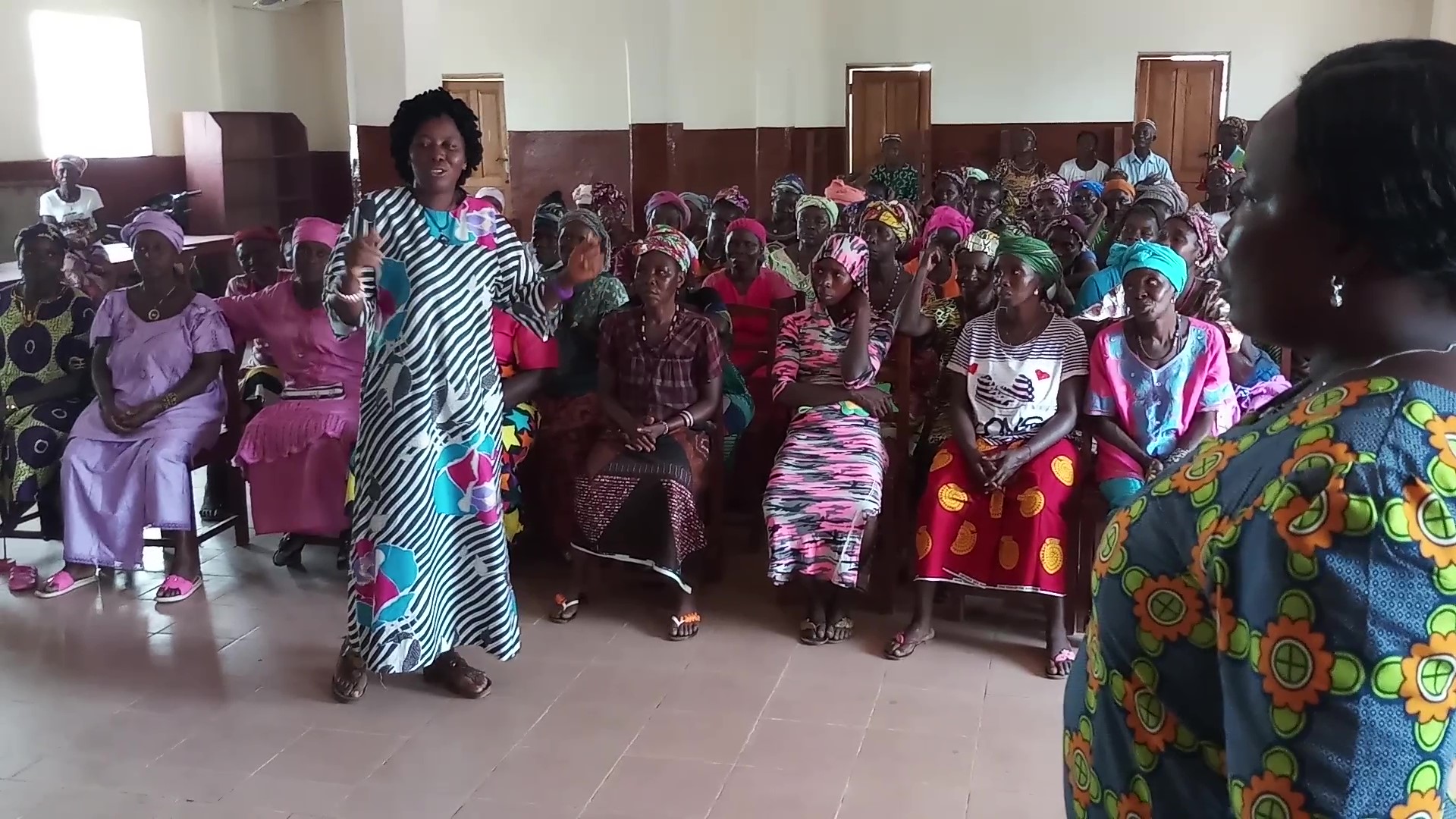
Chief Caulker, right, gave a state-of-the-union type of address, and told of what he’s accomplished and what he yet plans to do. The people roared their support.
Chief told me the thing he’s most proud of is uniting his chiefdom and keeping peace for 35 years, an accomplishment that’s been impossible elsewhere in Sierra Leone.
Bumpeh Chiefdom is diverse with seven often competing tribal groups in one area. Chief assumed his office in 1984 after a local violent conflict, followed by a highly contentious election. He was young to take office as a paramount chief — only 35 — and untested. But he made peace and reuniting the chiefdom his objective.
He did it by balancing the rights of all tribes and not allowing any one group to achieve dominance. His family tribe, the Sherbro, is now outnumbered in their own homeland. But he insisted all tribes would sit together in governing the chiefdom, with no one group favored over the other. Everyone has equal rights and deserves equal opportunity in his mind.
Speakers bore this out in their testimonials for Chief. “He is a man with a clean heart,” said the District Officer, the ranking district government official. “No matter what you do, he’ll never get angry. He embraces everyone and forgives all. After the rebel war, he came and worked with the government and NGOs to restore hope and joy to his people.”

Mr. Tamba Lamina, Minister of Local Government and Rural Development recalled how Chief Caulker advised five successive governments on local governance and represented the paramount chiefs of his district in parliament for 12 years after the war. Most recently, Chief was part of a 12-member transition team in 2018 for the newly elected Maada Bio government. Lamina said, “I consider Chief Caulker a benchmark for rural development, and use him in assessing other chiefdoms in the country.”
 Some of the strongest praise came from the man who actively opposed Chief in that paramount chief election 35 years ago.
“I believe I’m going to die and leave you on the throne to bring more development [to our chiefdom],” Alie Bendu, far left, declared.
“Today we are handing over these [symbolic] items to you as a sign we are happy with you and want you to govern us more.”
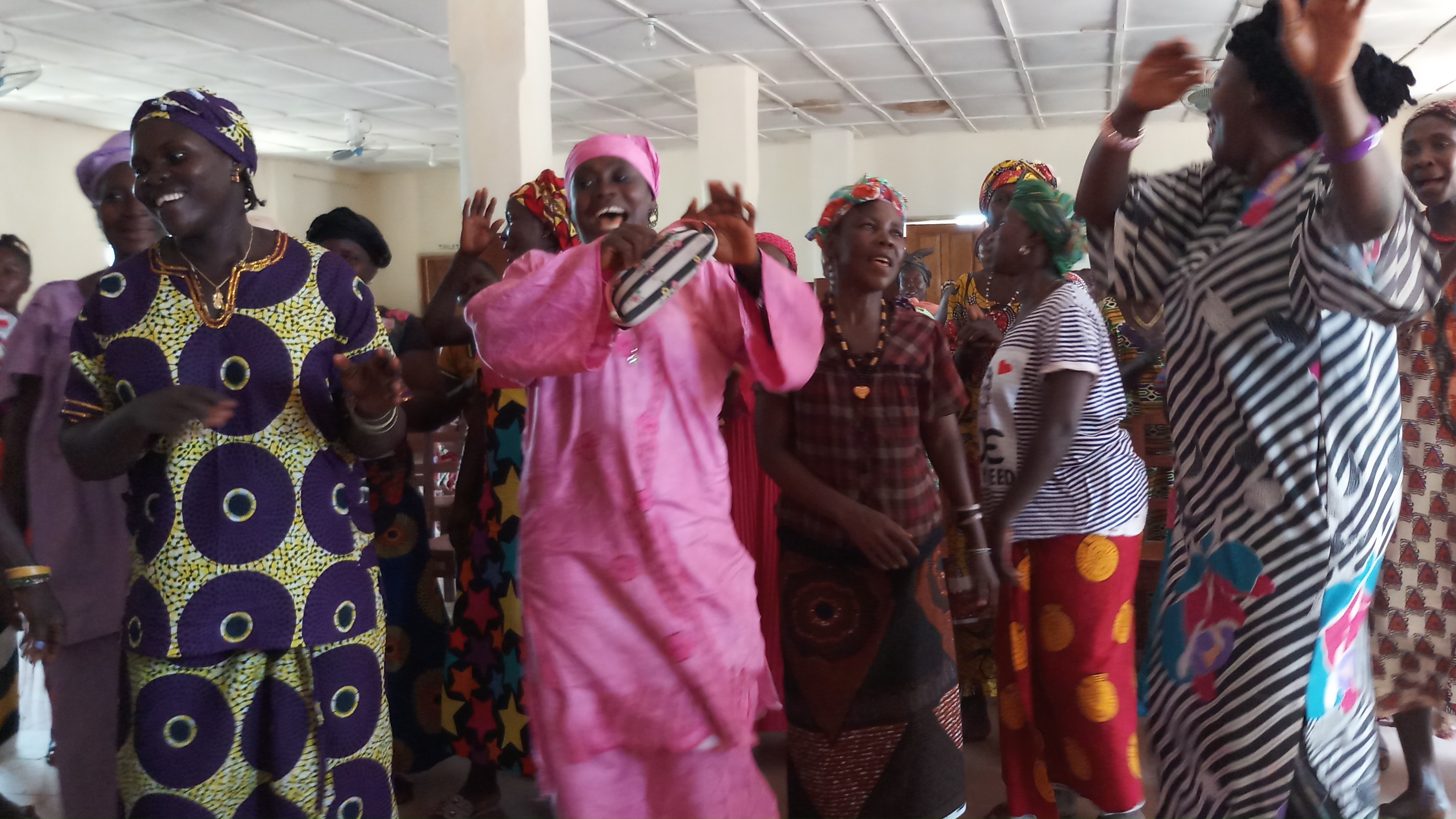
Then it was the people’s turn to celebrate their chief with traditional music and dancing.

The women’s society led off with their Bundu devils and colorful Sampa dancers, above and below.
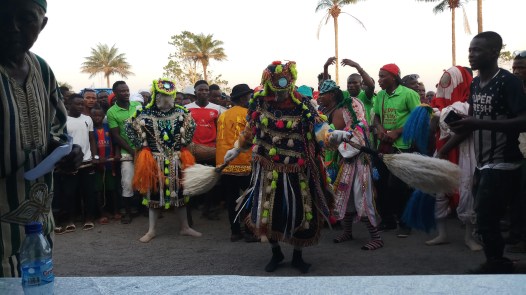
The athletic Ojeh society dancers, above and below, are from the Temne tribe.
The masked Nafali dancer, below, is often sent ahead to announce the men’s society devil, the Gboi, will follow him. Other dancers joined the Nafali.

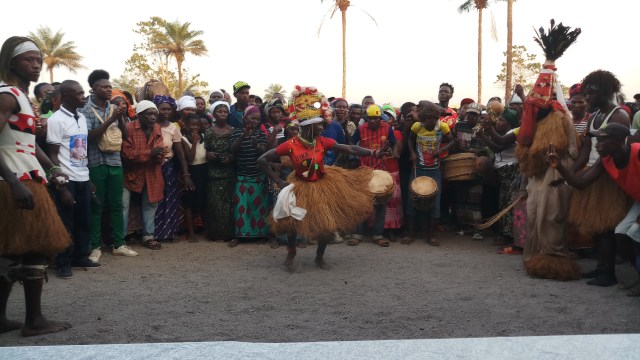
No cultural show is complete without the main devil from the men’s Poro society, the Gboi, below, a huge whirling dervish of raffia.

The official cultural parade ended by late afternoon. But the dancing DJ-style went on late into the night, or I should say into morning. A day-long fete fitting for a 35-year paramount chief.
This was just one of five days not only honoring Chief Caulker’s 35 years of public service, but also his 70th birthday. Family members came from the UK and the US to celebrate with Chief.
 Thirty-five years in service, but in no way is Chief Caulker retiring. He seems to just be picking up speed, with plans for the coming years pouring out.
The challenges in Bumpeh Chiefdom still loom large. But we can’t think of anyone more up to tackling them – and showing other chiefdoms the way – than Paramount Chief Caulker.
For those of you who join Sherbro Foundation in supporting Bumpeh Chiefdom’s community-led programs – thank you. There’s much more yet to come!
– – Arlene Golembiewski, Executive Director

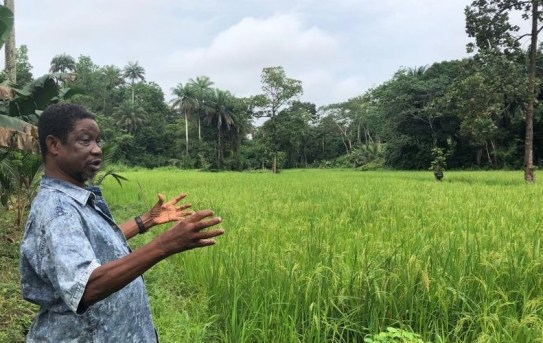

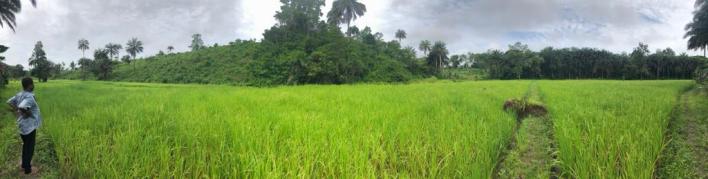
 Seven acres of IVS rice, above, were just harvested in what proved to be a bumper crop.


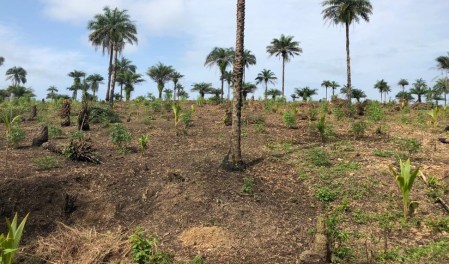 The third, most recent orchard was planted in June-July of this year
  Trees in the second orchard, left, planted in 2018 are strong, sprouting up with two rainy seasons of growth.
 The first orchard planted in 2017 is now in its third year.
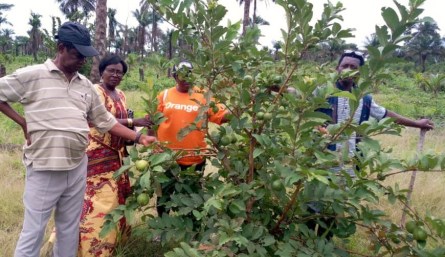 Guava and lime trees planted in 2017 in the first orchard are sporadically fruiting, and will yield a good harvest next year.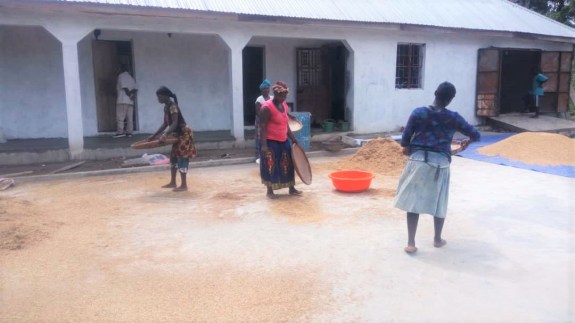


 I always anxiously await seeing what happened to individual girls I’ve gotten to know. This picture of Fatmata proudly smiling in her senior high uniform made me smile, then left me teary thinking of her story.


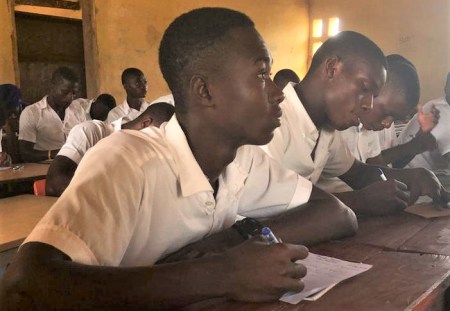 The fact is, they do. And with the scholarship program, the number of girls in Rotifunk secondary schools is catching up to their male peers.
 Student profiles show just how important it is to support boys as well as girls. Mustapha, left, is doing well now in 12th grade with his second scholarship.

 School sports meets are a huge deal across Sierra Leone, but especially in rural towns like Rotifunk with little to entertain and amuse. Students march onto the sports field in brightly colored T-shirts for their house’s color, while a DJ blasts out music with massive speakers (thanks to a generator for power).
 Announcers calls out the competitors in their various track & field events and give the volleyball play-by-play account. Winners in individual events get certificates. Houses will parade around town with trophies boasting of their overall meet results.
 My colleagues from our partner CCET-SL turned out to support Arlene’s house. Each house comes with its own masked “devil,” a nod to their traditional societies. These devils compete in a wildly gyrating dance competition where spectators vote by tossing money in their basket.






 Girls in CCET’s tutoring program waiting to start their senior-high entrance exam.
 Why the title Eat. Pray. Learn?
 And prayer in all faiths, left, is part of the camp day. At day’s end, tables were pushed to the side and girls spread out on the floor to sleep dormitory style.
 We especially want to congratulate Bumpeh Academy who had the highest exam results (all students, boys and girls) among schools in 3 adjoining chiefdoms.












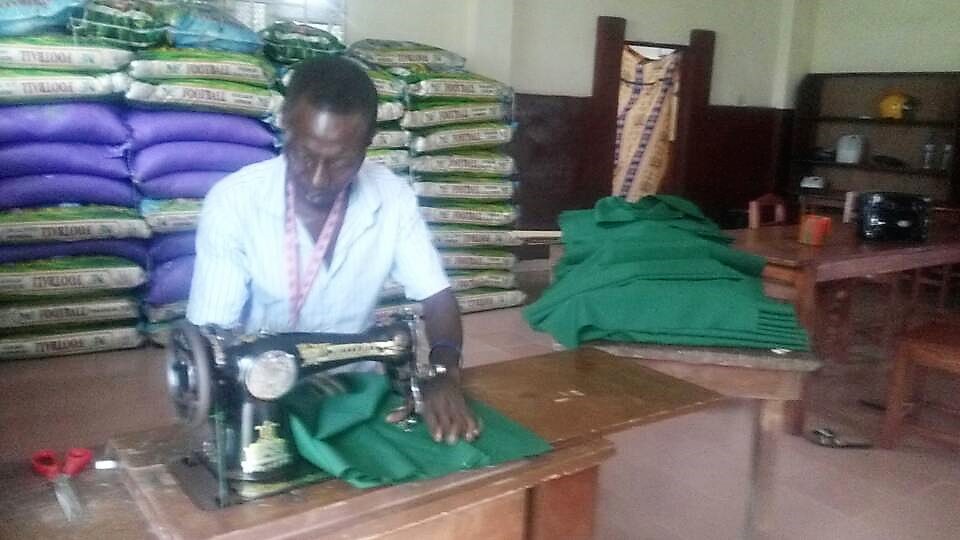 Uniforms are being sewn locally.
 The solar lights we sent were
 Yet Isatu has big plans. She wants to become a lawyer.
 As a biologist myself, I had to stop and think, it’s the same as with any other fruit. In nature fruit drops from a tree and will start growing where it falls.
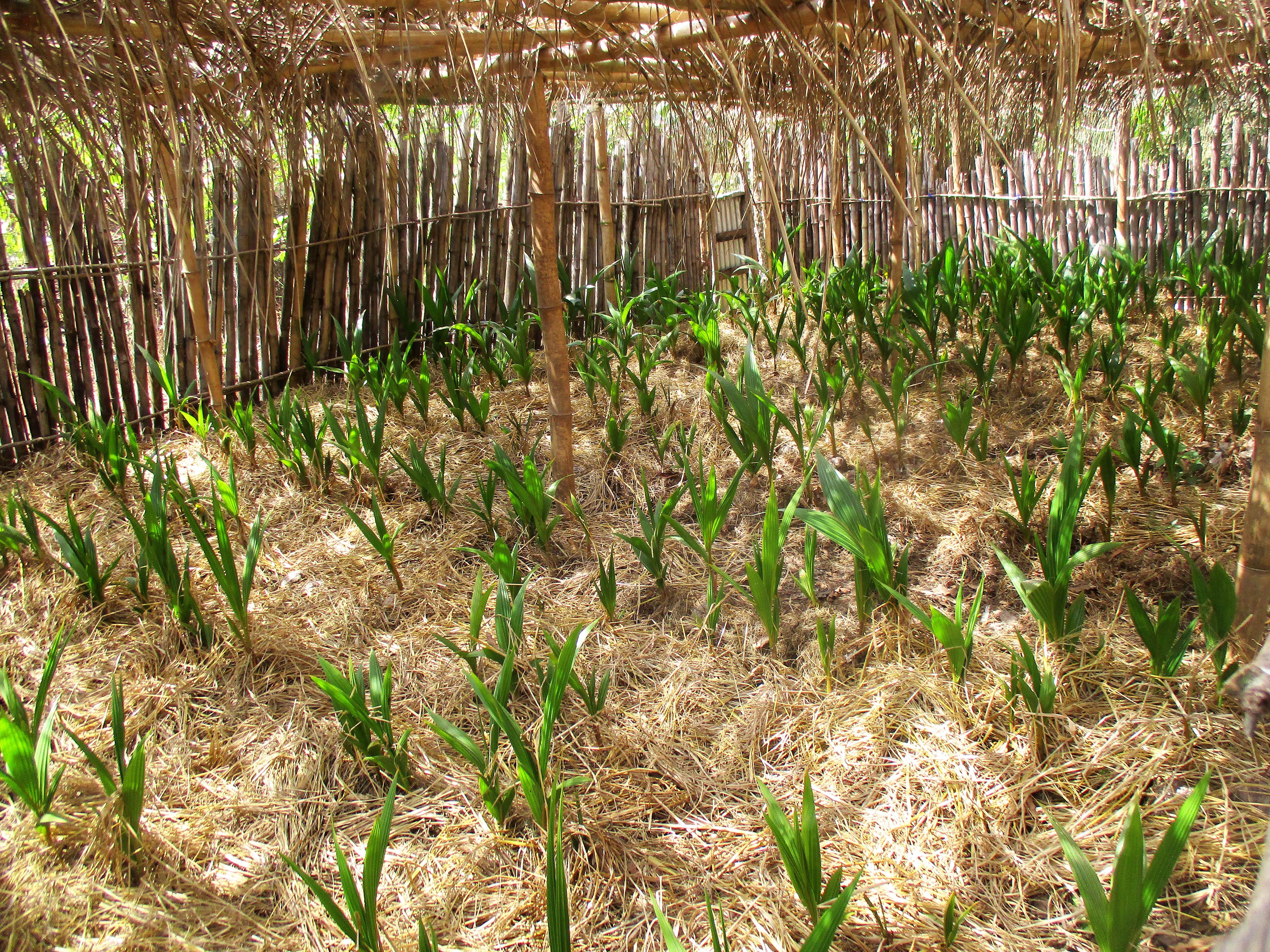 Bumpeh Chiefdom is lowland tropical rainforest, perfect for growing coconuts. The Center for Community Empowerment & Transformation (CCET) is growing them commercially by the hundreds in a coconut nursery.
 Coconuts, shell and all, are planted about a third of the way into loose soil and covered with straw mulch.
 CCET’s nursery manager, Pa Willie, grows project coconuts in a protected nursery to keep thieves from stealing them. It’s a fenced in and locked pen right behind his house he keeps an eye on.
 Work is underway and on a tight schedule, as the annual rains started in May. Here’s the step by step process.

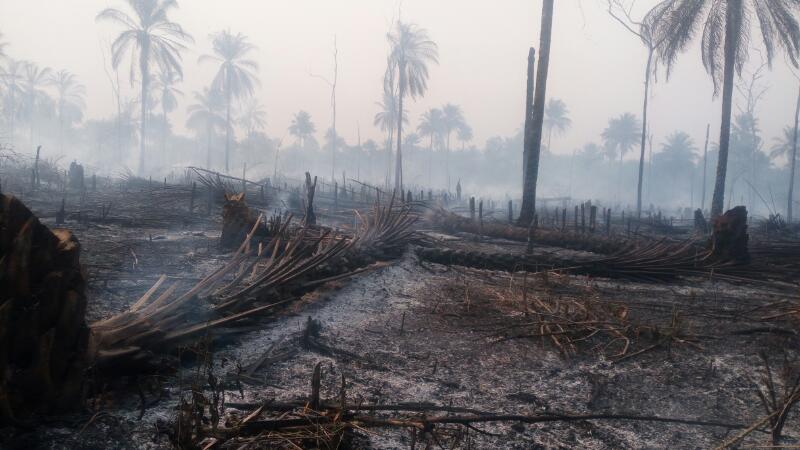 With no mechanized equipment to clear the land, it must be burned.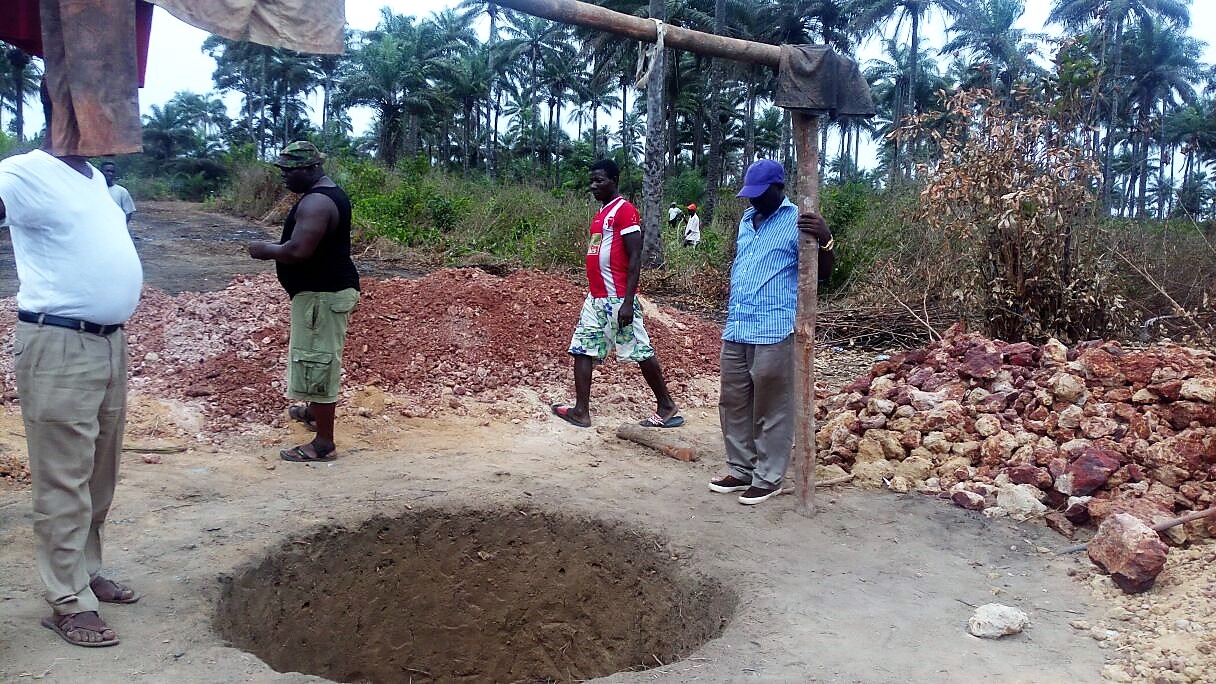
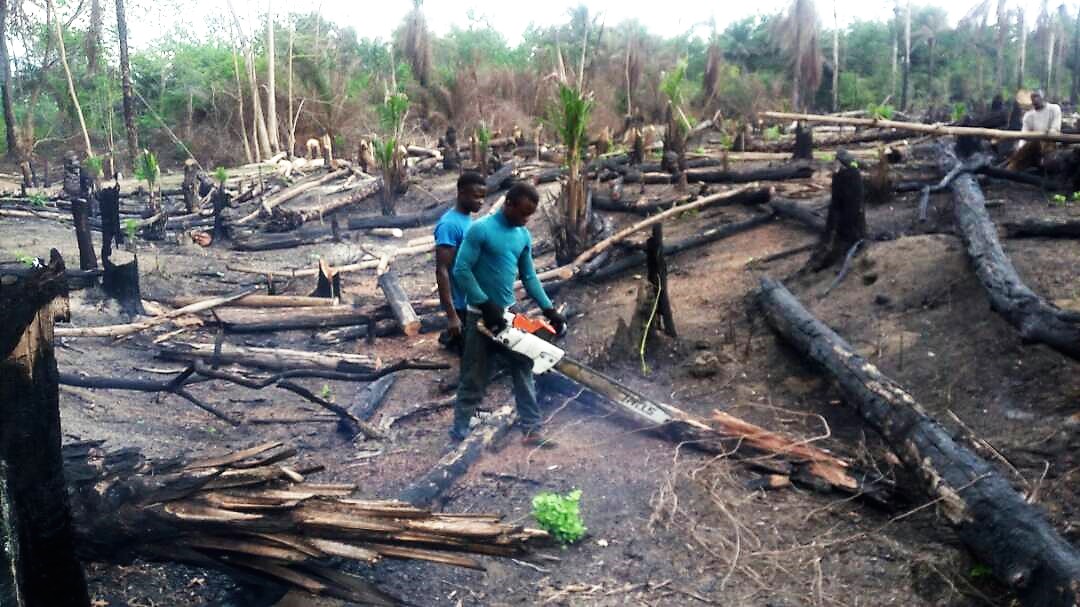
 Little goes to waste in Bumpeh Chiefdom.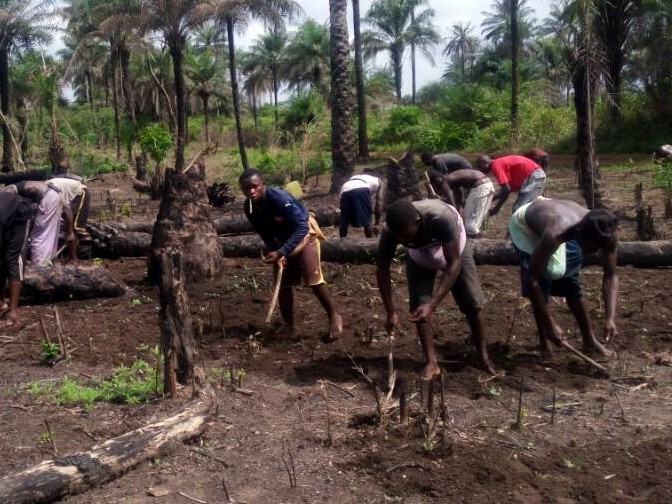






 Sherbro Foundation