
When Mustakin Conteh arrived at the Center for Community Empowerment & Transformation last September, he didn’t just bring professional nonprofit experience—he brought a vision. As our partner organization’s first manager with formal NGO background, Mustakin has spent the past year moving CCET-SL from a small community organization towards his goal of a full-fledged Sierra Leone nonprofit.
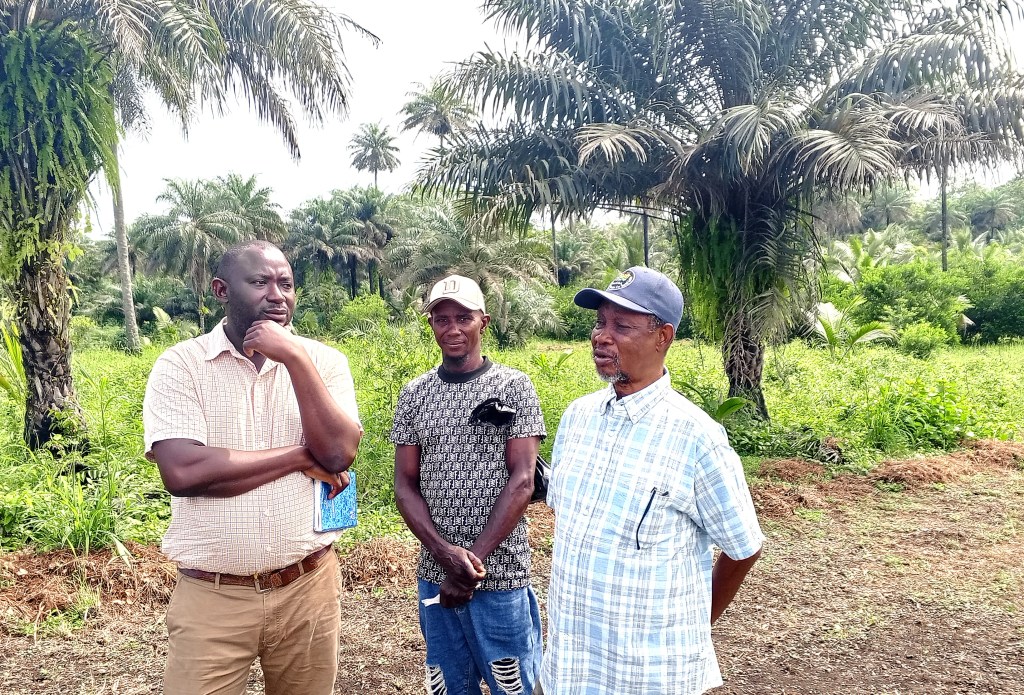
But his story begins much earlier, in a classroom in Bo.
A Teacher’s Calling
Like many first pursuing higher education in Sierra Leone, Mustakin started as a teacher. With a B.A. in Education, he taught secondary school English and English Literature for ten years in Bo, Sierra Leone’s second largest city. But as the country was recovering from its devastating rebel war, he witnessed firsthand how rural communities remained trapped in cycles of poverty that the conflict had only deepened.
That experience changed everything.
Armed with a Master’s in Rural Development from Njala University, Mustakin embarked on a second career dedicated to rural transformation. For 12 years, he honed his skills with Sierra Leone NGOs and international NGO programs like Save the Children and Welthungerhilfe, learning how to turn development theory into real-world impact.
Boots on the Ground Leadership
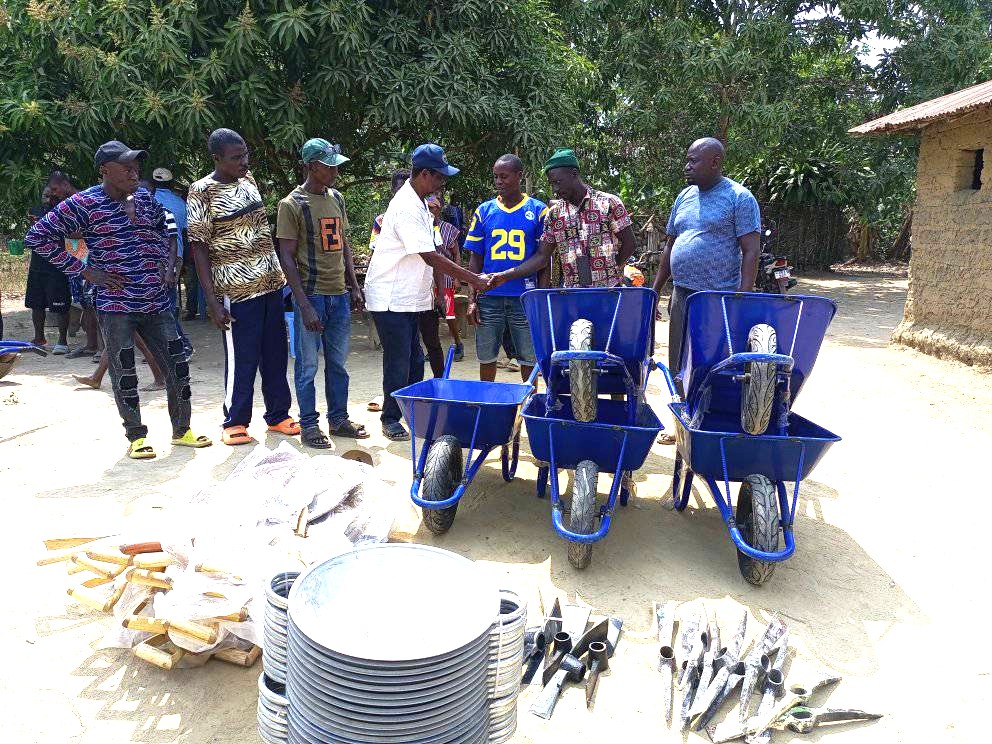
What sets Mustakin apart is his hands-on approach—still uncommon in rural Sierra Leone. I find him everywhere: meeting with school principals and teachers, visiting Let Them Earn villages, checking operations at CCET-SL’s Orchards for Education at 8am before continuing with his day. He doesn’t manage from behind a desk. He leads from the field and sets operating standards.
Staff and community members could see he’s there to improve the lives of everyday people. His respectful, engaging style quickly earns trust. CCET-SL’s small staff achieves broad community impact through local partnerships. Mustakin’s kind of relationship-building is everything.
Results, Not Just Reports
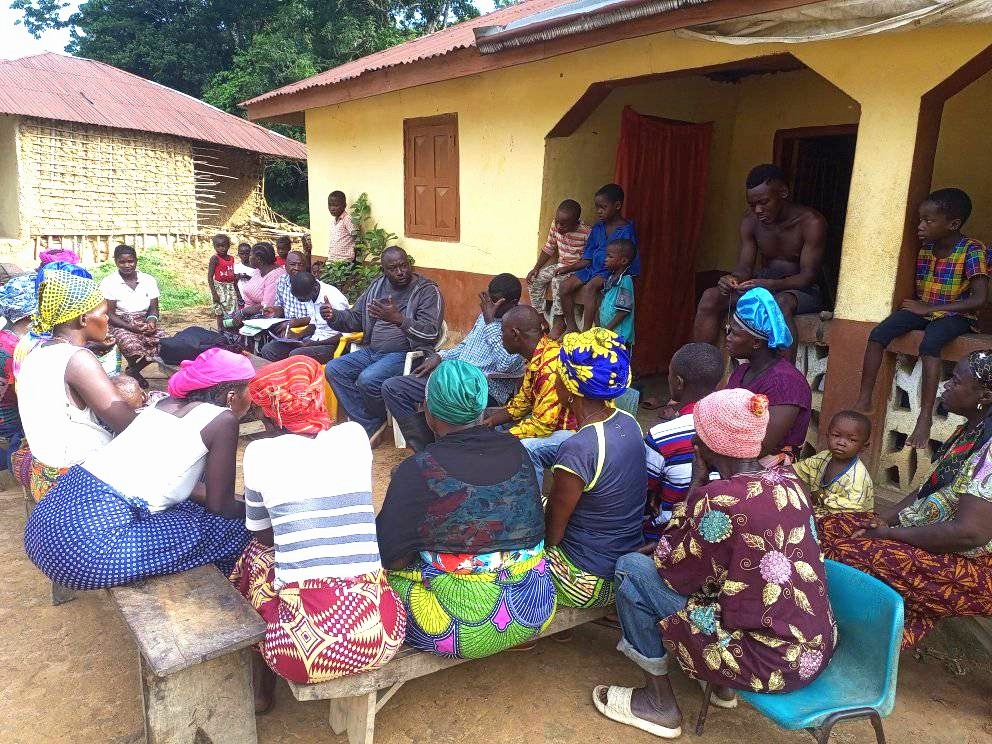
Mustakin didn’t come to simply manage programs on paper. His NGO experience trained him to look beyond activities to long-term impact. “How are we actually improving lives?” he asks—a critical question as CCET-SL enters year two of its village farmer development program, Let Them Earn. He’s guiding the project team and villagers to identify early learnings and make modifications to be more effective.
Project Management expertise
This results-oriented mindset recently solved a pressing challenge. Climate change is threatening CCET-SL’s 60-acre Orchards for Education with rising dry season temperatures and erratic rainfall. When asked to address this, Mustakin sprang into action.
Within three months, he had:
- Researched water system solutions, confirming a borehole as cost effective
- Engaged government advisors for technical design
- Secured the best borehole contractor
- Delivered a complete system reaching 220 feet to an aquifer providing plentiful clean water
Today, elevated storage tanks and standpipes cover the 60-acre orchard, ensuring maturing trees have year-round water. Mustakin isn’t an engineer, but he knew how to analyze problems, find technical resources, and execute solutions—exactly the project management skills rural communities desperately need.

Building a Legacy
 For Mustakin, this work transcends employment. “I’m here to create my own legacy,” he tells us. His commitment to the people of Bumpeh Chiefdom runs deep, driving him to push through the daily challenges of rural development work. Like getting to project sites on roads, left, he found even his motorbike had trouble passing in the rainy season.
As CCET-SL – and Sherbro Foundation – continue our mission of lifting communities out of poverty, we’re grateful to have a leader who understands sustainable change requires both professional expertise and genuine heart for the people being served.
Thank you, Mustakin, for choosing to invest your talents where they’re needed most—and for showing us what dedicated leadership looks like in action.
— Arlene Golembiewski
Executive Director


 A partnership between Ann Arbor Rotary and the Freetown Rotary Club in Sierra Leone will oversee the project’s progress.
 Sherbro Foundation