With your Sherbro Foundation gift, you’ve helped improve 300 lives by putting 60 family breadwinners on the path to sustainable mini-businesses.
The Women’s Small Grant & Savings Project is an evolving story, proving once again that when a door closes in Sierra Leone, another opens.
The price tag? Just $6,000 – 60 market women each receiving a $100 grant.
 They’re women like Yeama, left, who could be on her way to becoming “middle class” in her subsistence society.
The 45-year-old single mother of six was an orphan who couldn’t afford to go to school, or send her children to school after her husband abandoned her and the children. With the government now paying school fees, her youngest two girls are in junior high.
Yet, she is showing a talent for market trading. With her $100 grant last January, she’s grown her small business. That means she’s able to also save money. She’s one of the highest savers in her women’s saving group of 60. As its first year wraps up, Yeama is close to saving 2 million Leones – or $200. Double the grant she received and more money than she’s ever had.
She pays her own transportation for long trips to Freetown to buy toiletries to sell in Rotifunk’s market and still turns a profit. Small containers of soap, skin cream, toothpaste and mirrors are popular.
Other “petty traders” bring to market what they can carry on their heads: palm oil, dried fish, peanuts, produce, vegetable seeds. They buy at low prices in villages and resell at the big Saturday market. Most are illiterate. Many didn’t understand how to figure their profit.

We didn’t set out to sponsor market women. Our chiefdom partner, the Center for Community Empowerment and Transformation (CCET-SL), needed women last year to plant and water seedlings in the vegetable fields. But that project soon grew to 11 acres, too large for women to carry water around by hand.
Paramount Chief Charles Caulker didn’t want to put these needy women out of work. That’s when the new door opened. CCET Managing Director Rosaline Kaimbay came up with the idea of funding the women to expand their small market trading businesses and including a group savings plan.
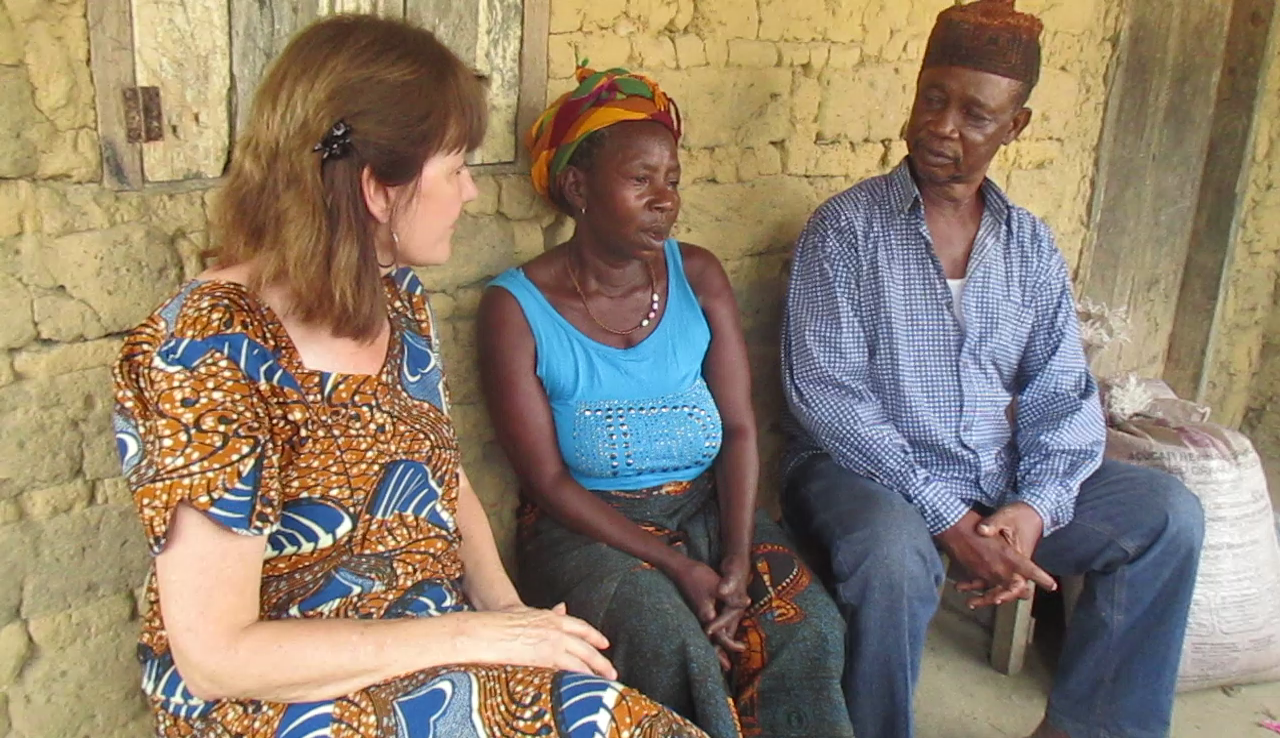
With prompt Sherbro Foundation funding, 20 market women received $100 grants each. Kaimbay, above left in black, gathers them for weekly Sunday meetings where they’re required to deposit something (no minimum) in savings and they discuss selling experiences. The veteran women traders advise the younger ones on good buying opportunities and how to improve profits.
Each woman deposits her weekly savings into an iron lock box with three keys, to be returned at year’s end. This is not a micro finance program. These extremely impoverished women can’t afford to pay back a short-term loan with interest. Those kind of schemes have put them back where they started, or even in debt.
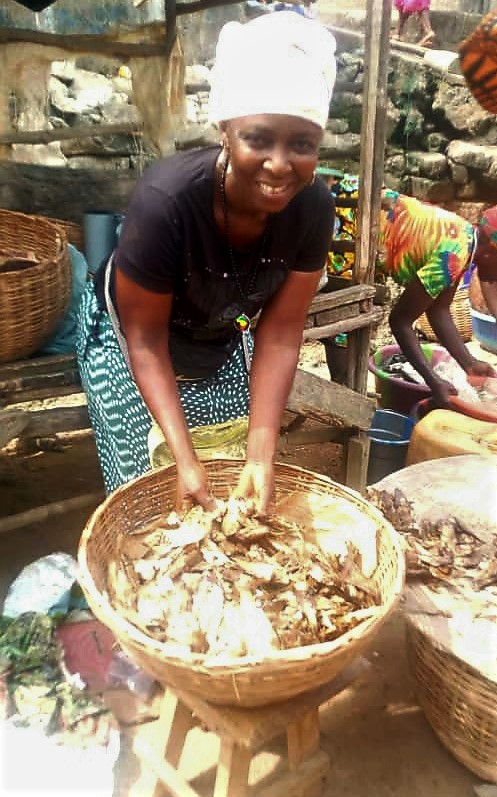 The women needed instant capitalization to bring more earnings home that improve their daily lives, as well as save. Soon, 40 more traders were added, 20 of them “fish mongers,” like Marie left, who buy dried fish from fishing villages to sell in Rotifunk. The women needed instant capitalization to bring more earnings home that improve their daily lives, as well as save. Soon, 40 more traders were added, 20 of them “fish mongers,” like Marie left, who buy dried fish from fishing villages to sell in Rotifunk.“This program can change the lives of these women,” Chief Caulker says.
“In another year, some can reach what for us is a middleclass income level, and stand on their own using capital they produce themselves,” he said. Women still come thanking him for the opportunity to grow – or pleading for the chance to be included. A steady business, no matter how small, has a broad ripple effect on the women’s community. They spend their earnings where they live.
First, children are fed two if not three meals a day. This includes wards many women take in from village relatives so they can attend school in town. Girls stay in school longer, avoiding early marriages and dangerous early pregnancies, and gain more promising futures.
With a little savings, women can seek early medical care for kids with malaria or other diseases that take the lives of twenty percent of children under 5.
 One invigorated trader is Zainab, left, who had to drop out of school at the 9th grade. She was forced into an early marriage because her family could no longer feed her at home. One invigorated trader is Zainab, left, who had to drop out of school at the 9th grade. She was forced into an early marriage because her family could no longer feed her at home. Zainab was a good student. She is now selling fresh fish at the weekly market and manages her business well. She’s one of the best savers in the group. In nine months, she saved $175.
Sherbro Foundation Executive Director Arlene Golembiewski sees better prospects for Zainab and others with more training and support.
“The fact is, market trading is the main business in Rotifunk,’’ she said. There are no local wage-paying jobs. “Trading should be seen as a career opportunity, not just a default for those with no other options.”
And the market looks destined to grow soon because a neglected road between Rotifunk and Moyamba, the district capital 17 miles away, is finally being upgraded. Traffic from across the district is expected to soon pass through town on their way to the capital.
Paramount Chief Caulker and the rest of the CCET Board are now evaluating the program, planning improvements for its second year.
 Adama, left, works very hard at her new opportunity. One of her husband’s two wives, she was forced to provide for her five children alone. The four oldest were married off young because she couldn’t afford to support them. Adama, left, works very hard at her new opportunity. One of her husband’s two wives, she was forced to provide for her five children alone. The four oldest were married off young because she couldn’t afford to support them.But now Adama – who walks to market with two tubs on her head — is succeeding at trading and has saved more than 1 million Leones, or $100.
At the end of the year, she withdrew her savings. It was like getting a second grant – one she paid herself.
If she and her friends could meet you, we know they’d thank you from the bottom of their hearts for providing a way to better futures with new hope.
We hope their stories bring you some joy and happiness in this strangest of years.
— Chris Golembiewski, Vice President, Sherbro Foundation
|

 Rice farmers are often forced to take a loan from a local lender at interest rates of 50% and more to send their children to school. These informal village lenders can charge this much because villagers usually have no other option for a loan.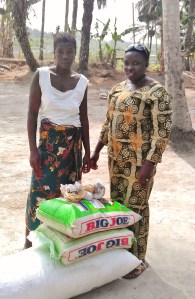
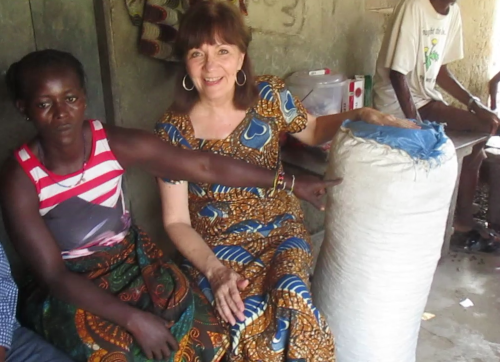

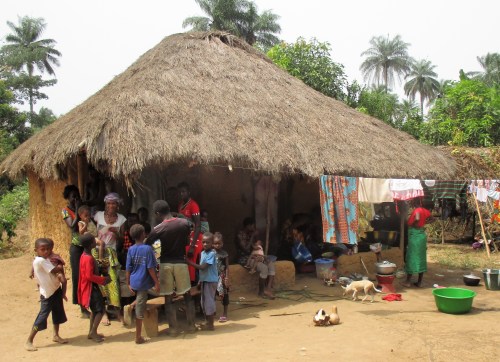 Fula Musa was one of eight women in the project from this small village of 25 houses.
 Sherbro Foundation