Making Personal Connections

The beauty of Paramount Chief Caulker’s recent US trip was how many person-to-person connections he made. You couldn’t help but feel the connection when Chief talked earnestly of the small village communities he’s working to transform with education and income-producing fruit orchards.

Sierra Leone was no longer a strange and distant land. It was one of girls excitedly going to secondary school for the first time and people planting home-grown trees to improve their lives and protect their environment.

Chief Caulker was able to connect with Americans in five states and the District of Columbia, sharing his personal stories of Bumpeh Chiefdom’s difficult life and his message of hope and hard work. 20160414_215258

Sherbro Foundation especially appreciated making connections with the Sierra Leone community in the US.

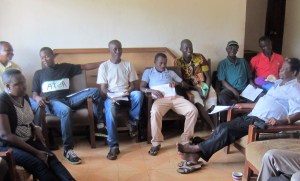
Who knew there is a Sierra Leone Group of Cincinnati with a Facebook page? Page organizer Hashim Williams 20160414_214742found my invitation message and brought a group to Chief’s April 6th presentation.

Mr. Michael Foday of the group then extended his and wife Evelyn’s hospitality with a dinner of Sierra Leone food at their home. He and a number of invited guests generously gave their support for the Chief’s Bumpeh Chiefdom programs. (Above L to R, Sanussi Janneh, Arlene Golembiewski, Chief Caulker, Hashim Williams, Michael Foday)

We started the evening as new acquaintances, and left feeling bonded as friends. Chief Caulker poured libation on Mr. Foday’s doorstep (left) in appreciation of the new friendships forged that evening.

Susan and Jim Robinson (below left)  hosted a reception in their home so people like Pam Dixon (far left) could talk with Chief Caulker firsthand. Winona McNeil (below right), Cincinnati Chapter President of The Links, a professional women’s society, joined in meeting the Chief.

20160416_191027   DSC_0398

20160330_104104Sherbro Foundation Board Members Arlene Golembiewski and Steve Papelian, left, are former Peace Corps Volunteers who served in Rotifunk, Chief Caulker’s hometown. They reminisced with Chief on their life-changing experience at the steps of the University of Michigan Union, where then-presidential candidate John Kennedy first presented his new concept of the Peace Corps in 1960. The 50th anniversary of the Peace Corps was commemorated at Ann Arbor’s U-M Union with this historic marker, depicting President Kennedy’s speech.

No visit to Michigan would be complete for Baby Boomers without a trip to Detroit and the Motown Museum.  Chief Caulker, a big Motown fan, enjoyed reliving the soundtrack of his youth with Sherbro Foundation Board Director Cheryl Farmer.

20160401_134248


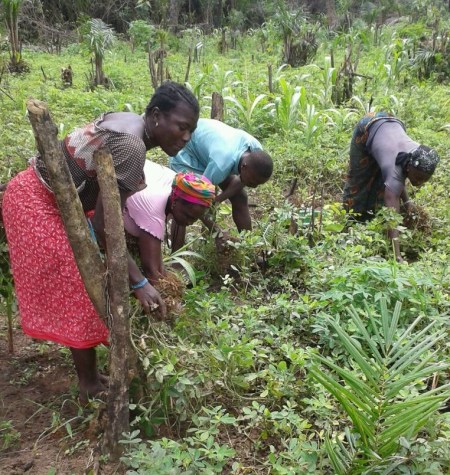
Women’s Vegetable Growing Project – Making millionaires out of peanuts

Women’s Vegetable Growing Project – Making millionaires out of peanuts

Seventy five women farmers have a chance to become Sierra Leone millionaires. Sherbro Foundation just funded a new group of 75 women to grow groundnuts (we call them peanuts) in the Women’s Vegetable Growing Project – one of our most successful projects to date.

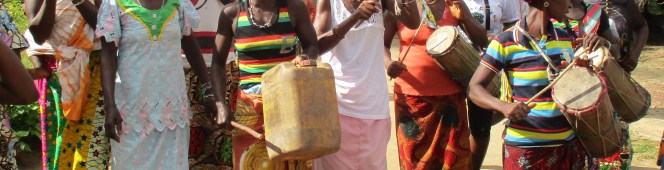
 I can still vividly remember last November when I approached Mobainda village to visit the first women’s project. Women had gathered and filled the narrow dirt road. The car stopped, so I got out to see what was happening. The women began singing and dancing around me. They had come out to honor me and escort me into their village — the traditional way of the women’s society.

No words, no speeches. They just surrounded me with their harmonized singing and drumming on hand-made drums, and slowly moved towards the village.  So, I moved with them, their singing filling the air for the last quarter mile.

They were thanking me – thanking Sherbro Foundation – for helping them plant peanuts in April 2015, right as the Ebola crisis was lifting. These are women who normally live on the slimmest of margins, earning an average of less than $1 a day. They couldn’t even earn that during Ebola, when much farming stopped and markets for selling their produce closed for over four months.

“The Women’s Vegetable Project is one of the most successful projects introduced in my chiefdom,Paramount Chief Caulker said.

Veg - Groundnut harvesting3It was conceived as a way to quickly help women earn income again. We started small with 30 women, supplying each with enough peanut seed for a half-acre garden and other vegetable seed like cucumbers and corn. They also got a 50Kg (100-pound) bag of rice to feed their families before their harvest.

Leave it to women to make the best use possible of resources they were given. Most women grew a bumper crop of peanuts in four short months, harvesting 6-7 bags of peanuts for each bag of seed they received.

We jokingly said we were making millionaires out of peanuts. A large bag of peanuts went for 160,000 leones. So, 7 bags are worth over a million leones. Or about US$200.

TIMG_0211hat may not sound like much, but it was three times more than the women would make in cash in a whole year of traditional rice farming, an incredibly labor intensive crop. And they still had the rest of the year to grow rice and do fishing in the Bumpeh River.

Leave it to these women to be grateful for this help. In these small, close-knit villages of 200-300 people, the women wanted to help other women do what they just did. They came up with the idea of each donating back a half-bag of groundnut seed for the next group to plant. They showed me their donated seed, left.

A local survey found 450 more women in this area of eight villages want to be part of the program. This part of Bumpeh Chiefdom was selected because it has the largest concentration of active women farmers. They were the most severely affected when Ebola abruptly curtailed their normal farming.

13177990_689055534567081_9185847638175857474_n[1]
Executive Director Rosaline Kaimbay, right, of CCET, our partner organization, distributes seed and supplies to the May 2016 group of women farmers, holding white drying tarps they received on their heads. We bought any seed locally available, saving transport cost for both buyer and sellers.

So, the program is expanding to 150 women per year in two groups of 75 women each in the spring and fall.  The program is meant to be a stopgap measure to help women farmers get back on their feet after Ebola. It will continue for three years and cover all 450 interested women. The women draw lots to select who will be in each group.

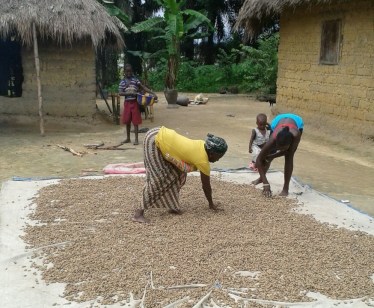
Veg - drying groundnutsThe 2014-15 farming year was exceptionally hard with Ebola. The first group of women peanut farmers unfortunately didn’t become self-sufficient with just one peanut crop in 2015. They were forced to eat a large part of their first peanut harvest to avoid hunger. But this allowed them to save some of the previous year’s rice as seed to grow their next rice crop. We’re giving these first 30 women partial support again in the current project to ensure they can make enough profit in 2016 to go from there.

This year we are also giving each woman a large tarpaulin to safely dry their harvest of groundnuts (or peppers) and avoid losses due to rotting.

I’m already looking forward to my next visit when I can join the women and again celebrate their success. I learned the song the women sang for me last November loosely translated said: “If you wake up in the morning and just work hard, you will succeed.”

And succeed these hard-working women did. In only five months after my first long-distance phone call that conceived the project, the women were harvesting a bumper crop. Their success became our success. And now we’re expanding to help more women succeed.

Arlene Golembiewski, Executive Director

Paramount Chief Caulker’s Message to the US

Paramount Chief Caulker’s Message to the US

Paramount Chief Charles Caulker brought a focused message on his first visit to America this month:

Sierra Leone has no social safety net for its children — not even ensuring they can go to school. So, he is creating his own.

He’s doing it using the only resources his chiefdom has, the natural ones of land, water and sun.

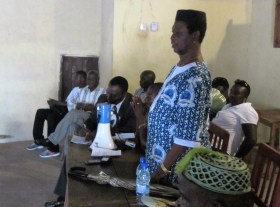
20160406_191637 - CopyDuring an April 6 public program Sherbro Foundation hosted in Cincinnati, Chief Caulker told the rapt gathering about the stark realities of life in Bumpeh Chiefdom. Conditions actually have worsened in the last 20 years. The partial recovery following a brutal 11-year rebel war was dealt a big setback with the recent Ebola epidemic. People are struggling to feed their families.

When Paramount Chief Caulker took the podium in his flowing embroidered blue robe, you knew this man didn’t just have the title of paramount chief. He’s clearly a leader with presence that commands your attention. Maybe it’s his 32 years as paramount chief of Bumpeh Chiefdom, where he’s the second-longest serving traditional ruler in Sierra Leone. And his leadership as the chairman of the National Council of all 149 paramount chiefs in Sierra Leone. And his 40 years of experience in various senior government roles.

Chief Caulker’s darkly intense eyes have seen much sadness in those 32 years as chief. But his face lit up as he told the April 6th group he brings them a traditional African greeting, addressing them as “my dear friends.”
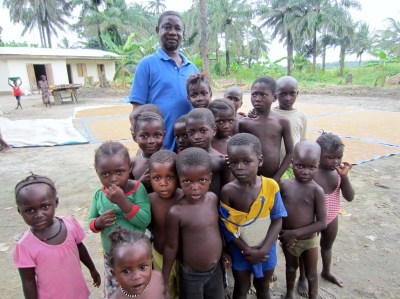
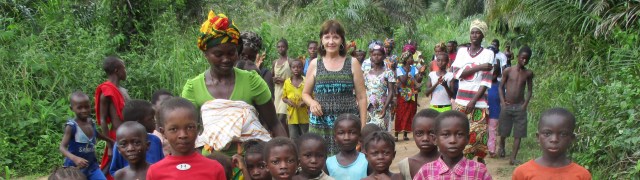
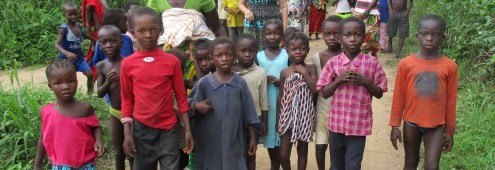
Chief Caulker with village children.

Chief Caulker and village children.

His face also lights up when he talks about the children of Bumpeh Chiefdom. Protecting children and striving to give them a better life has become his life’s work. A better life starts with education, and Chief Caulker spoke of how widespread illiteracy in his rural chiefdom weighs on him.

Only 40% of children there attend poorly equipped primary schools. Many drop out before secondary school, which only exist in the main town of Rotifunk. Most families live in small villages miles away.

Distance and cost (just $US30 a year for school fees!) are insurmountable roadblocks for most families.

For 20 years, this remote area waited for government and foreign nonprofit organizations (NGOs) to bring aid that never came. The chiefdom of 40,000 must take charge of its own development, Chief Caulker said, and find sustainable “roots” for education.

“We set a goal that, in 12 years, every baby born [in my chiefdom] will have access to secondary school education.”

Mother bring her baby to register education savings account.

Mother brings her baby to open education savings account.

“To do this, we are opening education savings accounts for each newborn baby. To date, we have opened 2,000 baby accounts,” Chief said.

How? By helping his villages raise fruit trees. He has an innovative program for expanding their subsistence agricultural tradition into profitable local businesses.

Fruit trees are raised from seed and given to rural villages to plant in community orchards. The orchards will produce income for their children’s education for years to come. And they’ll also fund village development projects like digging wells and building roads, primary schools and health clinics.

Chief Caulker said the program is becoming a model for community-led development in Sierra Leone. “We have accomplished big things in a short time under difficult circumstances,” he said. “We are confident about building a prosperous future as we fight to break barriers to development.”

Bumpeh Chiefdom’s program has grown in two and a half years to include two tree nurseries that have raised over 40,000 fruit tree seedlings — with seed from local fruit. Six villages have planted 15,000 trees in their community orchards. Families of newborn babies have been given over 4,000 seedlings to raise in their backyard gardens. Some seedlings are being sold to private farmers to raise funds to expand the program. And 2,000 babies have their education savings accounts. Ebola delayed but did not derail the program.

Chief Caulker has plans to cover the chiefdom with fruit orchards that will support new fruit-based cottage industries and create wage-paying jobs. He intends to transfer his knowledge to help other chiefdoms start their own self-sustaining programs.

Chief Caulker ended his presentation saying, “We are also confident that you’ll be by us since we share a common aspiration to serve mankind.” Read the full text of his speech here: April 6 PC Caulker – Cincinnati

Sherbro Foundation assists Bumpeh Chiefdom in their goal of giving every child access to education with our “Growing a Baby’s Future” program. We funded the first fruit tree nursery and helped the chiefdom create their own birth registration system, as no government system exists for rural areas. We’ve funded 1,200 of the newborn education savings accounts to date.

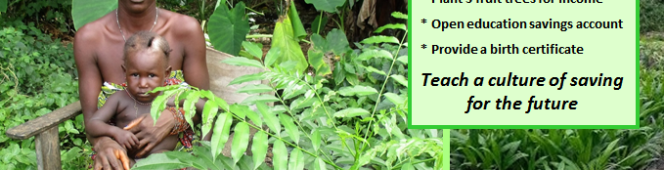
You can also “grow a baby’s future” by donating here. For $20, Sherbro Foundation will:
• Open a newborn baby’s education savings account
• Give families three fruit trees of their own to help fund their baby’s education savings.
• Help families secure their baby’s birth certificate.

100% of donations to Sherbro Foundation go directly to fund Bumpeh Chiefdom programs. We pay our own administration costs. Chief Caulker’s US trip was privately funded and with accommodations from family and friends.

Happy Birthday to us. Number 3 and growing.

Happy Birthday to us. Number 3 and growing.

Letterhead


Happy Birthday to us! 

happy_birthday_268662It was three years ago today Sherbro Foundation  got our certificate declaring we are a State of Ohio nonprofit corporation.

With a huge  backlog, it was then another eighteen months before the IRS notified us our 501(c)(3) tax exempt status was approved. It sometimes felt we’d never get through the process of organizing as a nonprofit.

But that was nothing compared to going through the Ebola crisis.

Now those things are all behind us. They say working through a big challenge only makes you stronger. It’s true. Stronger and smarter.

I won’t repeat here what we’ve accomplished in our first three years. I’ve recently written on this, given a 2015 year-end update and shared the latest news on the community computer center.

I just wanted to savor the moment. And take a moment to thank our Sierra Leone community partner, the Center for Community Empowerment and Transformation. It’s their hard work that makes things happen. They’re the heroes of this three year story.

And give thanks to our donors and supporters. You were there early when we – when Sierra Leone – needed you. I hope you feel satisfaction in the role you’ve played in fighting Ebola, in sending girls to school, in giving villages a new future by growing trees. You’re changing people’s lives, and we could not have done it without all of you.

Well, time to get back to pedaling again. Running a young nonprofit is still hard work. But it doesn’t feel quite so monumental any more.

Arlene Golembiewski
Founder & Executive Director


And then there was light – and fans

And then there was light – and fans

And then there was light. Solar, that is. Rotifunk’s new Community Computer Center is nearly ready to open with power from a nearby solar system. Sherbro Foundation just funded wiring to bring the solar power to the new center.

Feb 2016 2 - CopyThe pieces are falling into place for Rotifunk’s first computer center, a project over four years in the making.  When we first identified a proposal to teach computer literacy in 2011, we had no computers, no building and no power. Nor did we know where we’d get any of these. No one in town had a computer, and only three teachers had any PC skills.
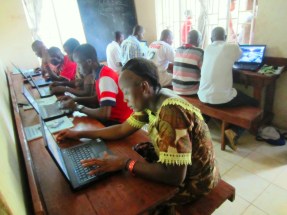
And we never imagined Ebola would throw us a big curve for over a year.

But the need was compelling – to introduce computer literacy as a way of giving job skills to students and adults in rural Bumpeh Chiefdom. So, you just get started.

With an unexpected and generous donation of fifty laptop computers late in 2013, we actually did start the project.

Computer class at CCET officeOur local partner, the Center for Community Empowerment and Transformation, CCET, started teaching adults in the living room of a borrowed house. There was only room for ten students at a time, but it was a start. Then Ebola hit in mid-2014 and all public gatherings were banned. Classes stopped.
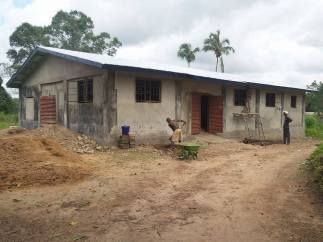
Paramount Chief Caulker made good use of the Ebola period when all travel in and out of the chiefdom halted to build the new computer center building. He donated land that had the shell of an old building burned by rebels during the war. It was in the center of town with a good concrete slab. The transformation was no less than amazing. Built with mud bricks and local lumber and labor, then stuccoed and painted inside and out – and voila, a new 40×60 foot computer center.

Computer Lab 6      Computer Center 9-15-14

IMG_0164

IMG_0104

But there still was no power. Operating with a generator would be costly, noisy, unreliable and spewing pollution. Estimates for a limited solar system for this building were $30,000+.

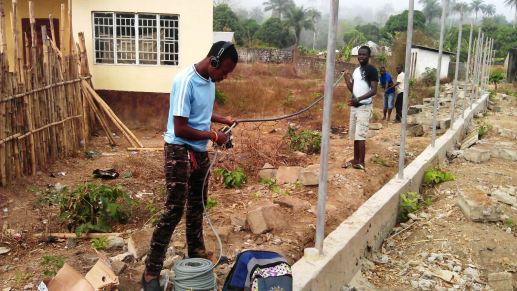
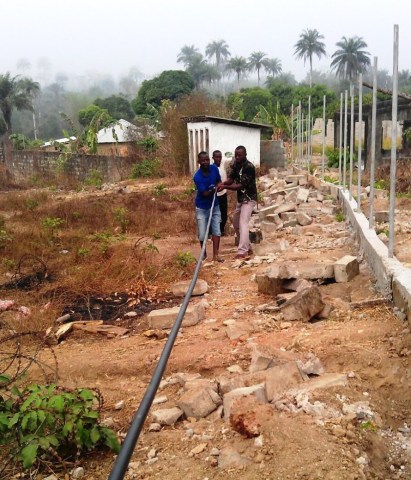
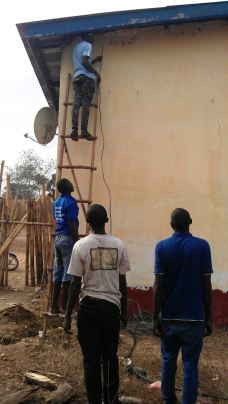
As luck would have it, a nearby community solar system had been installed and had excess capacity. It was feasible to wire power over. Last month wire was laid in conduit between the two buildings and buried in the ground.

Feb 2016 6

Feb 2016 5 - Copy Feb 2016 3

IMG-20160223-WA0003

I did a dance last week when I got word it’s connected and we finally have power!

LFeb 2016 4est you think we’re now all set, well, not quite. I’ve learned a lot about solar systems and their capacity. The parent system we’re drawing from, shown here, is considered large at 5000 Watts. We’ll be able to use 3000 – 4000 Watts on most days. But this will just cover basic operation of the computer center running 25 laptops at a time, a twenty 11 W LED lights, six small ceiling fans and a desktop printer.
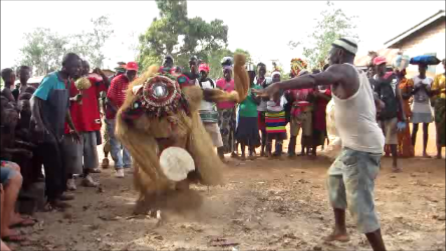
Running larger printers for the printing service we plan to start will still require a generator for the excess power needed.

I learned my lesson on power use when I tried to use a standard women’s hairdryer in a house with a generator. I asked first if it was OK, and then proceeded to shut down the generator. No wonder. Our hair dryers are 1875 W – for one hair dryer! As Westerners, we take for granted having all the power we want.

The computer center’s solar power is based on having sunny days. In the rainy season, we may use power faster than the solar batteries can recharge. A back-up generator is still a necessity.

But today, I’ll put those things aside.  I’m celebrating. The building is built. And the lights are on.


“Why Africans Cannot Get Depressed”

“Why Africans Cannot Get Depressed”

“This is why Africans cannot get depress…Only white people suffer from depression. Africans are always joyful…They have a community oriented. Every one comes to the festival.”

Snapshot 20 (12-24-2015 10-58 AM)I just had to share this recent comment on my YouTube Devil Dancing video from someone in the UK, obviously African.
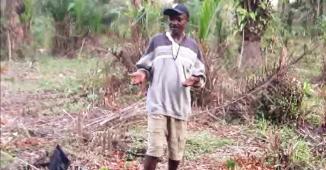
And my comment back: “Thanks.  I couldn’t agree with you more. People in Sierra Leone manage to find joy in everyday life with their community. It’s expressed in dance and music that’s irresistible – and joyful. Westerners need to take lessons here.”

It’s a bit of a stretch this year in Sierra Leone to be joyful with the post- Ebola economic crisis. But I know its music and dance that people are relying on there today.

So, on this Christmas Day, I hope you’re finding joy wherever you may be.  Merry Christmas and Happy Holidays.

PS: The YouTube video captures a Rotifunk event with a local dance troupe. It shows them marching into town from their nearby village and getting the devil ready for his dance.  To skip this and get to the main event, skip to about 1:20 on the video.  There’s over 30,000 views on YouTube. Check it out.

Growing Self-Sufficient Futures – Dec 2015 newsletter

Growing Self-Sufficient Futures – Dec 2015 newsletter

Letterhead


Growing Self-Sufficient Futures:  Dec 2015 Newsletter

  • We’re helping people raise fruit trees and grow self-sufficient futures.
  • The new Community Computer Center is a four year dream now coming true.

IMG_0175 - Copy (2)

Give a holiday gift that keeps on giving

Give a holiday gift that keeps on giving

XmasSome gifts you remember.
Some gifts keep on giving.

Growing a Baby's Future 2


Change a Sierra Leone child’s life.

Empower a family to save for their child’s education by raising fruit trees.

When did a $20 gift feel this good?

Do good. Feel good. Give a gift here.

Order a gift by Dec 22, we’ll send a gift notice by Dec 24.

Need more – read it here.


Giving Thanks in Sierra Leone

Giving Thanks in Sierra Leone

Thanksgiving came early for me this year. I hadn’t planned my trip to be in Sierra Leone on the day the country was declared Ebola free. But I was grateful it worked out that way.

November 9th, the actual day, was quiet and rather anticlimactic. This chiefdom, like much of the country, hadn’t had an Ebola case since mid-January – ten months ago.  November 9th was a day for reflection, to remember those who lost their lives, especially health care workers.  It was a day to give thanks that the chiefdom and the country were delivered from this scourge.

Bumpeh Chiefdom’s Ebola Committee decided at the last minute to have a small ceremony while I was still in the country to thank Sherbro Foundation for our support in their Ebola fight.

I was honored to accept their thanks on behalf of all Sherbro Foundation donors who came forward to help during Ebola’s darkest days.

Paramount Chief Caulker recognizing Nov 9th, the Ebola-free date.

Paramount Chief Caulker recognizing Nov 9th, the Ebola-free date.

One by one, leaders of the community came forward to thank Sherbro Foundation. An Imam and a Christian minister offered prayers, with people joining in to recite both.

A representative of village chiefs and a section chief were grateful SF funded over 300 hand washing stations they set up early when no other funding was coming. These were the chiefdom leaders on the front line as the epidemic was spreading. A year ago, it was unclear how easily the Ebola virus could be transferred with casual contact. It was a frightening time and people avoided each other. They didn’t know who they could trust.

The Local Councilor and Chiefdom Speaker were grateful SF stayed in touch throughout the outbreak and just asked, how can we help. When the Ebola Committee recognized they needed a more aggressive approach to keeping Ebola from entering their chiefdom, SF quickly responded. They thanked us for funding them to staff checkpoints, do house to house checks in every village and stop unsafe burials.

Paramount Chief Caulker has been vocal throughout that the chiefdom could not have done what they did without Sherbro Foundation support.

But as I was accepting their thanks, I was silently thinking, who’s more grateful?  Them, or me?

I was grateful lives were spared and my friends were safe.

I was grateful SF could play a role in enabling this chiefdom to become a model for the rest of the country in stopping Ebola.  I was never more proud to be part of an organization’s work than when I saw the dramatic 80% drop in Ebola cases last January as chiefdoms around the country implemented programs like Bumpeh Chiefdom’s.

IMG_4552I was grateful to work with our remarkable partner, the Center for Community Empowerment & Transformation who volunteer their efforts to protect and now develop their chiefdom.  They shifted from fighting Ebola to reopening schools closed for nine months to restarting our projects without missing a beat – all within a few months.
I was grateful to see children back in school – and more Bumpeh Chiefdom girls in secondary school than ever before.

I was grateful to go to the new community bank and see 1249 new savings accounts opened for newborn babies that can grow to fund their future education – more baby accounts than adult accounts.

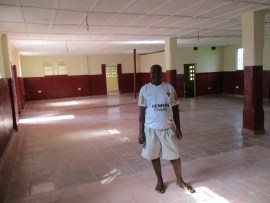
IMG_0104I was grateful to see the computer center built during the Ebola outbreak finished.  The floors are tiled floors and it’s wired for power we’ll bring over from a nearby solar system. Come February, we should be able to start initial computer and adult literacy classes.
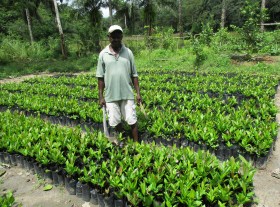


IMG_0138I was grateful to see our dream of transforming the chiefdom by planting fruit trees is becoming reality.  15,000 tree seedlings were planted this year that will transform six villages economically and environmentally.  I saw thousands more fruit trees started from seed growing in two tree nurseries, awaiting planting in next year’s village orchards. And plans to start thousands more in January – February.


IMG_4684I was grateful to see firsthand the work spreading to the community level. More than a hundred people in six villages took ownership to clear 10-20 acres each and plant their community orchards.  Orchards that will provide income for them to build schools, dig wells, send their children to school and protect the environment for years to come.

All this had been done, in spite of the Ebola crisis.


I think most people just want to feel they’ve made a difference in the world and someone’s life has improved because of their efforts.  

I had ample evidence on this trip that Sherbro Foundation’s collaboration with Bumpeh Chiefdom was doing just that.

This work gets done because of the generosity of Sherbro Foundation’s donors. We are deeply grateful for all you have done to make this possible.

So, when you’re sitting around the Thanksgiving table this year giving thanks, pat yourself on the back for reaching out and making a difference in Sierra Leone. I’ll be thinking of you and thanking you again.

——- Arlene Golembiewski, Executive Director

Girl Scholarship Students Dream Big – I Want to Become President

Girl Scholarship Students Dream Big – I Want to Become President

Going to secondary school should be about more than reading and writing. It should be a place where Sierra Leone girls learn what’s possible in life. They should learn to dream big at this early age.

Form 5 (11th grade) student Adama Sankoh at Bumpeh Academy has a big dream. When asked what she wants to do after finishing school, Adama said,

“I want to become a president.”

She’s clear on where to start. “Education is the only way I could change the social and economic status of my family. School prepares my mind to be useful and influential in my community and country as a whole.”

IMG_0257

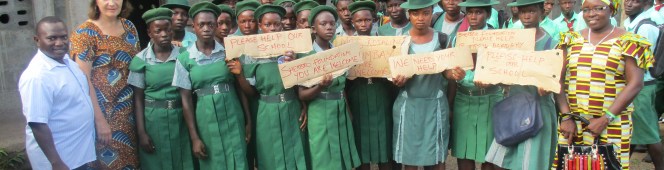
Bumpeh Academy Principal David Rashid Conteh, Arlene, BA scholarship students, CCET Executive Director, Rosaline Kaimbay. Adama is front row, 3rd student from right.  Signs read: Sherbro Foundation, You are welcome. Please help our school.

In school, Sierra Leone girls like Adama are being exposed to the opportunities open to them beyond the small rural communities they come from. Even becoming president. They’re learning the first practical step to achieving those dreams is completing their education.

Sherbro Foundation’s girls scholarship program helped 150 Bumpeh Chiefdom girls continue their education for the school year starting August 2015.

My motivation for starting the girls scholarship program in Bumpeh Chiefdom was simple.  I wanted girls to learn to dream big and start on the path to reaching their full potential with education.  I’ve met more high potential Bumpeh Chiefdom girls like Adama who want to become doctors, nurses, lawyers, journalists, teachers, accountants. Their first step – completing secondary school – is still a hurdle and huge accomplishment for most girls in Sierra Leone.

Sherbro Foundation helps eliminate financial barriers to girls attending secondary school. This year we provided school uniforms for girls in five Bumpeh Chiefdom schools.

The Sierra Leone government paid school fees this year with post-Ebola funding. But uniforms cost as much as school fees, and present a big burden for parents still recovering the past year’s Ebola crisis.

Sherbro Foundation’s 2015 scholarship program helped remove that barrier for 150 of the chiefdom’s most vulnerable girl students. The program is administered by our local partner, the Center for Community Empowerment & Transformation (CCET). Here’s more of this year’s scholarship students.

—– Arlene Golembiewski, Executive Director

WSSS scholarshipsWalter Schutz Memorial Secondary School students


2015 scholarships WSSS, Ah, BAScholarship awardees from three schools flanked by CCET Executive Director, Mrs. Rosaline Kaimbay (left) and CCET Child Welfare program director, Abdul Foday (lower right).  Schools left to right: Walter Schutz SS, Ahmadiyya SS, Bumpeh Academy SS
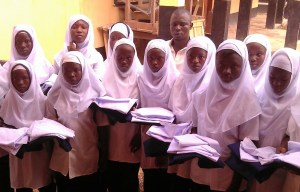


Ahmadiyya scholarshipsAhmadiyya Islamic Secondary School students


2015 scholarship Mosimbara bEarnest Bai Koroma Junior Secondary School in Mosimbara village, Bumpeh Chiefdom’s newest secondary school. Children from small villages can start secondary school here close to home, and later transfer to Rotifunk for senior high.


2015 Bellentine primaryVain Memorial Primary School, serving six villages in Bellentine Section.  Primary school students got 2 uniforms each. Mothers of many children in this school are in our Women’s Vegetable Growing project.
Back from a month in Sierra Leone

Back from a month in Sierra Leone

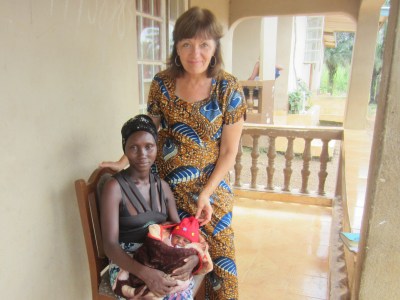
IMG_4630I’m just back Sunday from a month in Sierra Leone. Word is getting out to Bumpeh Chiefdom families about the Newborn Baby program. Kadijatu Kamara seen here presented herself to me with one-week-old Sheikfuad. She wanted to get him registered so he’ll have his education fund bank account opened and get three fruit trees to plant.

It was gratifying to be in Sierra Leone last week when they reached 42 days with no new Ebola cases and were declared Ebola-free. Bumpeh Chiefdom’s Ebola Committee warmly recognized Sherbro Foundation’s support in their Ebola fight – one that led to them being recognized nationally as a model program.

Big thanks go out to all Sherbro Foundation donors.  It was you who made that happen and you who helped save lives.

It was a great trip back to Sierra Leone – my first in two years.  All our projects are moving forward.  Our local partner the Center for Community Empowerment and Transformation mapped out big plans for 2016 that we are excited to assist them with. Look for more news here soon.

—- Arlene Golembiewski, Executive Director

Ebola-free at Last!

Thousands of people danced in the streets of the capital of Freetown Saturday, after the UN’s World Health Organization declared Sierra Leone officially free of Ebola.

They also gathered for candlelight vigils, according to news reports, to remember the nearly 4,000 people killed by the vicious virus since May 2014. Among them were 221 health workers, who died trying to save others.

But the impacts of the Ebola crisis are far from over. The economy, already weakened by a decade-long civil war, has been crippled. Foreign mining companies and other investors packed up and left. Farms had to be abandoned. People across the country are hungry. There are an estimated 12,000 orphans.

The country must be vigilant against new outbreaks — neighboring Liberia has been declared Ebola-free twice and Guinea saw several new cases in recent weeks. And scientists are discovering that the disease might be transmitted sexually by survivors and that “after effects” could include blindness, deafness or pain.

Sierra Leoneans, despite their undefeated spirit and optimism, will continue to need help getting back on their feet and securing their families’ futures. Sherbro Foundation intends to be there for them.

You can be a part of the recovery. Our current campaign, Growing a Baby’s Future, aims to help parents save for their baby’s education and gain income from planting fruit trees. Go to: SherbroFoundation.org/donate

To read more see:

http://www.theatlantic.com/international/archive/2015/11/sierra-leone-ebola-free/414795/

http://www.theguardian.com/world/2015/nov/07/world-health-organisation-sierra-leone-ebola-free

Growing a Baby’s Future

Growing a Baby’s Future

They say money doesn’t grow on trees. But in Bumpeh Chiefdom in rural Sierra Leone, new parents are banking on it.

Through Sherbro Foundation’s Growing a Baby’s Future project, impoverished families in remote villages have a chance for the first time to save for their child’s education. Our grassroots partner, the Center for Community Empowerment and Transformation (CCET), is reaching places foreign aid – or even government funding — never reach.

Chief Caulker with village children.

Paramount Chief Caulker with Bumpeh Chiefdom village children.

The chiefdom is creating a living trust fund for the next generation by planting trees. And they’re doing it by relying on the Chiefdom’s only resources – its fertile land, water and agricultural skills.

Paramount Chief Charles Caulker realized the chiefdom can’t wait for outside help; for “someone” to create a social safety net for children. In a country devastated by both the Ebola virus and a long civil war, the wait is endless. He and CCET organized a major fruit tree planting project for the chiefdom, trees raised themselves from seed.

Only $20 will Grow a Baby’s Future in three steps:

  • Three fruit trees are planted for each newborn baby. The income from fruit sales will go into an education savings account for each baby at the new community bank.  By age 12, there will be money to pay the child’s secondary school fees.
  • Sherbro Foundation is seeding the bank accounts by paying the $3.50 minimum deposits.
  • And to make every child count, we are also is helping the chiefdom start a birth registry. Rural areas today have no birth registration. Without birth certificates, people can be denied birthrights of land ownership, voting and health care.
IMG-20150523-WA0000

Two tree nurseries hold 40,000 seedlings grown from seed, maturing for next year’s rainy season planting.

CCET and the people of Bumpeh are determined to raise thousands of citrus, mango, avocado, coconut, cashew and teak seedlings for newborn babies and their future education. Families will reap their bounty for years to come.

CCET plans to expand their tree nurseries – already boasting 40,000 seedlings – to sell to local farmers, too. This will generate income for the program to become self-sufficient.

Growing a Baby’s Future is facing a backlog of 1,000 babies after it was interrupted by the yearlong Ebola crisis.

CCET only needs our seed money to secure a baby’s future. You can help – donate here.

Growing a Baby’s Future

Growing a Baby’s Future

Baby snip it 2

Join Sherbro Foundation’s fall campaign – sponsor a baby   

Only 30% of children in Sierra Leone can afford secondary school.  Without education, children are born into poverty and never escape. The post-Ebola economic crisis has made getting an education even harder.

Growing a Baby’s Future empowers Bumpeh Chiefdom parents to start saving for their child’s secondary education right after birth by providing 3 income-producing fruit trees to raise.

We also open a bank account for the child, paying the minimum balance. The program combines an old tradition of planting a tree with the baby’s umbilical cord and the new practice of education savings accounts.  Parents learn a culture of saving for the future – and gain a living safety net.

To make every child count, we are helping the chiefdom start a birth registry.  UNICEF reports “one in three children doesn’t exist.” In Sierra Leone, even fewer births are registered. Without birth certificates, people can be denied birthrights of land ownership, voting and health care.

For $20, please help parents secure their child’s future

www.sherbrofoundation.org/donate

Do good with good value

How We Spent Your Money

How We Spent Your Money

Sherbro Foundation Board members get annoyed with organizations we only hear from when they want money from us. We don’t want to be one of those organizations.

Rather, we want to let you know how we spent the money you already sent.  Below is a newsletter covering key projects over the last fifteen months.  You can judge if it was well spent, and whether you want to support us again. Or start supporting us.

If you’d like to subscribe for future e-news, please send an email with “Subscribe” in the title to sherbrofoundation@gmail.com . We only plan about three each year and the occasional special message.  We won’t flood your inbox.   (Likewise, send an “Unsubscribe” message to stop receiving them.)

Are you now thinking now, oh, they haven’t spent my money because I haven’t sent any. You can easily remedy that at http://www.sherbrofoundation.org/donate .

Thank you. Together, we are making a real difference in the lives of people in rural Sierra Leone.

Arlene Golembiewski
Executive Director

Letterhead


Eliminating poverty through education and economic empowerment
August 2015
Veg project distribution ceremony May 2015 - Copy


Click here:  Sherbro Foundation Newsletter August 2015