Seventy five women farmers have a chance to become Sierra Leone millionaires. Sherbro Foundation just funded a new group of 75 women to grow groundnuts (we call them peanuts) in the Women’s Vegetable Growing Project – one of our most successful projects to date.
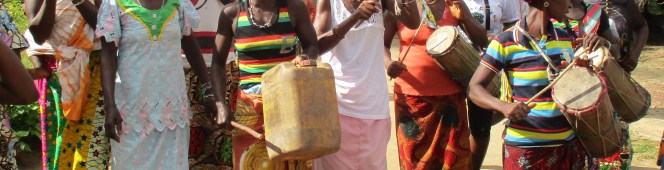
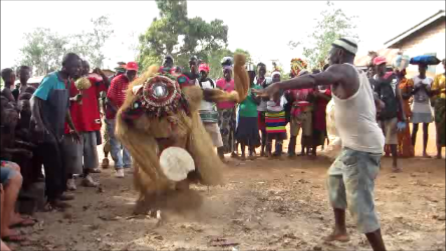
No words, no speeches. They just surrounded me with their harmonized singing and drumming on hand-made drums, and slowly moved towards the village. So, I moved with them, their singing filling the air for the last quarter mile.
They were thanking me – thanking Sherbro Foundation – for helping them plant peanuts in April 2015, right as the Ebola crisis was lifting. These are women who normally live on the slimmest of margins, earning an average of less than $1 a day. They couldn’t even earn that during Ebola, when much farming stopped and markets for selling their produce closed for over four months.
“The Women’s Vegetable Project is one of the most successful projects introduced in my chiefdom,” Paramount Chief Caulker said.
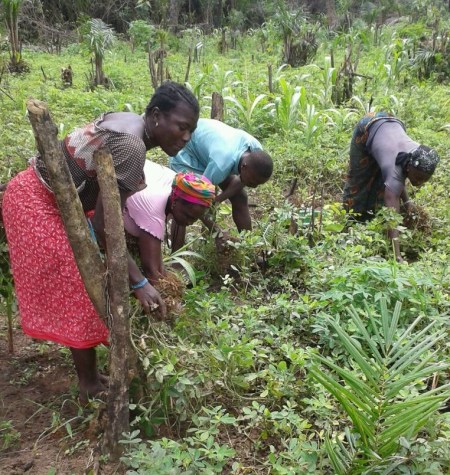 It was conceived as a way to quickly help women earn income again. We started small with 30 women, supplying each with enough peanut seed for a half-acre garden and other vegetable seed like cucumbers and corn. They also got a 50Kg (100-pound) bag of rice to feed their families before their harvest.
Leave it to women to make the best use possible of resources they were given. Most women grew a bumper crop of peanuts in four short months, harvesting 6-7 bags of peanuts for each bag of seed they received.
We jokingly said we were making millionaires out of peanuts. A large bag of peanuts went for 160,000 leones. So, 7 bags are worth over a million leones. Or about US$200.
T hat may not sound like much, but it was three times more than the women would make in cash in a whole year of traditional rice farming, an incredibly labor intensive crop. And they still had the rest of the year to grow rice and do fishing in the Bumpeh River.
Leave it to these women to be grateful for this help. In these small, close-knit villages of 200-300 people, the women wanted to help other women do what they just did. They came up with the idea of each donating back a half-bag of groundnut seed for the next group to plant. They showed me their donated seed, left.
A local survey found 450 more women in this area of eight villages want to be part of the program. This part of Bumpeh Chiefdom was selected because it has the largest concentration of active women farmers. They were the most severely affected when Ebola abruptly curtailed their normal farming.
![13177990_689055534567081_9185847638175857474_n[1]](https://sherbrofoundation.org/wp-content/uploads/2016/05/13177990_689055534567081_9185847638175857474_n1.jpg?w=640)
Executive Director Rosaline Kaimbay, right, of CCET, our partner organization, distributes seed and supplies to the May 2016 group of women farmers, holding white drying tarps they received on their heads. We bought any seed locally available, saving transport cost for both buyer and sellers.
So, the program is expanding to 150 women per year in two groups of 75 women each in the spring and fall. The program is meant to be a stopgap measure to help women farmers get back on their feet after Ebola. It will continue for three years and cover all 450 interested women. The women draw lots to select who will be in each group.
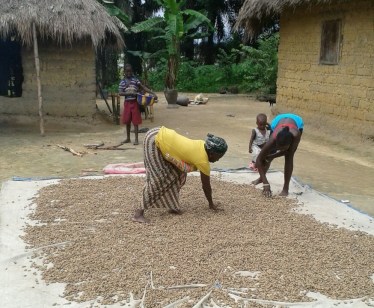 The 2014-15 farming year was exceptionally hard with Ebola. The first group of women peanut farmers unfortunately didn’t become self-sufficient with just one peanut crop in 2015. They were forced to eat a large part of their first peanut harvest to avoid hunger. But this allowed them to save some of the previous year’s rice as seed to grow their next rice crop. We’re giving these first 30 women partial support again in the current project to ensure they can make enough profit in 2016 to go from there.
This year we are also giving each woman a large tarpaulin to safely dry their harvest of groundnuts (or peppers) and avoid losses due to rotting.
I’m already looking forward to my next visit when I can join the women and again celebrate their success. I learned the song the women sang for me last November loosely translated said: “If you wake up in the morning and just work hard, you will succeed.”
And succeed these hard-working women did. In only five months after my first long-distance phone call that conceived the project, the women were harvesting a bumper crop. Their success became our success. And now we’re expanding to help more women succeed.
Arlene Golembiewski, Executive Director

 During an April 6 public program Sherbro Foundation hosted in Cincinnati, Chief Caulker told the rapt gathering about the stark realities of life in Bumpeh Chiefdom. Conditions actually have worsened in the last 20 years. The partial recovery following a brutal 11-year rebel war was dealt a big setback with the recent Ebola epidemic. People are struggling to feed their families.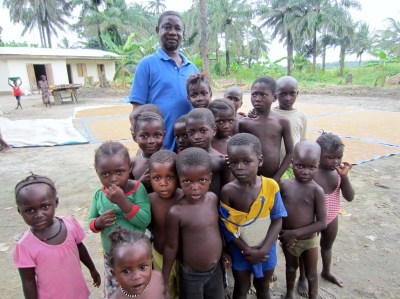



 It was three years ago today Sherbro Foundation got our certificate declaring we are a State of Ohio nonprofit corporation.
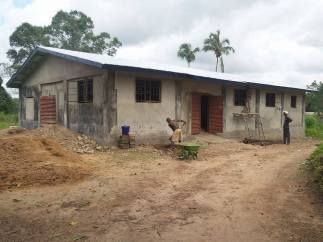
 The pieces are falling into place for Rotifunk’s first computer center, a project over four years in the making. When we first identified a proposal to teach computer literacy in 2011, we had no computers, no building and no power. Nor did we know where we’d get any of these. No one in town had a computer, and only three teachers had any PC skills.
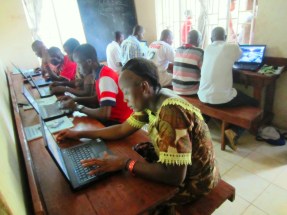 Our local partner, the Center for Community Empowerment and Transformation, CCET, started teaching adults in the living room of a borrowed house. There was only room for ten students at a time, but it was a start. Then Ebola hit in mid-2014 and all public gatherings were banned. Classes stopped.


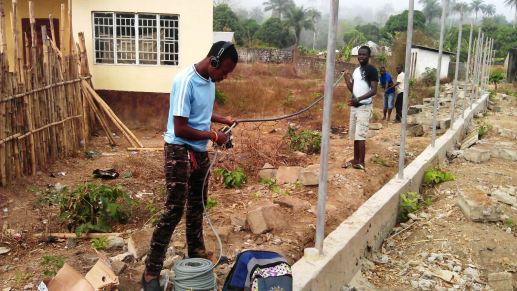
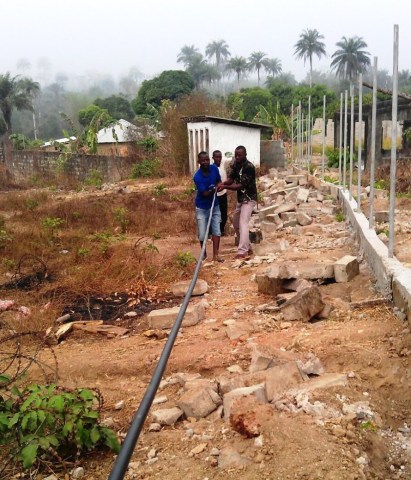
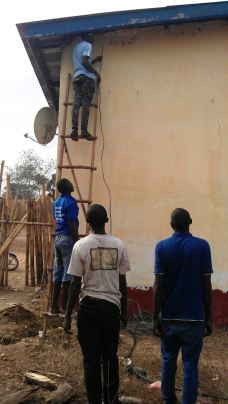

 est you think we’re now all set, well, not quite. I’ve learned a lot about solar systems and their capacity. The parent system we’re drawing from, shown here, is considered large at 5000 Watts. We’ll be able to use 3000 – 4000 Watts on most days. But this will just cover basic operation of the computer center running 25 laptops at a time, a twenty 11 W LED lights, six small ceiling fans and a desktop printer.
 I just had to share this recent comment on my

 Some gifts you remember.
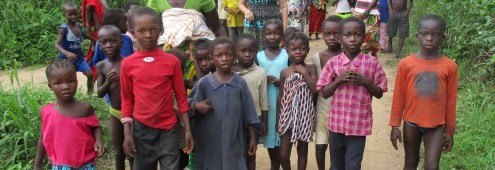
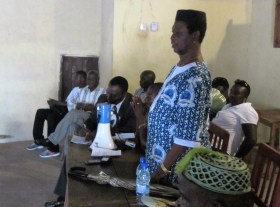
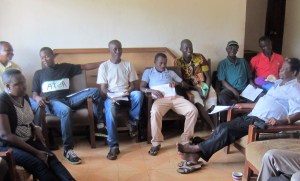 I was grateful to work with our remarkable partner, the Center for Community Empowerment & Transformation who volunteer their efforts to protect and now develop their chiefdom. They shifted from fighting Ebola to reopening schools closed for nine months to restarting our projects without missing a beat – all within a few months.
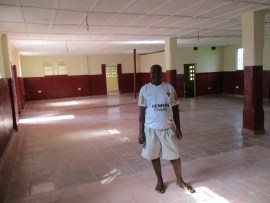 I was grateful to see the computer center built during the Ebola outbreak finished. The floors are tiled floors and it’s wired for power we’ll bring over from a nearby solar system. Come February, we should be able to start initial computer and adult literacy classes.
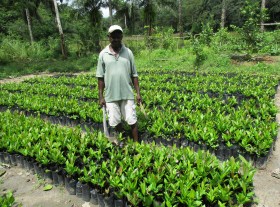 I was grateful to see our dream of transforming the chiefdom by planting fruit trees is becoming reality. 15,000 tree seedlings were planted this year that will transform six villages economically and environmentally. I saw thousands more fruit trees started from seed growing in two tree nurseries, awaiting planting in next year’s village orchards. And plans to start thousands more in January – February.
 I was grateful to see firsthand the work spreading to the community level. More than a hundred people in six villages took ownership to clear 10-20 acres each and plant their community orchards. Orchards that will provide income for them to build schools, dig wells, send their children to school and protect the environment for years to come.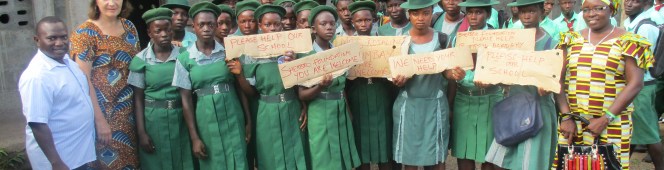

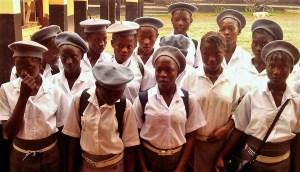 Walter Schutz Memorial Secondary School students
 Scholarship awardees from three schools flanked by CCET Executive Director, Mrs. Rosaline Kaimbay (left) and CCET Child Welfare program director, Abdul Foday (lower right). Schools left to right: Walter Schutz SS, Ahmadiyya SS, Bumpeh Academy SS
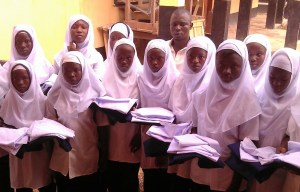 Ahmadiyya Islamic Secondary School students
 Earnest Bai Koroma Junior Secondary School in Mosimbara village, Bumpeh Chiefdom’s newest secondary school. Children from small villages can start secondary school here close to home, and later transfer to Rotifunk for senior high.
 Vain Memorial Primary School, serving six villages in Bellentine Section. Primary school students got 2 uniforms each. Mothers of many children in this school are in our Women’s Vegetable Growing project.
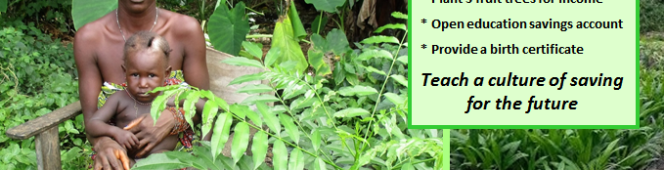
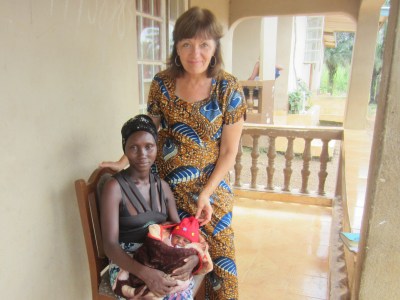 I’m just back Sunday from a month in Sierra Leone. Word is getting out to Bumpeh Chiefdom families about the Newborn Baby program. Kadijatu Kamara seen here presented herself to me with one-week-old Sheikfuad. She wanted to get him registered so he’ll have his education fund bank account opened and get three fruit trees to plant.




 Sherbro Foundation